Wir versenden in ganz Europa. Standardprodukte werden in 3 Wochen versendet.
Mehr erfahren
Speisekarte
Individuelles Angebot anfordern

Teilen Sie uns mit, wonach Sie suchen, und wir erstellen ein Angebot, das auf Ihre Räumlichkeiten, Ihr Team und Ihre Anforderungen zugeschnitten ist.

Sie erhalten:
  • Eine persönliche Empfehlung
  • Transparente Preisangaben basierend auf Ihrer Anfrage
  • Eine schnelle Rückmeldung, falls wir weitere Informationen benötigen
Persy One
Für Telefonanrufe und Videokonferenzen.
€3.999
(exkl. Versand & Mehrwertsteuer)
Fortdauernde Arbeit
Für tiefgründige Aufgaben und längere Arbeitssitzungen.
€4.699
(exkl. Versand & Mehrwertsteuer)
Persy Zwei
Für Besprechungen und Videokonferenzen zu zweit.
€9.499
(exkl. Versand & Mehrwertsteuer)
Persy Four
Für Besprechungen und Diskussionen in kleinen Teams.
€11.799
(exkl. Versand & Mehrwertsteuer)
Du bist startklar!
Danke! Ihre Anfrage wurde erfolgreich übermittelt. Wir werden uns in Kürze mit Ihrem personalisierten Angebot bei Ihnen melden.
Dieses Fenster schließen
Hoppla! Beim Absenden des Formulars ist etwas schief gelaufen.
Laden Sie eine Broschüre herunter
Was du darin findest:
  • Informationen zum Produkt
  • Preisgestaltung der Produkte
  • Technische Informationen
Laden Sie eine Broschüre herunter
Du bist startklar!
Vielen Dank für Ihr Interesse an Persy Booths! Wir haben die Broschüre an die von Ihnen angegebene E-Mail-Adresse gesendet. Bitte überprüfen Sie Ihren Posteingang für weitere Informationen.
Hoppla! Beim Absenden des Formulars ist etwas schief gelaufen.
Download a Brochure
You're All Set!
Thank you for your interest in Persy Booths! We've sent the brochure to the email address you provided. Please check your inbox for more information.
Oops! Something went wrong while submitting the form.

Optimiertes Airflow-Design
Jede Kabine ist mit strategisch platzierten Lüftungsöffnungen ausgestattet, die die Luftzirkulation maximieren und eine komfortable Umgebung für jeden Benutzer gewährleisten.

Konsistentes Temperaturmanagement
Unser fortschrittliches Belüftungssystem hilft bei der Temperaturregulierung und sorgt für ein angenehmes Klima, das Sie bei langen Trainingseinheiten kühl und konzentriert hält.

Flüsterleiser Betrieb
Unser Belüftungssystem wurde für ein ablenkungsfreies Erlebnis entwickelt und arbeitet geräuschlos, sodass Sie sich ohne Unterbrechungen auf Ihre Arbeit konzentrieren können.

Schalldicht aus Gründen der Vertraulichkeit

Fünf Schichten schalldämmender Materialien
Diese Schichten sind so konzipiert, dass sie eine Vielzahl von Schallfrequenzen absorbieren und reflektieren. Sie arbeiten zusammen, um die allgemeine Schalldämmung zu verbessern.

Gummagnetische Türdichtung
Diese Versiegelung sorgt dafür, dass selbst kleinste Lücken dicht verschlossen sind, wodurch Schallaustritt verhindert und die Privatsphäre verbessert wird.

Doppeltes akustisches Glas
Unser hochwertiges Glas lässt nicht nur natürliches Licht herein, sondern reduziert auch die Schallübertragung erheblich und sorgt so für eine friedliche Atmosphäre.

Recycelter PET-Filz
Dieses umweltfreundliche Material absorbiert Geräusche und Echos in der Kabine und sorgt so für eine ruhige Umgebung für konzentriertes Arbeiten und Gespräche.

Schallisolierte Lüftungskanäle
Jede Persy Booth hat Schallfallen in den Lüftungskanälen, die die Geräusche absorbieren, die durch Lüftungskanäle in die Kabine gelangen oder aus ihnen austreten.

Breakout-Bereich: Was er ist und warum er wichtig ist

A dedicated breakout space can transform how your team works, thinks and feels at the office. Here's everything you need to design one that actually works.
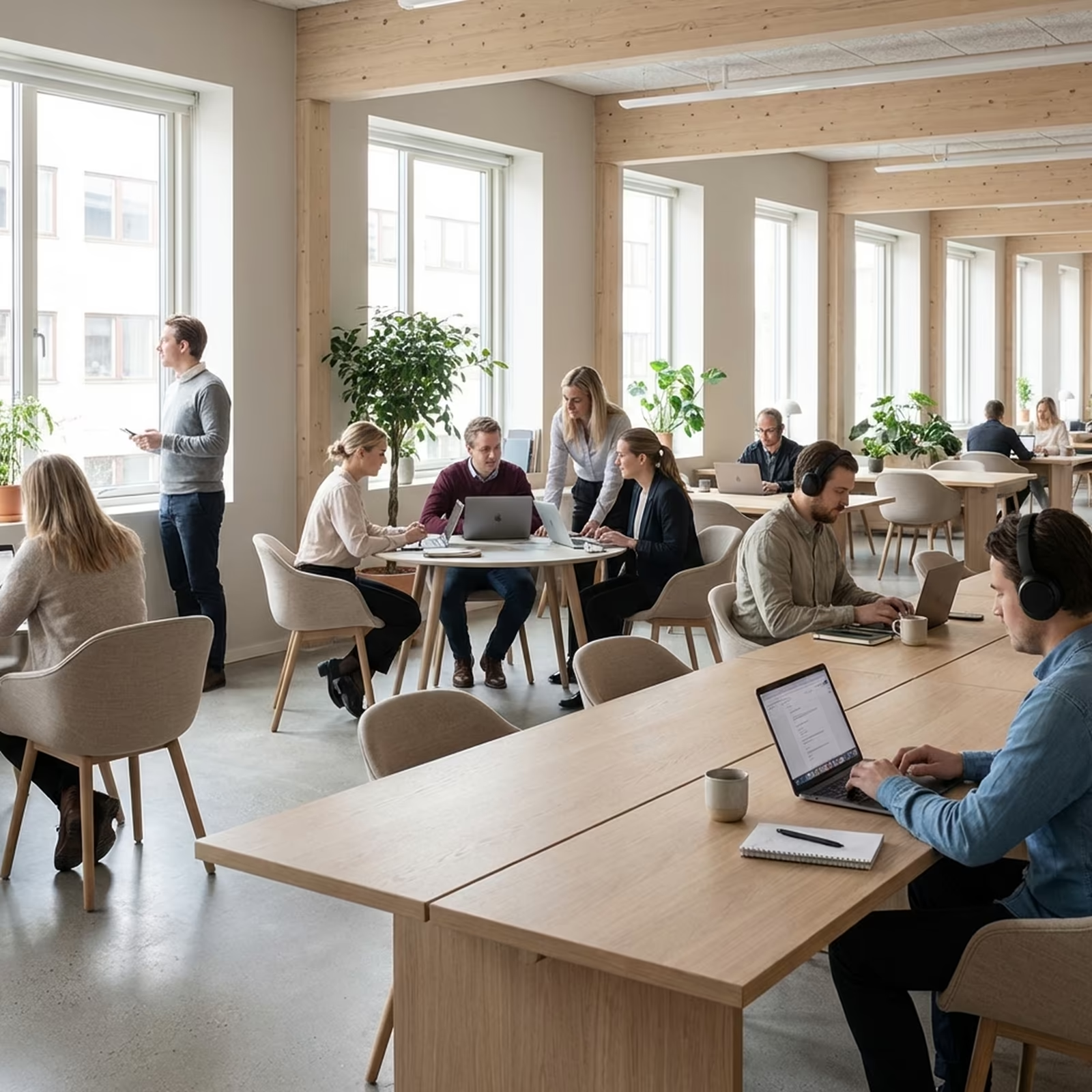
Open office breakout area with informal seating used for collaboration, focused work, and casual conversations

Manchmal muss man dem Druck einfach entkommen. Genau dafür gibt es Breakout Areas. Angesichts des zunehmenden Lärms und der steigenden Anforderungen moderner Arbeitsplätze ist es kaum überraschend, dass sie heute zu den am häufigsten gewünschten Elementen zeitgemäßer Bürogestaltung gehören.

Formal betrachtet ist eine Breakout Area ein speziell vorgesehener Bereich im Büro, der für eine informelle und flexible Nutzung konzipiert ist. Im Gegensatz zu Reihen von Schreibtischen oder geschlossenen Besprechungsräumen bietet ein Breakout-Bereich Mitarbeitenden einen Ort, an dem sie sich von ihrem Hauptarbeitsplatz entfernen, entspannen, austauschen und neue Denkansätze entwickeln können.

Eine gut gestaltete Breakout Area unterstützt Produktivität, Mitarbeiterwohlbefinden und Kreativität. Richtig geplant kann sie das gesamte Arbeitsumfeld positiv beeinflussen und die Unternehmenskultur widerspiegeln.

{{key-takeaways}}

Betekenis en doel van een breakout area op kantoor

Der Begriff „Breakout Area“ bezeichnet einen gemeinsam genutzten Bereich, in dem Mitarbeitende eine Pause vom Schreibtisch machen und Zeit in einer entspannteren Umgebung verbringen können. Ein „Breakout Room“ hat eine ähnliche Bedeutung, kann jedoch auch einen halbgeschlossenen Raum für kleine informelle Besprechungen oder kurze Abstimmungen beschreiben.

Im Alltag ist ein Breakout-Bereich ein Ort, an dem man sitzen, frei sprechen und auf andere Weise arbeiten kann. Er ist in der Regel leicht vom Hauptarbeitsbereich aus erreichbar und erfordert keine Reservierung. Der Fokus liegt auf Flexibilität. Mitarbeitende können den Bereich zur Erholung, für kurze Besprechungen, Zusammenarbeit oder ruhiges Nachdenken nutzen.

In Großraumbüros, in denen große Teams denselben Arbeitsbereich nutzen, schaffen Breakout Areas dringend benötigte Abwechslung. Sie geben Mitarbeitenden die Wahl, wo und wie sie im Laufe des Tages arbeiten möchten – ein wichtiger Faktor für Konzentration und Motivation.

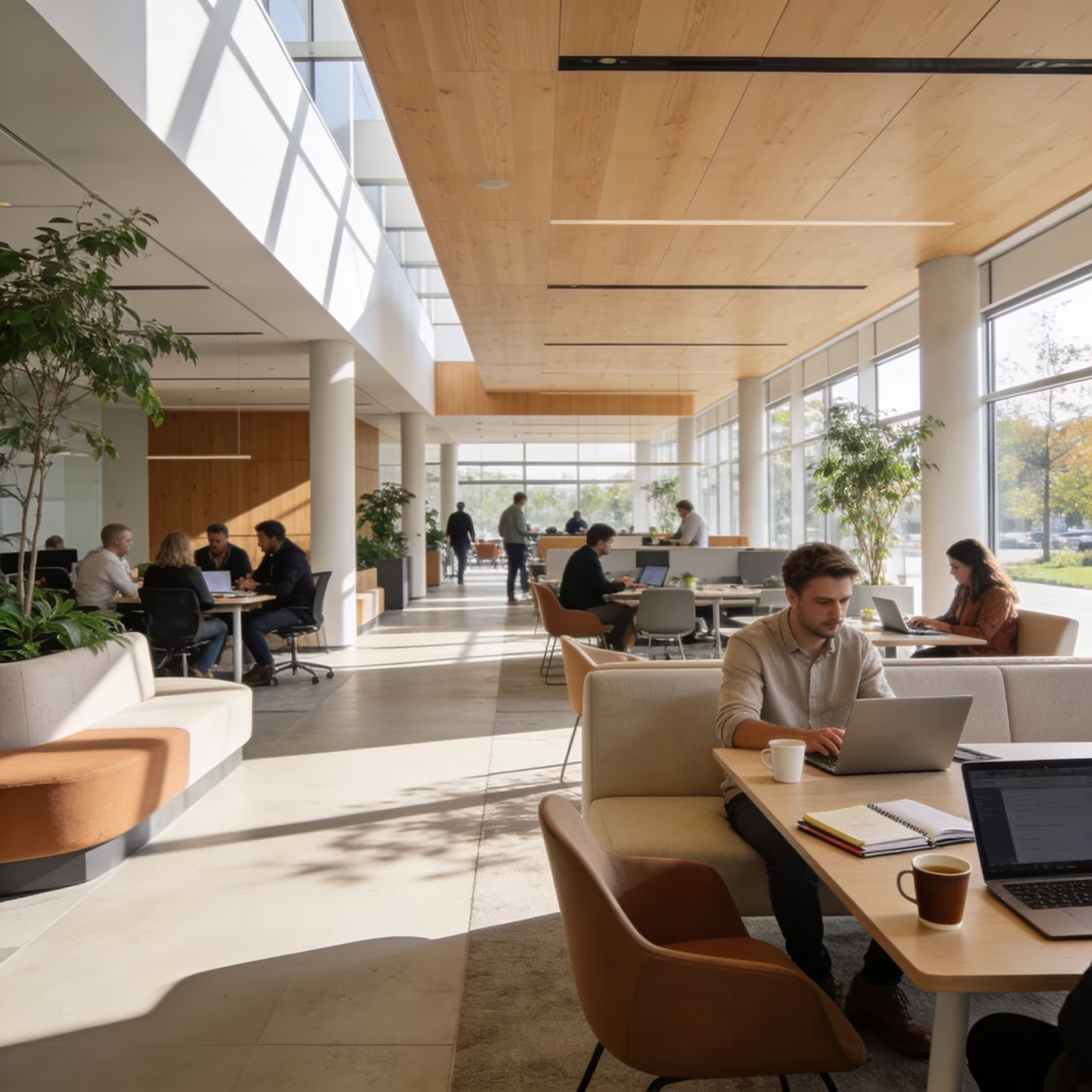
Open plan office breakout space with sofas and informal seating used for relaxed work and conversation

Was ist eine Breakout Area oder ein Breakout Room?

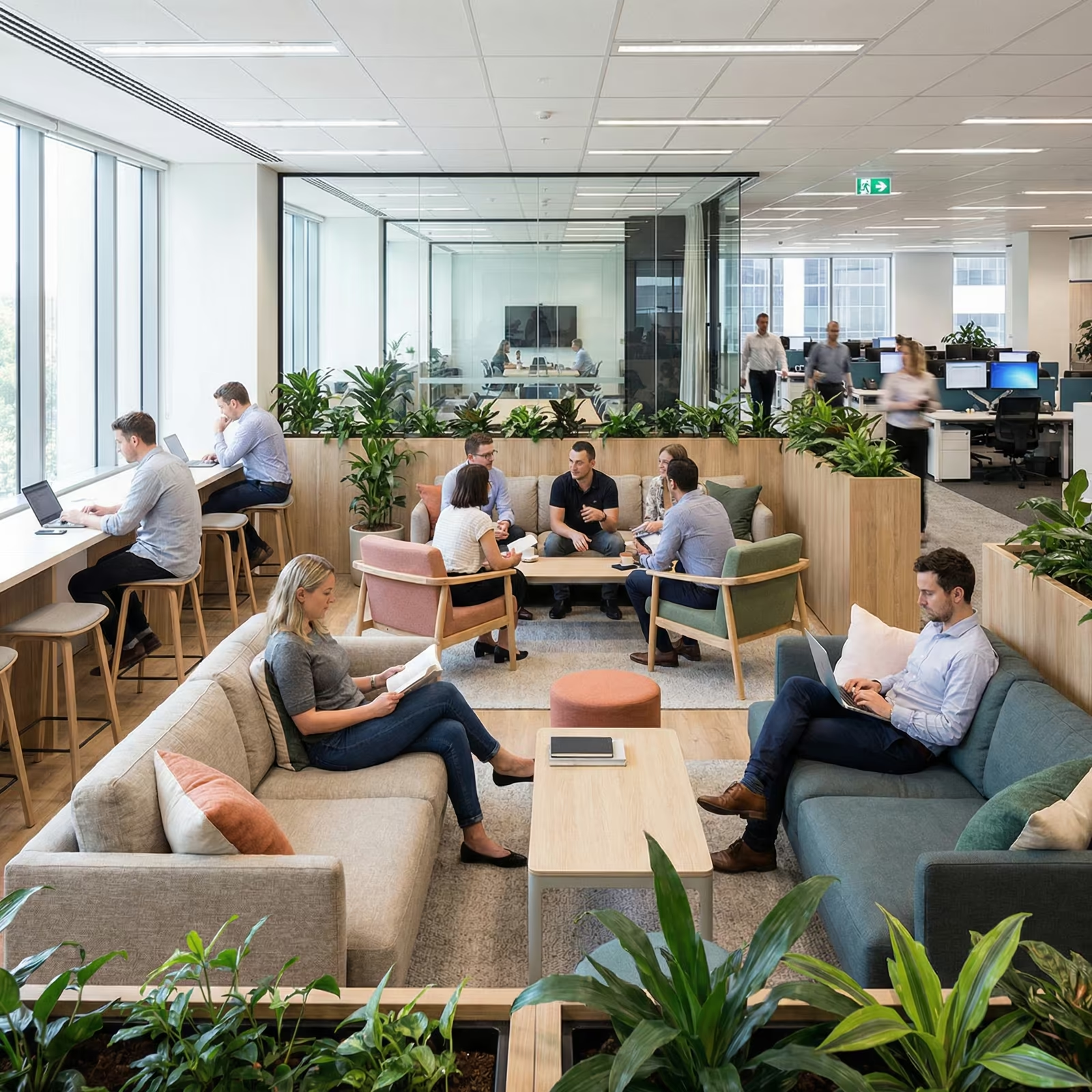
Im Gegensatz zu klassischen Besprechungsräumen, die häufig mit Konferenztisch, Bildschirmen und festen Sitzordnungen ausgestattet sind, umfassen Breakout Areas meist weiche Sitzmöbel, Sofas, Sessel und teilweise Hochtische oder Sitzbänke. Die Atmosphäre ist offener, einladender und flexibler.

„Der entscheidende Unterschied liegt im Zweck. Besprechungsräume sind strukturiert und werden im Voraus gebucht. Eine Breakout Area eignet sich für spontane Nutzung und fördert Kreativität sowie Gespräche ohne formellen Rahmen.“
Team having an informal meeting in a breakout area with sofas and relaxed seating arrangement

Zentrale Einsatzbereiche: Entspannung, informelle Besprechungen und Ideenfindung

Breakout Areas im Büro erfüllen mehrere praktische Funktionen. Sie unterstützen die Erholung, da eine kurze Pause abseits des Schreibtischs Mitarbeitenden hilft, neue Energie zu sammeln und anschließend konzentrierter zu arbeiten. Sie eignen sich ideal für informelle Besprechungen ohne den Aufwand einer Raumreservierung. Darüber hinaus fördern sie die Ideenfindung: Der Wechsel der Umgebung und die entspannte Atmosphäre verbessern nachweislich kreatives Denken.

{{stats-1}}

Vorteile von Breakout Areas für Mitarbeitende und Teams

Die Bedeutung von Breakout Areas geht weit über die reine Gestaltung hinaus. Sie tragen direkt zu einem gesünderen und produktiveren Arbeitsumfeld bei, fördern das Wohlbefinden der Mitarbeitenden, stärken Teambeziehungen und verbessern das Engagement.

Wohlbefinden, gesundes Arbeiten und weniger Stress

Breakout Areas bieten einen wertvollen Wechsel der Umgebung. Wer sich von Bildschirmen und dem Hauptarbeitsbereich entfernt, erhält die Möglichkeit, eine Pause einzulegen und zu entspannen. Dieser kleine Wechsel kann einen spürbaren Einfluss auf die mentale Gesundheit haben. Fühlen sich Mitarbeitende in ihrer Arbeitsumgebung wohl, fühlen sie sich häufig auch besser unterstützt und weniger gestresst.

{{fact-1}}

Employee taking a short break in a breakout area with plants and natural light in an open office

Zusammenarbeit, informelles Lernen und Mitarbeiterengagement

In offenen Bürolandschaften zögern Mitarbeitende häufig, sich direkt am Schreibtisch frei auszutauschen – sei es aufgrund von Ablenkungen oder aus Rücksicht auf Kolleginnen und Kollegen. Eine Breakout Area bietet einen geeigneteren Ort für Gespräche, den Austausch von Ideen und den Aufbau von Beziehungen. Informelles Lernen findet oft genau in diesen Umgebungen statt: Teammitglieder teilen Wissen, lösen gemeinsam Probleme und entwickeln neue Ideen in einer entspannten Atmosphäre.

{{fact-2}}

Effektive Breakout Areas im Büro gestalten

Die Gestaltung einer effektiven Breakout Area erfordert sorgfältige Planung. Raumaufteilung, Möbel, Beleuchtung und Akustik müssen auf die tatsächliche Nutzung abgestimmt sein. Ziel ist ein vielseitiger Bereich, der den Hauptarbeitsplatz ergänzt, ohne konzentriertes Arbeiten in der Umgebung zu beeinträchtigen.

Raumaufteilung, weiche Sitzmöbel und modulare Einrichtung

Der Breakout-Bereich sollte leicht zugänglich sein, aber dennoch klar von den Schreibtischen getrennt werden. Diese visuelle und physische Abgrenzung hilft Mitarbeitenden dabei, zwischen verschiedenen Arbeitsmodi zu wechseln. Weiche Sitzmöbel sind unverzichtbar – Sofas, Sessel und andere komfortable Optionen laden dazu ein, sich zurückzulehnen und zu entspannen. Besonders praktisch sind modulare Möbel, da sie sich je nach Nutzung flexibel umstellen lassen.

Zonen für Ruhe, soziale Interaktion und Spielbereiche

In größeren Büros kann es sinnvoll sein, innerhalb von Breakout Areas unterschiedliche Zonen zu schaffen – beispielsweise einen Bereich für ruhige Auszeiten mit bequemen Sitzgelegenheiten und wenigen Ablenkungen, einen sozialen Bereich mit Hochtischen für Gespräche sowie einen Spielbereich zur Förderung des Teamzusammenhalts.

Breakout Areas, Büroakustik und Lärmkontrolle

In Großraumbüros müssen Breakout Areas sorgfältig in das Gesamtkonzept integriert werden. Ohne entsprechende Planung können Gespräche und Freizeitaktivitäten den allgemeinen Geräuschpegel erhöhen und konzentriertes Arbeiten beeinträchtigen. Daher ist ein Verständnis der Büroakustik entscheidend, wenn Breakout-Bereiche für unterschiedliche Teamanforderungen gestaltet werden.

Um eine ausgewogene Arbeitsumgebung zu schaffen, sollte die Position der Breakout Area im Verhältnis zu Schreibtischen und Ruhezonen sorgfältig gewählt werden. Idealerweise befindet sie sich entfernt von Bereichen, die besonders hohe Konzentration erfordern. Materialien mit schallabsorbierenden Eigenschaften helfen zusätzlich bei der Geräuschkontrolle – gepolsterte Möbel, Holzoberflächen und weiche Materialien können den Lärmpegel wirksam reduzieren.


{{summary}}

DIESEN ARTIKEL TEILEN
Link kopieren
Link kopieren
Twitter
Twitter
LinkedIn
LinkedIn
Wichtige Erkenntnisse
  • Eine Breakout Area ist ein flexibler Bereich für Entspannung, informelle Besprechungen und Zusammenarbeit – getrennt von Schreibtischen und formellen Besprechungsräumen.
  • Gut geplante Breakout-Bereiche fördern das Wohlbefinden, die mentale Gesundheit und die Produktivität von Mitarbeitenden durch komfortable Sitzmöglichkeiten, Tageslicht und einen Wechsel der Umgebung.
  • Eine durchdachte Gestaltung ist entscheidend: Raumaufteilung, weiche Sitzmöbel, modulare Möbel, Beleuchtung und Akustik spielen eine wichtige Rolle.
  • In Großraumbüros sollten Breakout Areas durch Akustiklösungen wie Büro-Telefonboxen ergänzt werden, um konzentriertes Arbeiten zu schützen.
  • Sinnvoll integriert tragen Breakout Areas zu einer einladenderen, produktiveren und ausgewogeneren Arbeitsumgebung bei.
+15%
Produktivitätssteigerung im Zusammenhang mit auf Wohlbefinden ausgerichteter Bürogestaltung (World GBC)
70%
Der Mitarbeitenden kommen hauptsächlich für Zusammenarbeit und Austausch ins Büro (CBRE 2026)
-28dB
Schalldämmung der Persy Booths – zertifiziert nach ISO 23351-1:2020
Faktengeprüfte Erkenntnis
Untersuchungen des World Green Building Council zeigen, dass durchdacht gestaltete Büroumgebungen, die das Wohlbefinden in den Mittelpunkt stellen, die Produktivität und die gesundheitlichen Ergebnisse von Mitarbeitenden messbar verbessern können.
Quelle:
World Green Building Council — Bericht zu Gesundheit, Wohlbefinden und Produktivität
Faktengeprüfte Erkenntnis
Untersuchungen aus dem CBRE Workplace & Occupancy Benchmarking Program 2026 zeigen, dass die Mehrheit der Mitarbeitenden Zusammenarbeit und den Austausch mit Kolleginnen und Kollegen als Hauptgründe für die Anwesenheit im Büro nennt. Dies unterstreicht den Wert von Räumen, die spontane Interaktionen unterstützen.
Quelle:
CBRE — Mehr als nur der Schreibtisch: Wie Büros gestaltet werden können, die Mitarbeitende gerne nutzen

Eine gut gestaltete Breakout Area gehört zu den wirkungsvollsten Investitionen, die Unternehmen in ihre Arbeitsumgebung tätigen können. Wird sie durchdacht mit Akustiklösungen für konzentriertes Arbeiten kombiniert, unterstützt sie Teams dabei, nahtlos zwischen Zusammenarbeit, Erholung und fokussierter Arbeit zu wechseln. So entsteht eine Arbeitsumgebung, die die unterschiedlichen Anforderungen moderner Arbeitsweisen wirksam unterstützt.

Finden Sie einen Showroom in Ihrer Nähe
Besuchen Sie einen unserer Showrooms in Europa und vergleichen Sie verschiedene Modelle von Büro-Telefonboxen direkt vor Ort.

What to look for
  • Eine Breakout Area ist ein flexibler Bereich für Entspannung, informelle Besprechungen und Zusammenarbeit – getrennt von Schreibtischen und formellen Besprechungsräumen.
  • Gut geplante Breakout-Bereiche fördern das Wohlbefinden, die mentale Gesundheit und die Produktivität von Mitarbeitenden durch komfortable Sitzmöglichkeiten, Tageslicht und einen Wechsel der Umgebung.
  • Eine durchdachte Gestaltung ist entscheidend: Raumaufteilung, weiche Sitzmöbel, modulare Möbel, Beleuchtung und Akustik spielen eine wichtige Rolle.
  • In Großraumbüros sollten Breakout Areas durch Akustiklösungen wie Büro-Telefonboxen ergänzt werden, um konzentriertes Arbeiten zu schützen.
  • Sinnvoll integriert tragen Breakout Areas zu einer einladenderen, produktiveren und ausgewogeneren Arbeitsumgebung bei.
What to avoid
  • Eine Breakout Area ist ein flexibler Bereich für Entspannung, informelle Besprechungen und Zusammenarbeit – getrennt von Schreibtischen und formellen Besprechungsräumen.
  • Gut geplante Breakout-Bereiche fördern das Wohlbefinden, die mentale Gesundheit und die Produktivität von Mitarbeitenden durch komfortable Sitzmöglichkeiten, Tageslicht und einen Wechsel der Umgebung.
  • Eine durchdachte Gestaltung ist entscheidend: Raumaufteilung, weiche Sitzmöbel, modulare Möbel, Beleuchtung und Akustik spielen eine wichtige Rolle.
  • In Großraumbüros sollten Breakout Areas durch Akustiklösungen wie Büro-Telefonboxen ergänzt werden, um konzentriertes Arbeiten zu schützen.
  • Sinnvoll integriert tragen Breakout Areas zu einer einladenderen, produktiveren und ausgewogeneren Arbeitsumgebung bei.

FAQs (NBQs)

Sie sind ein bisschen wie FAQs, aber wir nennen sie NBQs. No b* questions.** Die Fragen, die Sie stellen sollten, um sicherzugehen, dass Sie ein gutes Preis-Leistungs-Verhältnis erhalten.

Was ist der Unterschied zwischen einer Breakout Area und einem Besprechungsraum?

Eine Breakout Area ist informell, flexibel und in der Regel ohne Reservierung nutzbar. Sie verfügt über komfortable Sitzmöglichkeiten und unterstützt spontane Gespräche. Besprechungsräume hingegen sind strukturiert, häufig geschlossen und werden normalerweise im Voraus gebucht. Sie sind für produktive, geplante Diskussionen und formelle Präsentationen konzipiert.

Wie viel Fläche sollte für Breakout Areas vorgesehen werden?

Dafür gibt es keine feste Regel. In vielen Büros machen Breakout Areas einen bedeutenden Anteil der gesamten Bürofläche aus, insbesondere in flexiblen Büroumgebungen. Die optimale Größe hängt von der Teamgröße, der Arbeitsweise und der Unternehmenskultur ab. Ziel ist es, ausreichend Bereiche für Zusammenarbeit und Erholung bereitzustellen, ohne konzentriertes Arbeiten einzuschränken.

Verbessern Breakout Areas tatsächlich die Produktivität?

Ja, wenn sie gut geplant sind. Eine durchdacht gestaltete Breakout Area bietet Mitarbeitenden Wahlmöglichkeiten. Sie ermöglicht es ihnen, eine Pause einzulegen, Ideen auszutauschen und neue Energie zu sammeln, bevor sie zu konzentrierten Aufgaben zurückkehren. Dieses Gleichgewicht zwischen Zusammenarbeit, Erholung und Konzentration unterstützt langfristige Produktivität und ein höheres Mitarbeiterengagement.

In der modernen Arbeitswelt sind Breakout Areas längst keine optionale Ergänzung mehr. Sie sind eine praktische, mitarbeiterorientierte Lösung, die dazu beiträgt, eine flexiblere, einladendere und produktivere Büroumgebung zu schaffen.

Sometimes you just have to get away from the pressure. That's what breakout areas are for – and with the increasing noise and pressure of the modern workplace, it's no wonder they're so popular.

To give it a formal definition, a breakout area is a dedicated part of the office designed for informal, flexible use. Unlike rows of desks or enclosed meeting rooms, a breakout space offers employees somewhere to step away from their main workspace, relax, talk, and think differently.

In many offices, especially in the modern workplace, the traditional layout of desks and formal meeting rooms no longer suits the full range of tasks people perform during the working day. At Persy Booths, we see the importance of this every time we visit our customers. Employees need places to focus, collaborate, reset, and share ideas. That is why office breakout areas have become such an important feature of contemporary office space.

A well designed breakout area supports productivity, employee wellbeing and creativity. It helps teams feel comfortable, stress free and engaged. When planned properly, it can transform the overall workplace environment and reflect the style and culture of the business.

Key Takeaways

  • A breakout area is a flexible space within the office designed for relaxation, informal meetings and collaboration, separate from desks and formal meeting rooms.
  • In the modern workplace, breakout spaces help employees move between focused work, teamwork and short breaks more naturally during the working day.
  • Well planned office breakout areas support employee wellbeing, mental health and productivity by offering comfortable seating, natural light and a change of scene.
  • Flexible breakout spaces encourage creativity, informal learning and stronger team relationships without the need to book meeting rooms.
  • Good design matters: layout, soft seating, modular furniture, lighting and acoustics all play a key role in creating a well designed breakout area.
  • In open plan offices, breakout areas should be supported by acoustic solutions such as office pods and office noise reduction solutions to protect focused work.
  • When thoughtfully integrated into the wider office space, breakout areas help create a more inviting, productive and balanced work environment.

Breakout Area Meaning and Purpose in the Office

The term “office breakout area” simply refers to a shared space where employees can take a break from desks and spend time in a more relaxed setting. A "breakout room" is similar in meaning, although it can also refer to a semi-enclosed room used for small, informal meetings or quick catch-ups.

In everyday language, a breakout space is somewhere you can sit, speak freely, and work in a different way. It is usually easily accessible from the main workspace and does not require booking. The purpose is flexibility. People can use it for relaxation, short meetings, collaboration or quiet thinking.

In open plan offices, where large teams share the same office space, breakout areas provide much-needed variety. They give employees choice about where and how they work during the day, which is key to maintaining focus and motivation.

Open plan office breakout space with sofas and informal seating used for relaxed work and conversation

What Is a Breakout Area or Breakout Room?

So what is a breakout area or breakout room in practical terms?

It is a space designed with comfort and informality in mind. Unlike traditional meeting rooms, which often feature a boardroom table, screens and structured seating, breakout areas tend to include soft seating, sofas, chairs and sometimes high tables or benches.

The atmosphere is more inviting and flexible. Comfortable seating, relaxed rules and varied office furniture allow people to sit, rest, unwind or have quick informal meetings without the pressure of a formal setting. A breakout space may include bold colours, wood finishes, good quality lighting and even food or drink facilities.

The key difference is intent. Meeting rooms are structured and often booked in advance. A breakout area is suitable for spontaneous use, encouraging creativity and conversation without formality.

Team having an informal meeting in a breakout area with sofas and relaxed seating arrangement

Key Uses: Relaxation, Informal Meetings and Idea Generation

Office breakout areas serve multiple practical functions during the working day.

First, they support relaxation. A short break away from desks helps employees reset, protect mental health and return to focused work feeling refreshed. Even ten minutes in a lounge-style space can make a difference.

Second, they are ideal for informal meetings. Instead of booking meeting rooms for every quick discussion, team members can gather in a breakout space to speak openly and share updates. This flexible breakout spaces approach saves time and helps maintain productivity.

Third, breakout areas encourage idea generation. When employees move away from the main workspace and sit in a more relaxed setting, creativity often improves. The change of scene, natural light and inviting breakout furniture create a setting that suits brainstorming and collaboration.

Benefits of Office Breakout Areas for Employees and Teams

The importance of office breakout areas goes beyond aesthetics. They contribute directly to a healthier and more productive workplace.

A well designed breakout area supports employee wellbeing, strengthens team relationships and improves overall engagement. In many offices, the presence of flexible breakout spaces signals a shift in how business leaders think about work. It shows recognition that employees are not machines tied to desks, but people who need variety and comfort.

Wellbeing, Healthy Work and Reduced Stress

Breakout areas provide a valuable change of scene. Stepping away from screens and the main workspace gives employees permission to take a break and relax.

This small shift can have a positive impact on mental health. When people feel comfortable in their office environment, they are more likely to feel stress free and supported. Soft, comfortable seating and access to natural light both contribute to a healthier workspace. Relaxation does not mean losing productivity. On the contrary, short breaks in a breakout area can improve focus and make the working day more sustainable. Employees who can unwind and reset are more likely to return to their desks feeling productive and engaged. Recent research from the World Green Building Council shows that thoughtfully designed office environments that prioritise wellbeing can measurably improve productivity and employee health.

Employee taking a short break in a breakout area with plants and natural light in an open office

Collaboration, Informal Learning and Employee Engagement

Breakout spaces are also powerful tools for collaboration.

In open office layouts, employees may hesitate to speak freely at desks due to office distractions or concerns about disturbing others. A breakout area offers a more suitable space to talk, share ideas and build relationships.

Informal learning often happens in these settings. Team members exchange insights, solve problems together and develop new ideas in a relaxed environment. Research from CBRE’s 2026 Workplace & Occupancy Benchmarking Program shows that a majority of employees cite collaboration and connection with colleagues as primary reasons they come into the office, underscoring the value of spaces that support spontaneous interactions.

This strengthens workplace culture and improves communication across the business. When employees have access to a perfect breakout space that feels inviting and practical, they are more likely to spend time together, strengthening bonds within the team. Over time, this contributes to higher engagement and a more positive workplace.

Designing Effective Breakout Spaces in Offices

Creating an effective breakout area requires careful planning. It is not simply about adding sofas to an office. The layout, furniture, lighting and acoustics must all suit how people actually use the space.

The goal is to create a versatile and flexible area that complements the main workspace without disrupting focused work nearby.

Layout, Soft Seating and Modular Furniture

Position the breakout space so it is easily accessible but clearly separated from desks. This visual and physical distinction helps employees switch modes from focused work to relaxation or collaboration.

Soft seating is essential. Sofas, chairs and comfortable seating options encourage people to sit back and unwind. Modular furniture is particularly useful, as it allows teams to reconfigure the space depending on the task. Modular solutions can be moved to accommodate small meetings, solo work or larger group discussions.

Incorporate high tables, benches and a range of seating types to suit different preferences. Some employees may prefer to sit upright at high tables, while others choose lounge-style sofas. Good quality lighting and access to natural light will make the breakout area more inviting.

Zoning for Quiet Time, Social Space and Games Rooms

In larger offices, it is helpful to create distinct zones within office breakout areas.

For example, one zone may be designed for quiet time, with comfortable seating and minimal distractions. Another may act as a social space with high tables and bold colours to encourage conversation. A third might function as a games room for team bonding and relaxation.

In open plan settings, breakout areas often sit alongside those focused work zones. This is often known as the concept of a collaborative workspace, with businesses exploring the shift from traditional layouts to a more adaptable model. These focused work zones allow teams to move easily between open collaboration and enclosed concentration as needed. However, to ensure that ambient noise from more "social" breakout spaces doesn't distract others, companies often turn to solutions such as a work boothprivate office pods and portable meeting rooms to protect focus while maintaining a flexible office space. These private booths vary mainly by size and function:

Open office layout showing breakout seating, collaborative zones, and quiet work areas

Breakout Areas, Office Acoustics and Noise Management

In open plan offices, breakout areas must be carefully integrated into the wider environment. Without proper planning, conversations and games can raise the overall office noise level and disrupt focused work.

Understanding the impact of an open office layout is crucial when designing breakout areas that suit different team needs.

Keeping Breakout Areas Comfortable Without Disturbing Others

To maintain balance, consider the location of the breakout area relative to desks and quiet zones. Position it away from the most focus-intensive parts of the office.

Use materials that absorb sound, such as upholstered furniture, wood finishes and soft surfaces. These practical choices help manage the office noise level and reduce distractions.

Employers should also explore office noise reduction solutions to ensure that breakout spaces do not negatively impact the wider workspace. In some cases, installing a white noise machine can help mask background conversations and maintain a productive environment.

Being aware of common office distractions allows businesses to create zones that suit different working styles.

Using Booths, Pods and Sound Solutions Around Breakout Spaces

To support both collaboration and focus, combine breakout areas with enclosed solutions.

A nearby soundproof phone booth or two person phone booth can give employees a private space for calls, while private office pods provide a suitable setting for deep, focused work. A work booth positioned close to the breakout area can offer quick transitions between relaxation and concentration.

Monitoring usage with a room occupancy sensor helps businesses understand how breakout spaces and booths are used throughout the working day. This practical data supports better space planning over time.

When designed thoughtfully, breakout spaces and acoustic solutions work together to create a balanced open office that supports both collaboration and productivity.

Person taking a call inside a soundproof office booth near an open workspace

Real-world Office Breakout Area Examples and Ideas

Breakout areas can reflect company culture and business priorities. The design should suit the style, team structure and values of the organisation.

Relaxed Lounge-style Breakout Areas

A lounge-style breakout area might include sofas, soft seating, low tables and plants. Warm lighting, wood finishes and comfortable chairs create a calm, inviting feel.

This type of space is ideal for relaxation, informal chats and solo breaks. Employees can sit, rest and unwind in a calm environment that supports mental health and wellbeing.

Activity and Games-focused Breakout Spaces

Some businesses choose a more energetic approach. A games room style breakout space might feature high tables, benches and activity zones.

This example works well for creative teams that benefit from movement and social interaction. The key is to maintain a respectful environment where fun supports, rather than undermines, productivity.

Multi-purpose Breakout Corners Next to Collaborative Workspaces

In smaller offices, a compact breakout corner placed next to a collaborative workspace can act as an overflow area before or after meetings.

These flexible breakout spaces may include modular furniture, screens for quick presentations and comfortable seating for small groups – all useful elements when planning coworking ideas. Positioned near meeting rooms but distinct from desks, they provide a versatile solution for quick huddles.

Are you ready to break out?

Given all the advantages, it's little wonder that breakout areas are found in most modern offices. But, if they are not already in place, companies still have to find the budget to do it.

The good news is that it does not need to be expensive. We're proud of the fact that Persy Booths, for example, provide high-quality soundproof booths without a hefty price tag (especially since we sell direct and cut out the reseller markup). Also bear in mind that many of the other elements that go into making these zones both desirable and effective are inexpensive.

The truth is that employees appreciate them and most companies can easily justify them and benefit from them – break out areas do not have to break the bank.

Team in a conference room joining a hybrid meeting with remote participants on screen
Arbeitsplatz
All articles
Best Practices für Büro-Meetings: So führen Sie ein besseres Meeting in jedem Besprechungsraum durch
April 14, 2026
Employees collaborating and working in a modern open office environment
Arbeitsplatz
All articles
Arbeitsplatzkultur: Was sie ist und warum sie wichtig ist
March 31, 2026
Modern office with people working individually and collaborating in a flexible hybrid workspace
Arbeitsplatz
All articles
Hybrides Arbeiten: Bedeutung und Relevanz
March 26, 2026
Team collaborating in a modern office using a large screen video call interface and connected laptops
Arbeitsplatz
All articles
Digital Workplace: Was es ist und warum es relevant ist
March 24, 2026