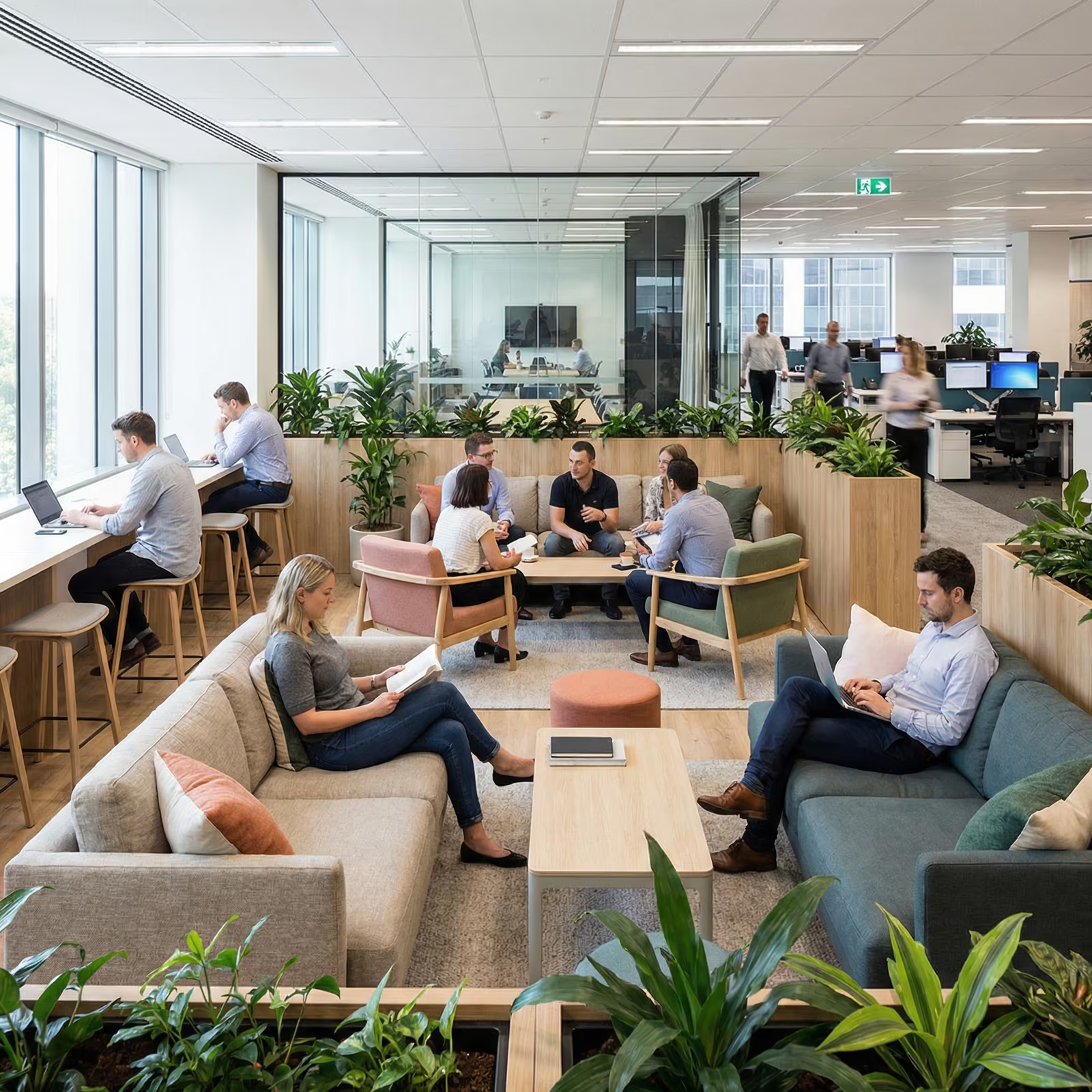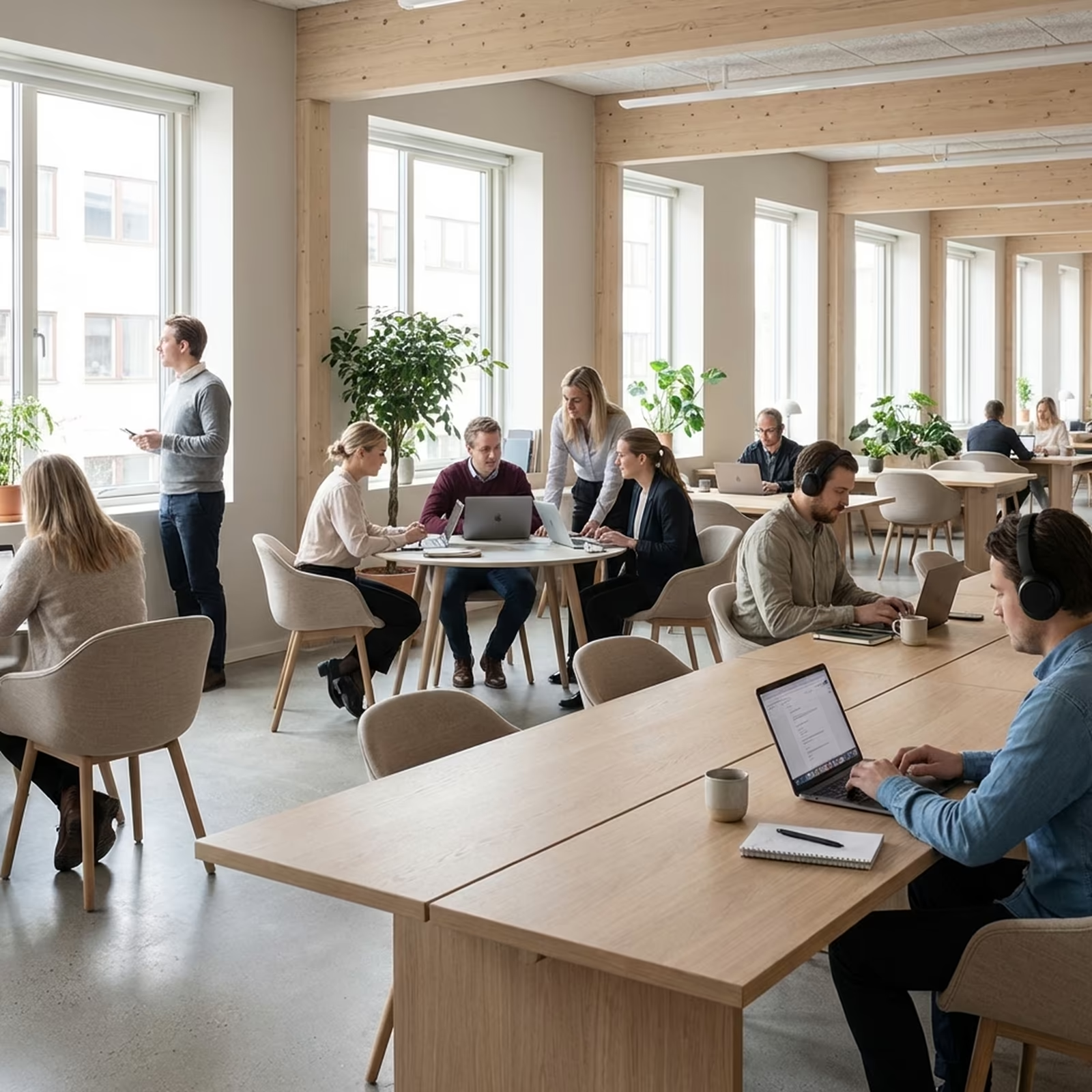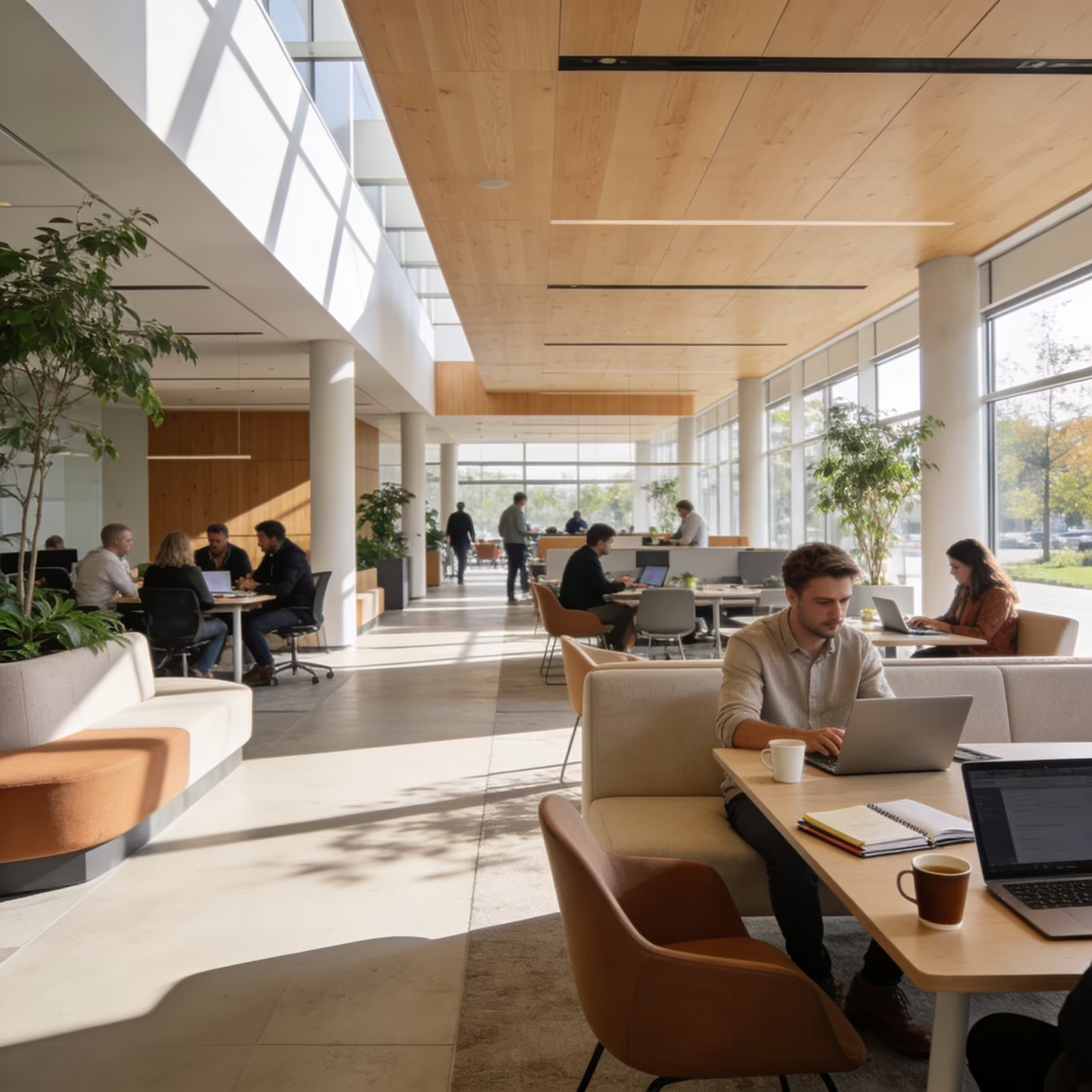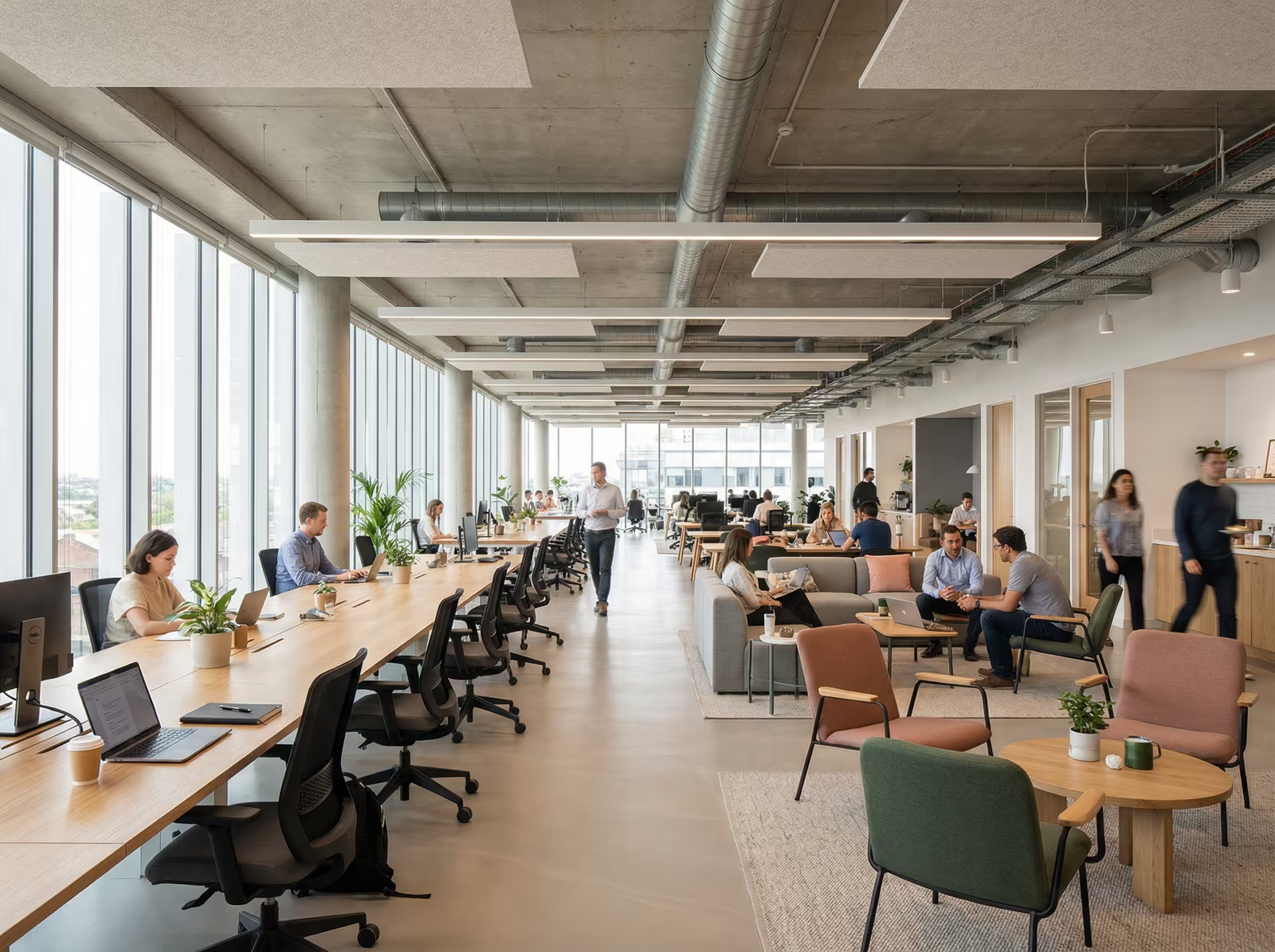
Si vous souhaitez que votre entreprise reste pertinente et à jour, il est logique d’offrir aux employés un lieu de travail qui évolue lui aussi. Un bureau moderne ne se résume pas à une pièce remplie de bureaux et de chaises. Il s’agit d’un environnement de travail conçu pour aider chacun à donner le meilleur de lui-même — qu’il s’agisse de collaborer avec une équipe, de rencontrer des clients ou de consacrer une heure à un travail concentré sans interruption. Ces dernières années, la manière dont nous utilisons les espaces de bureau a évolué rapidement, et les entreprises ont dû transformer l’aménagement, le mobilier et la technologie pour suivre l’évolution des besoins.
Persy Booths travaille étroitement avec des organisations confrontées directement à ces défis. Une première leçon s’impose rapidement : une bonne conception de bureau ne consiste pas à dépenser le plus possible. Il s’agit plutôt de faire des choix intelligents qui équilibrent fonctionnalité et coût. Il est facile de surinvestir dans des équipements (y compris des solutions acoustiques haut de gamme) alors que l’essentiel est de trouver la bonne combinaison d’espaces, le mobilier de bureau adapté et un plan qui correspond réellement à la façon dont vos employés travaillent.
Points clés à retenir de cet article
- Un bureau contemporain soutient plusieurs styles de travail grâce à un aménagement flexible, plutôt qu’à une organisation unique pour tous.
- L’environnement de travail le plus efficace équilibre les espaces de collaboration et les zones calmes dédiées au travail concentré.
- La lumière naturelle, les matériaux naturels et les chaises ergonomiques améliorent le confort, la posture et la santé mentale.
- Des fonctionnalités intelligentes comme les capteurs d’occupation peuvent aider les entreprises à mieux planifier l’espace et à réduire les surfaces inutilisées.
- L’identité de marque et les choix esthétiques influencent la perception de votre lieu de travail par les employés et les clients.
Principes clés de la conception de bureaux modernes
La conception de bureaux modernes fonctionne généralement bien lorsque quelques fondamentaux sont respectés. Ces principes apparaissent régulièrement, que vous réorganisiez un bureau à domicile ou que vous planifiiez la rénovation complète de plusieurs espaces de bureau au sein d’une entreprise.
Des aménagements fonctionnels et flexibles
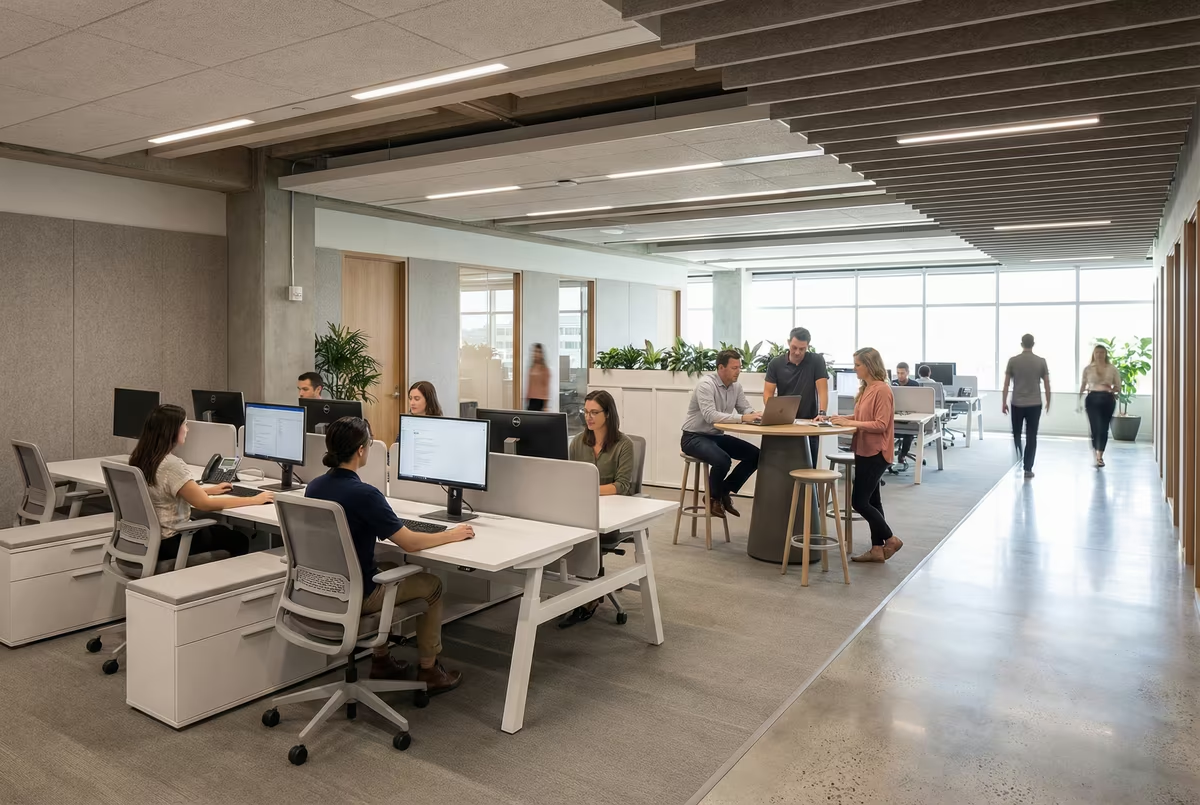
Un bureau moderne doit être polyvalent. Un même étage peut devoir accueillir du travail individuel calme, de la collaboration informelle, des salles de réunion formelles, des postes de passage pour des visites rapides, ainsi que des espaces où les collaborateurs peuvent se détendre. C’est pourquoi la flexibilité est une priorité essentielle.
Concrètement, la flexibilité signifie concevoir l’espace de travail de manière à pouvoir évoluer facilement. Des cloisons mobiles et des postes de travail modulaires facilitent la transformation d’une pièce lorsque les équipes grandissent, que les projets changent ou que les schémas de présence évoluent. Un aménagement flexible permet également d’éviter l’encombrement : lorsque le rangement, la gestion des câbles et les circulations sont bien planifiés, l’espace paraît plus calme et plus professionnel.
Cela reste vrai même dans les environnements plus petits. Dans un bureau compact ou un modèle hybride, le choix du bon mobilier de bureau à domicile et d’options de bureaux adaptées peut créer un espace de travail réfléchi plutôt que simplement improvisé. Un bon plan exploite chaque recoin tout en maintenant un environnement de travail confortable et fonctionnel.
Trouver l’équilibre entre collaboration et concentration
Le lieu de travail moderne doit favoriser la productivité, mais cela ne signifie pas que tout doit être « ouvert ». La collaboration est précieuse, mais le bruit constant et les interruptions sont des raisons fréquentes pour lesquelles les employés ont du mal à se concentrer.
La solution réside dans l’équilibre. Les zones de collaboration ouvertes fonctionnent mieux lorsqu’elles sont proches d’espaces plus calmes conçus pour le travail concentré. Cela peut inclure de petites salles, des espaces de type bibliothèque et des zones acoustiques où les appels et la concentration profonde peuvent se dérouler sans déranger les autres.
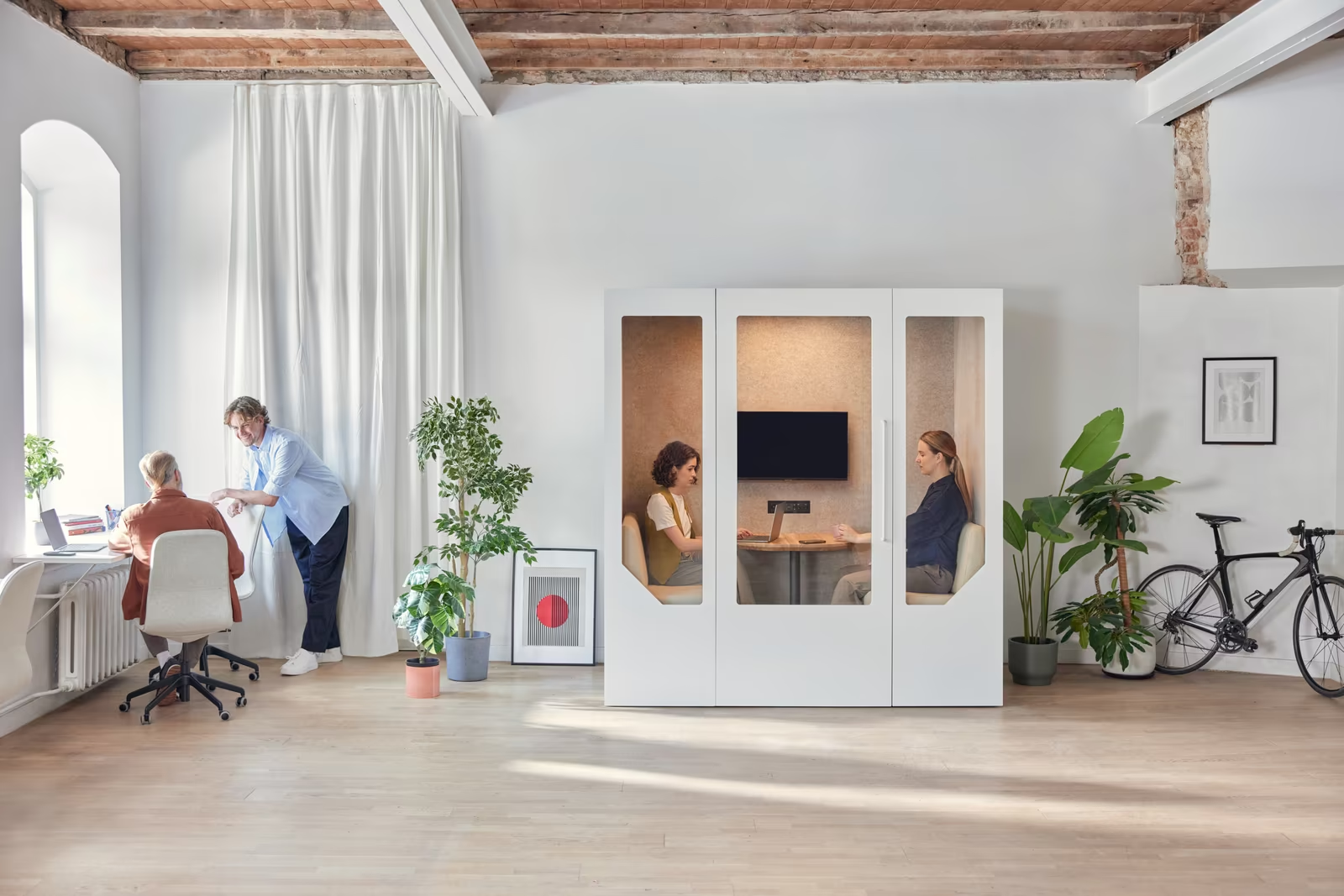
C’est là que les espaces fermés peuvent être utiles. Par exemple, l’ajout d’une cabine acoustique pour appels offre aux employés un lieu fiable pour des conversations privées, des échanges sensibles ou un travail sans interruption — sans avoir à reconstruire des murs ni à réduire la flexibilité globale de l’espace, un principe qui s'applique à chaque cabine acoustique Persy Booths. Si l’objectif est de soutenir à la fois le travail d’équipe et la concentration, ce type d’ajout ciblé peut être plus rentable qu’une refonte complète de l’aménagement.
Un design qui soutient le bien-être
Un bureau contemporain doit améliorer l’expérience quotidienne des personnes, pas seulement être esthétique dans une brochure. Le bien-être est désormais essentiel et se manifeste à travers l’ergonomie, l’éclairage, l’acoustique et le confort.
Commencez par la posture et le confort. Des chaises de bureau ergonomiques, des sièges adaptés et des bureaux réglables aident les employés à maintenir une meilleure posture et à éviter les douleurs qui réduisent l’énergie et la concentration. Ensuite, pensez à l’environnement : l’éblouissement, un mauvais éclairage et un bruit de fond constant influencent la santé mentale et les performances.
Il est également utile de rappeler que le « bien-être » ne se limite pas à des idées d’aménagement comme des tapis de yoga ou des plantes. Il s’agit surtout de savoir si les employés peuvent trouver l’espace adapté à la tâche du moment — qu’il s’agisse d’une réunion d’équipe, d’une heure calme pour terminer un projet ou d’un moment pour se recentrer entre deux appels.
Tendances de conception qui façonnent les bureaux actuels
Les tendances comptent lorsqu’elles reflètent de véritables évolutions dans la manière de travailler. Les tendances suivantes sont largement adoptées parce qu’elles répondent à des problèmes concrets dans la conception des environnements de bureau et aident les entreprises à s’adapter à des besoins en constante évolution.
Espaces hybrides avec aménagements flexibles
Le travail hybride a profondément modifié l’utilisation des bureaux. De nombreuses organisations connaissent désormais une occupation quotidienne fluctuante, ce qui signifie que le même aménagement doit fonctionner aussi bien lorsque le bâtiment est plein que lorsqu’il est plus calme. Cela a conduit la conception contemporaine des bureaux vers des « écosystèmes » d’espaces flexibles plutôt que vers des plans de postes fixes.
Les cloisons mobiles et les éléments modulaires jouent ici un rôle clé. Ils permettent de créer des salles lorsque c’est nécessaire, puis de rouvrir les espaces lorsqu’elles ne sont plus utiles. Les revêtements de sol sont également utilisés de manière plus stratégique : différentes textures ou finitions peuvent délimiter les zones (travail calme, collaboration, espaces sociaux) sans multiplier les cloisons.
Pour accompagner ces modèles hybrides, de nombreuses entreprises ajoutent des espaces de passage : des postes de travail rapides et pratiques pour les personnes présentes au bureau seulement quelques heures et qui ont besoin d’un accès, d’une prise électrique et d’une chaise confortable sans occuper un bureau permanent.
Design biophilique et inspiration naturelle
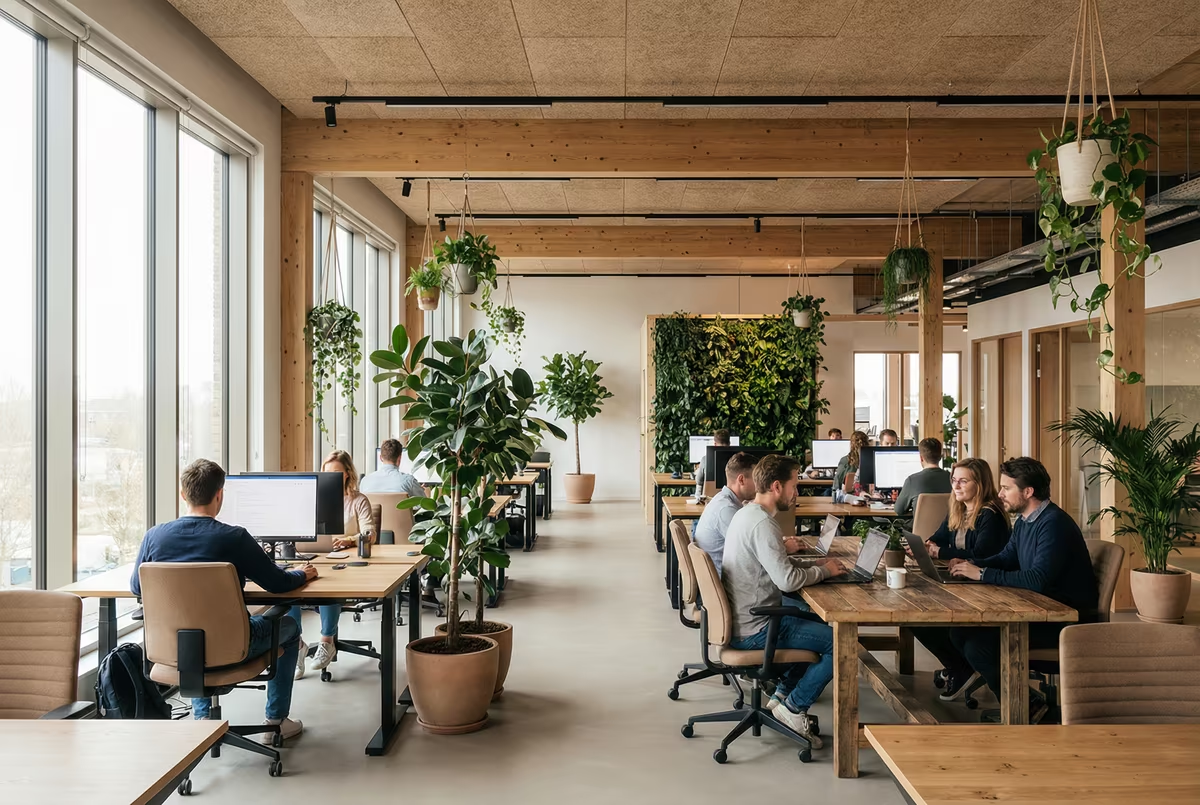
Le design biophilique n’est pas seulement une question d’esthétique. C’est une réponse au stress, au travail intensif sur écran et aux environnements intérieurs parfois monotones. L’intégration de matériaux naturels, de végétation et de références à l’extérieur peut améliorer l’humeur et rendre le bureau plus agréable.
La lumière naturelle joue un rôle central. Le World Green Building Council met en évidence des données reliant la lumière du jour, la qualité de l’air et d’autres facteurs environnementaux intérieurs au bien-être et à la performance. Intégrer correctement la lumière naturelle dans la conception d’un bureau est l’une des améliorations les plus fiables que vous puissiez apporter.
Même si votre espace dispose de peu de fenêtres, certaines solutions — surfaces plus claires, matériaux réfléchissants ou aménagement intelligent — peuvent aider à répartir la lumière plus uniformément.
Conception de bureau axée sur le bien-être
La conception axée sur le bien-être examine l’expérience globale : non seulement l’apparence d’un espace, mais aussi la manière dont il est vécu au quotidien. Cela inclut l’ergonomie, l’acoustique, l’éclairage, la température et la perception de contrôle qu’ont les employés sur leur environnement de travail.
L’acoustique est souvent l’élément manquant. Les bureaux en open space peuvent créer une distraction constante de faible intensité qui réduit progressivement la concentration. Pour mieux comprendre l’impact du bruit sur la concentration et le stress, le guide de Persy Booths consacré à l’acoustique de bureau constitue une référence utile pour planifier des zones plus calmes et fixer des attentes réalistes.
Pour de petites réunions ou du travail en binôme, l’ajout d’une cabine acoustique pour deux personnes peut être une solution efficace pour offrir de l’intimité sans construire de nouvelles salles. C’est également plus facile à déployer progressivement : vous pouvez en installer une, observer son utilisation, puis étendre l’équipement si la demande existe.
Matériaux durables et éco-responsables
La durabilité fait désormais partie intégrante de nombreux projets d’aménagement de bureaux — et elle ne se limite pas à un simple label. Choisir des matériaux durables, du mobilier réparable et des fournisseurs transparents sur leurs sources d’approvisionnement peut réduire les déchets et limiter les cycles de remplacement.
Les matériaux naturels jouent souvent un rôle ici. Le bois, les mélanges de laine et d’autres finitions responsables peuvent créer une esthétique plus chaleureuse tout en soutenant les objectifs de durabilité. Même des décisions simples — comme privilégier des chaises de qualité qui durent ou des systèmes modulaires reconfigurables — peuvent avoir un impact significatif sur la durée de vie d’un espace de travail.
Identité visuelle forte et branding
La conception des bureaux est devenue une expression visible de l’identité de marque. Les clients le remarquent. Les employés aussi. Et les candidats potentiels encore davantage.
Les bureaux utilisent souvent quelques éléments forts pour créer une identité reconnaissable : une couleur signature, un mur distinctif, un comptoir d’accueil caractéristique ou un langage de design cohérent entre les salles de réunion et les espaces partagés. L’objectif n’est pas d’être spectaculaire, mais d’être cohérent. Une esthétique claire rend l’environnement de travail plus harmonieux et renforce la crédibilité de l’entreprise auprès des visiteurs.

Espaces intégrant la technologie
La technologie n’est plus séparée de l’espace : elle le façonne. L’expérience de bureau des années 2020 repose sur des appels vidéo fiables, des salles de réunion faciles à utiliser et des outils qui simplifient le travail quotidien.
Les capteurs d’occupation deviennent de plus en plus courants, car ils permettent de comprendre comment les espaces sont réellement utilisés. Ces données peuvent orienter les décisions d’aménagement — par exemple déterminer s’il faut davantage de salles calmes, moins de bureaux fixes ou un meilleur accès aux espaces collaboratifs.
Conception inspirée de l’hôtellerie
Les bureaux inspirés de l’hôtellerie reprennent certains codes des salons, des hôtels et des cafés : assises plus confortables, éclairage chaleureux et espaces accueillants plutôt qu’institutionnels. Cette tendance ne vise pas simplement à rendre le bureau « cosy ». Elle reconnaît qu’un espace de travail est aussi un environnement social.
Un espace partagé bien conçu peut renforcer le sentiment de communauté et faciliter la collaboration naturelle entre équipes. Il améliore également l’expérience des clients et partenaires qui visitent votre entreprise — un aspect important si votre bureau contribue à l’image de marque.
Aménager un bureau moderne
Les décisions concernant le mobilier peuvent faire ou défaire un espace de bureau. Le bon mobilier soutient le confort et la productivité. Les mauvais choix créent de l’encombrement, une mauvaise posture et un espace qui paraît élégant sur les photos mais peu pratique au quotidien.
Mobilier fonctionnel pour le travail quotidien
Commencez par l’essentiel : des bureaux adaptés au travail réalisé, des chaises de bureau favorisant une bonne posture et des solutions de rangement qui empêchent l’encombrement de se répandre sur toutes les surfaces. La gestion des câbles est souvent négligée, mais elle influence fortement l’impression de professionnalisme d’un espace. Si les câbles sont visibles partout, même un design haut de gamme peut sembler désordonné.
Réfléchissez à la façon dont les employés travaillent réellement. Ont-ils besoin d’écrans plus grands ? De plus d’espace de table ? De zones calmes ? De postes de travail partagés ? Le meilleur plan de mobilier soutient l’environnement de travail dans son ensemble, pas seulement les préférences individuelles.
Aménager les petits bureaux modernes
Dans les espaces plus petits, le mobilier doit souvent remplir plusieurs fonctions. Un bureau peut intégrer du rangement. Une zone de réunion peut nécessiter des sièges flexibles faciles à déplacer. Les coins doivent être utilisés de manière réfléchie — non pas comme zones de stockage improvisées, mais comme espaces utiles (zone de travail rapide, petit espace de concentration ou mur de rangement).
Cela vaut également pour le travail à domicile. Un bureau à domicile bien choisi et un mobilier adapté peuvent transformer la productivité, surtout lorsque cet espace est utilisé régulièrement.
Matériaux et finitions selon les zones
Chaque zone nécessite des finitions différentes. Les zones à fort passage bénéficient de surfaces durables. Les zones calmes sont souvent plus agréables avec des matériaux plus doux qui absorbent le son. Les espaces de collaboration peuvent utiliser des finitions plus robustes capables de supporter les déplacements fréquents et les reconfigurations.
Les matériaux naturels peuvent apporter de la chaleur dans l’ensemble du bureau, mais leur utilisation doit rester stratégique. L’objectif est d’adapter les matériaux à la fonction de chaque zone — et non d’appliquer un même style partout.
Matériaux, couleurs et surfaces
Les couleurs et les matériaux influencent le comportement plus qu’on ne l’imagine. Les tons neutres favorisent le calme et la concentration, tandis que des couleurs plus vives peuvent dynamiser les zones de collaboration et renforcer l’identité de marque. Un bureau moderne utilise souvent le contraste pour structurer les espaces : des tons plus doux pour le travail concentré et des éléments plus marqués pour les espaces partagés.
Les surfaces jouent également un rôle important. Les finitions brillantes peuvent provoquer de l’éblouissement. Les surfaces sombres peuvent donner l’impression que les espaces sont plus petits. Une palette équilibrée — associée à une bonne distribution de la lumière naturelle — peut rendre même un étage modeste plus ouvert et plus professionnel.
Les idées de conception les plus efficaces restent souvent les plus simples : réduire le bruit visuel, contrôler l’encombrement, choisir des matériaux agréables au toucher et s’assurer que l’espace soutient réellement les personnes qui y travaillent.
Technologie et expérience du bureau moderne
Les bureaux modernes deviennent de plus en plus des environnements « mesurés ». La technologie aide les équipes à collaborer et les responsables à comprendre ce qui fonctionne. Les systèmes de réservation réduisent les conflits liés aux salles de réunion. Les installations audiovisuelles efficaces évitent les pertes de temps. Les capteurs d’occupation aident les entreprises à planifier le bon mélange d’espaces plutôt que de se fier à des estimations.
La technologie influence également la confidentialité et la concentration. Beaucoup de personnes disposent d’un bureau à domicile dans une pièce calme — ce qui n’est généralement pas le cas des postes de travail en open space. Si votre bureau comporte de nombreux appels vidéo, vous avez besoin d’espaces conçus pour cela. Une cabine de réunion pour équipe peut offrir à un groupe un environnement fermé comparable à une salle, sans travaux importants. Pour les personnes ayant besoin d’un espace calme pour se concentrer, une cabine de travail individuelle peut offrir cette sensation de « porte fermée » dans un bureau ouvert.
Si vous hésitez entre les avantages de l’open space et les défis liés à la concentration, le guide de Persy Booths consacré aux bureaux ouverts constitue une référence utile — en particulier lorsque vous essayez de concevoir un aménagement qui favorise à la fois la communauté et la concentration.
Un bureau moderne est-il adapté à votre entreprise ?
Un bureau de style moderne convient bien aux entreprises qui souhaitent aligner leur environnement de travail sur la manière dont les équipes travaillent aujourd’hui. Si vos équipes collaborent souvent, ont besoin d’espaces pour des appels privés, fonctionnent en mode hybride ou reçoivent des clients, une conception de bureau plus contemporaine peut faire une réelle différence. Le Gensler Research Institute indique d’ailleurs que de nombreux employés préfèrent passer la journée au bureau plutôt que de travailler depuis chez eux. Ce n’est pas seulement pour voir leurs collègues : c’est aussi un lieu où le travail peut être plus efficace.
La décision repose sur quelques questions simples :
- Les employés disposent-ils des espaces nécessaires pour le travail concentré comme pour la collaboration ?
- Votre espace de travail réduit-il les frictions (bruit, manque de salles, mauvaise organisation) ou les crée-t-il ?
- Anticipez-vous les besoins futurs ou essayez-vous de figer le bureau dans une structure qui vieillira mal ?
- L’environnement de travail reflète-t-il l’identité de votre marque auprès des clients ?
Vous n’avez pas besoin d’un bureau parfait. Vous avez besoin d’un bureau réfléchi, cohérent et suffisamment flexible pour continuer à fonctionner à mesure que votre entreprise évolue.
FAQs
.avif)
Entrepreneur engagé et orienté vers le progrès, avec une expérience à la fois en startup et en entreprise établie. J’aborde les projets avec une vision business claire, tout en gardant les besoins des clients au centre des décisions.