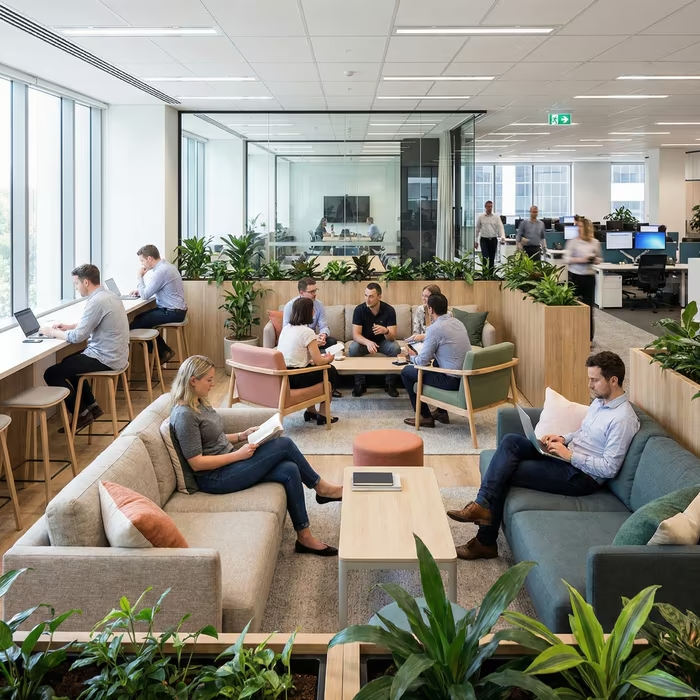
Want some coworking ideas to boost productivity? Want to create a shared space that really drives collaboration? We have some ideas for you.
Coworking spaces have become central to how people work in the UK’s hybrid economy. As more modern professionals move away from the traditional office space, expectations of what a coworking space should offer have changed dramatically. Today’s coworking environment must support focused work, collaboration, wellbeing and community building – all within a flexible, cost-effective office space.
This article explores 15 practical coworking ideas that improve workplace productivity, support physical and mental health, and help your coworking spaces stand out in an increasingly competitive coworking industry. Drawing on proven coworking space design principles and real-world examples, these ideas are aimed at operators who want to create a better coworking experience without over-spending.
Persy Booths works closely with organisations designing coworking environments and flexible workspaces, so we see first-hand how important it is to strike the right balance between function, cost and user experience – especially where noise, phone calls and shared workspace dynamics are involved.
Key takeaways from this article
- Well-planned coworking space design improves overall productivity by balancing open workspace areas with quiet zones and private spaces.
- Natural light, ergonomic furniture and thoughtful layouts support mental health, wellbeing and long-term workplace productivity.
- Community building through networking events and community events increases engagement, retention and meaningful connections.
- Flexible workspaces that cater to diverse professionals consistently outperform rigid traditional office environments.
- Modular solutions such as phone booths and meeting booths deliver focus and privacy without the cost of permanent construction.
How coworking spaces are great for collaboration and productivity
Coworking spaces bring together independent workers, remote workers, small businesses and teams from various industries into a shared workspace designed for flexibility and social interaction. Unlike a traditional office, coworking environments encourage casual conversations, collaboration and knowledge sharing between other members who may never have crossed paths otherwise.
Open spaces make it easier to foster collaboration and community engagement, while networking opportunities often emerge organically rather than through formal structures. However, coworking spaces must also accommodate diverse needs – including focused work, private offices, phone calls and Zoom calls – without compromising the wider work environment.
The challenge is not whether coworking works, but how well the space is designed to support different work styles at the same time.
What can you do to make coworking spaces even more productive
Many of the challenges faced by coworking members can be addressed through careful design. Research consistently shows that better work environments improve productivity, wellbeing and engagement. The World Green Building Council finds "overwhelming evidence" that good office design and layout affects the well-being and productivity of employees. Thoughtful coworking ideas help people work better, manage stress and remain productive throughout the day.
Use natural light, plants for wellbeing
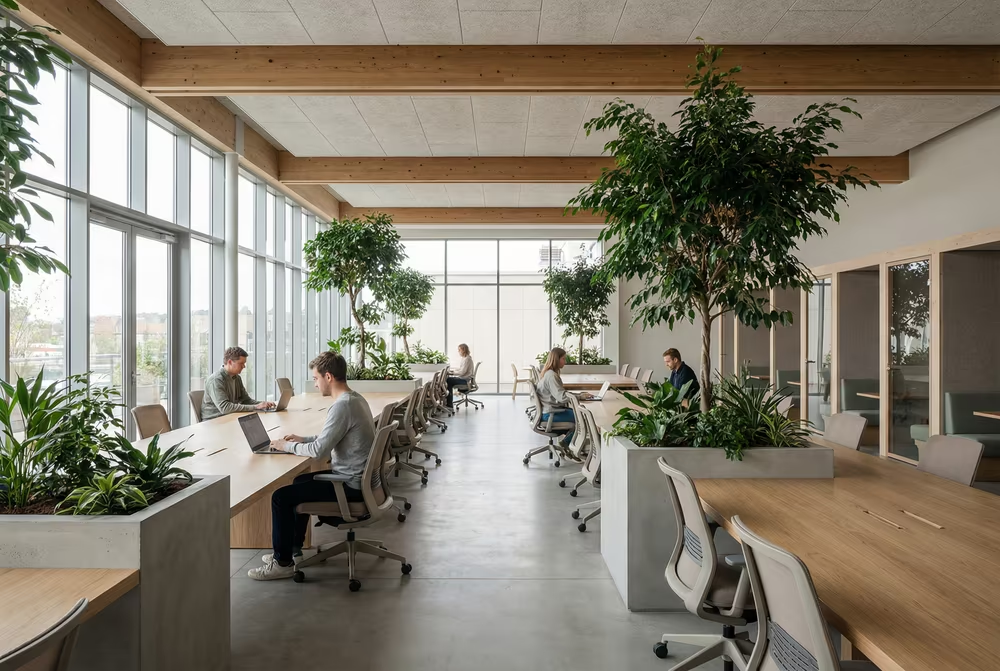
Natural light is one of the most effective design ideas available to coworking spaces. Exposure to daylight improves mental health, boosts mood and helps regulate sleep patterns, which in turn supports overall productivity. Combined with natural materials and indoor plants, natural light creates calmer, healthier coworking environments.
Biophilic design also supports physical and mental health by reducing stress and encouraging mindfulness. Plants can be used to subtly divide open spaces, soften acoustics and improve air quality without creating physical barriers.
Add quiet zones and soundproof booths for focus
Quiet zones are essential in any coworking space that supports focused work. Without designated quieter spaces, noise from phone calls, meetings and social interaction can quickly undermine productivity.
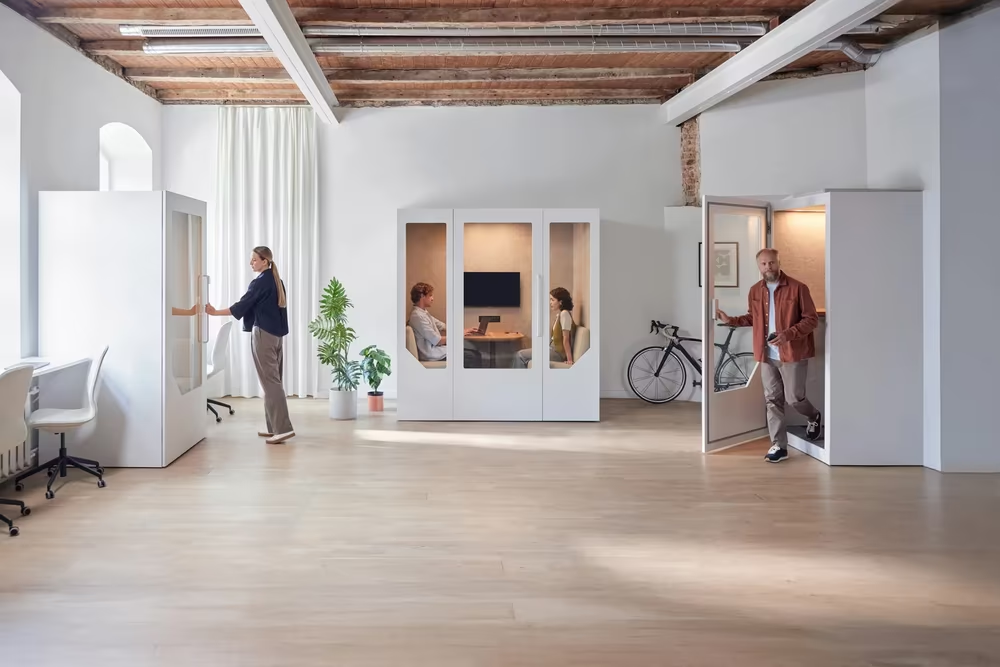
Soundproof booths offer a flexible alternative to building permanent private offices. A soundproof phone booth provides a space-efficient solution for calls and video meetings in open workspace environments. For collaborative discussions, a team meeting booth enables small groups to meet without disturbing others:
For coworking operators seeking quick improvements without major fit-out costs, modular booths strike a practical balance between performance and affordability.
Design flexible meeting rooms and conference rooms
Meeting rooms and conference rooms remain essential components of coworking office design. The most successful spaces design these rooms to be flexible – supporting workshops, presentations, team building events and client meetings.
Movable furniture, adaptable layouts and good acoustic control ensure meeting rooms can be used throughout the day for different purposes, maximising the value of the office space.
Create zones for different work styles
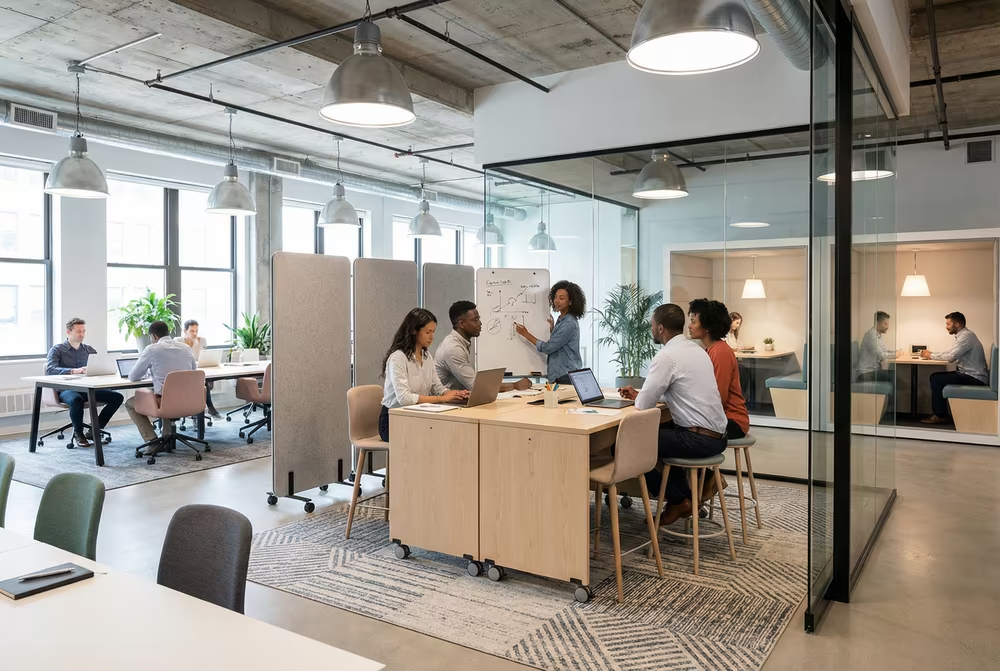
Zoning is one of the most effective coworking ideas for managing diverse needs. Clear separation between open spaces, quiet areas, private offices and social zones allows coworking members to choose how and where they work throughout the day.
Strategic placement of quieter spaces away from kitchens and event areas helps improve focus, while open workspace zones near communal areas encourage interaction and community building.
Invest in ergonomic and modern furniture
Ergonomic furniture directly affects physical and mental health. Adjustable desks, supportive seating and varied working postures reduce fatigue and improve overall productivity.
Modern furniture also reinforces professionalism and signals quality, helping coworking spaces differentiate themselves from other coworking spaces competing for members.
Encourage community building through events
Community events are central to a successful coworking experience. Hosting events such as talks, workshops and informal socials encourages active participation and helps new members integrate quickly.
Team building events and networking events create meaningful connections and support professional development, adding value beyond desk space alone.
Support informal networking opportunities
Not all networking needs to be formal. Design ideas that encourage interaction – shared tables, breakout areas and coffee points – help members connect naturally.
These casual conversations often lead to collaborations, referrals and new ventures, strengthening the sense of community within the coworking environment.
Provide private offices for growing teams
While flexibility is key, private offices remain important for small businesses and teams requiring confidentiality or consistency. Offering private offices alongside shared workspace options allows coworking spaces to support members as they grow.
Offer phone booths for calls and video meetings
Phone booths help manage noise and privacy in open spaces. For individual focus, a smaller work booth provides a quiet, enclosed space without isolating members from the wider community, while a two person phone booth supports collaborative calls and interviews.
These solutions help coworking spaces manage noise without resorting to costly permanent construction.
Design for mental health and wellbeing
Work environments play a significant role in mental health. Calm colour palettes, access to quiet zones and opportunities to practise mindfulness all contribute to healthier coworking environments.
The World Health Organization highlights how supportive work environments improve wellbeing, mental health and productivity, particularly in flexible working settings.
Balance openness with privacy
The best coworking spaces balance openness with privacy. Too much openness leads to distraction, while too much separation weakens community engagement. Thoughtful coworking space design ensures both coexist effectively.
Ensure reliable technology infrastructure
Reliable internet, accessible power and intuitive booking systems are non-negotiable. Without them, even the best coworking ideas fall short.
Avoid overspending on fixed infrastructure
Overspending on permanent structures can limit flexibility. Modular solutions such as the meeting booths and phone booths already mentioned often deliver better long-term value. Buying direct from manufacturers – rather than through distributors – also helps keep costs down while maintaining quality.
Create opportunities for professional development
Workshops, mentoring sessions and skills-sharing events support professional skills development and increase coworking membership value.
Design with growth in mind
Coworking spaces should evolve over time. Flexible layouts, movable furniture and scalable solutions allow spaces to adapt as more members join and needs change.
Final Thoughts
Great coworking ideas focus on people first. By supporting diverse needs, encouraging social interaction and prioritising wellbeing, coworking spaces can outperform the traditional office. Thoughtful coworking design improves focus, strengthens community and delivers long-term value – without unnecessary complexity or cost.
FAQ
.avif)
Passionate, progress-driven venture & business developer with startup and corporate experience. I speak business, while keeping customers in my heart.