
If you have a noise problem to deal with, both of them probably sound like a good idea – and people often use the terms interchangeably. But “soundproofing” and “sound absorbing” are actually quite different things. While both improve acoustic quality and reduce unwanted noise, they serve very different purposes.
Understanding the distinction between soundproofing vs sound absorbing helps you choose the right acoustic solutions for your space – whether you're dealing with excess noise in an open office, improving speech intelligibility in conference rooms, or enhancing the acoustics of recording studios and music studios for professional results. Sound absorption vs soundproofing is not about choosing a better option overall – it’s about selecting the right approach based on how noise behaves in your specific space.
Persy Booths knows these distinctions well since we work closely with companies that value quieter, more focused work environments. We also understand that those companies want to reduce noise without adding too much to the bottom line costs, so we are always aiming to advise on finding the right balance between performance and cost. We hope some of our ideas below will help you achieve that (whether it's through soundproofing, sound absorption or possibly both).
Key takeaways from this article
- Soundproofing blocks sound from entering or leaving a space, while sound absorbing improves how sound behaves within it.
- Soundproofing uses dense, sealed materials to isolate noise; sound absorption uses soft, porous materials to reduce echo and improve clarity.
- Each method tackles different problems — soundproofing stops external noise, while sound absorption improves internal acoustics.
- Combining both approaches creates the most comfortable and effective acoustic environments.
Soundproofing vs Sound Absorbing: The Key Differences
Although both techniques aim for noise reduction, they achieve it in completely different ways. Soundproofing is designed to block or contain noise, preventing sound from entering or leaving a space. Sound absorbing focuses on improving the way sound behaves within a room by reducing echo, reverberation, and reflected noise.
Soundproofing's main goal is to achieve sound containment. It works by adding mass and sealing gaps, using dense materials that block sound transmission. You'll often find it in walls, floors and ceilings where preventing noise from travelling between spaces is the priority. The result is a quieter environment through isolation.
Sound absorbing, by contrast, aims to reduce echo and improve acoustic quality within a space. It uses porous or soft materials to absorb sound waves rather than reflect them. This approach is ideal for rooms such as conference rooms, open offices and concert halls where clear communication and comfort are key. The result is a smoother, more controlled sound quality and improved speech clarity.
In short, soundproofing stops sound getting in or out, while sound absorbing improves how sound behaves inside. The two methods often complement one another – one tackles sound transmission, the other focuses on clarity and comfort. Let's look at each in more detail.
What Is Soundproofing?
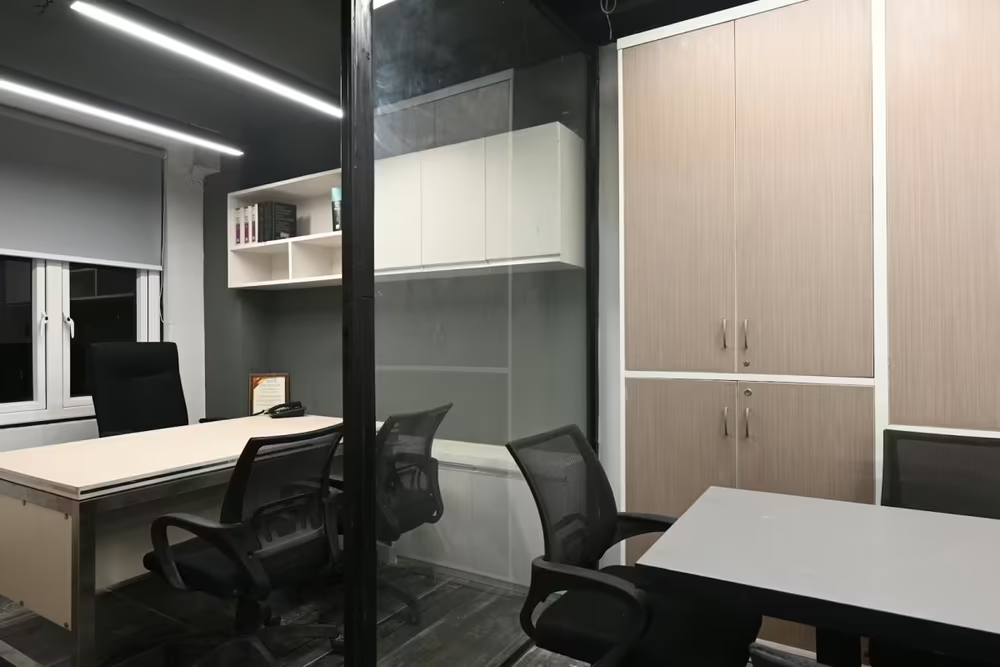
Soundproofing refers to techniques that stop sound transmission by creating physical barriers that block sound. The aim is complete isolation – or as close to it as possible – so that unwanted sounds from neighbouring rooms, traffic or equipment don't enter the space.
Effective soundproofing treatments rely on four main principles. First is adding mass – using dense materials like plasterboard, Mass Loaded Vinyl or concrete walls to prevent vibration transfer. Second is decoupling, where structures are separated to stop sound waves from passing directly through them. Third is damping, which converts sound energy into a small amount of heat using materials that absorb vibration. Finally, sealing gaps with door sweeps, acoustic sealants and tight fittings helps stop sound leaks.
You'll find soundproofing work used in music studios, recording studios, commercial spaces and open offices where background noise and phone calls can travel between rooms. In extremely sensitive environments such as cinemas or broadcast studios, soundproofing materials help achieve complete isolation and keep the noise level under tight control.
Soundproofing is all about physical barriers. It's the go-to solution when you want to block sound completely rather than simply reduce echo.
What Is Sound Absorbing?
While soundproofing keeps sound waves out, sound absorbing keeps them under control once they're already inside. Sound absorption aims to reduce echo, reverberation and poor acoustics by converting sound energy into small amounts of heat as it passes through porous materials. This creates a calmer, more comfortable acoustic quality and improves speech clarity.
Common sound absorbing materials include acoustic foam panels, fabric wall baffles, carpets and rugs, ceiling clouds, heavy curtains, and a wide range of sound absorption products. These materials are designed to absorb sound waves rather than reflect them off hard surfaces like glass, wood or concrete. The result is a noticeable reduction in reflected noise and unwanted sounds that can make a space feel harsh or overwhelming.
Sound absorbing is vital in environments where communication matters, especially when learning how to deaden sound in a room. In a conference room, for example, soft materials help prevent echoes that make speech difficult to follow. In an open office, sound absorption treatments can transform wrong settings that create distractions into calm, focused workspaces. And in recording studios or concert halls, the right combination of sound absorbers helps control resonance for clearer, more accurate sound.
Sound absorption is also measured scientifically through something called the Noise Reduction Coefficient (NRC). The higher the NRC value, the more effective the material is at absorbing sound waves. It's one of the most important factors to consider when designing a room for comfort and productivity.

When to Use Soundproofing vs Sound Absorption
The difference between soundproofing and sound absorbing comes down to the sound issues you need to fix. If you're dealing with noise pollution coming from outside – for example, traffic or loud neighbours – you need soundproofing. If the problem is echo, poor speech clarity or excess noise inside a room, then you need sound absorption.
Here are some practical examples of when to use each:
- Open offices – These environments are rarely extremely loud, but background noise and reflected noise can quickly create distractions, as shown in how SumUp reduced open office distractions. Many psychological experiments have shown that office clamour leads to distractions and reduced productivity. Sound absorption using porous materials like acoustic panels, carpets and ceiling baffles will reduce noise and improve speech intelligibility.
- Conference rooms – Sound absorbing solutions help stop voices bouncing off hard surfaces, ensuring better clarity for meetings and phone calls. They're also useful for reducing excess noise in hybrid meeting spaces.
- Recording studios – In this setting, both methods are required. Soundproofing ensures sound containment and prevents external noise from leaking in, while sound absorption maintains clarity and reduces reverb during studio recordings.
- Residential flats or shared walls – Soundproofing treatments using dense materials or sound blocking products are best for preventing sound travelling between existing walls.
Understanding these key differences can save time, money and frustration. Many people install sound absorption products hoping to block noise, only to find that echoes disappear but unwanted sounds remain. Conversely, a perfectly soundproofed space can still sound unpleasantly hollow without proper acoustic treatment.

Combining Both for Best Results
In many environments, the most effective approach is to combine both techniques. For example, an open office might use soundproofing materials in the walls and floors to block sound transmission from neighbouring rooms, while adding sound absorption materials such as ceiling clouds, wall panels and carpets to reduce reflected noise inside. The ISO (International Organization for Standardization) has issued formal recommendations in the form of ISO 22955:2021 on how to optimise soundproofing and sound within working offices.
Combining both soundproofing and sound absorbing materials delivers the best of both worlds: it reduces noise entering or leaving the space while also improving the sound quality and comfort for those inside.
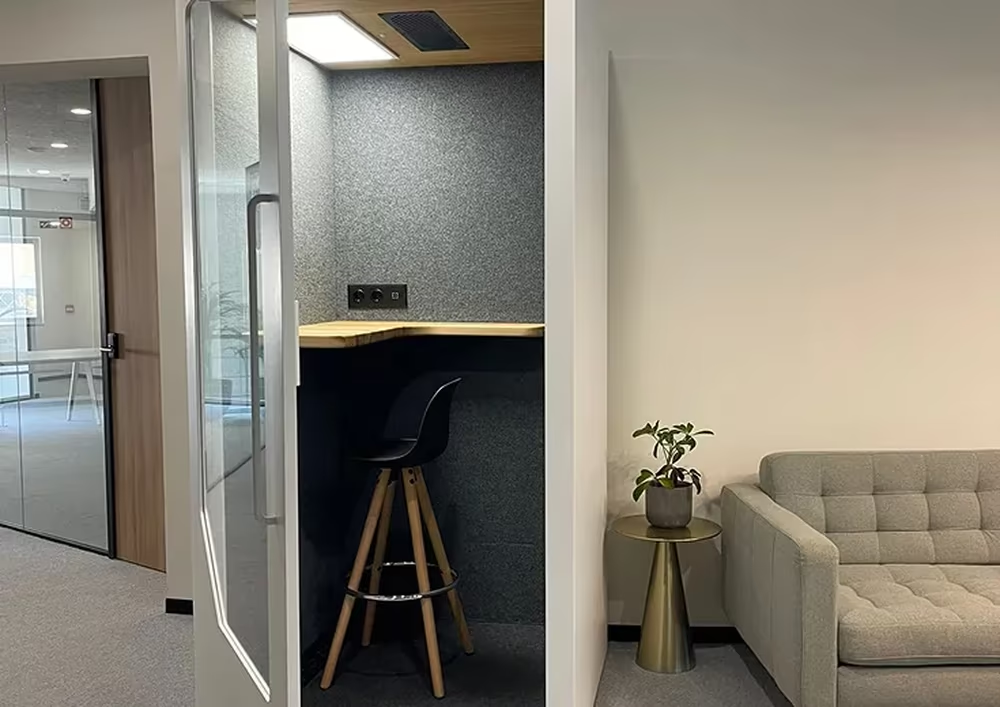
The Persy One soundproof phone booth demonstrates this perfectly. It balances sound blocking construction with sound absorbing interiors to provide privacy without creating a completely sealed or “dead” atmosphere. For teams needing more space, the Persy Four team meeting booth offers the same noise reduction benefits at a larger scale, making it ideal for collaborative workspaces and private meetings within commercial spaces.
Conclusion
Choosing between soundproofing vs sound absorption comes down to the specific sound issue in your space. If external noise is raising the noise level, you’ll need soundproofing that reduces sound transmission and improves sound containment. If the problem is harsh sound reflections and excess noise inside the room, sound absorption is the better route for improving overall sound quality. In practice, the best results usually come from soundproofing and sound absorption working together – managing how sound waves behave while also limiting what gets in or out.
To pick the right acoustic solutions, it helps to look at performance measures and materials. For absorption, compare the noise reduction coefficient of different sound absorption products and choose effective sound absorbing materials like acoustic panels, acoustic foam, and other porous materials. These sound absorption treatments help convert sound waves and sound energy into small amounts of heat energy, reducing the build-up that makes rooms feel loud. For isolation, focus on soundproofing materials, acoustic insulation, and sound blocking products that help block sound and reduce sound transmission – then use ratings like sound transmission class to guide expectations.
The aim isn’t to spend more – it’s to apply the right mix for the problem you’re solving. That’s the approach behind Persy Booths: combining practical acoustic treatment with smart construction to control noise without over-specifying. With the Persy Work soundproof office booth, for example, we balance sound blocking and absorption so it becomes a go-to solution for focused work – without unnecessary extras or reseller mark-ups.
FAQs
.avif)
Passionate, progress-driven venture & business developer with startup and corporate experience. I speak business, while keeping customers in my heart.