


Key takeaways from this article
- Room soundproof office pod alternatives in 2026 should be compared based on use case first, not size or price
- Different pod types support different tasks, from solo focus work to collaboration and team meetings
- Key features to prioritize include acoustic performance, ventilation, lighting, and overall comfort
- Office pods offer faster installation and better space efficiency than traditional meeting rooms
- Long-term value depends on usability, layout fit, and daily adoption rather than upfront cost alone
Types of Office Pod Alternatives to Compare
Not every business needs the same type of enclosed workspace. Some teams need quiet spaces for short calls. Others need more privacy for one-to-ones, interviews, or focused project work. That is why room soundproof office pod alternatives are best compared by use case first, then by size, acoustics, and footprint. Creating defined personal space is essential in both home and office environments, and pod alternatives help establish these boundaries to reduce distractions and boost productivity.
What should you compare first? Start with the task the pod needs to support most often. A solo call pod solves a different problem than a shared booth or a larger meeting pod. Then look at how often the space will be used, how much speech privacy is needed, and how easily the unit can fit into your existing office layout. It’s important to consider space constraints, especially for home offices or smaller workspaces, to ensure the pod fits comfortably and functions well. Buyers who skip this step often end up with pods that look right on paper but do not get used properly once installed.
Modular pods are a flexible solution that can be quickly installed, reconfigured, or moved as organizational needs change.
Many customizable office pods offer a range of finishes, colors, and furniture options to match branding and functional requirements. Alternatives to fully enclosed soundproof office pods are also evolving toward modular, adaptive, and biophilic solutions.

Single-Person Pods for Calls and Focus Work
Single-person pods are often the starting point for companies comparing room soundproof office pod alternatives. They work best for confidential calls, video meetings, heads-down work, and short bursts of concentration in busy open offices. These pods create a quiet space that supports deep focus and helps users maintain focus in busy environments. They also take up less floor space than larger enclosed units, which makes them easier to place near workstations without major layout changes.
A good single-person pod should feel private without feeling cramped. Ventilation, lighting, seat comfort, and power access matter just as much as acoustic performance. High-quality soundproof office pods can provide significant noise reduction, often achieving 30 dB or more of speech level reduction, ensuring privacy during calls and meetings. Features like sound insulation, built-in desk, and power outlets further enhance the usability and comfort of these pods. Acoustic panels, designed to absorb sound waves effectively, are pivotal in creating a soundproof office environment. For businesses that need a compact solution for individual work, a soundproof phone booth is often the most efficient option.
Two-Person Booths for Quick Collaboration
Two-person booths are ideal for quick check-ins, manager conversations, interviews, and informal teamwork. They offer more flexibility than a solo pod, but they still use far less space than a full meeting room. These booths are especially well-suited for hybrid teams needing privacy for video calls and virtual meetings, providing a productive environment for collaborative work in flexible office settings. That makes them a strong middle-ground option for offices that need privacy in short sessions throughout the day.
These booths work well in teams that rely on frequent one-to-ones or hybrid collaboration. They can also reduce pressure on larger meeting areas by giving staff a quieter place for short conversations. In addition to acoustic privacy, these booths support confidential conversations and visual privacy, making them suitable for sensitive discussions and minimizing distractions. A two person phone booth is a smart choice when the office needs shared privacy without committing too much floor space.
For individual needs, smaller pod alternatives like HushPhone and Framery One are designed for maximum temporary individual sound isolation, offering a compact solution for focused work or private calls.
Larger Meeting Pods for Teams
Larger meeting pods are built for team discussions, project reviews, private client calls, and collaborative work that needs more than two seats. They suit businesses that want enclosed meeting space but do not want the disruption or permanence of adding more built rooms. As team needs grow, organizations can easily add more pods, making modular pods a scalable and flexible solution. These flexible solutions allow companies to adapt quickly to changing requirements without permanent structural changes. They are also useful in offices where existing meeting rooms are constantly booked for small group sessions.
When comparing these pods, look beyond capacity alone. Check table layout, airflow, acoustic control, entry width, lighting quality, and how easy the pod is to move or reconfigure later. Collecting usage data from pods can help optimize their placement and space allocation, ensuring efficient use of office space and meeting actual demand for quiet, private work environments. A team meeting booth is usually the right fit when several people need privacy at the same time.
The market is also shifting toward smaller, mobile acoustic furniture and modular partitions, including high-backed chairs and sofas designed with sound-absorbing materials to support redefined and flexible office layouts.
How Room Soundproof Office Pod Alternatives Compare to Traditional Meeting Rooms
Traditional meeting rooms still have a place in many offices, but they are no longer the default answer for every privacy need. Many teams now compare room soundproof office pod alternatives because they offer faster delivery, more layout flexibility, and better alignment with how modern offices actually work. Soundproof office pods are also a cost-effective solution compared to traditional office build-outs, which often come at a higher price point due to premium materials and extended construction timelines. Workplace design coverage continues to point toward offices built around mixed-use zones instead of static one-size-fits-all rooms.
The biggest difference is practical use. Fixed meeting rooms often end up being used for everything, from solo calls to four-person discussions. That is not always efficient. Pods let businesses match the space to the task more closely, which can improve both availability and floor-plan performance. Soundproof office pods typically cost between $5,000 and $20,000, depending on size and features, while traditional office build-outs can exceed $20,000.
Pods can also be installed quickly, often within a few hours, minimizing disruption to daily operations.
Additionally, many modern pods feature double-glazed windows, which not only enhance soundproofing but also improve energy efficiency and reduce energy costs.

Faster Installation and Less Disruption
One of the clearest advantages of office pod alternatives is speed. Installing a modular pod is usually much simpler than planning and building a permanent room. There is less structural work, less disruption to nearby teams, and far less downtime during changes to the workspace. However, careful consideration should be given to pod placement to minimize disruption and effectively manage external noise, ensuring optimal acoustic conditions.
This matters for growing companies, leased offices, and businesses that expect to reconfigure space again in the future. A fixed room is hard to reverse. A modular pod is easier to introduce, reposition, or scale across multiple locations, especially in workplaces trying to reduce noise exposure through enclosure and separation, as outlined by OSHA’s noise exposure guidance. Recent advancements in soundproofing technology, such as the use of acoustic isolation membranes, have significantly reduced noise transfer between spaces, making pods even more effective for privacy and focus. That makes pod-based solutions attractive for teams that need agility as well as privacy.
These features help contain sounds within specific areas, improving overall acoustic performance and ensuring a quieter, more productive workspace.
Better Space Efficiency for Modern Offices
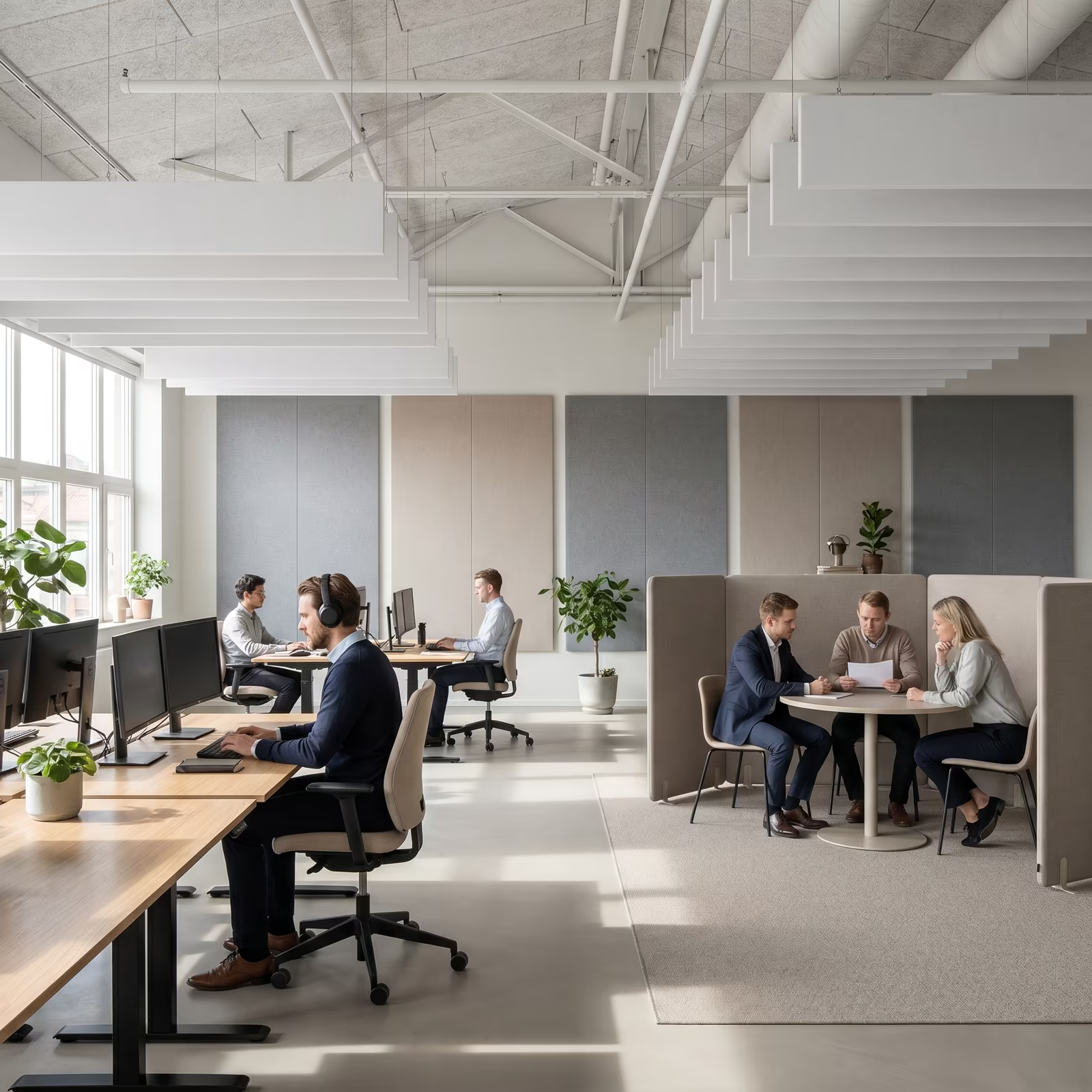
Meeting rooms are often underused for their intended purpose. A four- or six-person room may sit empty for large parts of the day, or get booked for one person on a video call. Pods can solve that mismatch by giving different tasks different-sized spaces. That usually leads to more efficient use of floor area. In open floor layouts, integrating pods creates private offices and acoustic office booths, offering flexible, sound-insulated alternatives to traditional private offices.
This is especially useful in open-plan offices where every square meter matters. Smaller enclosed units can sit closer to work zones, which helps teams access privacy quickly without walking across the office. By using acoustic glass partitioning and glass walls, these pods maintain natural light and an open feel while blocking up to 30 dB of sound. For companies focused on workspace optimization, pods can support a more balanced mix of open and enclosed settings.
More Choice for Different Work Modes
A single meeting room type cannot support every task equally well. Calls, focused work, private conversations, interviews, and team huddles all need slightly different environments. Office pod alternatives give businesses more control by creating a range of dedicated spaces instead of forcing every activity into the same room format. Soundproof booths, for example, provide privacy for phone calls and help reduce background noise, making them ideal for confidential and focused communication.
That choice matters because acoustic needs change with the task. A confidential HR conversation needs different privacy from a quick two-person sync. Acoustic panels play a key role in absorbing sound and creating a quieter environment, which is essential for maintaining privacy and productivity. A focused solo task needs different comfort features from a brainstorming session. A mix of pod sizes often gives better day-to-day results than relying only on fixed meeting rooms.
Active acoustic panels equipped with sensors can also analyze noise levels and adjust their absorption in real-time, further enhancing soundproofing and adaptability in modern office environments.
Common Mistakes When Choosing Office Pod Alternatives
The market for room soundproof office pod alternatives has become more mature, but buyers still make the same core mistakes. The biggest one is treating all pods as interchangeable. They are not. Two units can look similar in photos and perform very differently once employees start using them. Many businesses are looking for alternatives to traditional soundproof office pods due to the high costs associated with premium brands like Framery, and there are other brands offering cost-effective solutions with similar features and customization options.
Another common problem is buying around appearance alone. Good design matters, but not at the expense of comfort, airflow, or privacy. Increasingly, eco friendly and sustainable materials—such as recycled PET panels made from bottles, and natural materials like wool-based felt, hemp, cork, and timber—are being used to create visually appealing and environmentally responsible pods. Research on workplace acoustics keeps reinforcing the same point: speech privacy and distraction are not small details. They directly shape user satisfaction.
Additionally, biophilic sound barriers using mycelium-based panels and mushroom leather are now being used to manage reverberation and improve acoustic comfort.
Focusing Only on Price
Upfront price is important, but it should never be the only filter. Some office pods come at a higher price point due to advanced features or premium soundproofing materials, but there are also cost-effective solutions available that still provide strong soundproofing and comfort. A lower-cost pod can become expensive if it is uncomfortable, noisy, or wears poorly over time. Long-term value comes from reliable acoustic performance, durable materials, easy maintenance, and a design people actually want to use.
A pod that supports regular daily use will usually deliver more value than a cheaper unit that employees avoid. Buyers should compare warranty terms, expected lifespan, power integration, ventilation quality, and serviceability, not just the headline number on a quote.
Ignoring Office Layout and Workflow
A good pod in the wrong location can still fail. Placement affects how often the pod gets used, how much surrounding noise reaches it, and how naturally it fits into employee movement through the office. That is why layout planning should happen before purchase, not after delivery. Space constraints should also be carefully considered to ensure the pod fits comfortably and maximizes functionality. Consulting with interior designers can help select soundproofing materials and integrate acoustic solutions that complement both the office’s workflow and its overall aesthetic.
Think about noise hotspots, circulation paths, nearby collaboration zones, and where private calls already happen. The right pod should reduce friction, not add it. When the layout and workflow are ignored, even strong room soundproof office pod alternatives can end up underused.
Overlooking User Experience
A pod can meet the spec sheet and still disappoint in practice. Poor airflow, weak lighting, cramped seating, or awkward door access can make users avoid the space. That is a serious issue because adoption is what turns a pod from a product into a workplace solution.
Comfort shapes use, and GSA’s indoor environmental quality guidance makes it clear that acoustics, ventilation, and lighting all affect occupant satisfaction in office environments. Maintaining air fresh inside pods is essential—proper ventilation and air filtration help prevent fatigue and create a comfortable environment. High stress levels caused by workplace noise can negatively impact office life and reduce productivity, making it crucial to address both soundproofing and air quality. People stay longer in spaces that feel calm, breathable, and easy to work in. That is why user experience should be part of every comparison, along with privacy and footprint. If possible, buyers should test a unit before ordering at scale.
Studies show that high-quality soundproofing in office pods can increase productivity by up to 60 percent in quiet environments.
Why Persy Booths Fits the 2026 Office Pod Market
Persy Booths fits the 2026 office pod market because it answers the practical questions buyers are asking right now. Teams want private space that can be added quickly, used daily, and matched to different tasks without locking the office into a rigid layout. Persy Booths leverages usage data and IoT integration in smart acoustic technology to optimize pod placement and monitor ambient noise in real time, ensuring efficient use of space and a consistently quiet environment.
They also want solutions that feel professional, comfortable, and easy to integrate into modern workplaces. Persy Booths supports virtual meetings with advanced soundproofing—using high-density acoustic panels and double-glazed glass to minimize noise transfer—while also enhancing energy efficiency through these window upgrades.
That is where product range matters. Instead of treating every privacy need the same way, Persy Booths gives buyers a clearer path to matching pod size with real work patterns. That makes it easier to build a workplace mix that supports focus, calls, quick collaboration, and team discussion in a more intentional way.
A Range of Pod Sizes for Different Tasks
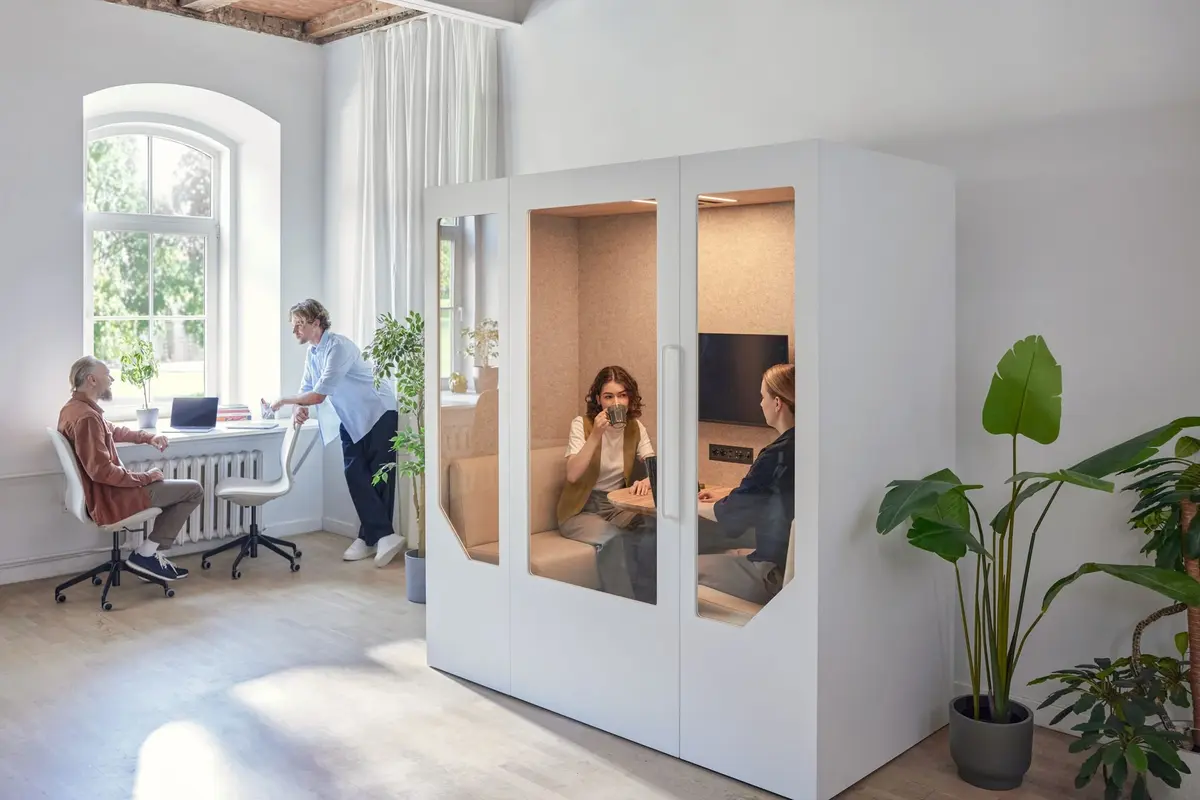
One reason Persy Booths stands out is that it supports multiple work modes through a clear range of products. A business can start with solo units for calls, add shared booths for quick conversations, and scale up to larger enclosed spaces for group sessions. As needs grow, organizations can easily add more pods, taking advantage of modular pods that offer flexible solutions for changing office requirements. That gives buyers more control over how privacy is distributed across the office.
For teams comparing office pods, that range matters. It helps reduce overbuilding, avoids wasted floor space, and supports a more useful mix of enclosed spaces from the start.
Designed for Privacy, Productivity and Flexibility
Persy Booths also aligns well with the main buying priorities in 2026: privacy, comfort, and flexibility. Buyers are paying closer attention to acoustic performance, air circulation, lighting quality, and how easily a pod fits into future layout changes. Those factors have a direct effect on daily adoption and long-term value.
A pod should not just block sound. It should support better work. That means helping people focus, speak comfortably, and move between work modes without friction. Ergonomic design and visual privacy are also essential, as they ensure users can work comfortably and confidentially, further supporting productivity. Solutions built around those basics are far more likely to stay useful as office needs change.
Persy Booths' solutions are also designed to integrate seamlessly with interior design, balancing aesthetics and acoustic functionality for a cohesive office environment.
Conclusion
The best room soundproof office pod alternatives in 2026 are the ones that match the way your office actually works. That means comparing pod types by task, checking acoustic performance carefully, and making sure the unit fits your layout, comfort expectations, and long-term plans. A solo pod may be enough for call-heavy teams. A two-person booth may solve everyday collaboration gaps. A larger meeting pod may reduce pressure on booked-out rooms.
The key is not to buy on size or price alone. Look at privacy, airflow, lighting, footprint, ease of installation, and likely daily use. Businesses that compare room soundproof office pod alternatives with those factors in mind are far more likely to choose a solution that stays effective over time.
FAQs
.avif)
Passionate, progress-driven venture & business developer with startup and corporate experience. I speak business, while keeping customers in my heart.


.avif)