


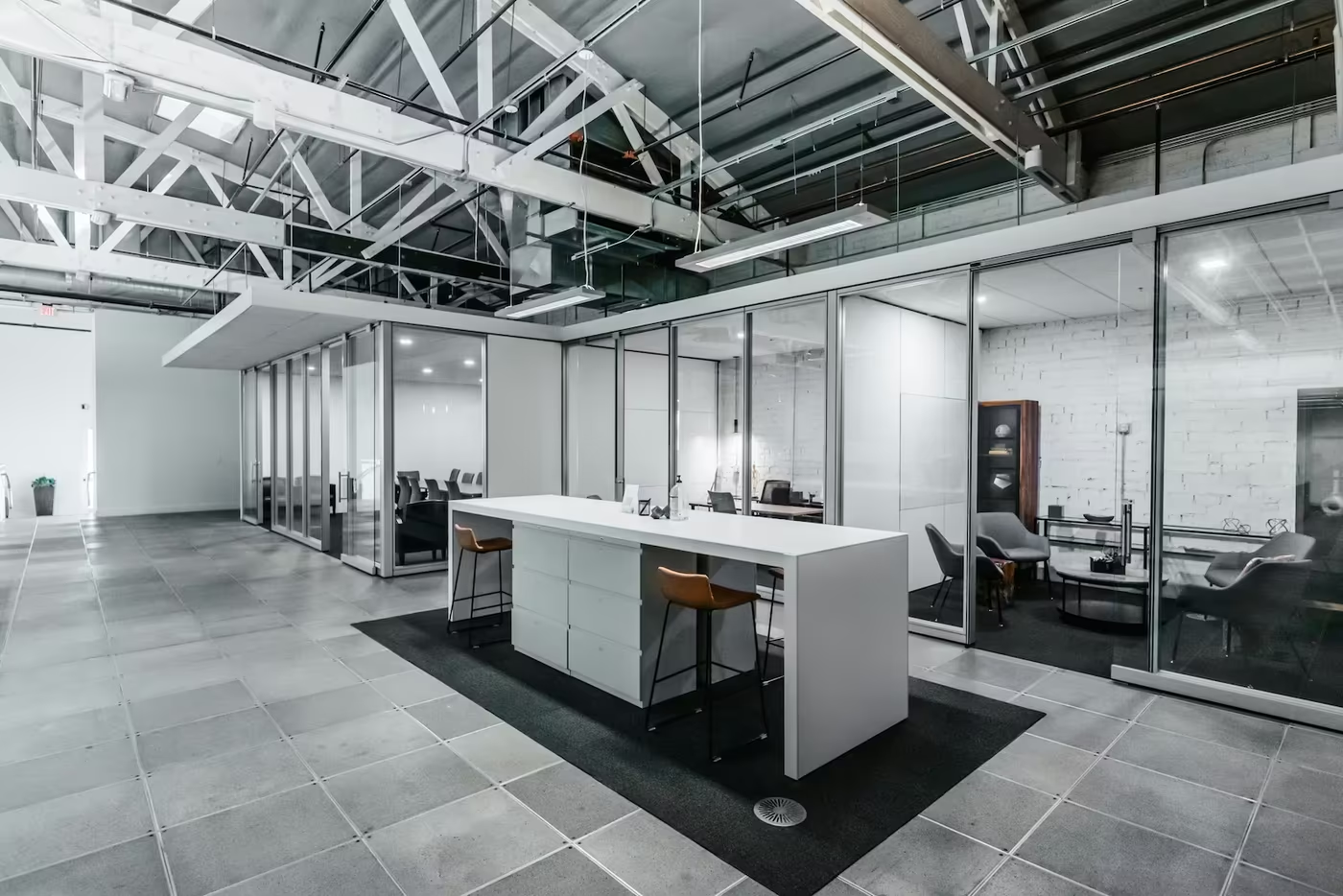
Activity based working is rapidly becoming the go-to model for companies rethinking office space for the future of work in 2026. Instead of a traditional fixed-desk setup, it lets people choose the right work setting throughout the day based on the task at hand. As expectations evolve, employees are looking for an office environment that truly supports collaboration, focused work, privacy, and flexibility.
At Persy Booths, we work with lots of customers who are looking to create their own activity based workplace. After all, we are manufacturers who supply office pods that create different areas to support different types of activity – so no surprise that we know a thing or two about activity based workplaces! To help you decide if this approach is right for you and how to create the right office environment without overspending, we’ve put together this guide covering the key points.
Key takeaways from this article
- What activity based working is, how it differs from a traditional office, and why it matters in the future of work.
- The core benefits of an activity based workplace – including productivity, collaboration and employee satisfaction.
- The challenges companies must overcome when shifting to an activity based working model, along with practical solutions.
- A step-by-step guide to implementing an ABW office, plus how to monitor and improve it over time.
- Where pods, meeting rooms and quiet zones fit into an effective based workplace design.
What is Activity-Based Working?
Activity based working (ABW) is a workplace strategy that allows employees to choose the most suitable work settings for their specific tasks across the day – a principle that also shapes effective coworking ideas. Instead of assigning each person a fixed desk, an activity based workplace provides a variety of workspaces that support different activity types – collaborative, quiet, creative, focused or social.
In a traditional office, people often adapt their tasks to the environment because the environment is static. In an activity based workplace, the environment adapts to the task. This approach is driven by the needs of people, the rhythm of work and the increasing desire for flexibility in how, when and where work gets done.
An activity based working model typically includes:
- open plan team areas
- meeting rooms of different sizes
- quiet rooms or privacy booths
- informal collaboration spaces
- touchdown desks
- soft seating zones for relaxed conversation
- private areas for deep focus
- technology-enabled rooms for hybrid work
What makes ABW compelling is the sense of autonomy it gives employees, which also helps strengthen workplace culture. People can move between these settings throughout the day, selecting the environment that best supports their tasks. This flexibility improves cognitive performance and collaboration in varied environments, focus and the overall experience of being in the office.
Companies increasingly see ABW as a powerful way to make office space more efficient, reduce real estate costs and provide a workplace experience that supports the future of work.
Benefits of Activity-Based Working
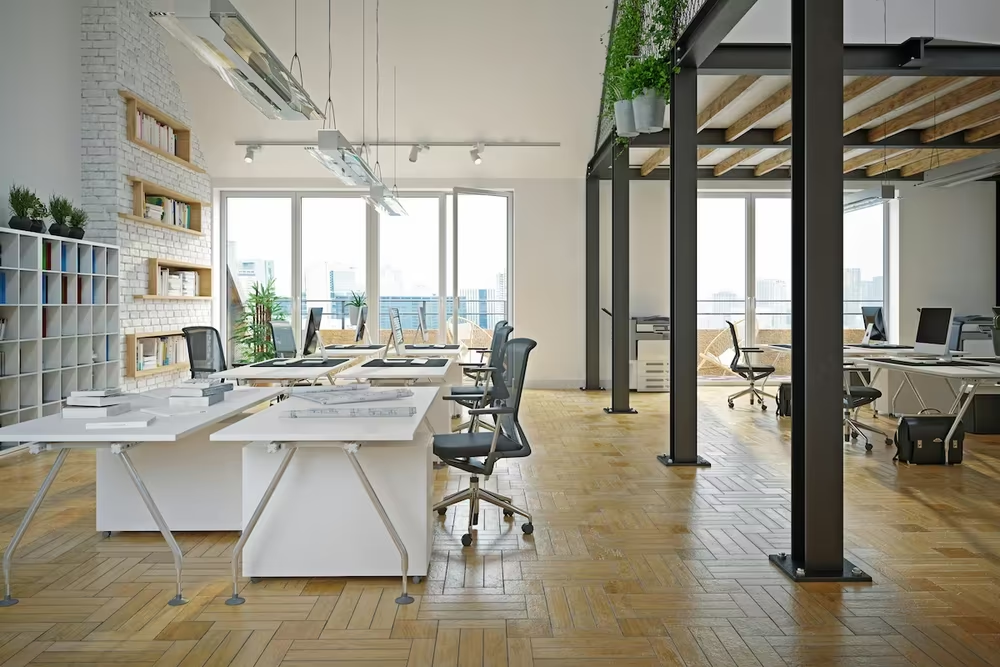
The benefits of activity based working extend far beyond flexible seating. When implemented well, ABW strengthens productivity, enhances employee satisfaction backed by workplace studies, and prepares the business for long-term success.
Productivity Gains
When employees can choose the right environment for their specific tasks, their productivity naturally increases. Focus zones help people complete complex work without interruption, sometimes supported by tools like a white noise machine. Tools like privacy booths such as the Persy Two soundproof booth also support quiet work in otherwise open environments, providing a quick alternative to booking meeting rooms.
_opt_1000.avif)
Boosted Employee Satisfaction
Activity based workspaces give people flexibility, choice and autonomy – three proven drivers of employee satisfaction. When employees feel trusted to manage their own time and select their preferred work environment, they tend to feel more engaged and more connected to their work. This sense of empowerment contributes to higher morale and better long-term retention.
A 2022 paper published by the Multidisciplinary Digital Publishing Institute showed that an ABW initiative in a Swedish government department was proven to increase employee satisfaction.

Future-Proofing the Workplace
One of the biggest advantages of ABW is how adaptable it is. As hybrid work becomes the norm, companies need office designs that can flex for different days, team sizes and new ways of working. Activity based working allows organisations to reconfigure spaces, increase collaboration zones or add new technology without redesigning the entire office, which supports a stronger digital workplace.
The CIPD highlights how agile workplace strategies are essential for navigating the future of work, especially as businesses continue to evolve alongside digital and hybrid models.
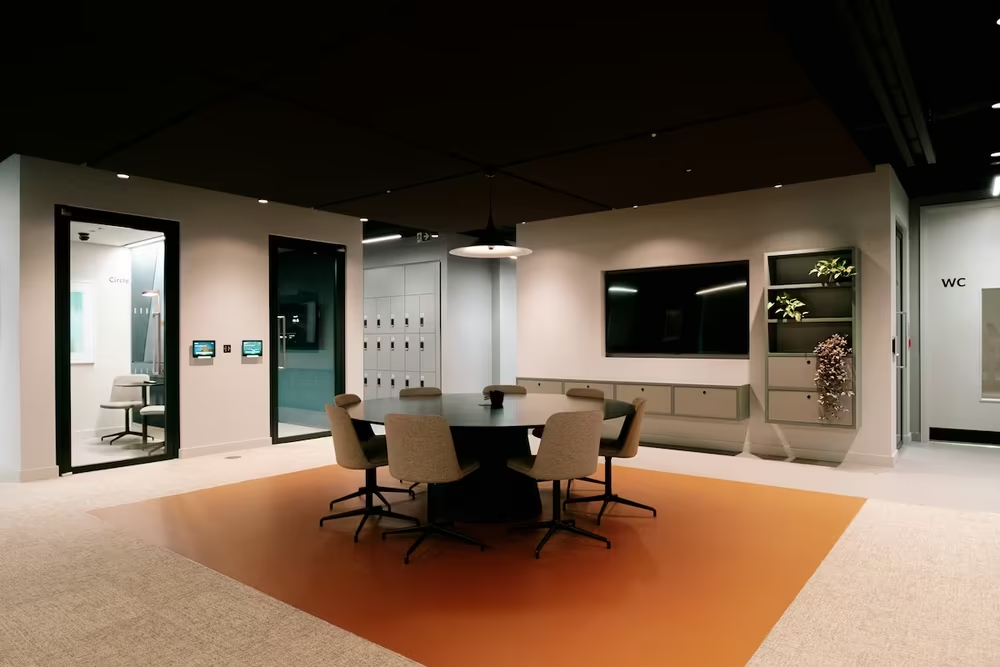
Overcoming Challenges with Activity Based Working
Activity based working brings clear benefits, but it also requires a shift in habits and careful planning from the organisation. These common challenges - and the practical strategies to address them - should be considered as part of any transition.
Change Management and Employee Buy-In
Some employees may initially resist activity based working because it challenges the comfort of habits, and studies show resistance to change impacts productivity in workplace transitions like this.
Change management is therefore essential. Communicating the benefits, running pilot areas and gathering feedback early can help employees feel more involved and more positive about the transition.
A good ABW programme reassures people that the goal is to support their needs, not disrupt their routine.
Optimising Space Allocation
Balancing different zones within an activity based workplace is one of the most important design considerations. Teams must determine how many desks are needed, how many meeting rooms should be available and how much space should be allocated to collaborative vs quiet areas. Real estate efficiency must be weighed carefully against user comfort to prevent overcrowding or underused spaces.
When zoning is done well, the office feels cohesive, open and supportive. When done poorly, bottlenecks form around busy areas and productivity suffers.
Maintaining Focus and Privacy
Maintaining focus and privacy remain essential even in an open plan ABW environment, as shown by how Personio turned noise into productivity. Quiet zones, booths such as the Persy One office booth, or scheduled use of private rooms help employees get uninterrupted time for important tasks. The research backs it up: one study reported that cognitive performance increased by 16.9% amongst employees that used 'quiet workspaces' over general open office space. To make this happen in practice, office pods like the Persy Work office pod offer an efficient, space-saving method to support privacy without needing to construct new rooms.
Implementing an Activity-Based Workplace
Moving to activity based working is a major change, so a structured plan matters. Below is a clear guide to designing, launching, and improving an activity based working office.
Step-by-Step Implementation Guide
A practical activity based working rollout typically follows these steps:
- Assess business needs – understand teams, tasks, collaboration patterns, and the current work environment.
- Map daily activities – identify the work employees do across the day, from focus tasks to meetings and calls.
- Define the settings required – list the spaces needed to support activity based working, such as meeting rooms, open team areas, quiet zones, phone booths, hybrid rooms, focus rooms, and a breakout area.
- Design the space – align layout, furniture, technology, and zoning with activity based working behaviors.
- Run a pilot area – test the approach with a small team, gather feedback, and refine what’s not working.
- Train employees – explain how activity based working works day to day, including how to choose spaces, book rooms, and move between zones.
- Roll out in phases – expand activity based working gradually to reduce disruption and increase adoption.
Monitoring and Iterating
After launch, activity based working should be reviewed and improved over time with office space monitoring. This includes:
- collecting employee feedback
- tracking meeting room use and overall space utilisation
- reviewing how often different zones are used
- adjusting layouts, furniture, and rules to improve flow
- adding technology, booths, or extra focus spaces if demand rises
Activity based working is not a one-off redesign - it’s an evolving workplace strategy that should grow with your teams.
Conclusion
In 2026, activity based working offers a practical way to align office design with real work. By reducing reliance on fixed desks and creating a range of settings for different tasks, organisations can support collaboration, focus, and privacy more effectively. With the right mix of meeting rooms, quiet zones, and flexible spaces, activity based working improves how people use the office while making workplace design more efficient.
FAQs
.avif)
Passionate, progress-driven venture & business developer with startup and corporate experience. I speak business, while keeping customers in my heart.


.avif)