


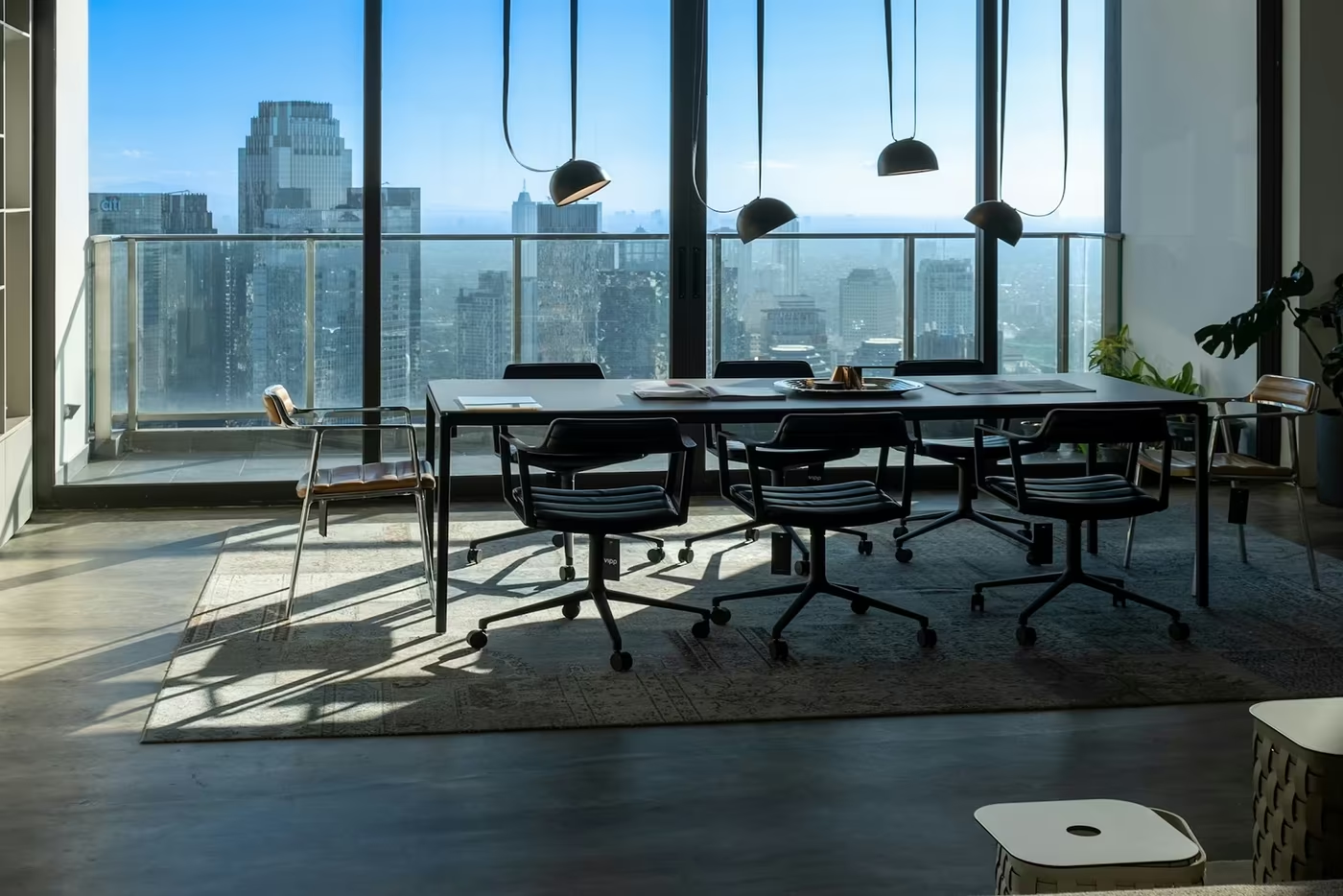
They should go together perfectly. Business needs and space planning. Your company should plan the place where it does its work – so it can work better, right? But designing the right office space is about far more than furniture, floor plans, or the starting point of a shell and core fit – it also requires a clear understanding of cat a and cat b fit out. The modern workplace must flex with shifting priorities, support hybrid working, and create an office environment where collaboration and focus can coexist.
At Persy Booths, we see this every day. Our customers tell us that finding the right balance between cost and function is key – there's little value in investing in the workspace if it doesn't serve your business objectives. That's why we believe in practical solutions and planning a work environment that helps you to get more work done. Here's our view on how to do it.
Key takeaways from this article
- How to align your business goals with effective space management planning
- The essential components of an efficient office layout
- A 7-step strategic process for successful space planning
- The measurable key benefits of strategic space management
- How to future-proof your existing workspace for future growth and employee satisfaction
What Is Business Needs and Space Planning?
Business needs and space planning is the practice of aligning an office layout, its zones and its circulation with what the business actually does, so every square metre supports real workflows, business goals and future growth.
In other words, it matches the space to how teams work, rather than just filling a floor with desks. Done well, it connects people, place and performance, turning the office from a fixed overhead into a flexible asset that adapts as the business changes.
Why is proper space management so important?
When a business occupies physical premises, every square metre matters. Poorly utilised office space can drain budgets, lower morale, and even hinder productivity, as seen when SumUp beat open space office distractions with Persy Booths. Strategic space planning ensures that space is used efficiently to meet both current and future needs, supporting day-to-day operations and long-term goals through optimising office space with phone booths.
As companies adapt to new workplace trends such as hybrid working and flexible schedules, understanding how much space is truly needed becomes vital. Too little space can cause congestion and noise issues; too much leads to wasted space, inflated energy costs, and unnecessary maintenance costs.
Incorporating space management software, room occupancy sensors, and utilisation data allows organisations to make evidence-based adjustments. The message is clear: well-informed space management isn't a luxury – it's a strategic necessity.
Naturally, the office space should also be designed for effective working, and solutions like the soundproof phone booth make focused work and private meetings easier to achieve. A great example is the use of soundproof pods like the two person phone booth, which allow focused work and private meetings. Office noise solutions like these take up little room, but can make a huge difference to productivity.
This isn't just our own view either. Forbes Business Council members agreed that, in order to enhance productivity, companies need to ensure the right balance of open and private work areas.
How Much Office Space Does Each Employee Need?
There is no universal figure, but a long-standing UK planning benchmark sits at roughly 8 to 12 square metres of net space per person once desks, meeting rooms, circulation and breakout areas are all counted. Hybrid working has made this far more fluid, so instead of one desk per head, many organisations now plan around peak occupancy and desk-sharing ratios, which is exactly why accurate occupancy data matters so much.
The practical takeaway is to plan for how many people are actually in on a busy day, not your total headcount, and to use flexible, enclosed spaces to absorb the peaks rather than paying for square footage that sits empty most of the week.
Key Components of Effective Space Planning
Effective space planning starts with aligning physical space to operational realities. The following components define success:
- Clear understanding of business needs – every planning process should begin with reviewing business objectives and workforce structure.
- Employee feedback – listen to staff to identify comfort issues, bottlenecks, or under-used areas.
- Smart space allocation – ensure meeting rooms, quiet zones, and breakout spaces support effective business office meetings and are sized for real usage.
- Integration of technology – from room booking systems and desk booking software to management software providing real time data, technology is now central to space management strategy.
- Attention to design details – consider noise control, air quality, traffic flow, and office acoustics to create a well designed space that enhances focus and creativity.
- Adaptable spaces – modular layouts and modular furniture support future growth and flexible seating arrangements.
A well-executed plan aligns the office environment with both employee needs and business goals, while leaving room to evolve.

7-Step Space Planning Framework
Let's look at it in stages. A sensible framework covers each stage of the planning process – from assessing business objectives and mapping employee workflows, to defining space types, integrating workplace technology, managing costs, ensuring compliance, and refining your design based on employee feedback. Follow these steps, and you'll create a flexible, efficient, and future proof workspace that enhances both performance and employee well being.
1. Assess Business Goals and Requirements
Start by defining your short- and long-term business objectives. Are you expanding headcount, supporting hybrid working, or consolidating multiple sites? Understanding these business needs ensures your office space planning supports the wider strategy.
2. Map Employee Workflows and Needs
Observe how teams collaborate and perform focused work. Map out seating arrangements and circulation to optimise traffic flow. This step highlights where adaptable spaces or designated quiet areas will best enhance productivity and employee well being.
Protect time and space for a proper in person meeting too, since some kinds of collaboration only really work face to face.
3. Define Space Types and Functions
Categorise your existing space into zones – from meeting rooms and conference pods to breakout spaces and private pods for focused work. If you're exploring soundproof options, Persy Booths offers stylish, practical office pods that create effective space for confidential calls or quiet concentration without the disruption of building works.
A modern office phone booth is an easy win here, giving people a private spot for calls without carving up the floor plan.
4. Integrate Technology and Tools
Incorporate workplace technology that supports efficiency. Room booking systems, desk booking software, and management software let you monitor space utilisation and identify underused areas. The use of real-time data empowers facility management teams to make informed, agile decisions.
5. Evaluate Costs and Budget
A solid space management strategy must be financially sustainable. Factor in energy efficient lighting, maintenance costs, and energy efficiency measures. Choosing reputable suppliers – like Persy Booths, naturally – is one thing, but also try and find suppliers who sell direct and avoid distributor mark-ups. This helps businesses maximise value and cost savings while maintaining quality.
6. Review Compliance and Safety
Compliance is often overlooked but essential. Ensure your floor plan adheres to fire regulations, accessibility requirements, and health standards, particularly around air quality and noise control. Review how your facility management systems support these standards.
7. Pilot, Test, and Refine
Before a full rollout, pilot your plan. Gather employee feedback on comfort, layout, and flexibility. Use the insights to fine-tune space requirements and space efficiency. Continuous improvement ensures your existing workspace stays aligned with evolving business needs.
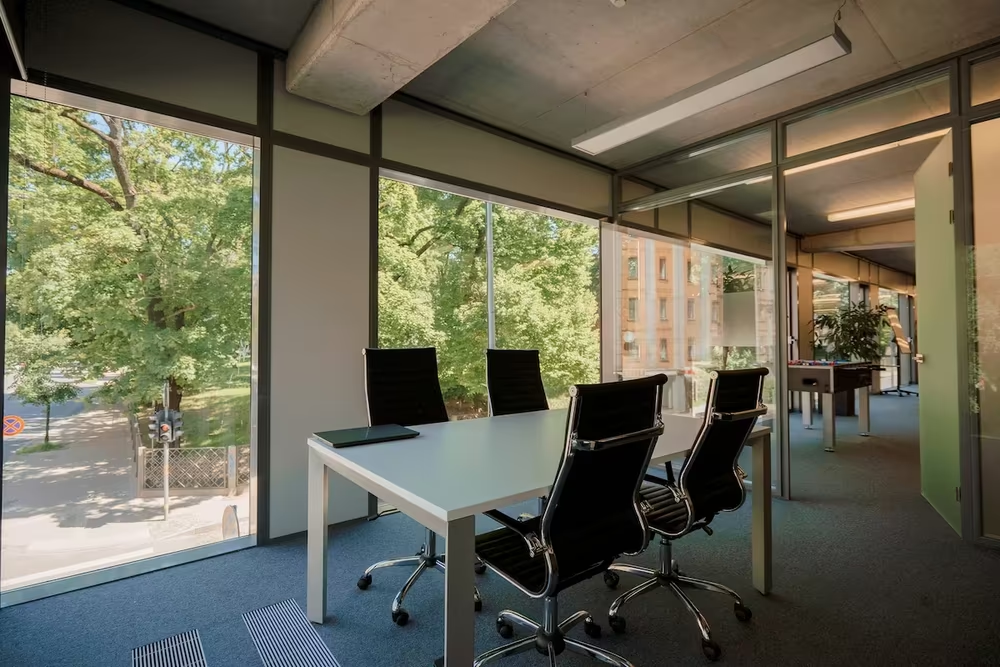
Benefits of Space Planning
Strategic space management delivers tangible, measurable benefits for businesses. The Gensler Institute has published research that shows that well-designed office space usage with big gains: 94% of employees in high-performing spaces report a positive impact on their productivity (vs 45% in low-performing spaces), and decision-making speed is far higher too.
Effective office layout and space management planning unlock:
- Improved collaboration through better-designed meeting rooms and breakout spaces, such as team meeting booth
- Reduced wasted space and cost savings through efficient space allocation
- Enhanced productivity by aligning space is used with daily workflows
- Future proof flexibility for expansion or future growth
Key Benefits of Business Needs and Space Planning
This framework is a great way to go about it - but you will also need to sell your space planning initiative internally. And for that, you will need to be clear on what the business will get out of it. This is what you can tell them...
Cost Efficiency
Effective space management minimises wasted space, reduces energy costs, and lowers maintenance costs. Smart space usage combined with energy efficient lighting and storage solutions can deliver significant cost savings over time.
Increased Productivity
When a well designed space matches employee workflows, output rises. Reducing distractions and offering designated quiet areas or hot desking options helps staff focus on focused work. The benefits of a quiet room at work are often overlooked, but can make a big difference to employee effectiveness.
Enhanced Employee Satisfaction
A thoughtful office environment improves employee experience and morale. Employees feel valued when their business needs are reflected in space management planning, improving retention and loyalty.
Superior Workplace Experience
Beyond comfort, the best offices create inspiring environments. Natural light, ergonomic design, and modular furniture all contribute to employee well being and reduced absenteeism. These are the hallmarks of a modern office people actually want to come into.
Optimised Collaboration and Communication
Space allocation for conference rooms, breakout spaces and focus areas encourages idea-sharing, concentration and teamwork. Fluid design supports different workstyles, fostering stronger connections between teams. If you want to check out an example of how a soundproof booth creates the perfect environemnt for focused work, check out our work booth.
Flexibility for Hybrid Work
Modern workplaces require agility and smart temporary office solutions. Spaces that accommodate flexible seating, hot desking, and flexible schedules allow teams to adapt as priorities shift. This strategic process helps balance remote and in-office activity. Designing for flexible office space from the start makes these shifts painless.
Better Resource Utilisation
A strategic space management approach ensures every square metre contributes to business objectives. Use office space monitoring to identify underused areas and make proactive changes.

How to Implement an Effective Space Planning Strategy
Executing a strong space management strategy involves more than drawing up a floor plan. Consider the following steps:
- Gather data: Use occupancy data, management software, and facility management reports to measure space usage accurately.
- Set objectives: Define how the space is used and link these goals to broader business needs.
- Engage employees: Encourage employee feedback on comfort, collaboration, and noise control.
- Review frequently: Conduct quarterly reviews to ensure space utilisation supports productivity and morale.
- Incorporate technology: Integrate workplace technology and room booking systems to track and adapt usage dynamically.
- Plan for scalability: Make sure layouts are future proof, allowing for future growth and reconfiguration.
The most significant benefits come from treating space management as a continuous improvement process rather than a one-off project.
Conclusion
Business needs and space planning are inseparable. When aligned properly, office space planning ensures your physical space actively supports business objectives rather than working against them. From smarter office layouts and well-considered floor plans to reducing inefficient space allocation, a strategic approach helps businesses improve employee productivity, control operational costs, and make better use of every square foot. Effective space management turns underutilized spaces into valuable assets and supports focused work, collaboration, and day-to-day business functions across modern corporate offices.
Strategic space planning is also essential for long-term resilience. By analysing occupancy data, usage patterns, and current space usage, organisations can monitor space utilization, reduce wasted floor space, and manage real estate costs more effectively. This data-led approach improves operational efficiency, supports business growth, and helps companies adapt their workplace management strategy as teams evolve. Meeting rooms, meeting spaces, private offices, and flexible spaces all play a role in creating a productive environment that balances collaboration with concentration.
Persy Booths understands how commercial space planning connects people, place, and performance. We work with businesses to design office space that enhances employee experience, supports employee presence, and delivers efficient space management without unnecessary energy consumption or cost. From supporting collaboration spaces to improving indoor air quality and energy costs, aligning business needs with space planning is one of the smartest investments a business can make for sustainable growth and long-term success.
Business Needs and Space Planning: FAQs
.avif)
Passionate, progress-driven venture & business developer with startup and corporate experience. I speak business, while keeping customers in my heart.


.avif)