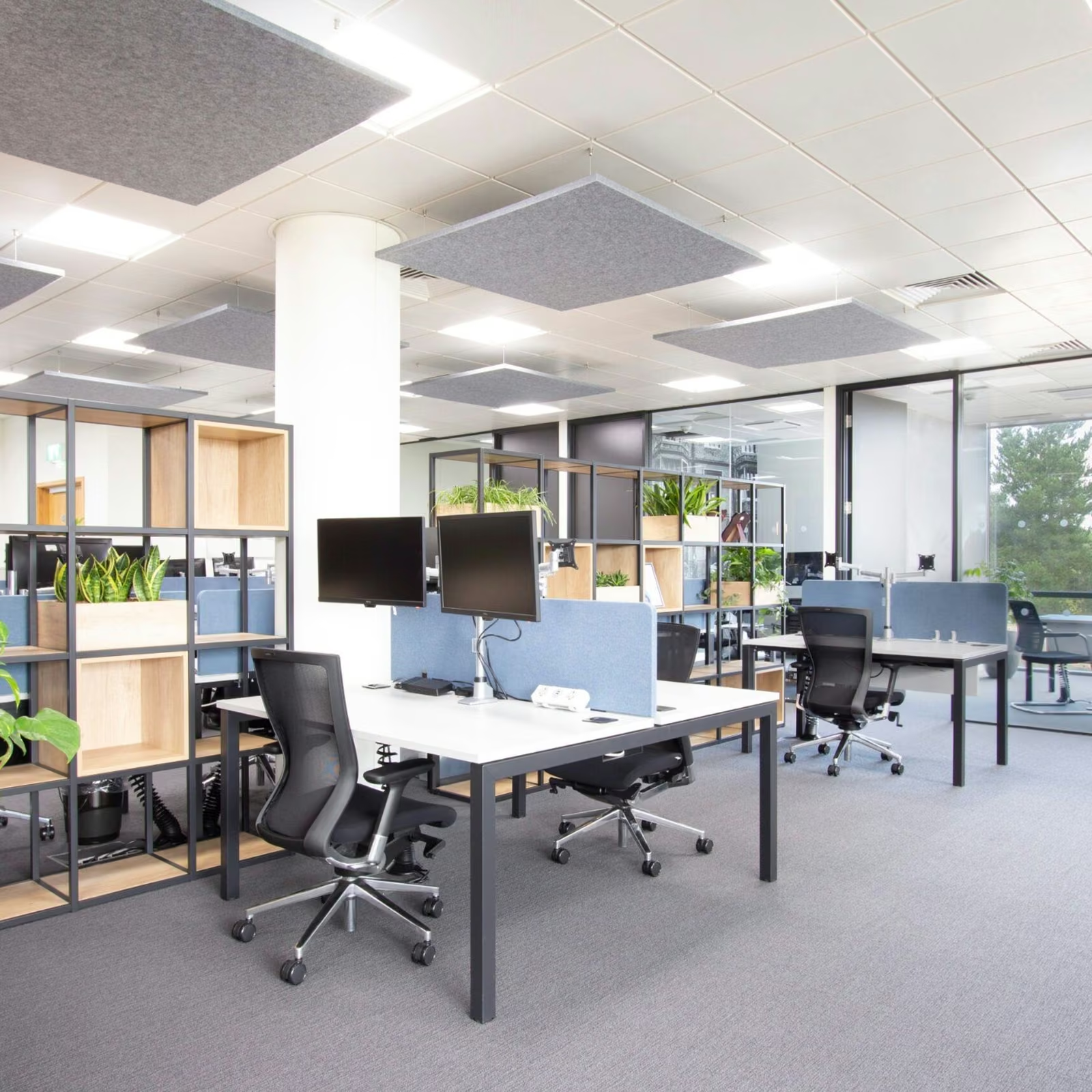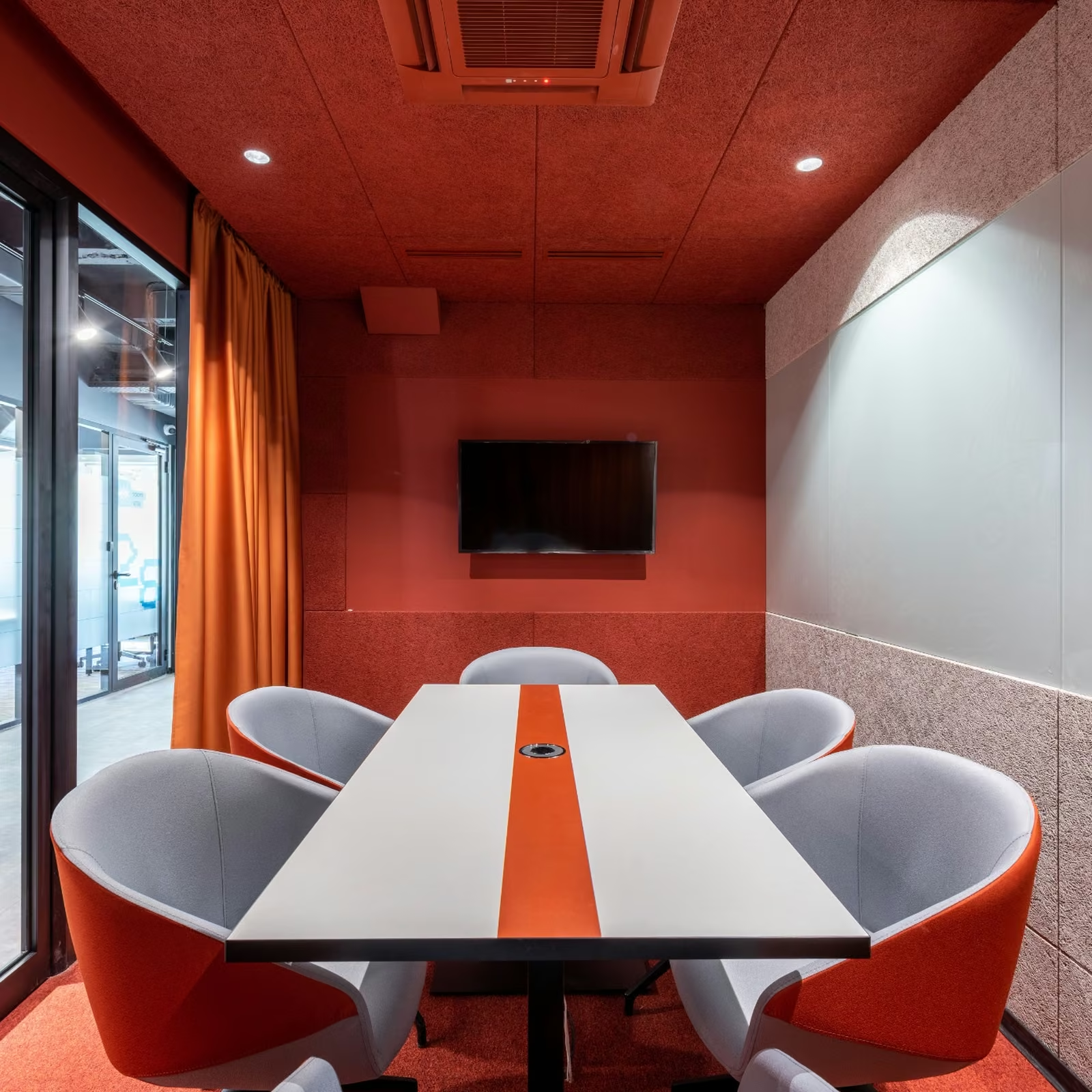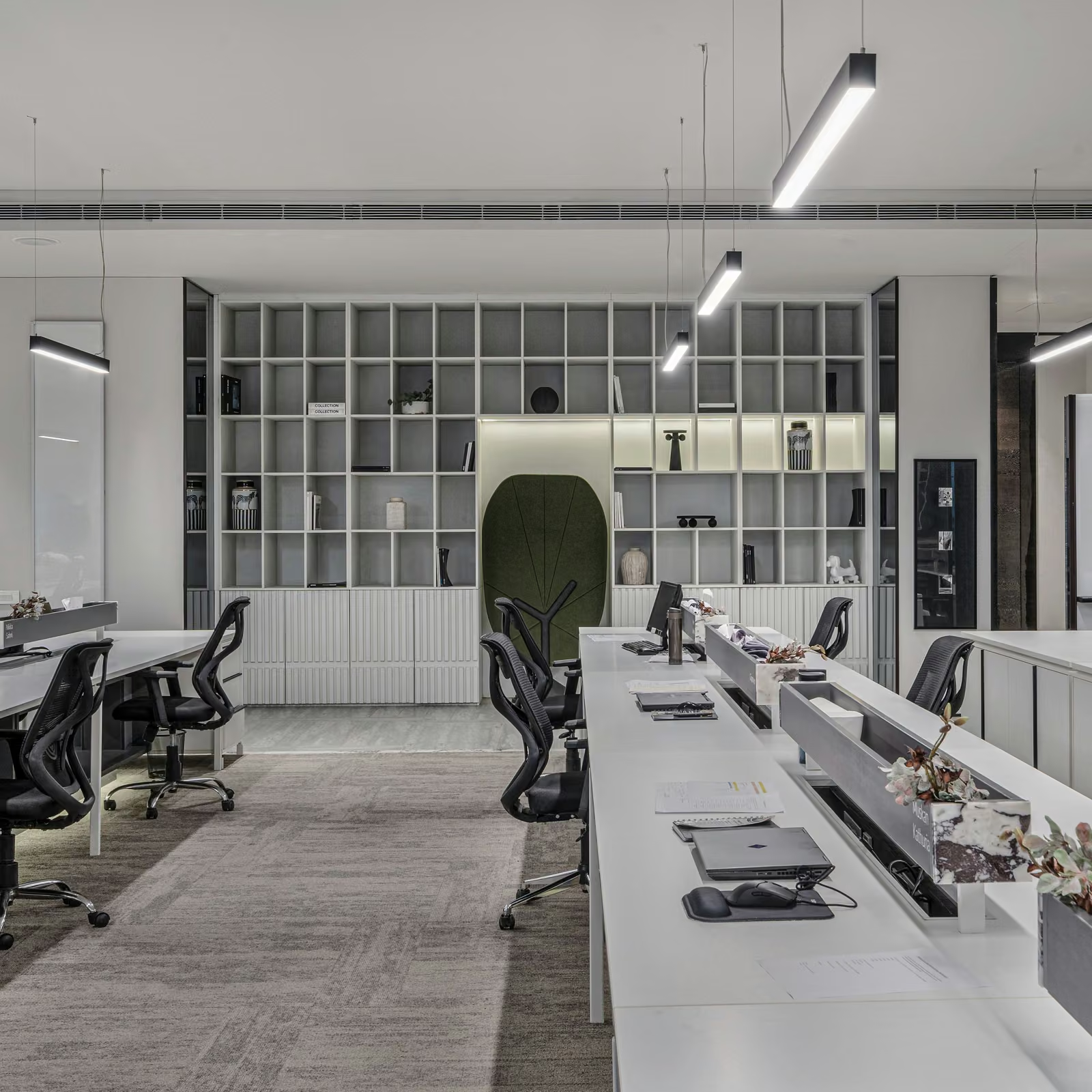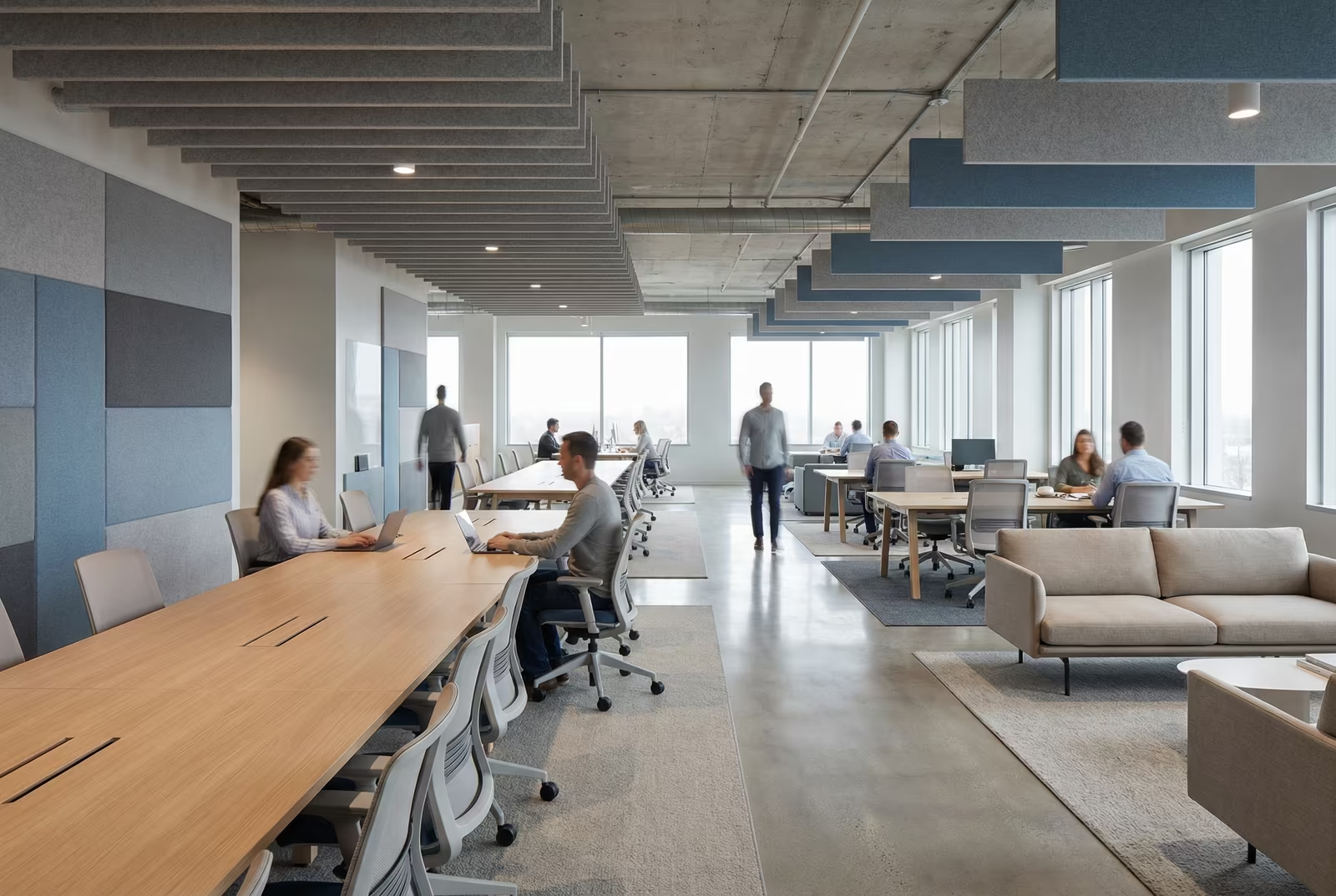
Can you hear that? It's the sound of productivity and success – provided you are carefully managing your office acoustics. Office acoustics has become one of the most overlooked, yet most influential, elements of modern office design. As organisations move towards open plan offices, hybrid working, and collaboration-led layouts, noise has quietly become one of the biggest barriers to focus, wellbeing, and performance.
At Persy Booths, we spend every day working with companies that care deeply about their office environment. While soundproof office pods are one part of the picture, good office acoustics is really about balance – balancing focus with collaboration, function with cost, and acoustic comfort with flexibility. Overspending on equipment isn’t always the answer, but under-investing in acoustic solutions almost always comes at a productivity cost.
This guide explains why office acoustics matter, how poor acoustics affect employees, and which office acoustic solutions genuinely make a difference, without unnecessary complexity or expense.
Key takeaways from this article
- Poor office acoustics directly affect focus, communication, wellbeing, and productivity.
- Open plan offices amplify sound energy through hard surfaces, reflections, and reverberation.
- Acoustic panels, sound absorbent materials, and thoughtful office layout dramatically improve acoustic comfort.
- Installing a quiet zone or soundproof phone booth can restore speech privacy without redesigning the entire office.
- The most effective acoustic treatment combines layout, materials, and targeted private spaces.
How Sound Behaves in an Office
To fix office acoustics, it helps to know how sound moves through a room. Three things happen at once:
- Direct sound: what you hear straight from the source, such as a colleague speaking to you.
- Reflected sound: sound that bounces off hard surfaces like glass, concrete and ceilings and reaches you a fraction later, blurring clarity.
- Reverberation: many overlapping reflections that make a room feel echoey; the harder the surfaces, the longer it lingers.
Not all noise is bad, either. Research by Mehta, Zhu and Cheema (2012) found that a moderate hum of around 70 dB can actually boost creative thinking, while a louder 85 dB harms it. The real problem in most offices is not volume alone, but the unpredictable, speech-heavy noise that keeps pulling focus.
Why Do Office Acoustics Matter?
Office acoustics matter because sound shapes how people think, communicate, and perform at work. In a busy office space, sound waves travel freely, bouncing off glass, concrete, ceilings, and walls. Without acoustic treatment, sound energy builds up, increasing background noise, echo, and distraction.
Research consistently shows that high office noise levels reduce concentration, increase errors, and raise stress. According to the World Economic Forum, typical levels of ambient noise "increased the negative mood" of workers by 25%. And many companies are not addressing the problem: the Leesman index shows that two thirds of global workers are dissatisfied with the way noise levels are controlled in the office.
In a modern office, employees switch constantly between focused work, phone calls, collaboration, and meetings. Without acoustic design that supports these activities, even well-designed spaces become frustrating. Office acoustics is not about silence – it is about control, clarity, and comfort.

How Poor Office Acoustics Affect Employees and Productivity
Poor acoustics don’t just make offices unpleasant – they undermine how people work. When sound is unmanaged, distractions multiply, conversations overlap, and speech clarity drops. Over time, this damages productivity, morale, and performance. Office noise reduction solutions – whether in the form of separate areas or simply insisting on quieter behaviour – are becoming more important in the workplace.
Noise, Distraction, and Loss of Focus
Speech is the most distracting type of office noise. Unlike a steady hum, conversations constantly change in pitch and rhythm, pulling attention away from tasks. In open plan offices, phone calls, informal discussions, and video meetings create a constant stream of interruptions.
When sound bounces off hard surfaces like glass walls, concrete floors, and exposed ceilings, reverberation increases. Employees struggle to hear clearly, and this loss of focus adds up over a working day, reducing deep work time and increasing fatigue.
To find out more, check out our guide on common office distractions – you may recognise some of them!

Employee Stress, Fatigue, and Dissatisfaction
Persistent background noise raises stress levels. Employees in noisy environments report higher fatigue, lower motivation, and increased frustration. Over time, this affects employee wellbeing and contributes to burnout and absenteeism.
Noise control is therefore not just an acoustic issue – it is a wellbeing issue. A supportive working environment should reduce unnecessary stressors, not amplify them.
Communication Breakdowns and Reduced Privacy
Poor acoustics damage communication in two ways. First, speech clarity suffers in meeting rooms and collaborative spaces, leading to misunderstandings. Second, speech privacy disappears.
When confidential conversations can be overheard across desks, employees become reluctant to speak openly. This affects everything from performance reviews to sensitive client phone calls.
Using office acoustic panels to keep meeting areas separate from the office hubbub – or installing a team meeting booth – can be an effective and welcome escape for those who want concentration or privacy.
How to Measure and Identify Acoustic Problems in an Office
You don’t need specialist equipment to identify acoustic problems. Many issues are immediately noticeable once you know what to look for.
Start by listening. Is there a constant hum from HVAC systems or equipment? Do conversations carry across the room? Does sound echo after someone speaks? These are signs of poor acoustic performance.
Next, observe behaviour. Are employees wearing headphones all day? Do people leave their desks to take phone calls? Are meeting rooms difficult to use without closing doors? These behaviours indicate that the office environment is not supporting focus or speech.
Finally, assess surfaces. Large areas of glass, concrete, and exposed ceilings reflect sound waves, increasing reverberation. Offices dominated by hard surfaces almost always need acoustic treatment.
For a more precise picture, acousticians measure reverberation time (RT60, how long sound takes to fade away) and rate materials by their Noise Reduction Coefficient (NRC). As a rough guide, a comfortable office aims for an RT60 below about 0.6 seconds.
Top Cost-Effective Office Acoustics Solutions
Improving office acoustics does not require a full redesign. The most effective office acoustic solutions combine layout changes, targeted private spaces, and sound absorbent materials.
1. Add Private Spaces and Quiet Zones
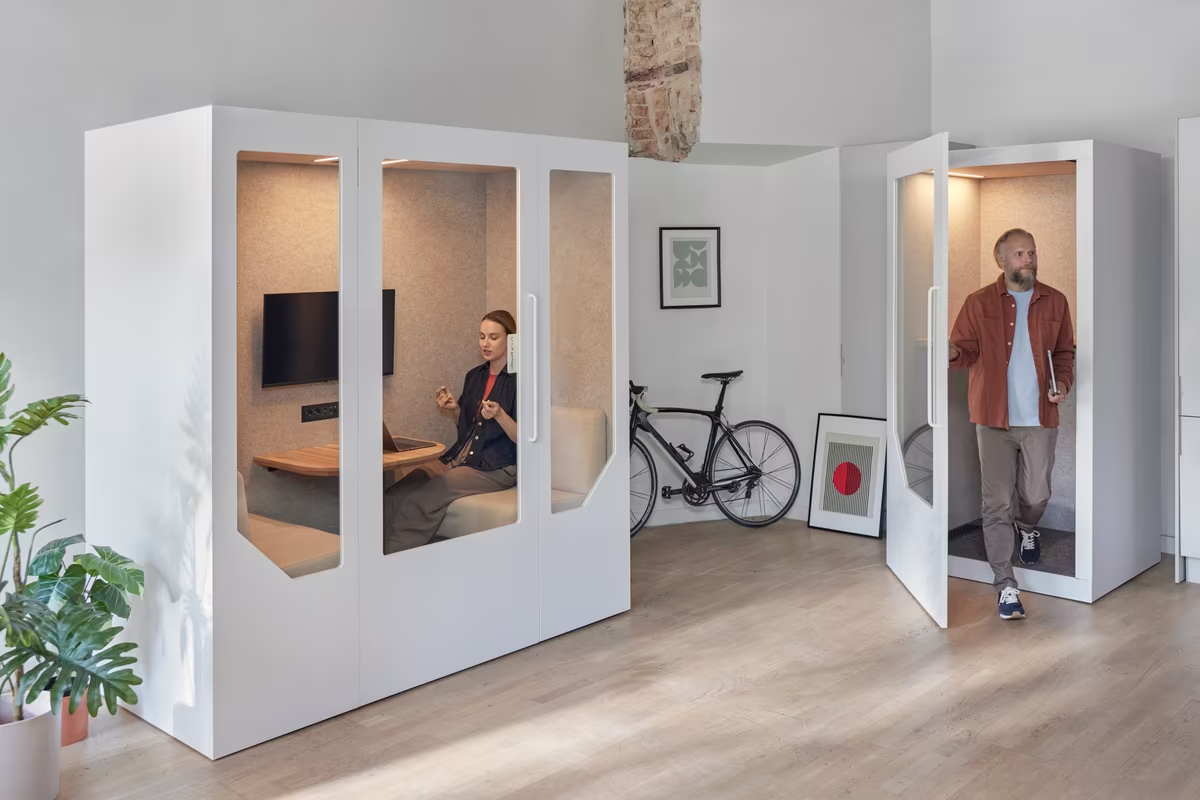
Private spaces give employees somewhere to focus, make phone calls, or hold sensitive conversations. Office phone booths and enclosed office pods are one of the fastest and easiest ways to reduce office noise without altering the entire workspace. If you are weighing up models, our guide on how to choose the best office pod walks through the key specs.
It's also important to reduce distractions across the office while supporting flexible working styles, so make sure you choose the most appropriate solution depending on your needs. A two person phone booth is great for one-on-one meetings but, if concentrated solo work is your priority, a standard work booth may be a cheaper and more suitable option.
2. Improve Office Layout and Team Arrangement
Office layout strongly influences noise levels. Placing collaborative teams next to quiet work zones creates conflict. Instead, group similar activities together, for example separate a breakout area from focus desks and position meeting rooms away from open plan spaces. Use storage, partitions, or booths as acoustic buffers. For more on layout strategies, see this guide to collaborative workspaces.
3. Use Sound-Absorbing Materials
Sound absorbent materials reduce reverberation by preventing sound from bouncing around a room. Acoustic panels are one of the most effective and versatile tools available.
Panels can be installed on walls, ceilings, or as free-standing partitions, and they work best when sound-absorbing materials cover roughly 20-30% of wall surfaces. A wide range of options, including cork, felt, and acoustic foam, can improve acoustic comfort, while recycled PET felt offers excellent absorption and supports sustainability when combined with acoustic ceiling treatments, carpets, and soft furnishings.
Unlike sound insulation, which limits sound transfer between rooms, acoustic panels improve the quality of sound within a space, and our guide to soundproofing vs sound absorbing explains that difference clearly.
4. Reduce Speech Intelligibility Strategically
Not all sound needs to be eliminated. In some areas, reducing speech intelligibility is enough. When conversations are less distinct, they become less distracting.
This can be achieved through layout changes, acoustic treatment, and controlled background noise. The goal is to prevent speech from carrying across open plan spaces without silencing collaboration.
5. Introduce Sound Masking Systems
Sound masking systems add a controlled layer of ambient noise to reduce distraction. They work well in large, consistent open plan spaces but are less effective in smaller or irregular rooms.
Sound masking should support other acoustic solutions – not replace them. For a balanced explanation, see this guide to the benefits that can be achieved with a white noise machine.
6. Separate Noisy Activities and Equipment
Printers, coffee machines, and collaboration hubs generate noise. Isolating these activities behind doors or in dedicated rooms reduces background noise across the office.
This is a simple change that often delivers immediate improvements.
7. Add Plants and Soft Furnishings
Plants, curtains, upholstered furniture, and rugs all help absorb sound. While not a replacement for acoustic panels, they also contribute to a calmer office environment and improve wellbeing.
Conclusion: Have You Considered Your Office’s Acoustics?
Office acoustics shape how people experience work. Poor acoustics reduce focus, damage communication, and increase stress – while well-designed acoustic solutions support productivity, wellbeing, and collaboration.
The most effective approach combines thoughtful office design, acoustic treatment, and flexible private spaces. Persy Booths works closely with organisations to strike the right balance between performance and cost – avoiding unnecessary overspend while delivering meaningful improvements.
If your office feels noisy, distracting, or tiring, it’s worth getting in touch. The solution may be simpler than you think.
Office Acoustics: FAQs
.avif)
Passionate, progress-driven venture & business developer with startup and corporate experience. I speak business, while keeping customers in my heart.