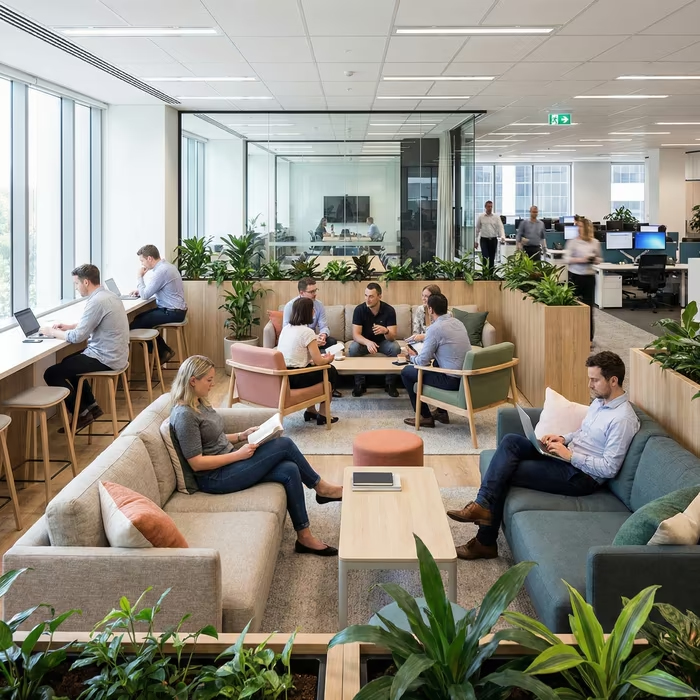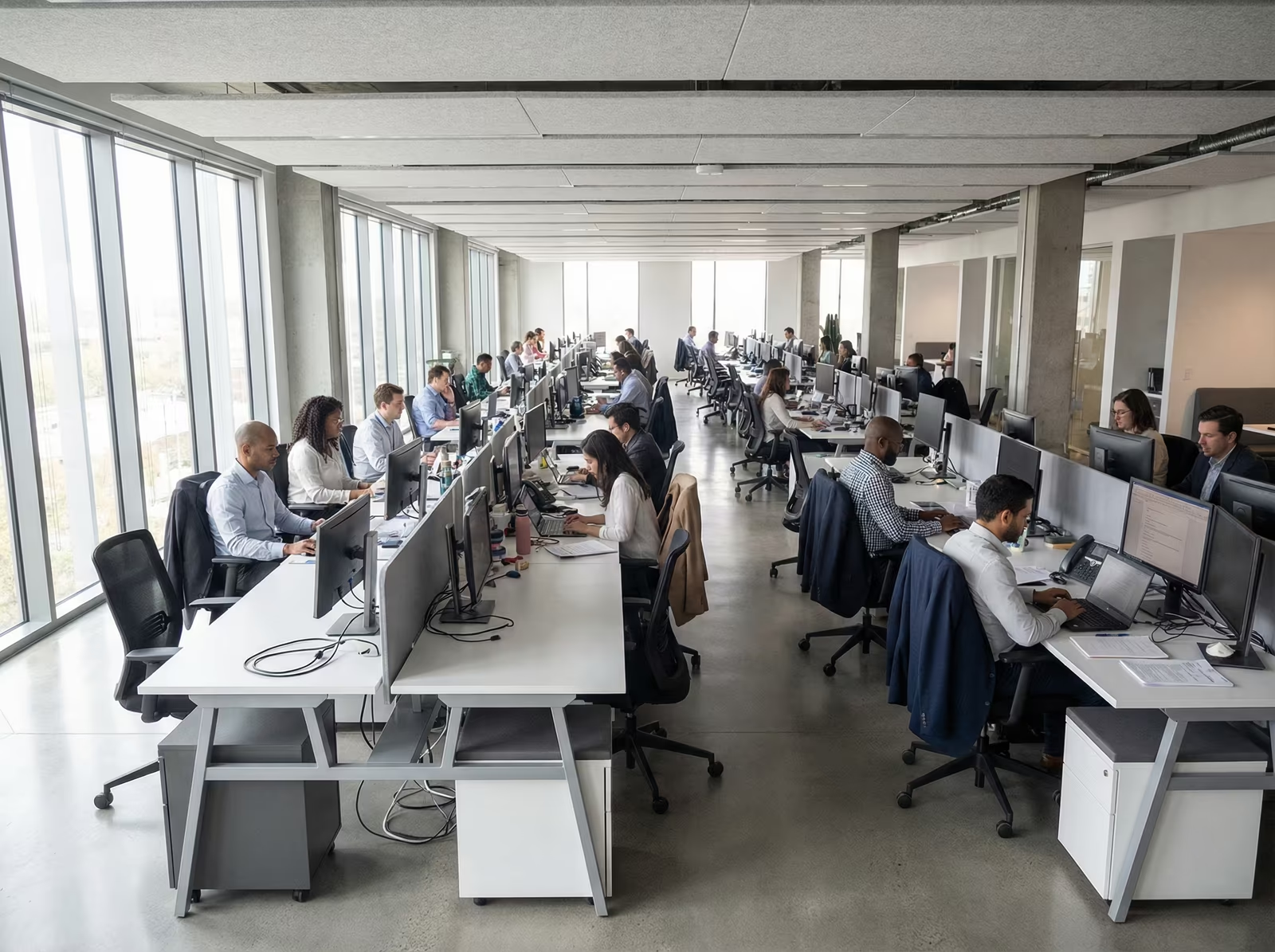
Some offices are like ghost towns. Others are so busy, you can't hear yourself think. But what's the right balance for office utilisation? How can you plan accurately how much space you need? This is where office space monitoring comes in.
Office space monitoring is becoming an essential tool for organisations that want to plan their workplace based on evidence rather than assumption. By using reliable data on how desks, rooms, meeting rooms, and shared spaces are actually used, businesses can make smarter decisions about space planning, operational costs, and future workplace strategy.
Persy Booths works closely with organisations that are actively trying to balance cost, efficiency, and employee satisfaction. That proximity gives us a clear view of a common challenge – companies either underinvest in understanding their office space or overspend on solutions without first validating the need. Office space monitoring provides a practical way to avoid both extremes, ensuring investment is proportional, justified, and aligned with real usage.
When implemented well, occupancy monitoring becomes the foundation for better workplace management, healthier work environments, and long-term efficiency.
Key takeaways from this article
- Office space monitoring replaces assumptions with reliable data on how space is actually occupied and used.
- Occupancy sensors and space utilisation data help organisations reduce wasted space.
- Monitoring supports better decision making around layouts, hybrid working, and shared areas.
- Real time data improves employee satisfaction by reducing overcrowding and unused areas.
- Data driven insights help reduce costs while improving the overall workplace experience.
Why Office Space Monitoring Matters for Workplace Planning
Workplace planning has traditionally relied on headcounts, lease sizes, and occasional surveys. In hybrid offices and flexible workplaces, these methods no longer reflect reality. Office space monitoring matters because it captures how people actually behave in a building – not how planners expect them to.
Accurate occupancy data supports better capacity planning, investment decisions, and day-to-day workplace management. It also helps organisations align office space with changing attendance patterns while maintaining comfort, access, and safety.
Used correctly, monitoring supports several outcomes at once – cost savings, efficiency, and a better workplace experience. It also complements other environmental factors such as acoustics, lighting, and noise levels, which directly affect productivity. For example, an excessive office noise level can undermine otherwise well-designed spaces, making data-led planning even more important.
Office real estate experts CBRE recently noted in their report on office utilisation that: "Organisations are placing a greater emphasis on how real estate supports workplace effectiveness rather than relying on traditional metrics such as square feet or square meters per person." Another recent report by Remit Consulting noted that office space utilisation in the UK reached a new post-Covid high of 37.1% in 2025. This illustrates not just that only a third of office space is used, but that organisations are increasingly looking to measure utilisation to a high degree of accuracy.
Understanding Actual Space Usage
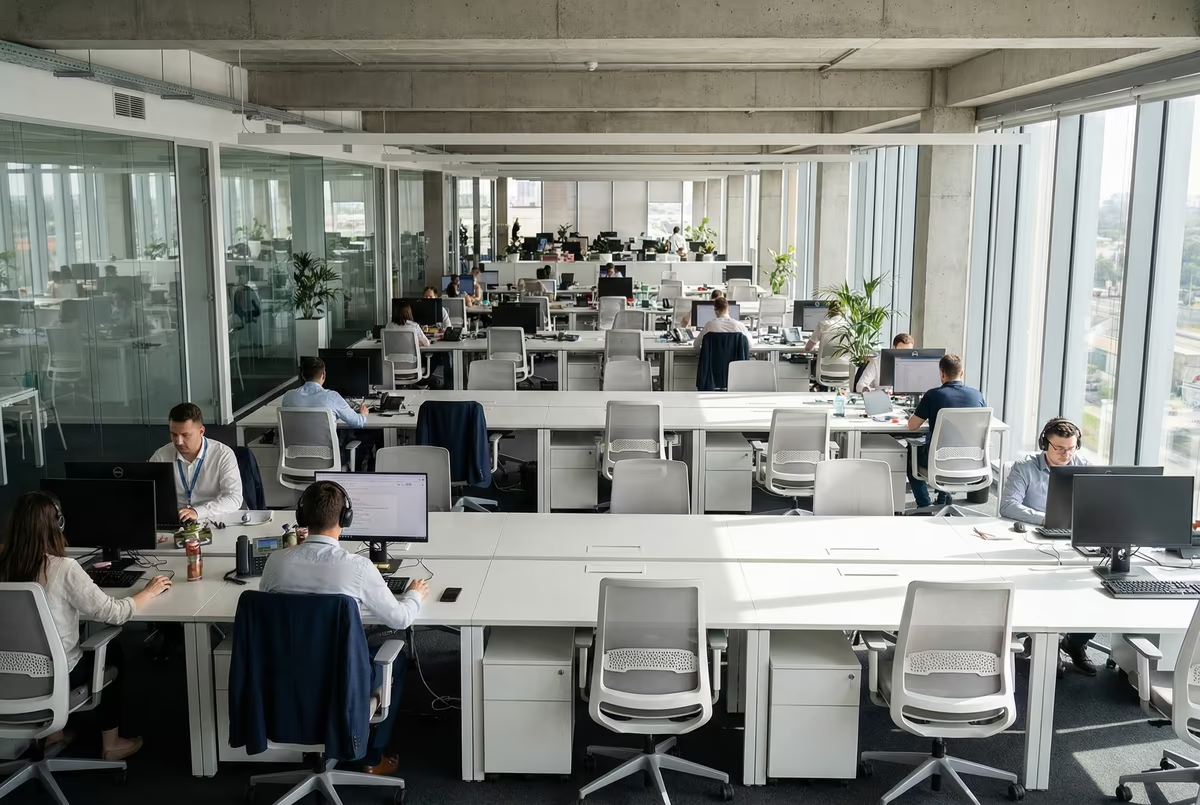
Space usage is rarely evenly distributed. Desk occupancy sensors, people counting sensors, and workplace occupancy sensors reveal that some desks are permanently occupied, while others sit empty for weeks. Meeting rooms may appear busy in calendars but remain unoccupied for much of the day.
By analysing usage patterns across desks, rooms, communal spaces, and shared areas, facility management teams gain insights into where space is being wasted and where demand consistently exceeds supply.
Aligning Office Capacity With Attendance
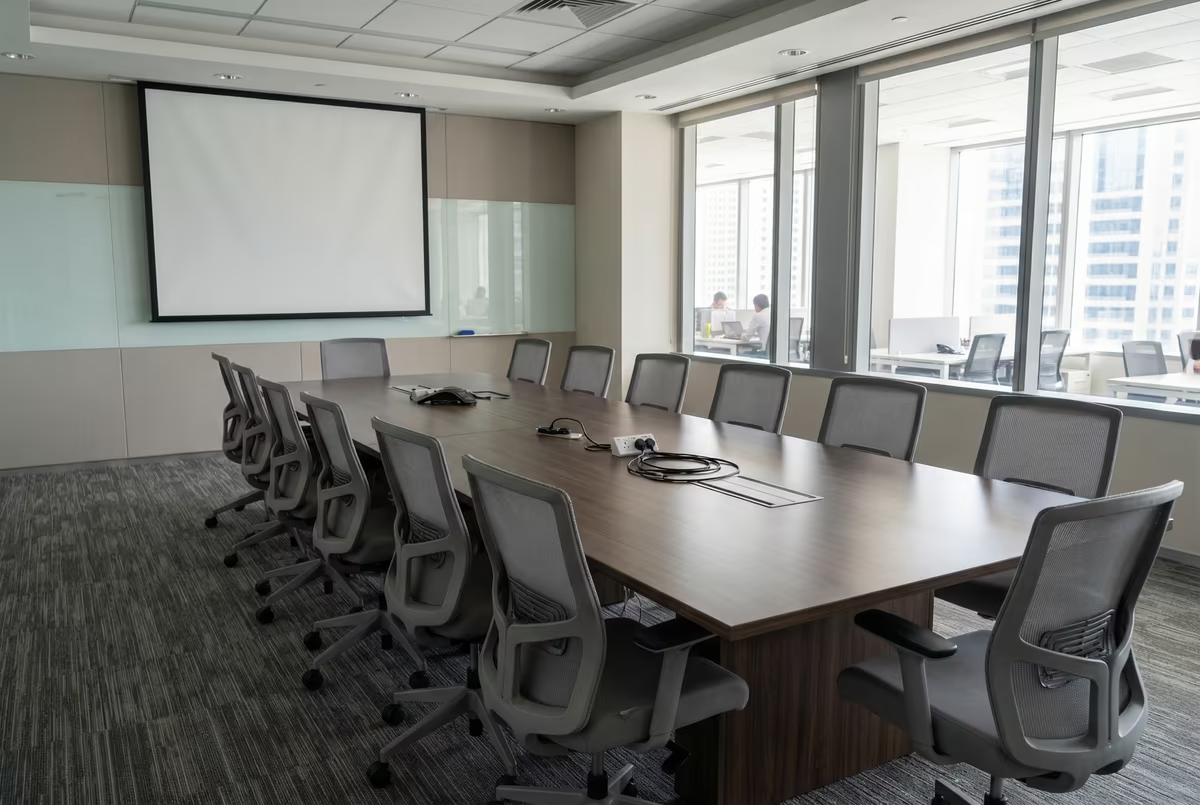
Hybrid working has made capacity planning more complex. Occupancy monitoring allows organisations to track space occupancy by day, floor, or zone, supporting decisions about access, hot desking, and desk sharing policies.
Instead of guessing how many employees are in the office, teams can use real-time data to align services, cleaning, and maintenance with actual occupancy.
Improving Workplace Experience
Employees notice when meeting rooms are always booked but rarely occupied, or when open space feels overcrowded while unused areas sit empty. Monitoring helps rebalance these issues, improving comfort, accessibility, and employee satisfaction without expanding the office footprint.
How Office Space Monitoring Supports Data Driven Decisions
Office space monitoring is only valuable if the data collected is translated into actionable insights. Occupancy data, space utilisation metrics, and usage trends together form a reliable foundation for decision making.
Rather than reacting to anecdotal feedback, workplace teams can evaluate evidence across time, identifying recurring patterns and anomalies. This enables smarter decisions about space availability, layout changes, and investment priorities.
Monitoring also supports operational efficiency. When data shows low occupancy in certain zones, services such as lighting, heating, and cleaning can be adjusted accordingly. Over time, this leads to measurable reductions in operational costs and a more sustainable building strategy.
Crucially, reliable data reduces risk. Decisions about reducing floors, reconfiguring desks, or introducing new shared spaces are supported by evidence rather than assumption.
Office Space Monitoring Technology Explained
Office space monitoring technology is a practical part of the digital workplace, combining sensors, software platforms, and analytics dashboards. These solutions are designed to collect data passively, discreetly, and securely.
Modern systems focus on occupancy rather than individuals. They measure presence, movement, and space usage without identifying employees, supporting privacy-first deployment.

Occupancy and Utilisation Sensors
Occupancy sensors detect whether desks, rooms, and zones are occupied. These include desk sensors, people counting sensors, and environmental sensors that track factors such as temperature or CO₂ levels alongside occupancy. Workplace occupancy sensors are often used in meeting rooms and large meeting rooms to identify underutilisation.
Installation, Maintenance, and Scalability
Most office sensors are wireless, battery-powered, and designed for easy installation. IoT sensors scale across floors and buildings, allowing organisations to start small and expand over time.
Maintenance requirements are minimal, and systems are designed to integrate with existing facility management and security systems.
Security and Privacy Considerations
Privacy and security risks are common concerns. Reputable monitoring solutions collect anonymous occupancy data and comply with data protection standards. Clear communication with employees about what is monitored – and what is not – is essential for trust and adoption. Employers and office managers need to reassure staff that sensors are there to optimise the working experience – not to check up on employees!
Using Office Space Monitoring Data to Optimise the Workplace
Once data is available, organisations can begin optimising their workplace in practical, measurable ways. Office space monitoring supports improvements across layout planning, capacity management, and flexible working models.
Space Optimisation and Layout Planning
Usage data highlights which desks rooms and shared areas are underperforming. This enables targeted changes such as converting unused desks into collaboration zones or reallocating space to higher-demand functions.
For example, monitoring may show demand for enclosed focus areas rather than additional desks. This insight can justify investment in solutions such as a soundproof phone booth or work booth rather than spending more money unnecessarily to expand floor space. Such areas are perfect for focused, solo work or for confidential calls.
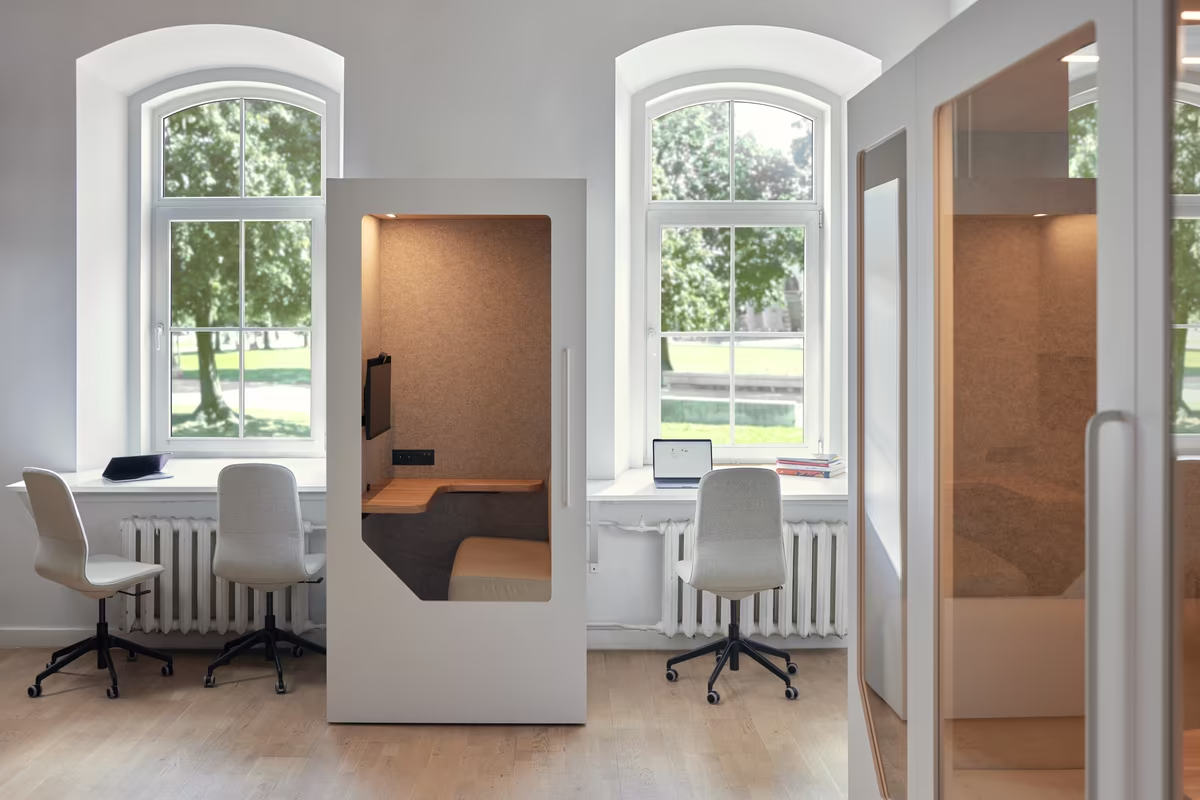
Balancing Capacity and Utilisation
Overcrowded areas and wasted space often coexist. Occupancy management helps balance capacity across floors and zones, ensuring employees can find suitable spaces without frustration.
Monitoring also prevents over-spending. Rather than purchasing large numbers of soundproof office pods upfront, organisations can validate demand first. Buying direct from manufacturers such as Persy Booths helps reduce costs by avoiding distributor mark-ups while still achieving the right balance between function and price.
For larger collaboration needs, data may support the addition of a team meeting booth or two person phone booth in precisely the areas where demand is proven. Why invest in the extra floor space needed for a large meeting room when modular, easily installed meeting booths can meet the need perfectly for a smaller investment? This is precisely the kind of decision that office planners are able to make with confidence when supported by data from office space monitoring systems.
Supporting Agile and Flexible Work Models
Hot desking, shared spaces, and phone booths all rely on visibility of space availability, which is central to agile working. Real time occupancy monitoring allows employees to locate available desks and rooms, improving flow and reducing friction in flexible workplaces.
Is Office Space Monitoring Right for Your Organisation?
Office space monitoring is most effective when aligned with clear goals. Organisations considering monitoring should assess their readiness across several factors, including workplace size, hybrid working adoption, and decision-making maturity.
Monitoring is particularly valuable where there is uncertainty about space usage, rising operational costs, or pressure to improve efficiency without compromising employee experience. It also supports organisations planning future office changes, lease renewals, or workplace redesigns.
When introduced transparently and used responsibly, monitoring becomes an essential tool rather than a surveillance concern.
FAQs
.avif)
Passionate, progress-driven venture & business developer with startup and corporate experience. I speak business, while keeping customers in my heart.