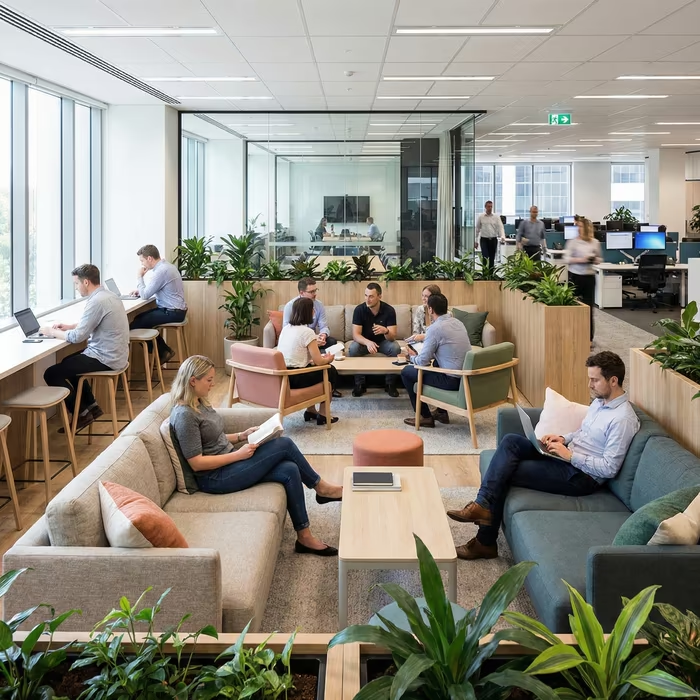
If you look around your office and take a moment to consider the people who work there you will notice how very different they are from each other. Human diversity and individuality is a great thing – but it creates a problem. And your solution could very well be agile workspace design.
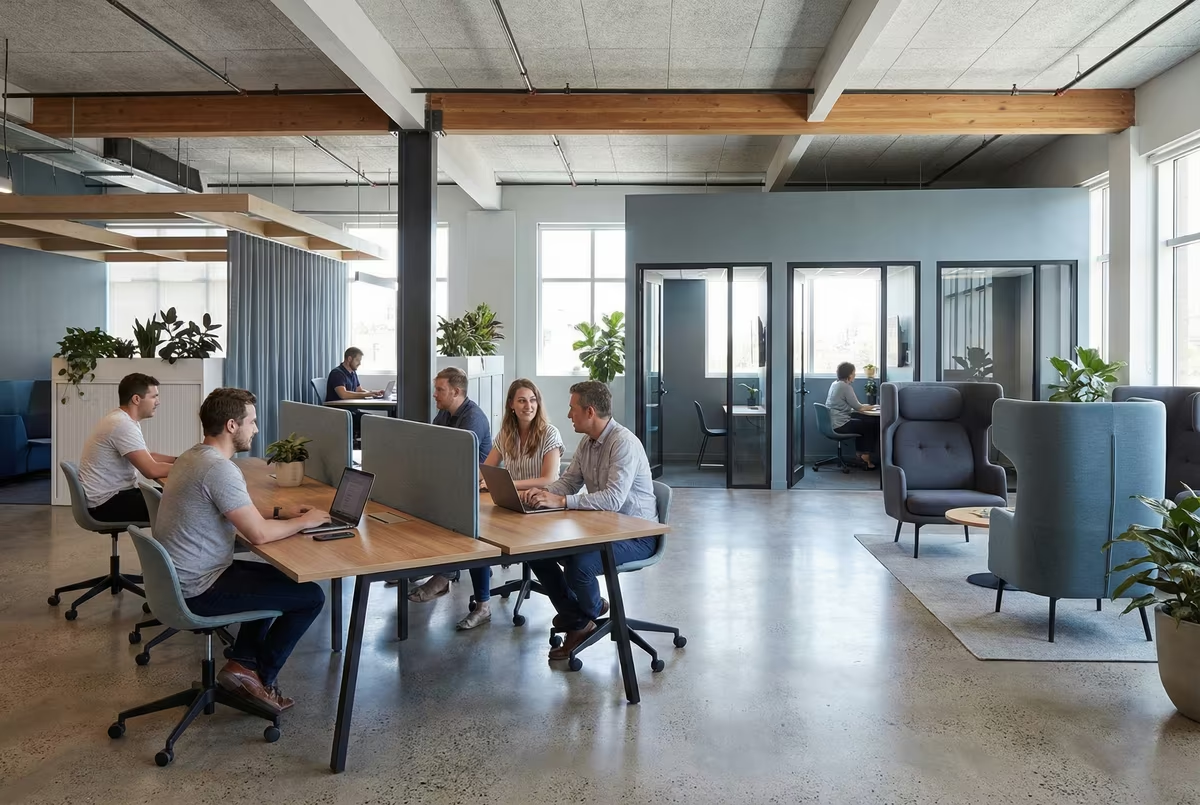
Agile workspace design is an approach to workspace design that supports agile working by recognising a simple truth – people do not work in the same way all day, every day. Instead of relying on traditional office layouts built around fixed desks and static roles, agile workspace design creates a physical workspace that adapts to different working styles, tasks, and levels of collaboration.
In an agile workplace, the office environment is made up of a variety of spaces – open plan areas for collaboration, quiet spaces for focused tasks, shared spaces for informal meetings, and enclosed zones that help manage noise and distraction. This creates a dynamic environment that allows employees to work efficiently while supporting knowledge sharing, creativity, and wellbeing.
As hybrid working and flexible working become the norm, organisations are reassessing how their entire office functions. Persy Booths works closely with businesses navigating this shift, which gives us a practical understanding of how agile office design must balance function, cost, and flexibility. Agile workspace design is not about filling offices with expensive features – it is about creating spaces that genuinely support work, and avoiding over-investment where it adds little value.
Key takeaways from this article
- Agile workspace design enables agile working by providing spaces that support collaboration, focus, and movement throughout the working day.
- Agile offices use space more efficiently by reducing reliance on assigned desks and minimising unused floor space.
- Open plan offices work best when balanced with quiet zones, private spaces, and enclosed areas that manage noise and distraction.
- Activity based workspaces improve job satisfaction by allowing employees to choose spaces that suit their tasks and working styles.
- Agile workspace design supports long-term adaptability, helping organisations respond to hybrid working and evolving business goals.
Why Agile Working Is Becoming Popular
Agile working has moved from a niche concept to a mainstream agile working strategy for modern organisations. Several workforce, cultural, and business drivers are accelerating this shift.
One major factor is the widespread adoption of hybrid working. According to Microsoft’s Work Trend Index 2025, employees increasingly expect flexibility in how and where they work. While AI provides tools for improving individual productivity, Microsoft also states the need "to maximise potential for your employees to collaborate when they’re in the office". This is why many organisations are adopting a hybrid working model that blends remote working with time spent in the office. As a result, traditional office layouts with assigned desks and fixed seating are often generally geared towards occupancy levels that no longer exist.
Another driver is the growing awareness of how office space design affects productivity and wellbeing. The British Safety Council notes that "30% of employees were troubled by their physical working environment". Poorly designed office space can negatively impact concentration, collaboration, and job satisfaction. Issues such as noise, visual distractions, and physical barriers are common in open plan spaces that were not designed with agile principles in mind. These challenges are explored in more depth in Persy Booths’ guide to office distractions, which highlights how unmanaged office environments can undermine performance.
Cultural change is also playing a role. Agile workplace design supports knowledge sharing, fostering innovation, and encouraging movement throughout the work environment. Rather than confining employees to a single desk, agile office space design allows people to choose where they work based on the task at hand – whether that is a collaborative zone for teamwork or quiet focus areas for deep concentration.
Finally, business leaders are recognising that office design must align with business goals. Software companies, marketing teams, and corporate teams alike benefit from adaptable processes and flexible furniture that support continuous improvement and evolving ways of working. Agile workspace design helps organisations remain resilient as workforce expectations and business needs continue to change.
The Benefits of Agile Working
Agile working delivers benefits across productivity, wellbeing, and space efficiency when supported by the right physical environment.
Greater Flexibility and Autonomy
Agile workspace design gives employees greater autonomy by allowing them to choose where and how they work. Instead of being tied to an assigned desk, people move between spaces depending on whether they are collaborating, concentrating, or attending informal meetings.
This flexibility supports different working styles and allows employees to work efficiently throughout the day. It also makes it easier for organisations to accommodate hybrid working and remote working without fragmenting teams or weakening company culture.
Better Use of Office Space
One of the clearest benefits of agile office design is improved space efficiency, supported by office space monitoring. By replacing fixed seating with shared spaces and modular furniture, organisations can reduce unused floor space and ensure that the entire office supports productive activity.
Meeting rooms, for example, are often occupied by one or two people taking calls. In agile office space design, these activities are supported elsewhere, freeing meeting rooms for true collaboration. The adoption of flexible office space allows businesses to do more with their existing space rather than expanding their footprint.
Improved Collaboration and Focus
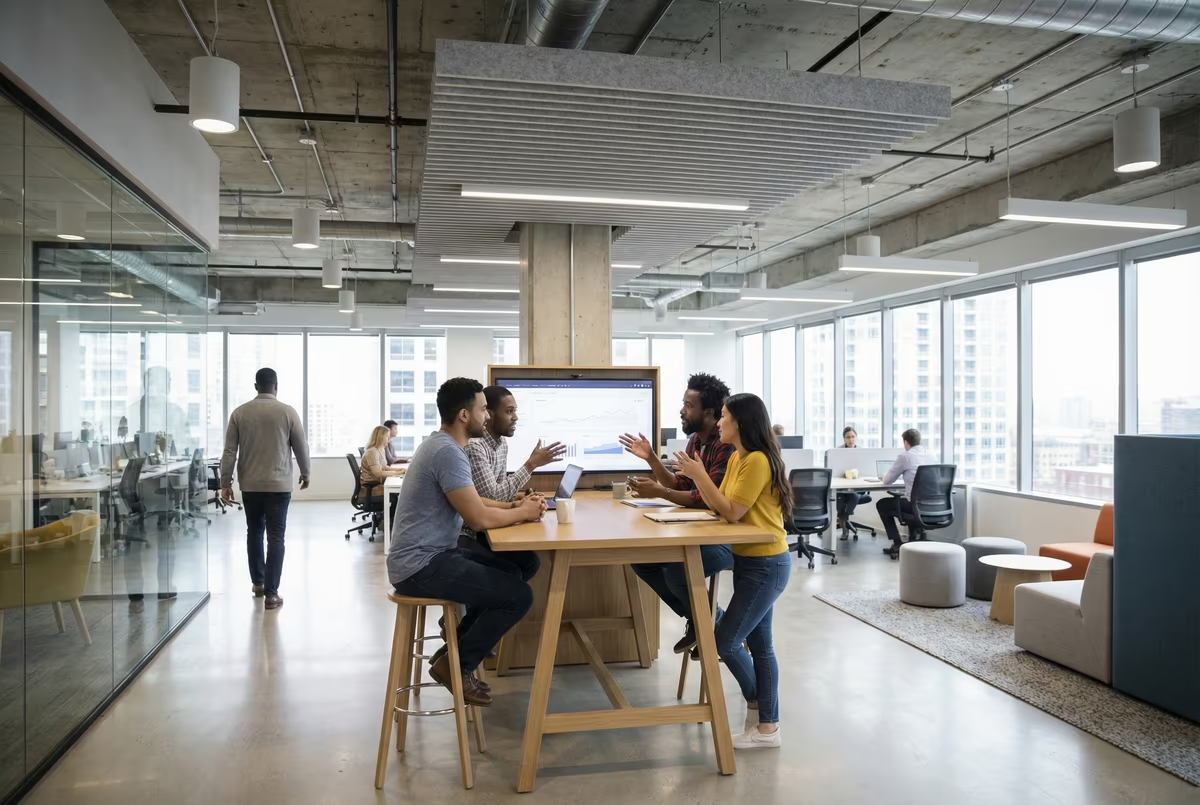
Agile workplaces are designed to support both teamwork and concentration. Collaborative workspaces comprise open plan offices and breakout spaces to encourage interaction and brainstorming sessions, while quiet zones and private spaces protect focus.
Managing the office noise level is critical here. Enclosed solutions such as soundproof office pod installations allow employees to take calls without disrupting others, while also preventing sound from travelling across open plan spaces. This balance helps enhance collaboration without compromising individual productivity.
Future-Ready Work Environments
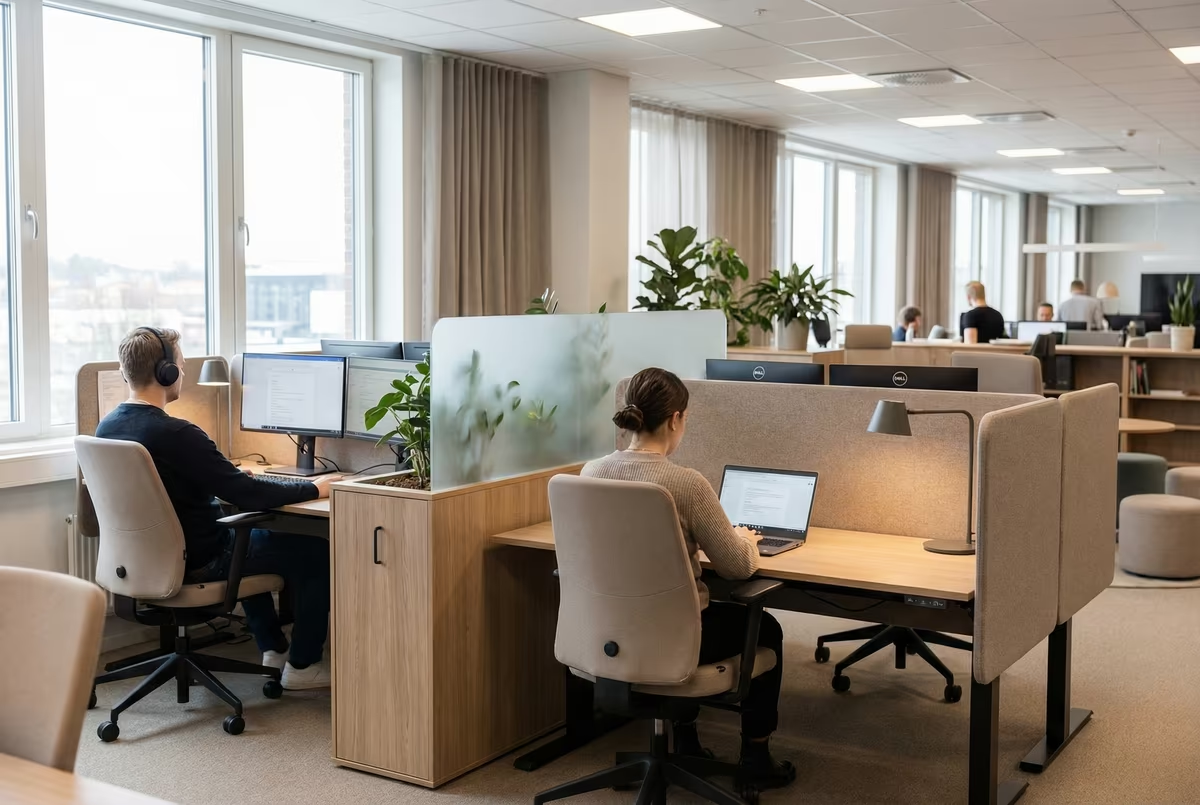
Agile working is generally geared towards long-term adaptability, making temporary office solutions a practical fit. Agile workspace design supports continuous improvement by allowing office layouts to evolve alongside business needs, incorporating office noise reduction solutions as and when needed.
Instead of committing to rigid structures, organisations invest in adaptable processes, flexible furniture, and agile spaces that can be reconfigured as teams grow or change. This makes agile offices particularly well suited to modern workplaces where change is constant.
Types of Agile Work Environments
Agile design brings together multiple office layouts and space types, each supporting different aspects of work.
Open Plan Offices
Open plan offices remain a central feature of many agile workplaces. They support knowledge sharing, foster collaboration, and create a sense of openness within the work environment.
However, open plan spaces must be carefully managed. Without access to quiet spaces and physical barriers, they can become distracting. Agile design addresses this by complementing open plan areas with enclosed and semi-enclosed zones, such as a work booth.
Activity Based Workspaces
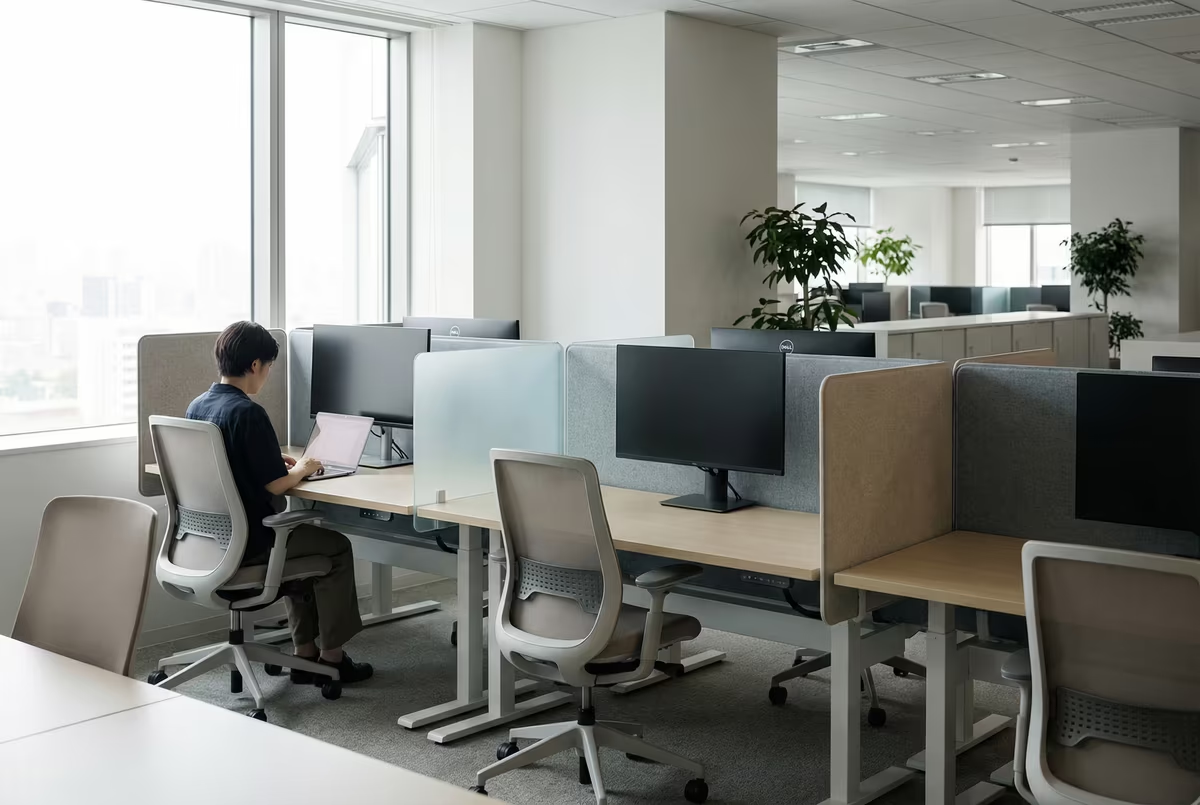
Activity based workspaces are a core component of agile workplace design. These environments are organised around tasks rather than job titles, with spaces designed for specific activities such as:
- Collaborative zones for team discussions and workshops
- Quiet focus areas for solo activity and deep work
- Breakout spaces for informal meetings and short conversations
Hybrid and Flexible Offices
Hybrid and flexible offices are designed to support fluctuating attendance and diverse working patterns. They are particularly effective for organisations operating under a hybrid working model, where employees split their time between home and office.
Within these spaces, a variety of solutions are available, depending on your needs:
- a simple soundproof booth provides a small space for individual focus work, or for privacy when making sensitive phone calls
- solutions like a two person phone booth setups allow small discussions to take place, ensuring distraction-free discussions – while keeping confidential details private. without occupying larger meeting rooms, while individual work zones support focused tasks away from shared spaces.
- Agile offices also often include a team meeting booth that provides flexible meeting spaces without permanent construction, giving teams a place to have productive, focused meetings without occupying larger meeting rooms.
Deploying the right combination of these options ensures enclosed, high-performance spaces that integrate seamlessly – and cost-effectively – into modern workplaces.
Is Agile Working Right for Your Organisation?
Agile working can deliver significant benefits, but it must align with organisational culture and business goals to be successful.
Agile workspace design works particularly well for organisations that value collaboration, flexibility, and employee autonomy. Marketing teams, software companies, and project-based corporate teams often benefit most from agile workplaces that support diverse working styles.
Employee involvement is critical. Organisations should involve employees in decisions about office layouts and space usage to ensure the agile workplace genuinely supports how people work. Without this input, even well-designed agile spaces may be underused.
Cost is another important consideration. Agile office design does not require excessive investment. In fact, over-spending on equipment that is rarely used can undermine the benefits of agile working. Choosing suppliers that strike the right balance between performance and cost – and buying direct from manufacturers where possible – helps organisations create effective agile workplaces without unnecessary expense.
FAQ
.avif)
Passionate, progress-driven venture & business developer with startup and corporate experience. I speak business, while keeping customers in my heart.