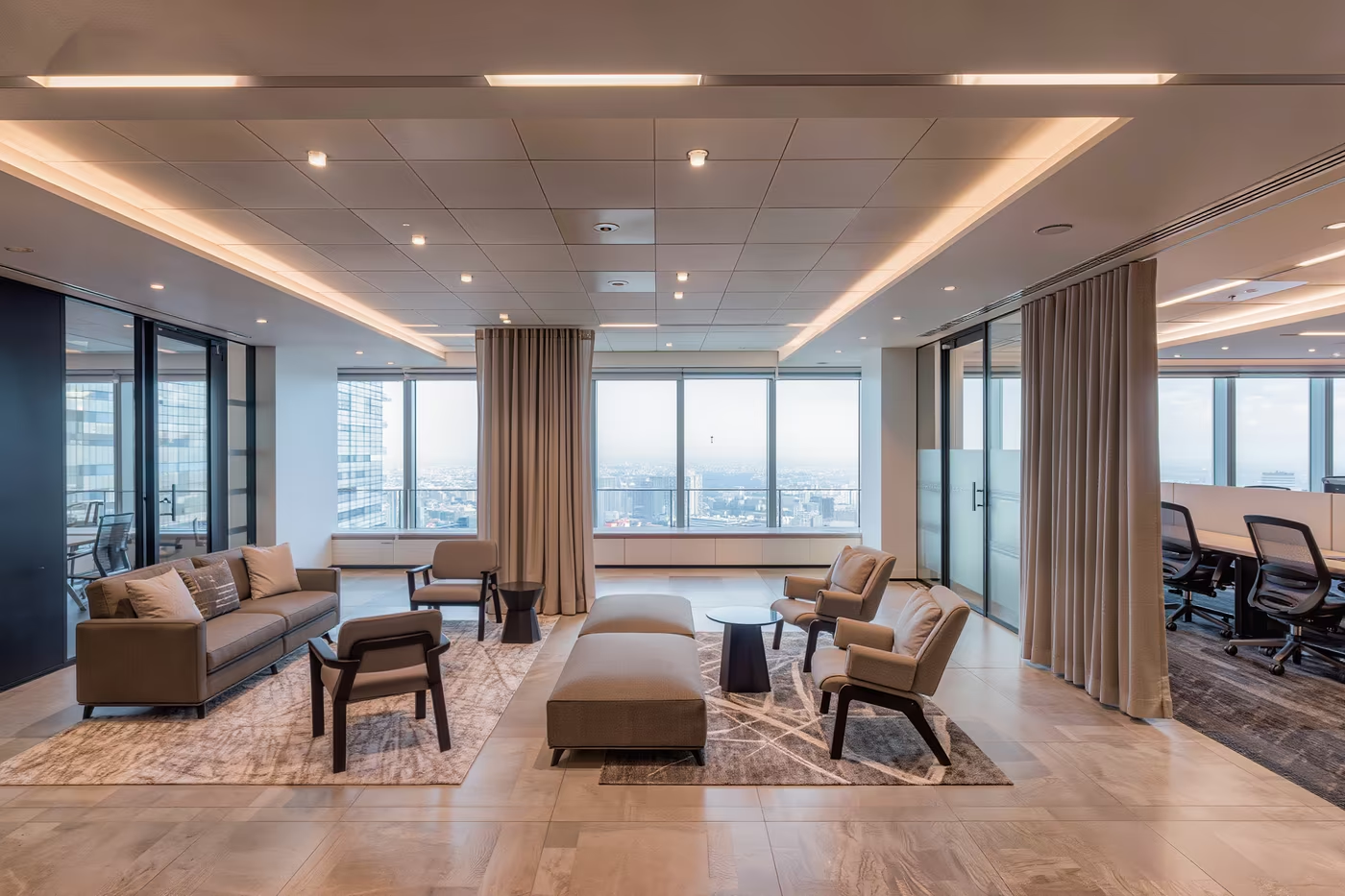
If you’ve ever walked into an empty room and heard your voice echo around the walls, you’ve already experienced the answer. Furniture does absorb sound. But how, and how much? In this article, we’ll explore how everyday items in your home or office affect sound waves, which materials absorb vibrations most effectively, and how to arrange your space for maximum noise reduction.
Here at Persy Booths, we are in the business of helping companies to optimise office space by removing the problem of unwanted noise. Our soundproof phone booths have the perfect balance of materials to maximise soundproofing and sound absorption, and we know how different materials have different effects. And in the same way that we minimise echoes in our booths, furniture can be used to reduce echoes in a room. Let's explain how it works.
Key takeaways from this article
- Furniture made from soft materials can absorb sound and reduce echoes.
- Proper furniture placement improves sound quality and helps control reflections.
- Heavy or upholstered furniture, thick curtains, and carpets dampen noise effectively.
- Furniture reduces sound transmission but can’t replace full soundproofing.
How Furniture Affects Sound
Before we answer “does furniture absorb sound” in detail, it helps to understand what happens when sound travels. Sound waves bounce off hard surfaces such as walls, ceilings, and floors. These reflections cause reverberation and echo, which increase noise levels and reduce clarity.
Furniture plays a key role in sound absorption, not sound insulation. That’s an important distinction. Sound insulation (or soundproofing) prevents sound transmission between rooms – it stops sound getting through walls or ceilings. Sound absorption, on the other hand, focuses on controlling reflections within a room. It’s about improving the way sound behaves once it’s already inside the space.
Soft, porous materials – such as fabric, foam, or dense textiles – are excellent at absorbing sound waves. They convert sound energy into tiny amounts of heat through friction. This means items like sofas, rugs, and curtains help reduce noise and create better acoustics, especially in rooms with hard floors or bare walls.
By contrast, hard or shiny surfaces like wooden tables, glass windows, or metal cabinets reflect sound. This is why a minimalist room may look stylish but feel loud. It's why you hear your voice coming back to you in a cave. And it's why cathedral choirs sound so beautiful.
We work with clients who face the issue of unwanted noise in open offices – where the effect is less desirable. And we also know that, while they want a better work environment, they don't want unnecessary expense. So we advise against overspending on full-scale acoustic panels they don’t really need, and point out that effective noise reduction often starts with better use of what’s already there, eg the furniture. In the same way that a soundproof office booth is an affordable and practical way of solving the problem of noisy offices, using the right furniture is a key part of controlling noise.
What Types of Furniture Absorb Sound Best
Not all furniture helps equally. Some items actively improve sound quality, while others make little difference. The best furniture for absorbing sound waves tends to be soft, thick, and irregularly shaped – breaking up and trapping sound vibrations before they bounce around.
Here are the most effective examples:
- Sofas and armchairs with thick cushions – Upholstered furniture uses foam and fabric to absorb sound and dampen noise. It’s especially helpful in shared wall spaces where conversations might otherwise carry.
- Rugs and carpets – These soften hard floors and reduce sound transmission from footsteps, also known as impact noise.
- Curtains and drapes – Especially thick curtains made from dense fabrics, which help reduce external noise coming through windows and block sound reflections from glass.
- Bookcases and shelving units – When filled with books and decorative objects, they scatter sound waves, reducing reverberation.
- Soft furnishings such as cushions, table cloths, and throws – These add soft materials that soak up sound energy and dampen sound.
- Upholstered headboards or wall hangings – Great for bedrooms or meeting rooms where noise levels need control.
A balance of these items makes a big difference to sound quality and comfort, even before you add specialist solutions like acoustic panels or soundproofing products.

How to Arrange Furniture for Better Sound Absorption
Having the right furniture is one thing – but furniture placement can make all the difference in how effectively a room manages sound. Here’s how to arrange your space for better sound absorption and noise reduction:
- Spread soft items around the room – Don’t bunch everything in one corner. Distribute sofas, cushions, and soft furnishings evenly to prevent echoes.
- Use rugs under desks or tables – This reduces sound transfer and impact noise from footsteps and chairs.
- Add curtains to reflective surfaces – Large windows and glass doors reflect a lot of sound vibrations, and thick curtains help block sound and reduce external noise.
- Mix absorption with diffusion – Combine sofas and rugs (which absorb) with bookshelves and artwork (which scatter) to manage both echo and clarity.
- Seal small gaps around door frames – Even small openings allow sound transmission. Using acoustic caulk can help reduce sound leaking between rooms. (This is also a tell-tale sign of a cheap soundproof booth - sometimes you can even see through the gaps!)
- Add mass to shared walls – Placing wardrobes or bookshelves against a shared wall helps significantly reduce sound transmission from next door – ideal if you’re dealing with noisy neighbours.
Together, these steps transform even an ordinary living room into a calmer, more private space.
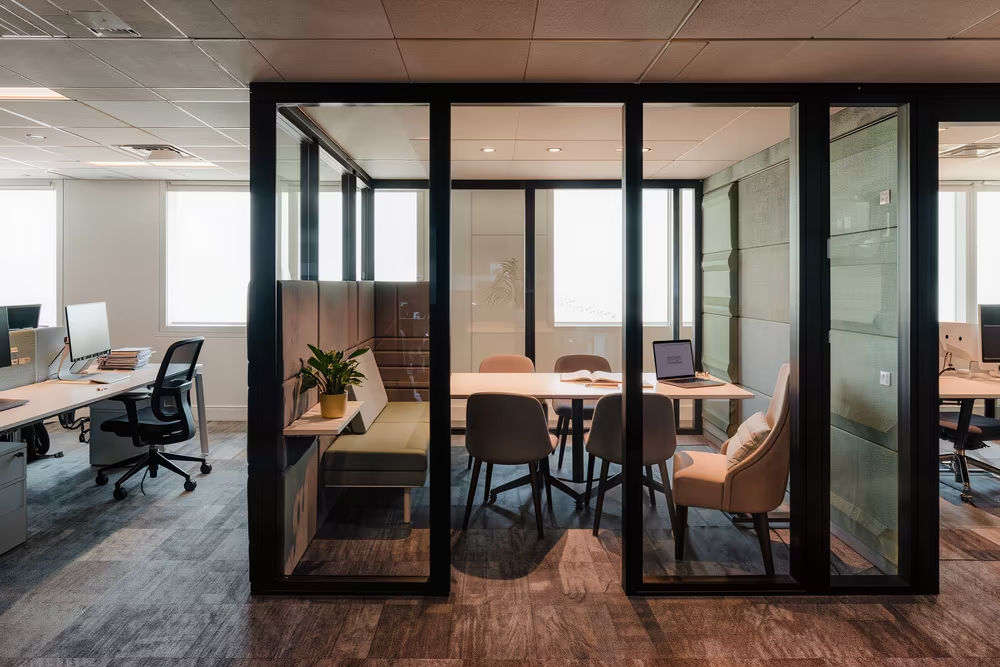
For offices, smart layout planning can do the same. Many Persy Booths clients use modular pods like the soundproof phone booth for solo work, the two person phone booth for small meetings, or the team meeting booth for collaborative sessions – all designed to complement good sound control rather than overcomplicate it. Alternatively, the work booth offers a focused environment for individual productivity.

How Much Can Furniture Really Help?
So, does furniture absorb sound enough to make a major impact? In short – yes, but within limits. Furniture can’t block sound like a fully sealed soundproofing system, but it can significantly reduce sound transmission within a room and improve comfort.
When sound waves hit a soft object, part of their energy becomes heat as it passes through the material. The denser and softer the material, the more sound energy it can absorb. That’s why thick upholstery, curtains, and carpets make such a noticeable difference.
In one quantitative research study, levels of sound reflections in 43 occupied open-plan offices were analysed. One of the key findings was that offices with carpeting showed ~2.7 dB lower overall sound levels than those without carpeting, and when combined with ceiling absorption the difference was ~4.1 dB – a measurable reduction in noise attributable to soft surfaces.
Still, furniture alone can’t eliminate exterior noise from traffic or voices through walls. For that, you would need sound insulation techniques like adding mass (extra drywall), sealing gaps, or installing acoustic panels.
The key takeaway? Use furniture and soft materials to improve sound quality, and combine them with light soundproofing measures for best results.
Final Thoughts
So, does furniture absorb sound? Absolutely – and using it wisely can transform your room acoustics. Even small changes, like adding curtains, carpets, or moving a sofa, can reduce noise and make your space feel calmer and more private.
But don’t get carried away buying every product promising noise reduction. At Persy Booths, we know from experience that the best results come from balance – understanding what’s necessary and what isn’t. Whatever kind of workspace you are trying to optimise, start with practical, soft furnishings before investing in structural soundproofing.
And if you need quieter areas for solo work or confidential meetings, consider quick, effective solutions, such as the Persy One or Persy Four – simple ways to control noise levels without unreasonable expense.
FAQ
.avif)
Passionate, progress-driven venture & business developer with startup and corporate experience. I speak business, while keeping customers in my heart.

%20(1).avif)