%20(1).avif)
Office Space Optimization: Practical Strategies to Maximize Productivity and Modernize Workplace


.webp)
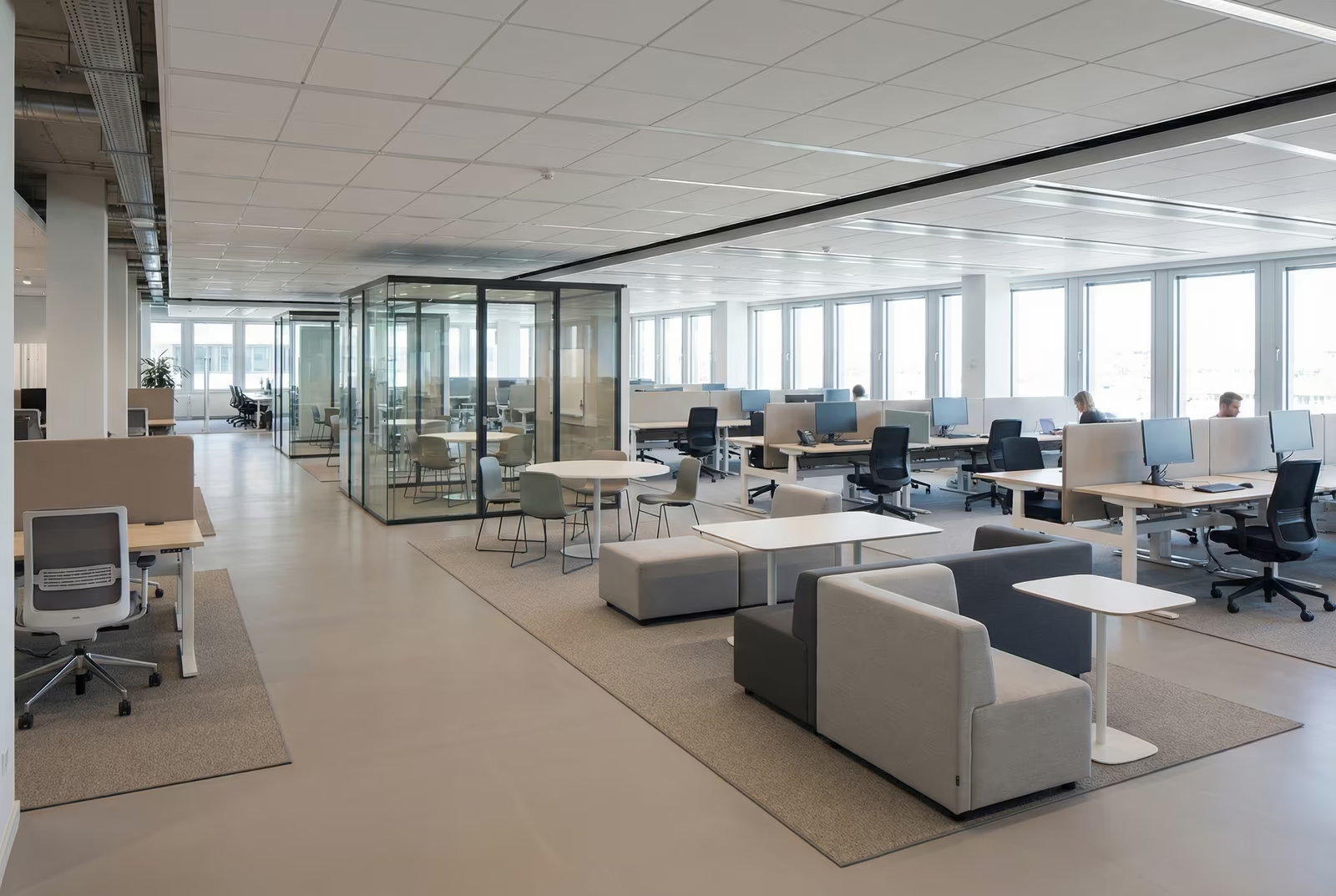
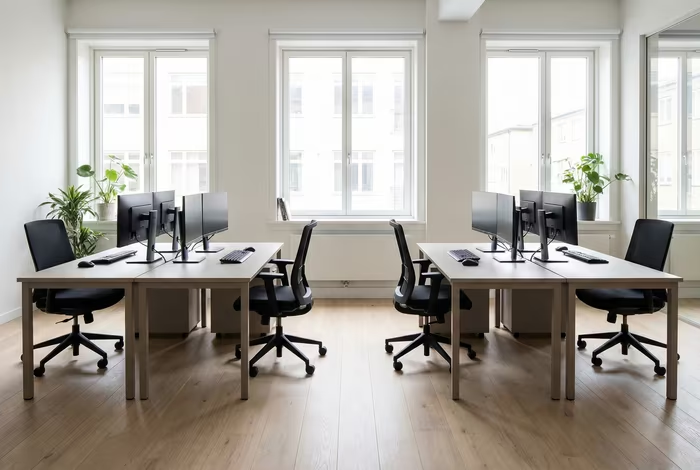
Did you know most companies only use 40–60% of their office space at any given time? In fact, 66% of organizations use their spaces less than 60% on average. This inefficiency costs businesses money and wastes valuable resources.
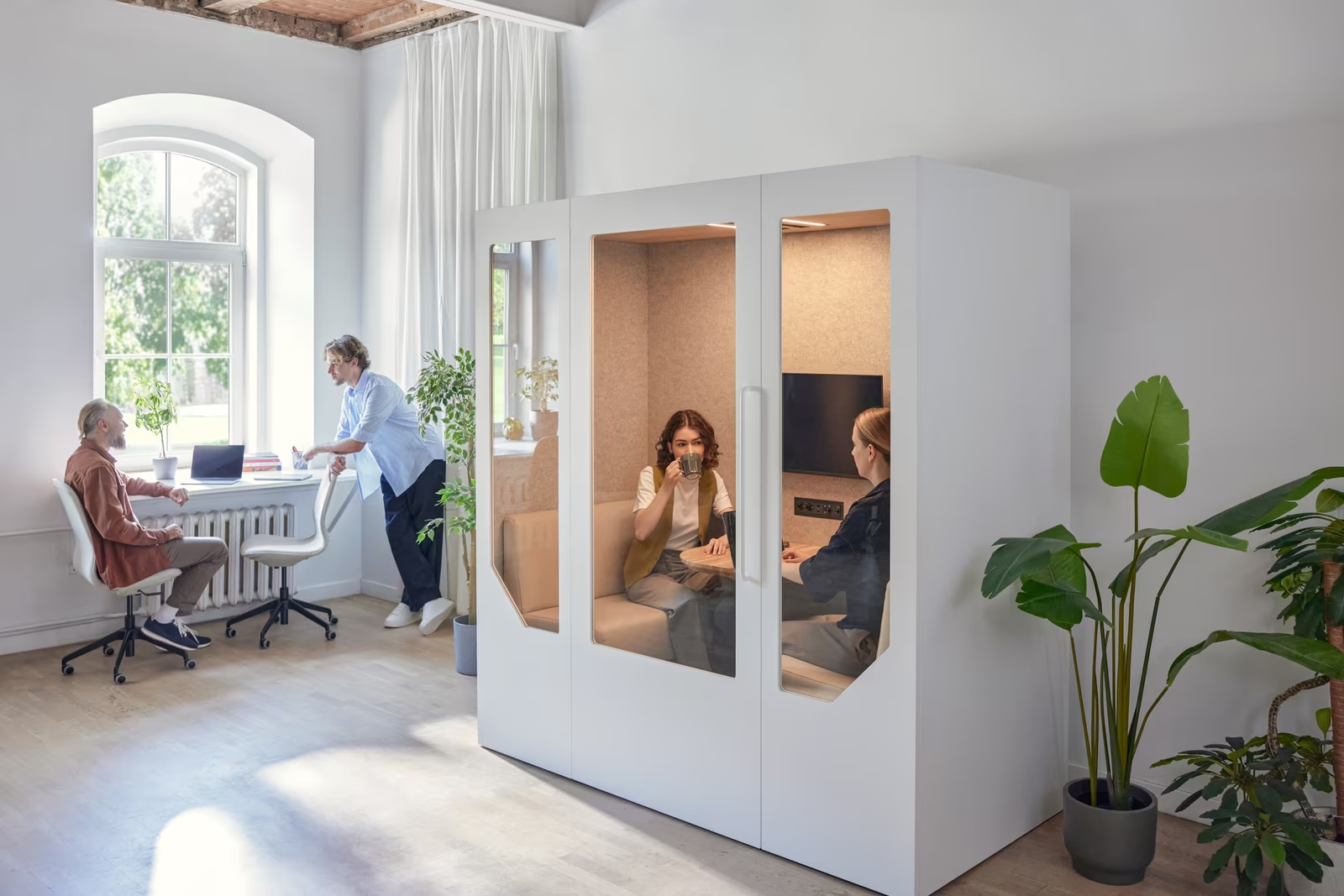
Workspace optimization helps you use every square foot efficiently while cutting costs and enhancing the employee experience, and solutions like PersyBooths support this by creating flexible, high-performance spaces for focused and collaborative work.
With the huge rise of remote and hybrid working, many businesses are now looking to adopt flexible office space models to reduce their office footprint or repurpose existing areas. Office space planning starts with a simple formula to calculate exactly how much space you need, as outlined in how much office space is needed per employee.
What’s even more compelling? 83 % of office workers feel more productive in an organized workspace and believe this could increase their productivity by 38 %, aligning with research showing the impact of environment on performance.
Good space optimization often leads to real estate savings while also improving environmental sustainability.
Understanding the Basics of Workspace Optimization
Workspace optimization, as explained in workspace optimization, has become a cornerstone of modern office management as companies adapt to changing work patterns.
What is workspace optimization?
Workspace optimization is the strategic organization and configuration of office space to enhance productivity, reduce waste, and minimize costs. It goes beyond simply rearranging furniture or reducing square footage. It's about creating an environment that supports both business goals and employee needs.
At its core, workspace optimization involves:
- Making the most of available office real estate
- Ensuring each space serves its intended purpose
- Creating layouts that support different work styles
- Strategically positioning resources for maximum efficiency
Unlike traditional office planning focused solely on fitting more employees into less space, modern workspace optimization balances efficiency with employee experience. When done correctly, it helps create short and long-term strategies that avoid paying rent on unoccupied space.
The goal isn't just increasing employees per square foot but ensuring spaces actively support positive work experiences. This approach applies to both physical environments — like desk arrangements, meeting rooms and digital workspaces including file systems and application layouts.
How it differs from space utilization
Many people confuse workspace optimization with space utilization, but they represent different aspects of space management:
Space optimization focuses on maximizing the use of available areas to enhance efficiency and functionality. It involves strategic decisions about how space should be designed, allocated, and used to support organizational goals.
Space utilization, conversely, measures how effectively space is being used in real-time. It tracks actual usage patterns and occupancy rates — essentially monitoring whether spaces are fulfilling their intended purposes.
Think of it this way: utilization is the metric that tells you how spaces are currently being used, whereas optimization is the strategic process of improving those spaces based on utilization data. Space utilization divides building occupancy by capacity to show how much space is actively used, but optimization transforms that data into actionable improvements.
Why it's essential in hybrid work environments
With hybrid work becoming standard practice, workspace optimization has never been more crucial. According to Gartner projections, 80% of millennial workers will prefer spending time in various workplaces rather than full-time remote or full-time office by 2027, up from 61% in 2021.

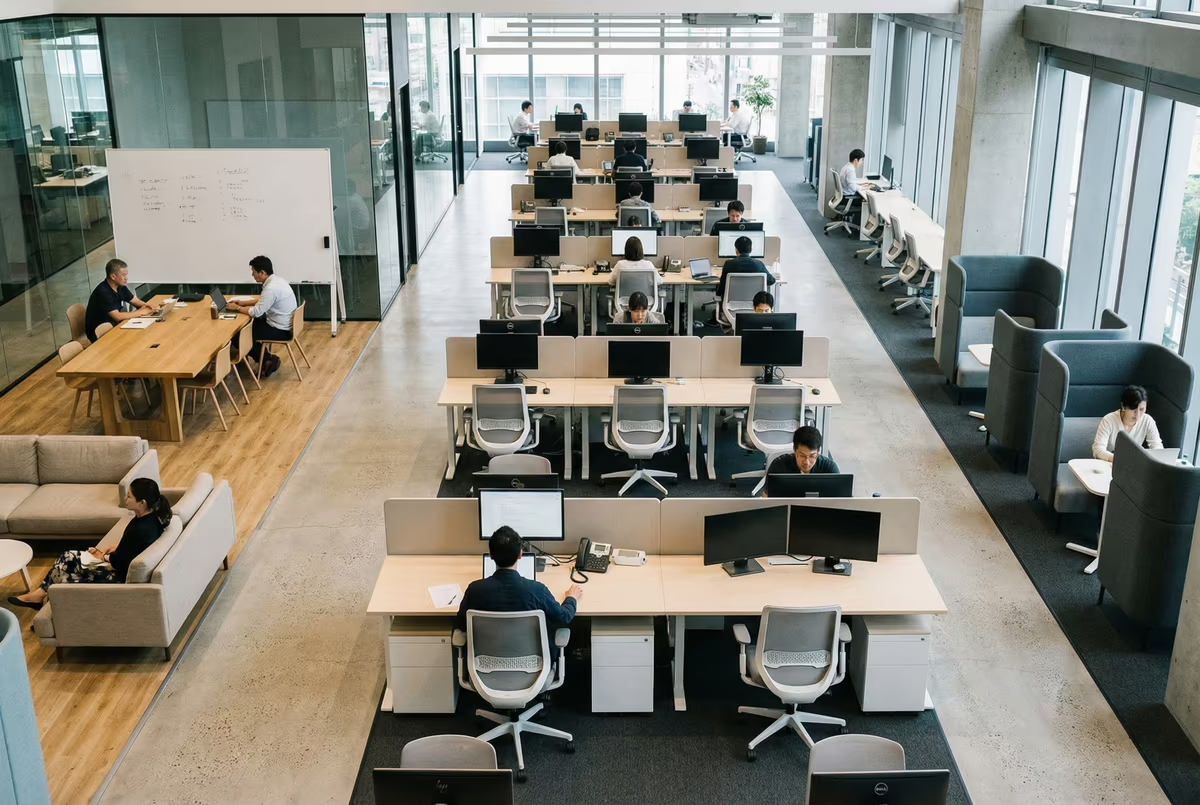
First, hybrid workplaces create unique challenges for space management. With unpredictable attendance patterns, traditional models of assigning one desk per employee often lead to wasted space. Through optimization, companies can identify underutilized areas and transform them into productive spaces.
Next, optimized workspaces directly support hybrid teams through:
- Designated spaces for focused work, collaboration, and relaxation
- Technology integration for seamless remote collaboration
- Flexible layouts that adapt to changing attendance patterns
Finally, effective workspace optimization results in significant benefits for hybrid organizations — reducing real estate costs, enhancing employee satisfaction, and improving operational efficiency. By creating spaces that reflect diverse employee needs, organizations can boost overall productivity and engagement in hybrid models.
Key Benefits of Optimizing Office Space
Properly optimized office spaces deliver substantial benefits that extend far beyond just esthetics. Let's explore the key advantages that make workspace optimization a strategic priority for forward-thinking businesses.
Reducing unused space and costs
The financial impact of underutilized office space is significant. Many businesses are currently paying for empty desks and unused areas, with studies showing that 40% of office space goes unused on a typical workday. This inefficiency translates into real money — companies can save as much as £8,735.76 per employee annually through proper space optimization.
Real estate typically represents the second-largest fixed cost for most companies after payroll.
By optimizing office space, you can:
- Cut unnecessary expenses on rent and utilities
- Reduce maintenance, insurance, and supply chain costs
- Lower energy bills — especially important since 30% of energy consumed in commercial buildings is wasted
For example, downsizing from 50,000 to 30,000 square feet at £39.71 per square foot could save £0.79 million annually. Companies transitioning to hybrid-flexible strategies often see 30-50% reductions in real estate costs.
Enhancing employee productivity
The relationship between workspace design and productivity is well-documented. A thoughtfully designed office layout directly influences how effectively your team works. Research shows that employees in optimized workspaces report 15-20% higher satisfaction, which correlates directly with output and engagement.
Physical workspace elements that boost productivity include:
- Ergonomic furniture and appropriate lighting
- Dedicated spaces for different work modes (focus, collaboration, relaxation)
- Proper acoustic management to minimize distractions
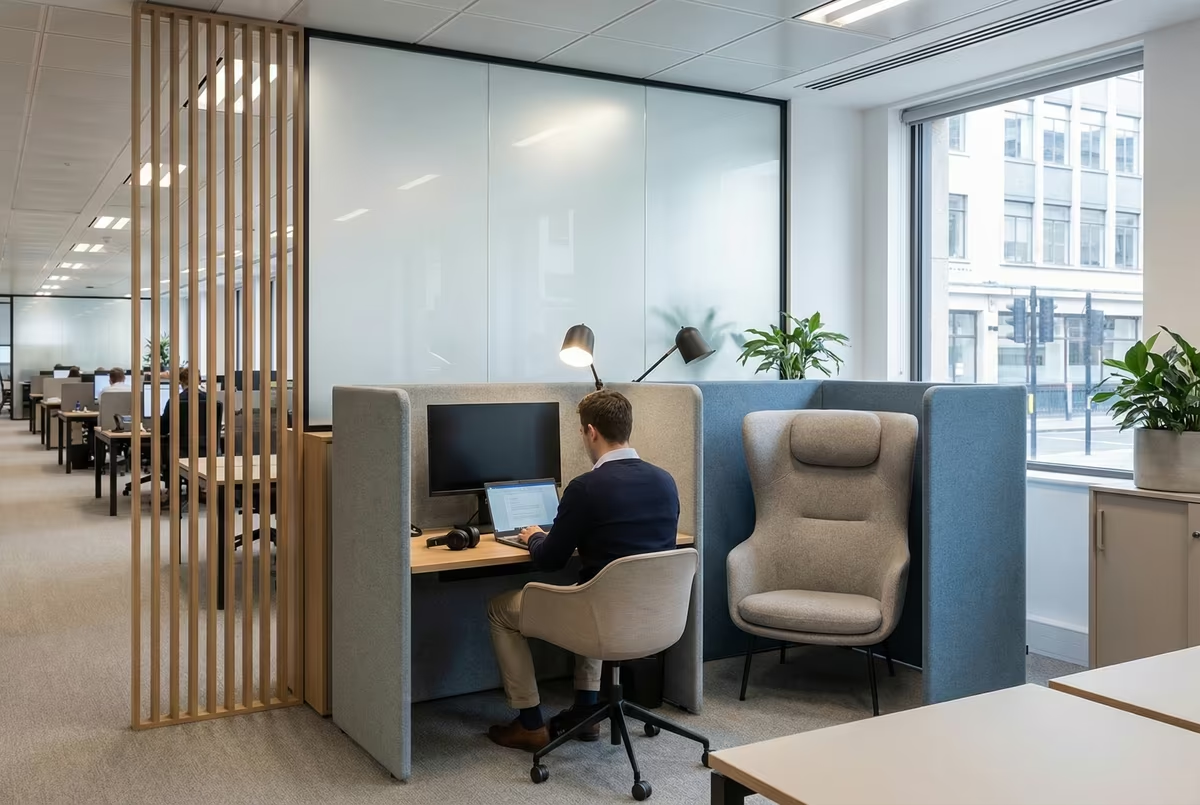
A Cornell study found that employees seated within 10 feet of windows reported an 84% decrease in eyestrain, headaches, and blurred vision symptoms. Furthermore, the presence of natural elements in the workspace has been shown to increase reported wellbeing by 15%.
Creating a modern, flexible workplace
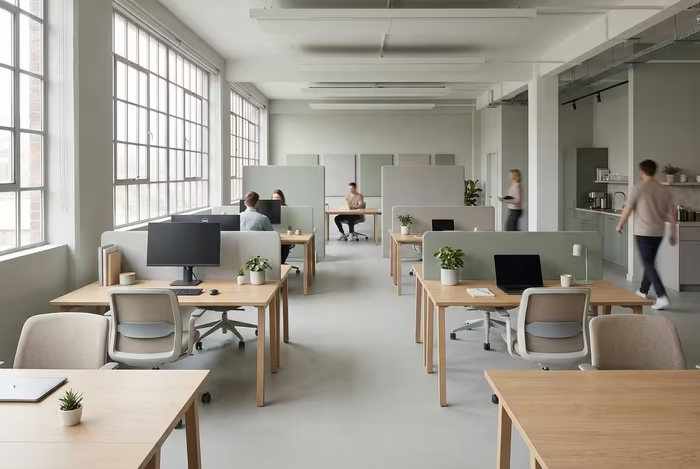
Today's workforce expects more from their office environment. A flexible workplace design supports diverse working styles and adapting to changing business needs.
Modern flexible workplaces typically feature:
- Open and collaborative zones balanced with quiet areas for focused work
- Modular furniture that can be reconfigured as needed
- Technology integration that supports hybrid work patterns
- Spaces designed for both in-person and virtual collaboration
Flexibility pays off — 88% of highly engaged employees work in offices with an activity-based working concept. Additionally, 60% of employees say spaces where they can relax, meet colleagues, and be creative enhance their productivity.
Improving space utilization metrics
Data-driven decisions form the foundation of successful space optimization. Key metrics help you track progress and identify opportunities:
Space utilization rate measures how much of your available seating or room capacity is actually used over time. For hybrid offices, average utilization typically falls around 60%.
Occupancy rate tracks how many people are physically present compared to total capacity. Hybrid offices typically see average occupancy of 30-50% with peak occupancy below 70%.
Vacancy rate measures unoccupied seats relative to total available. A healthy buffer of 10-20% supports hybrid variability and prevents overcrowding on peak days.
Cost per seat divides total occupancy cost by the number of active workstations. This metric helps justify expenses and evaluate potential changes to your office footprint.
Tracking these metrics through occupancy sensors, booking systems, and workplace analytics allows you to make informed decisions about your space needs. With 89% of companies considering space utilization their most valuable metric for planning office spaces, these measurements provide concrete data to guide your optimization strategy.
Planning Your Office Layout for Maximum Efficiency
Creating an efficient office layout requires methodical planning and data-driven decisions. Before making any changes, you need to understand how your space currently functions, what your team actually needs, and how to align these insights with your business goals.
Assess current space usage and occupancy
Start by tracking how your current workspace is used. Many offices are only occupied 40-60% of the time, making it crucial to gather accurate data before redesigning.
Consider implementing:
- Desk and room booking systems to monitor reservations
- Occupancy sensors to track real-time usage patterns
- Manual walkthroughs at different times of day
- Employee surveys about workspace preferences
Look for areas with high traffic versus underutilized spaces. This baseline data reveals what works, what doesn't, and where the opportunities are. Without this information, you're simply guessing — which often results in wasted money.
Define team needs and work styles
Your office should reflect both business goals and employee preferences.
Different teams have distinct requirements based on their work styles:
- Collaborative teams need open spaces for group work
- Analytical roles require quiet zones for focused tasks
- Creative departments benefit from flexible, stimulating environments
- Client-facing teams need professional meeting spaces
Survey your employees about their preferences and pain points. Understanding these diverse needs helps you create zones that support various activities throughout the workday — from focused work to brainstorming sessions.
Map workflows and adjacencies
Analyze your team's workflow patterns to determine which departments should be positioned near each other. Strategic placement improves communication and efficiency:
- Place teams that frequently collaborate in proximity
- Position finance near leadership for decision-making support
- Locate HR in central, approachable areas
- Ensure shared resources are easily accessible
Department adjacencies directly impact productivity by reducing unnecessary movement and creating natural interaction points. This thoughtful positioning minimizes distractions while fostering spontaneous collaboration.
Create a space budget and test fit
Develop a space budget that breaks down square footage requirements for each function. Industry standards suggest 7-12 square meters per person, though hybrid workplaces often function well with 100-125 square feet per person.
Next, create test fits — preliminary layouts that show how your requirements work within your space.
A proper test fit:
- Includes basic room layouts and furniture placement
- Maps circulation paths and key functional areas
- Provides multiple options for comparison
- Involves stakeholders throughout the process
- Considers future growth and changing work patterns
This "dress rehearsal" for your office design helps you identify constraints before committing to final plans.
Tools and Technologies That Support Office Space Optimization
The right technology stack forms the backbone of effective workspace optimization and space planning. Modern tools eliminate guesswork by providing concrete data about how your office functions, enabling you to make informed decisions about your space. These technologies not only support office space optimization but also enhance the overall workplace experience.
Workplace Analytics Platforms
Workplace analytics software transforms raw space utilization data into actionable insights. These platforms help you understand exactly how your office is being used, from building-level patterns down to individual desk occupancy, supporting comprehensive office space planning.
Key capabilities of workplace analytics include:
- Analyzing occupancy trends and peak usage times
- Visualizing space through interactive floor plans and office layouts
- Identifying underutilized zones and meeting rooms
- Setting custom targets for building usage and occupancy rates
- Forecasting future space needs based on historical trends
Beyond basic reporting, advanced platforms offer AI-powered pattern recognition to spot optimization opportunities. Many solutions also integrate with your existing business intelligence systems, allowing data to flow directly into your analytics ecosystem, enhancing overall space management.
Desk and Room Booking Systems
Booking systems serve as the front line of workspace optimization, giving employees an easy way to reserve the resources they need while providing valuable usage data. These systems support flexible seating arrangements, including hot desking and desk sharing strategies.
These systems effectively eliminate "ghost bookings" — reserved but unused spaces by automatically freeing up meeting rooms when no activity is detected. This prevents the common scenario where employees perceive a shortage of meeting space despite low actual utilization.
Most platforms offer mobile and web interfaces, interactive maps, and integration with tools like Microsoft Teams or Slack. The resulting data helps you understand which spaces are in demand and how reservation patterns change throughout the week, informing your office space planning process.
Occupancy Sensors and IoT Devices
Internet of Things (IoT) sensors provide objective, real-time data about how employees actually interact with your workplace.
These small, wireless devices can be installed throughout your office to monitor:
- Space usage data through desk and room occupancy tracking
- Traffic patterns showing how people move through the space
- Environmental conditions including air quality, temperature, and lighting
- Energy usage patterns to identify waste and reduce costs
Occupancy sensors are particularly valuable for identifying "ghost meetings" where rooms appear booked but remain empty, allowing the system to automatically release them for others to use. This technology is crucial for creating a smart office environment and optimizing space utilization.
Integrated Workplace Management Systems (IWMS)
An Integrated Workplace Management System (IWMS) serves as a comprehensive command center for all aspects of workplace operations. These platforms combine multiple functions into a unified system, offering a holistic view of your entire workspace and supporting overall office space optimization.
IWMS platforms typically incorporate facilities management, maintenance tracking, real estate lifecycle management, and resource scheduling in one interface. They often integrate with IoT systems to provide real-time monitoring of building systems and occupancy patterns.
This centralized approach eliminates data silos and enables informed, comprehensive decision-making for your entire workplace portfolio. With a unified system, you can track KPIs like average utilization, employee attendance, and cost per seat across your entire real estate portfolio, supporting effective space management and cost savings initiatives.
By leveraging these tools and technologies, organizations can create more efficient, flexible, and employee-centric workspaces. From space planning software to smart office solutions, these innovations are reshaping how we approach office design and management, ultimately leading to improved workplace experiences and optimized use of valuable square footage.
Design Strategies for a Future-Ready Office
Static office layouts no longer work in today's ever-changing business environment. Future-ready offices require thoughtful design strategies that balance flexibility with functionality.
Use of modular and ergonomic furniture
Modular furniture allows workspaces to adapt fluidly as needs change. These systems support quick reconfiguration without tools or disruption.
Look for:
- Height-adjustable surfaces that support different tasks
- Dual-purpose modules that compress functions (storage doubling as seating)
- Mobile units that increase layout versatility
Ergonomic designs prevent discomfort and enhance focus by supporting natural alignment. They reduce workplace strain through proper posture and movement encouragement.
Zoning for different work modes
Strategic zoning divides your office into purpose-built areas that support various work activities:
- Focus zones for concentrated individual work
- Collaboration areas for team interaction
- Quiet spaces with acoustic treatments
- Social zones for informal connections
This approach lets employees choose environments that match their current tasks.
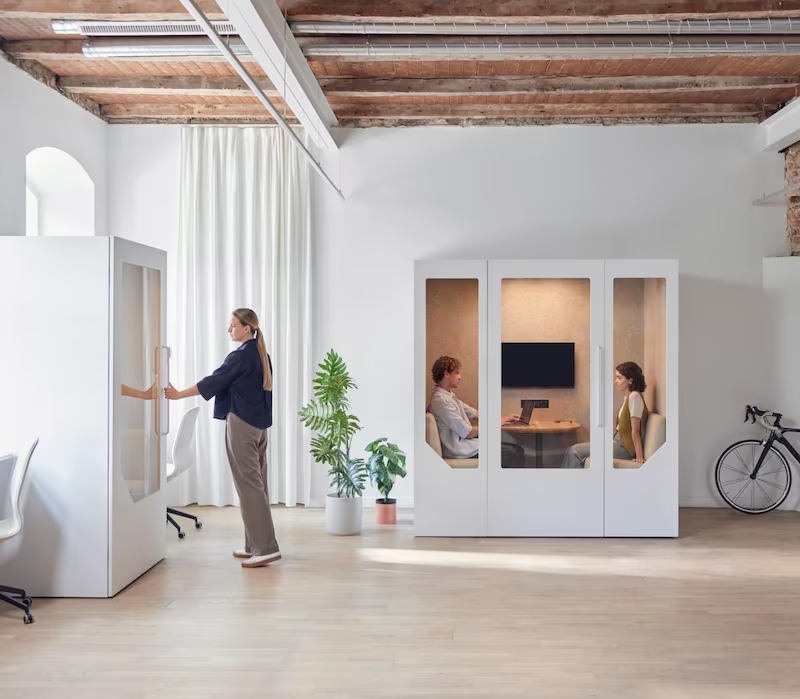
Incorporating acoustic booths like PersyBooths

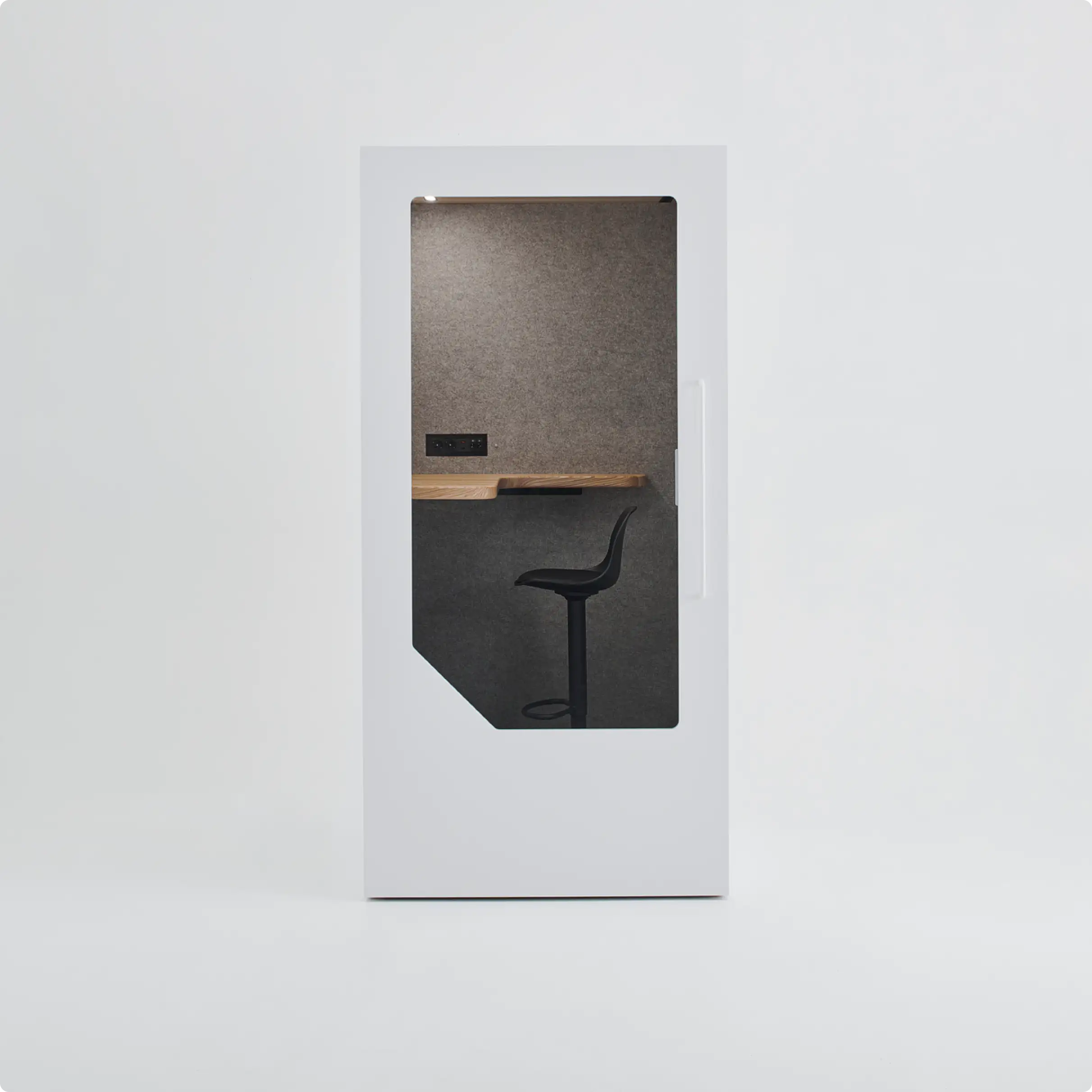
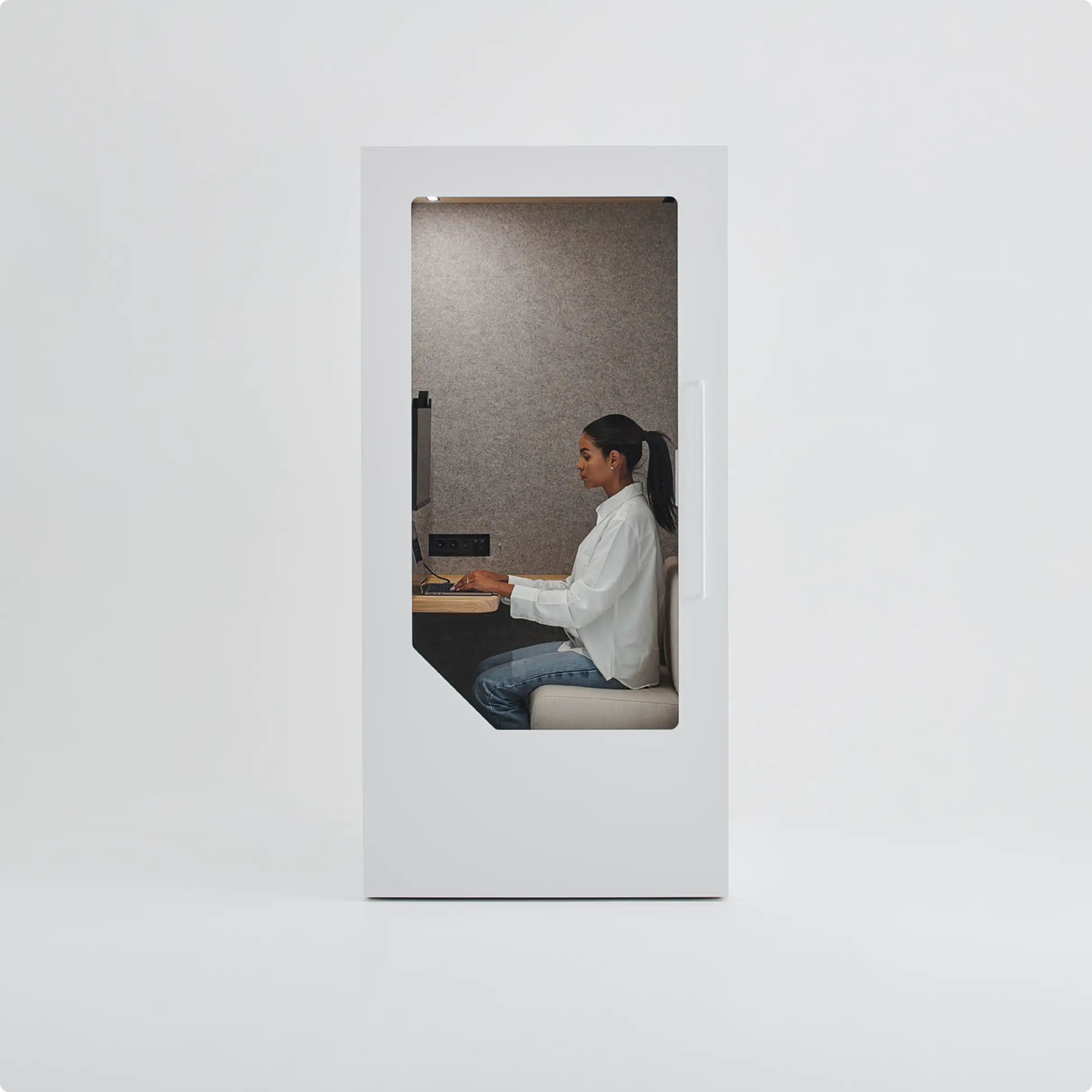
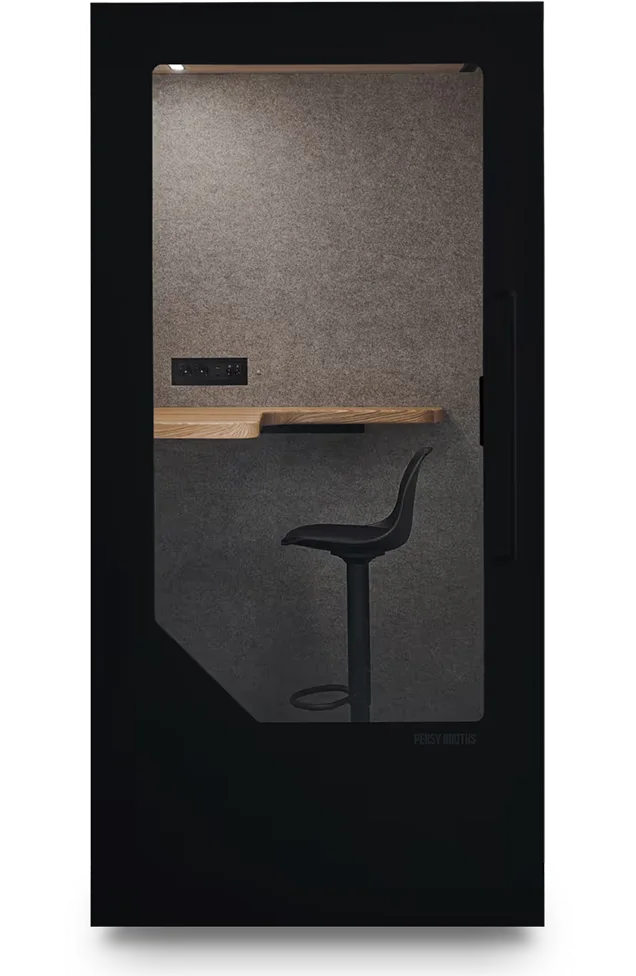
Acoustic booths such as Persy One create private, soundproof islands in busy offices.
PersyBooths feature:
- Five layers of soundproofing materials
- Double acoustic-grade glass
- 28 dB speech level reduction
- Complete air refreshment every 27 seconds
Larger solutions like Persy Two support focused work, calls, and small meetings without disruption.
Designing for collaboration and focus
Balancing collaborative and focus spaces is easier with meeting solutions like Persy Four.
Effective designs include:
- Semi-private zones using soundproof partitions
- Lounge-style layouts for informal collaboration
- High-quality lighting and sound control
This balance respects different work styles while supporting team needs.
Adapting layouts for hybrid attendance
Hybrid work demands spaces that scale with fluctuating attendance.
Consider:
- Dynamic space allocation that supports variable headcount
- Multi-functional breakout areas near entrances
- Clear team "neighborhoods" for improved coordination
This flexibility ensures your office remains valuable regardless of daily occupancy patterns.
FAQ
Why is office space optimization important for hybrid work?
How much office space does a company actually need per employee?
How can I measure office space utilization?
What are the biggest signs of wasted office space?
How does office layout affect employee productivity?
What technologies help with workspace optimization?
How can acoustic booths improve office space efficiency?
Compare Our Private Workspaces

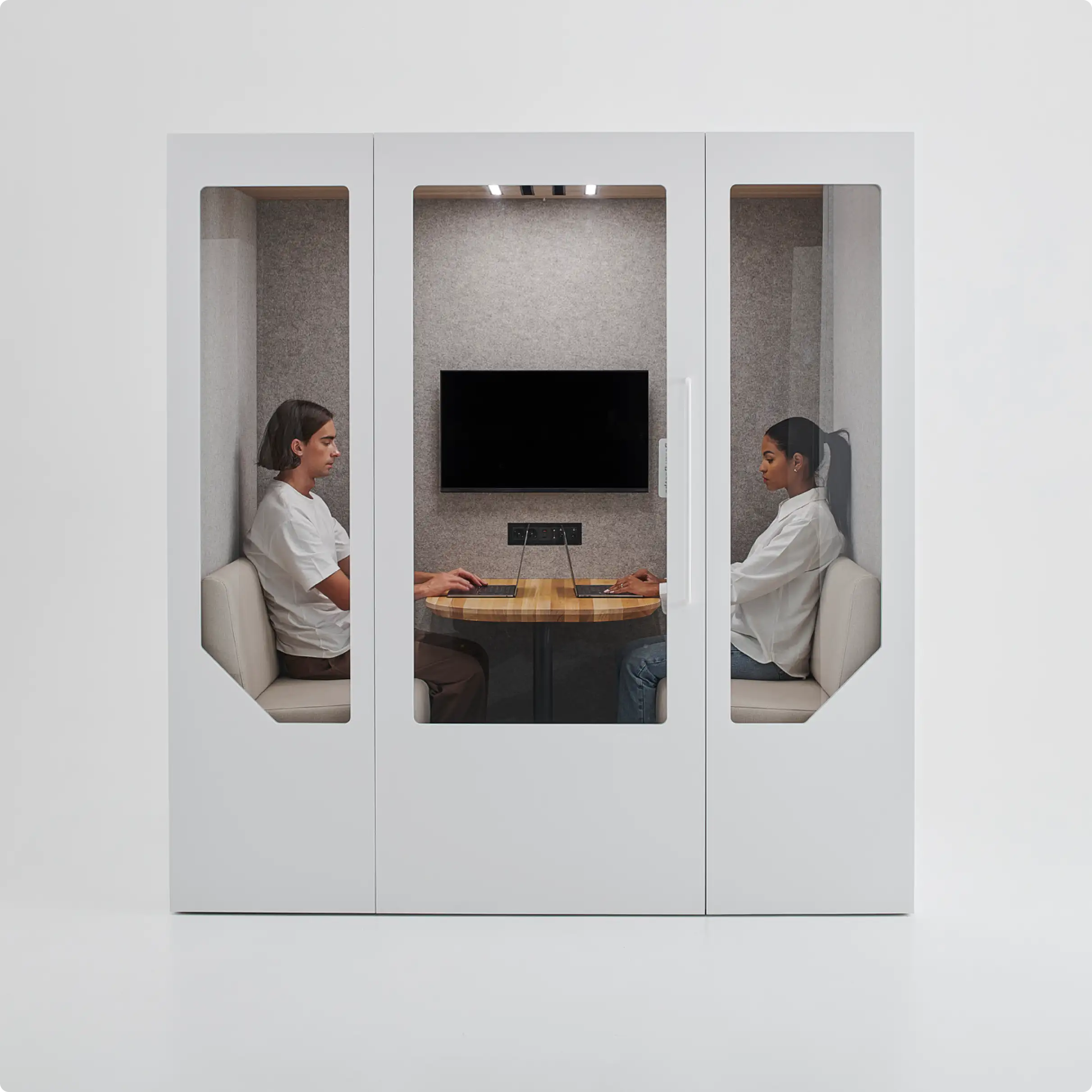
Persy Four
- Exterior
215 cm x 133 cm x 225 cm
- Interior
200 cm x 122 cm x 205 cm
- Soundproofing
-25.6dB according to ISO 23351:1:2020, all the way up to -38.3dB
- Ventilation
Adjustable 8 ultra-quiet fans, max airflow of 810m3/h, air refreshed inside every 31 seconds
Persy Four
- Exterior
215 cm x 133 cm x 225 cm
- Interior
200 cm x 122 cm x 205 cm
- Soundproofing
-25.6dB according to ISO 23351:1:2020, all the way up to -38.3dB
- Ventilation
Adjustable 8 ultra-quiet fans, max airflow of 810m3/h, air refreshed inside every 31 seconds
Learn More About Office Design Concepts
A guide to modern, flexible, and human-centered office spaces.

Why Our Private Workspaces Are the Smarter Choice
Watch how Persy Booths deliver privacy and focus – reducing distractions, improving airflow, and blending seamlessly into any office.
- Sold directlyCompetitive pricing, no middleman costs.
- Money-back guarantee30 days risk-free purchase.
- ISO certifiedTested soundproofing up to 28 dB.
- Fast deliveryShips in weeks, installs within hours.
- Trusted by thousandsThousands sold, near-zero returns.
- 3-year warrantyLong-lasting quality, guaranteed.
Design a workplace that actually works