%20(1).avif)
Modern Office Spaces Design: Creating Productive and Flexible Workplaces


.webp)
Modern office space design is now a strategic tool for supporting hybrid work, improving productivity, and protecting employee well-being, and at PersyBooths we see how thoughtful spaces and acoustic booths create a better everyday experience for teams. As office space moves away from fixed desks and traditional layouts, businesses need design ideas that combine natural light, quiet zones, dedicated spaces, and adaptable furniture to support collaboration, focused work, and brand identity in equal measure.
Why Office Space Design Matters in Today’s Workplace
Office design significantly impacts employee health, wellbeing, and productivity, with evidence linking better air quality, natural daylight, and space layout to improved performance outcomes. Research on workplace well-being shows that factors like air quality, thermal comfort, and natural daylight can significantly impact employee productivity, making design decisions a business-critical issue rather than a cosmetic one.
Access to natural light increases employee productivity and reduces eyestrain in office environments, with research showing significant reductions in health complaints and improved performance.
Thoughtful office design influences:
- Employee satisfaction and well-being – People working in offices with natural elements and better ventilation report higher well-being and comfort, which reduces stress and absenteeism.
- Collaboration and focused work – Clear zoning of space, easy access to meeting rooms, quiet zones, and acoustic booths helps teams switch between teamwork and individual focus without constant disruption.
- Company culture and brand identity – Office design, from colour schemes to shared spaces, signals what your company values and how you want your people to work and collaborate.
- Business performance – Global workplace studies link better designed offices to higher productivity, more effective hybrid work support, and more efficient use of space and real estate.
Key Trends Shaping Modern Office Spaces
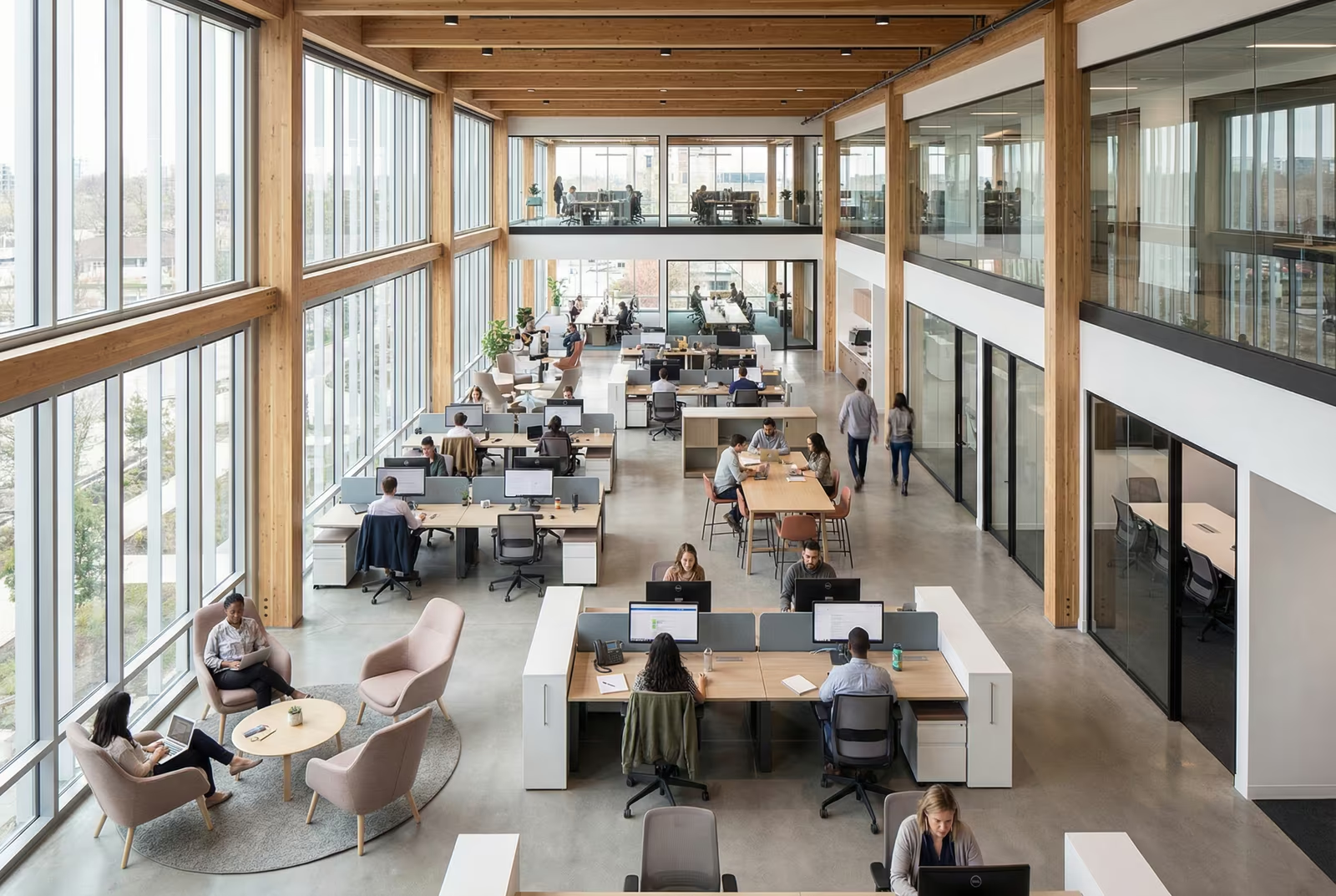
Modern office spaces design is being reshaped by hybrid work, employee well-being priorities, and rapid advances in workplace technology. Organisations are moving away from rigid layouts towards agile environments that combine flexible seating, quiet zones, outdoor spaces, and dedicated spaces for deep focus, all supported by smart tools and data. Office space utilisation has become increasingly important due to the presence of underutilized areas in workplaces, leading companies to transform unconventional spaces into functional work areas like small huddle booths and informal meeting spaces.
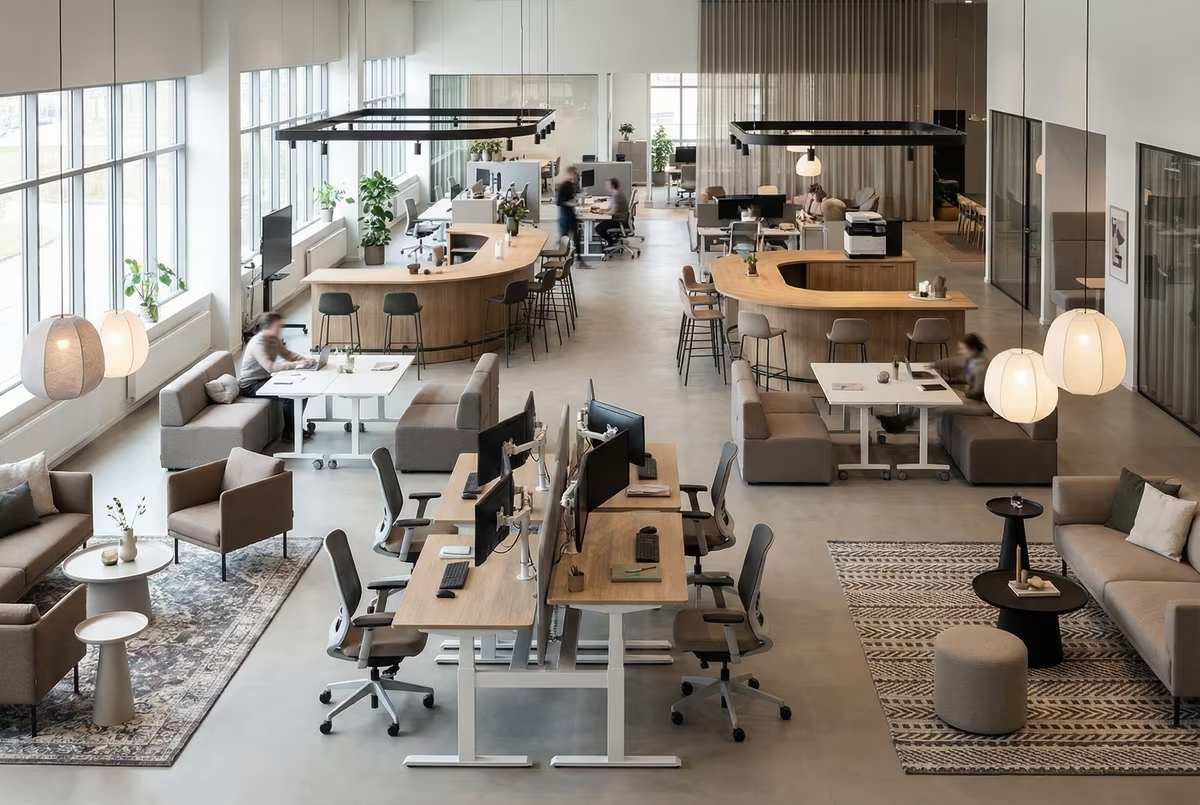
Current office design trends:
- Flexible layouts and adaptable furniture – Hybrid work is pushing companies towards modular layouts, hot-desking, and multipurpose rooms, often supported by booking systems and movable desks to accommodate changing team sizes.
- Biophilic and wellness-focused office design – More offices are integrating natural light, plants, fresh air, and access to outdoor spaces to support well-being and better posture, often linked to measurable gains in productivity and reduced stress. The use of templates for implementing workplace wellness programs, especially for fitness and wellbeing facilities, helps organizations plan and structure their initiatives efficiently.
- Quiet zones and acoustic solutions – As open-plan offices remain common, demand grows for quiet zones, soundproof booths, and phone pods that reduce noise and support focused work within the modern open office environment.
- Technology integration – The integration of tech in smart office design now includes advanced digital tools, connected devices, and infrastructure to enhance collaboration and optimize space utilization. Smart office technology such as room and desk booking, occupancy sensors, and digital wayfinding streamlines daily tasks and supports hybrid meetings, space booking, and data-driven planning of meeting rooms and shared spaces. Occupancy monitoring systems can capture data on how the office is used on a day-to-day basis, helping to optimize space and track the use of various things like sensors and occupancy data within smart office systems.
Health, Safety, and Well-being
Office air quality can significantly affect employees’ cognitive performance and productivity, as studies show that poor indoor air increases response times and reduces focus. Studies on existing office buildings have found that improved ventilation and better daylight can boost staff productivity and comfort, making wellness features a core design investment rather than a nice-to-have.

Key well-being design ideas for your office space include:
- Improved ventilation and air quality – Research suggests that optimised ventilation and air quality can enhance employees’ performance, with WELL-inspired features delivering measurable improvements in airflow and temperature control.
- Maximising natural light – Exposure to natural light has been shown to increase productivity by up to 15 % compared with dimly lit workplaces.
- Biophilic elements and fresh air – Incorporating plants, green walls, natural materials, and easy access to outdoor spaces improves perceived well-being and reduces stress, especially in dense urban offices.
- Ergonomic office furniture and better posture – Height-adjustable desks, supportive chairs, and layouts that encourage movement help counter prolonged sitting and reduce musculoskeletal issues.
- Safe circulation and clear zoning – Safe walkways, well-marked exits, and logical flows between rooms reduce accidents and support inclusive access. Logical layouts and clear pathways also help reduce clutter, making navigation intuitive and keeping the workspace tidy.
- Incorporating artwork – Artwork in the workplace has numerous positive effects on mental health and well-being, helping to create a more inspiring and supportive environment.
Natural Light and Ventilation
Natural light and ventilation are essential elements in modern office design, playing a pivotal role in shaping a healthy and productive workspace. By incorporating large windows, skylights, and open floor layouts, businesses can maximize the amount of natural light that floods the office, creating a bright and inviting environment. This approach not only reduces reliance on artificial lighting—leading to significant energy savings—but also supports employee wellbeing by boosting mood, focus, and overall productivity. Exposure to natural light has been shown to enhance cognitive function and increase serotonin levels, helping employees feel more energized and engaged throughout the workday.
Equally important is the provision of fresh air through effective ventilation systems. Proper airflow removes stale air and indoor pollutants, ensuring a healthy environment that supports long-term wellbeing. Integrating these elements into office design demonstrates a forward-thinking approach, showing employees that their health and comfort are a priority. Ultimately, prioritizing natural light and ventilation leads to a workspace where people can perform at their best, strengthening business performance and enhancing brand reputation in a competitive market.
Biophilic Design: Bringing Nature into the Office
Biophilic design is transforming office spaces by bringing the calming and revitalizing effects of nature indoors. This innovative concept goes beyond simply adding a few plants; it’s about weaving natural elements—such as living green walls, wood finishes, stone accents, and outdoor views—into the very fabric of office design. By doing so, businesses can create a workspace that not only looks beautiful but also actively supports employee wellbeing and productivity.
Plants and natural materials help purify the air, reduce stress, and foster a sense of calm, making it easier for employees to focus and collaborate. Biophilic design also encourages movement and spontaneous interaction, as people are naturally drawn to green spaces and communal areas inspired by nature. Whether your office style is sleek and modern or more traditional, biophilic elements can be adapted to fit your brand and culture, making this approach both flexible and impactful. As sustainability and wellbeing become increasingly important, integrating biophilic design is a smart way to create a workspace that supports your team, enhances collaboration, and reflects your commitment to a healthier, more productive work environment.
Fitness and Wellness Areas
Fitness and wellness areas have become essential features in today’s office design, reflecting a growing recognition of the link between employee wellbeing and business success. By providing dedicated spaces for activities like yoga, stretching, meditation, and even on-site gyms, companies empower their teams to prioritize both physical and mental health during the workday. These areas are thoughtfully designed to accommodate a range of fitness levels and interests, ensuring everyone feels included—whether they prefer a high-energy workout or a quiet moment of relaxation.
Incorporating wellness programs, nutrition workshops, and stress management sessions further supports a culture of wellbeing, helping employees develop healthy habits that extend beyond the office. The result is a workforce that feels valued and supported, leading to higher productivity, improved job satisfaction, and reduced absenteeism. As the boundaries between work and personal life continue to blur, fitness and wellness areas are not just a perk—they’re an essential part of a modern, people-focused office design that helps everyone do their best work and feel their best every day.
Spaces for Collaboration and Focus
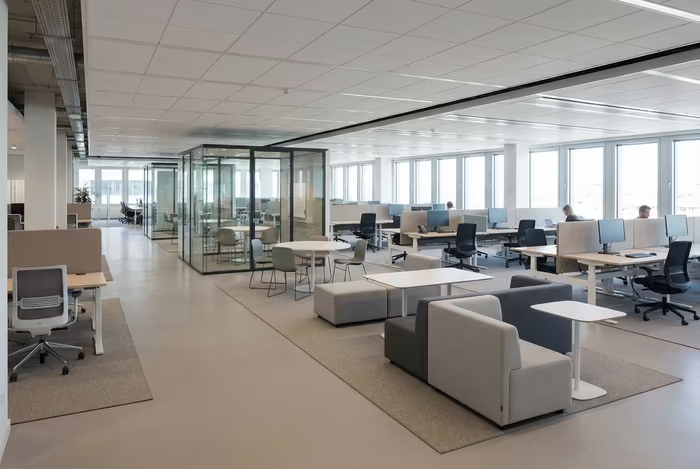
Modern office design needs to provide both collaborative spaces and dedicated quiet zones, supporting everything from quick huddles to deep, focused work. Hybrid work and open-plan layouts mean more people share fewer desks, so acoustics, visual privacy, and space planning are essential to keep noise and distractions under control.
Ways to balance collaboration and focus:
- Zoned layouts – Divide space into collaboration areas, quiet zones, and semi-private rooms so people can choose the right environment for their task or project.
- Touchdown spaces – Provide touchdown spaces to relieve pressure on meeting rooms and reduce fixed desk demand, giving people flexible spots for short tasks or quick check-ins.
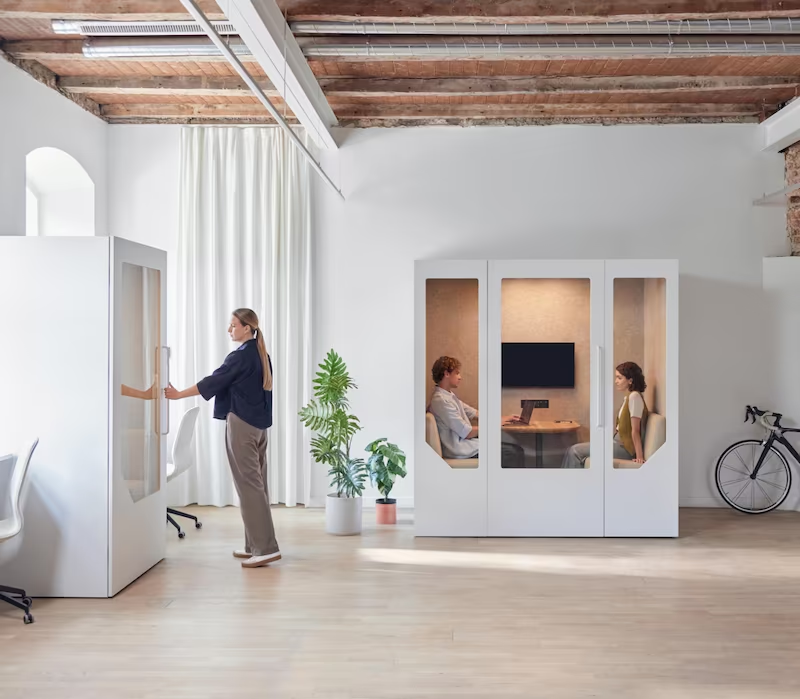
- Dedicated spaces for meetings and calls – Create meeting rooms, phone booths, and acoustic pods that function like huddle rooms to handle video calls, confidential conversations, and focused work without disrupting the wider team. Focus pods and phone booths offer instant, bookable privacy for calls and deep work.
- Relax and recharge areas – Designate areas where employees can relax and recharge, creating low stimulus spaces with soft furnishings and calming activities for quick mental resets.
- Furniture that encourages movement – Use movable desks, mobile whiteboards, and modular seating to create pop-up collaboration zones while still maintaining calm areas for individual work.
- Acoustic comfort and fabrics – Use fabrics such as fabric panels, curtains, and upholstered furniture to bring reverb down and improve acoustic comfort. This helps ensure everyone can hear clearly in hybrid collaboration spaces, supporting good sound quality for virtual meetings and in-person discussions.
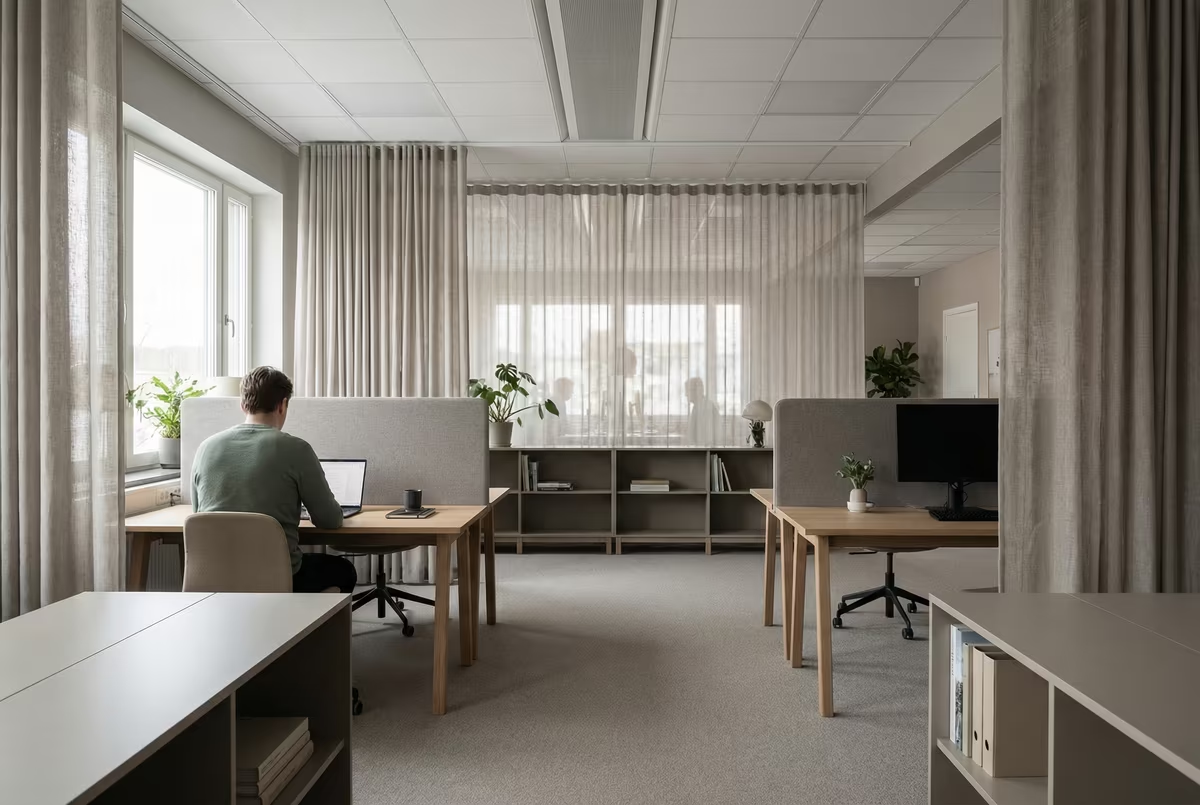
Social Lounges and Break Rooms
Social lounges and break rooms are vital elements of effective office design, providing employees with dedicated spaces for relaxation, informal collaboration, and community building. These areas are thoughtfully designed to create a welcoming atmosphere, featuring comfortable seating, vibrant decor, and amenities like coffee bars or snack stations that invite people to unwind and connect. By encouraging employees to step away from their desks, social lounges and break rooms help reduce stress, spark creativity, and foster a sense of belonging within the company.
Beyond relaxation, these spaces serve as flexible hubs for informal meetings, brainstorming sessions, and even company social events, supporting both collaboration and productivity. A well-designed break room or lounge reflects the company’s culture and values, making employees feel appreciated and engaged. As businesses strive to create workplaces that support wellbeing and high performance, investing in social lounges and break rooms is an essential step toward building a positive, dynamic environment where people love to work.
Brand Identity and Company Culture
Office design is a powerful way to express your brand identity and company culture, from entrance areas to meeting rooms and tea points. Colour choices, materials, graphics, and the mix of communal and quiet spaces all signal what your brand stands for and how you expect people to work and collaborate. Incorporating friendly design elements helps create a relaxed, approachable, and welcoming atmosphere, making the workspace more inviting and conducive to collaboration. Integrating hospitality features, such as bar or beverage facilities, can enhance client hosting and boost employee engagement. Displaying art throughout the office not only reflects your company values but also improves productivity, sparks creativity, and softens the overall mood.
Practical ways to reflect your company brand through office design:
- Colour schemes and feature walls – Use brand colours in subtle ways on walls, furniture, and signage so the space feels coherent without overwhelming employees.
- Branded communal spaces – Design lounges, kitchen areas, and informal meeting rooms to showcase your story, values, and visual identity with artwork, messaging, and displays.
- Consistent design language across spaces – Make sure meeting rooms, quiet zones, and acoustic booths share a design language that aligns with your brand, helping create a recognisable experience across the office.
- Friendly and hospitality-driven features – Incorporate comfortable seating, inviting layouts, and hospitality amenities like beverage stations or bars to foster a collaborative and engaging environment.
- Art integration – Use artwork to inspire creativity, boost productivity, and create a softer, more welcoming mood throughout the office.
By integrating acoustic booths that match your colour palette and brand aesthetics, you can turn functional quiet zones into extensions of your identity rather than isolated objects.
The Role of Acoustic Office Booths in Modern Design
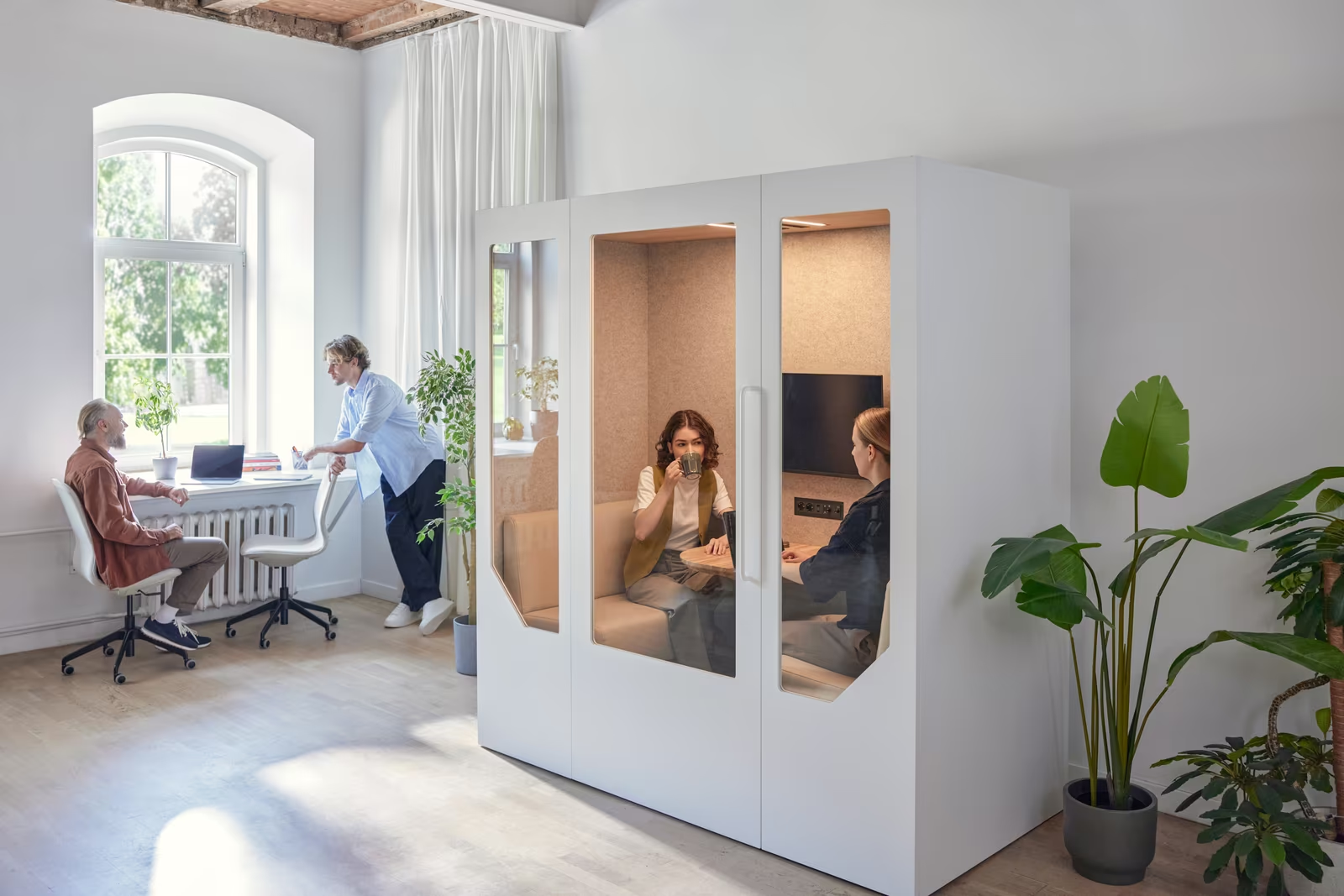
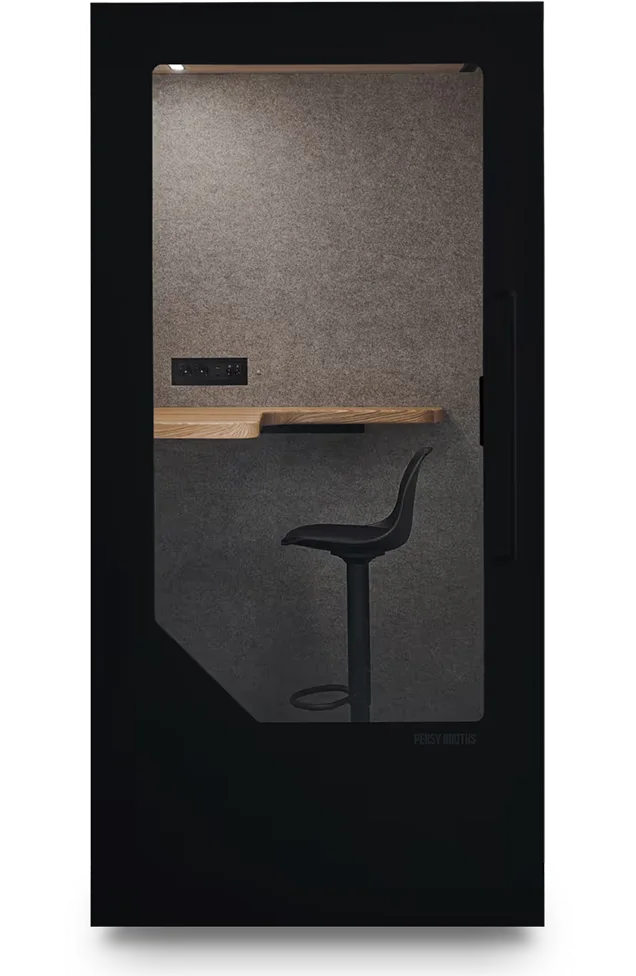
Acoustic office booths like Persy One have become a key component of modern office design because they solve one of the biggest problems in open-plan spaces: noise and distraction. Studies highlight that noise distractions can reduce productivity significantly, with some sources indicating drops of up to 40% when people cannot focus, which is why dedicated quiet booths are increasingly common in hybrid offices.
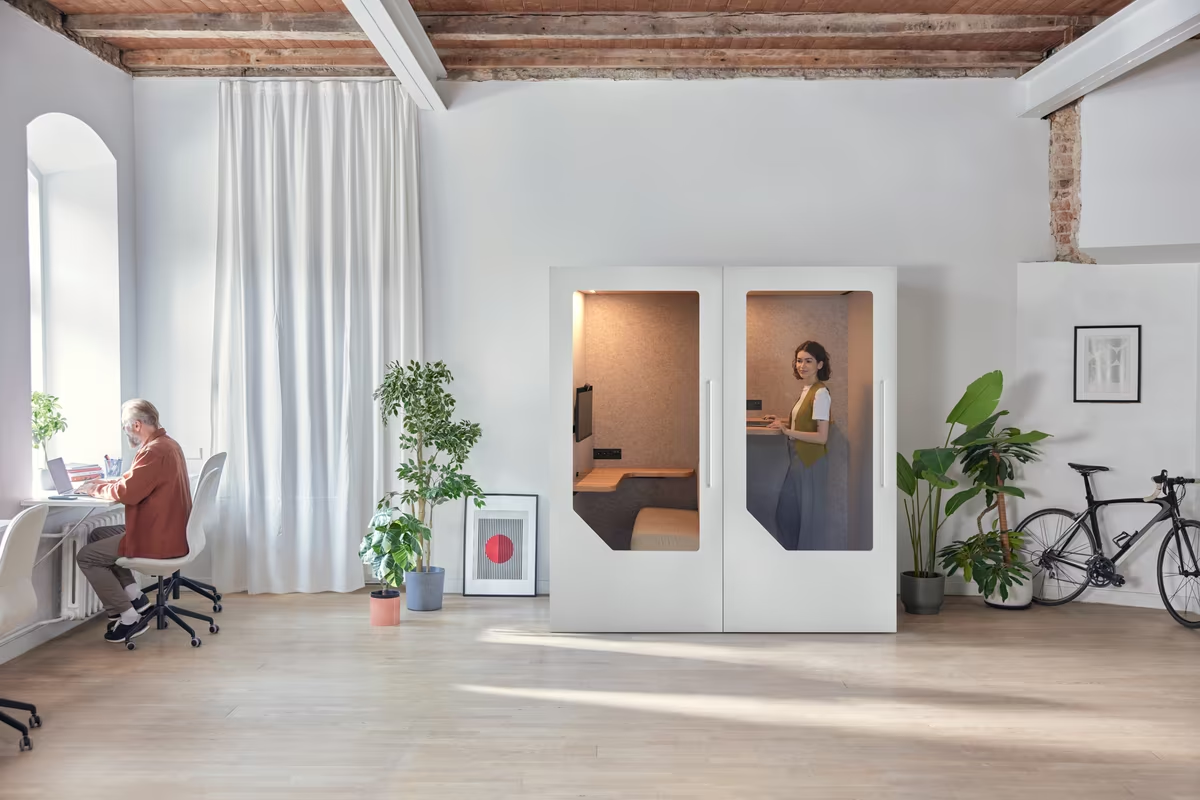
This is how acoustic booths support productive offices:
- Reducing noise and distractions – Soundproof booths use acoustic panels, seals, and insulating materials to reduce ambient noise, a distinction explained clearly in soundproofing vs sound absorbing.
- Supporting focused work and confidential calls – Larger acoustic pods such as Persy Two provide private, quiet zones for calls, deep work, and one-to-one conversations, protecting privacy without building extra rooms.
- Flexible, non-permanent solutions – Most solutions from the PersyBooths products can be relocated as teams grow or layouts change, allowing you to respond to new demands without major construction.
- Boosting well-being and reducing stress – Quieter, protected spaces lower cognitive load and mental fatigue, making it easier for employees to recover from constant noise and interruptions.
-
Many organisations report significant productivity gains after integrating soundproof pods into open offices, with some studies citing improvements of around 18–32% in task completion and overall performance when employees can escape noise. For a focused overview of these benefits, see our guide to the 5 benefits of soundproof booths in the open office, which includes examples of how booths improve both individual and team outcomes.
Acoustic booths and quiet zones: quick comparison
How PersyBooths Transforms Workspaces
PersyBooths transforms office spaces by providing acoustic office booths that deliver privacy, flexibility, and a clean design language that integrates smoothly with your existing office furniture and brand identity. In modern open-plan and hybrid offices, our booths help teams manage noise, protect focused work, and create dedicated spaces for calls and meetings without losing the benefits of shared space.
We support partnership with social enterprises and community organizations, enabling collaborations for mental health initiatives and art programs within the workplace. Our booths also make it easy to create a flexible central hub that can shift from a cafe style workspace during the day to hosting social events after hours, supporting dynamic office spaces design.
Key benefits of PersyBooths in your office design
From a design perspective, PersyBooths supports your office design ideas in several ways:
- Acoustic privacy for focused work – Our booths create quiet zones within open offices, providing better acoustic control for video calls, one-to-ones, and deep focus tasks.
- Support for hybrid work and video calls – Acoustic booths such as Persy Work office booth are ideal for hybrid teams, giving employees a professional, consistent environment with good sound isolation for remote meetings and webinars.
- Flexible, modular office space – PersyBooths can be installed without major structural work, then relocated or reconfigured as your team or project needs evolve.
- Design that reflects your brand identity – Booths can be aligned with your colour scheme and materials, helping them blend into your space and support a consistent brand experience.
One example is how companies like SumUp use acoustic booths to beat open space office distractions, improving both employee focus and overall satisfaction while preserving open-plan collaboration; our SumUp client story shows how integrating several phone booths transformed their open office without extra real estate.
To understand the broader role of booths in open offices, our article on soundproof booths in the open office explores how combining acoustic pods with smart space planning can unlock higher productivity and better well-being.
Practical Tips for Designing an Efficient Office Space
Designing an efficient office space starts with understanding how your people work, then using layout, furniture, and solutions like PersyBooths to support different modes of work in one coherent environment. Hybrid patterns mean you need to plan for fluctuating occupancy, different work styles, and easy access to meeting rooms, quiet zones, and shared resources.
Practical office design ideas:
- Plan zones around real work patterns – Use occupancy data and observation to decide how much space to allocate to desks, meeting rooms, quiet zones, and collaborative areas.
- Choose adaptable furniture – Opt for height-adjustable desks, modular seating, and movable tables so you can quickly reconfigure space for workshops, project work, or individual focus.
- Integrate acoustic booths strategically – Place PersyBooths near collaboration zones, but not directly inside them, so people can step away for calls or deep focus without leaving the area entirely.
- Maximise natural light and fresh air – Position workstations and booths where they can benefit from natural light and better airflow, supplementing with full-spectrum lighting if needed.
- Create well-being-focused dedicated spaces – Design office gyms, relaxation rooms, and outdoor seating areas to encourage movement, recovery from prolonged sitting, and informal conversations.
- Align design with brand and culture – Use colours, materials, and feature walls that reflect your brand values, and design communal spaces to support the kind of interactions you want to encourage.
FAQ
How can I improve acoustic privacy in an open-plan office?
What are the benefits of using office booths like PersyBooths?
How do I balance collaborative and private work areas?
What should I consider for employee well-being in office design?
How can office design reflect my company’s brand and culture?
What is the ideal desk-to-employee ratio for modern offices?
Are office booths suitable for video calls and focused work?
Compare Our Private Workspaces
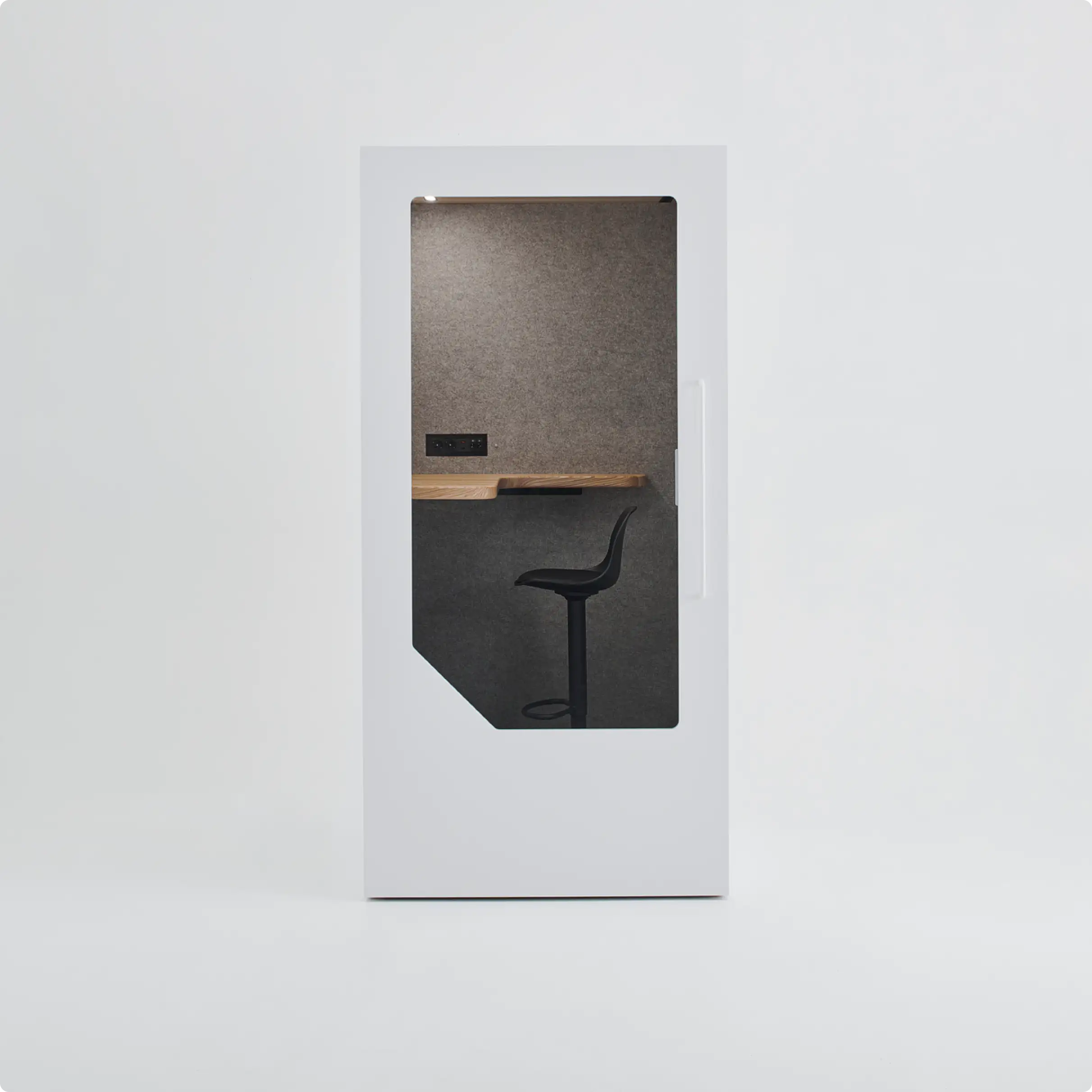
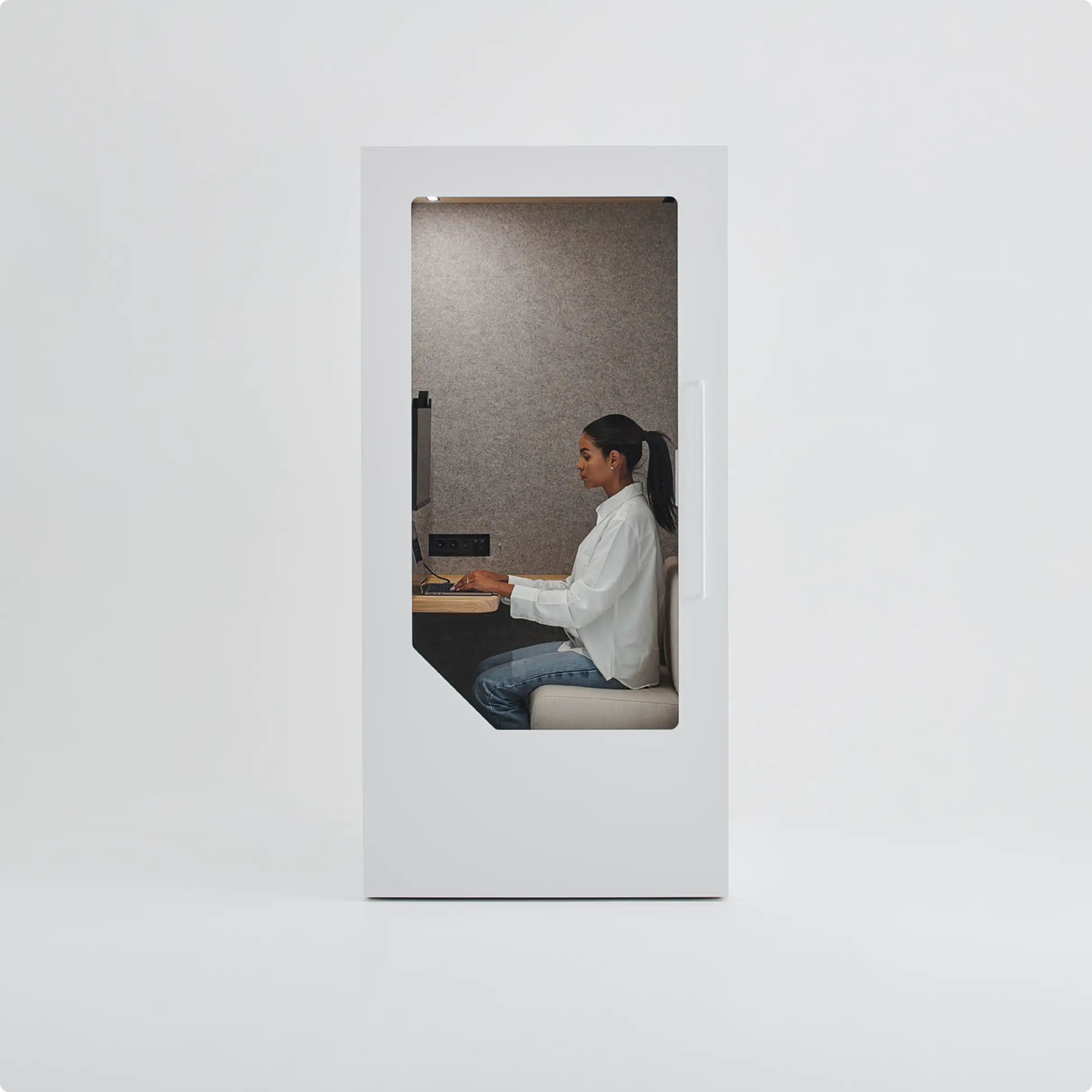

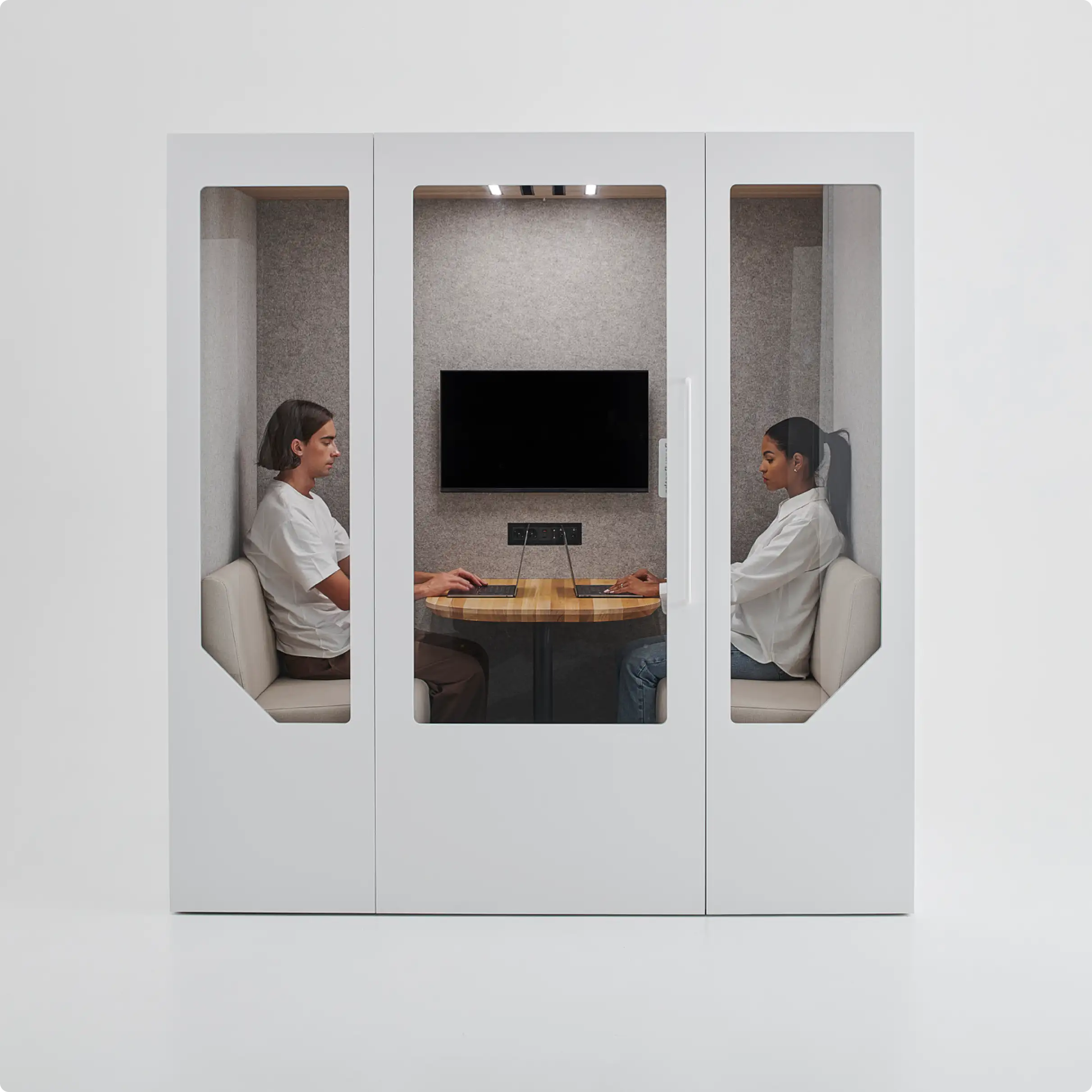
Persy Four
- Exterior
215 cm x 133 cm x 225 cm
- Interior
200 cm x 122 cm x 205 cm
- Soundproofing
-25.6dB according to ISO 23351:1:2020, all the way up to -38.3dB
- Ventilation
Adjustable 8 ultra-quiet fans, max airflow of 810m3/h, air refreshed inside every 31 seconds
Persy Four
- Exterior
215 cm x 133 cm x 225 cm
- Interior
200 cm x 122 cm x 205 cm
- Soundproofing
-25.6dB according to ISO 23351:1:2020, all the way up to -38.3dB
- Ventilation
Adjustable 8 ultra-quiet fans, max airflow of 810m3/h, air refreshed inside every 31 seconds
Learn More About Office Design Concepts
A guide to modern, flexible, and human-centered office spaces.
Why Our Private Workspaces Are the Smarter Choice
Watch how Persy Booths deliver privacy and focus – reducing distractions, improving airflow, and blending seamlessly into any office.
- Sold directlyCompetitive pricing, no middleman costs.
- Money-back guarantee30 days risk-free purchase.
- ISO certifiedTested soundproofing up to 28 dB.
- Fast deliveryShips in weeks, installs within hours.
- Trusted by thousandsThousands sold, near-zero returns.
- 3-year warrantyLong-lasting quality, guaranteed.
Design a workplace that actually works