
A workplace is more than the place where work happens. It's a place where people enagage, interact, collaborate and support each other. And that's why workplace culture matters.
Workplace culture shapes how employees behave, collaborate and perform every day. It influences how people communicate, how decisions are made and how employees feel about their work. A strong workplace culture supports employee engagement, employee satisfaction and long-term organisational success, while a poor workplace culture can lead to low productivity, disengagement and high employee turnover.
At Persy Booths, we understand this well. Not only are we proud of our own working culture, we also work closely with organisations that care about building better workplaces and who want to know how the work environment and daily habits shape culture in the workplace.
Organisations that prioritise the employee experience recognise that culture is not just a soft concept. It is a practical driver of business success, affecting performance, innovation and retention.
Key takeaways from this article
- Workplace culture is the everyday reality of shared values, behaviours and expectations.
- Positive workplace culture improves employee engagement, employee wellbeing and employee retention.
- Toxic workplace culture drives burnout, disengagement and higher employee turnover.
- Leadership, open communication and psychological safety are essential to a healthy workplace culture.
- Organisations can improve company culture through clear values, consistent behaviour and supportive environments.
Workplace Culture Definition and Core Elements
Workplace culture refers to the shared values, behaviours and expectations that shape how employees work together. It influences how employees feel, how leaders behave and how teams collaborate. Corporate culture and company culture are not just written statements. They are the daily experience of employees.

What Is Workplace Culture in Everyday Language?
Workplace culture is simply how work feels. It is visible in everyday interactions. Do employees feel confident asking questions? Do team members support each other? Do senior leaders communicate openly? Do new employees feel welcomed and guided?
Answering these questions helps you define work culture. In a positive workplace, employees feel respected, connected and motivated. In a toxic culture, employees feel cautious, unsupported and disengaged.
Key Elements of a Healthy Work Environment
A healthy workplace culture usually includes the following elements:
- Open communication so employees can share ideas freely
- Psychological safety so employees feel safe speaking up
- Mutual respect among employees
- Work life balance supported by realistic workloads
- Recognition so employees feel valued
- Professional development opportunities
When these are present, organisations build a positive work environment where employees feel connected, engaged and able to contribute, supported by accessibility in the workplace.

Common Types of Workplace Culture (With Examples)
Organisations often display a mix of cultural styles depending on leadership, business strategy and industry context.
Clan, Adhocracy, Market and Hierarchy Cultures
Clan culture focuses on collaboration, shared values and mutual respect. Team members support each other and employees feel valued.
Adhocracy culture encourages innovation, flexibility and new ideas. These innovative cultures support experimentation and creativity.
Market culture focuses on performance, competition and results. It can drive success but may harm employee wellbeing if pressure becomes constant.
Hierarchy culture emphasises structure, stability and clear processes. It works well in regulated environments but can limit flexibility and innovation.
Positive Workplace Culture vs Poor Workplace Culture
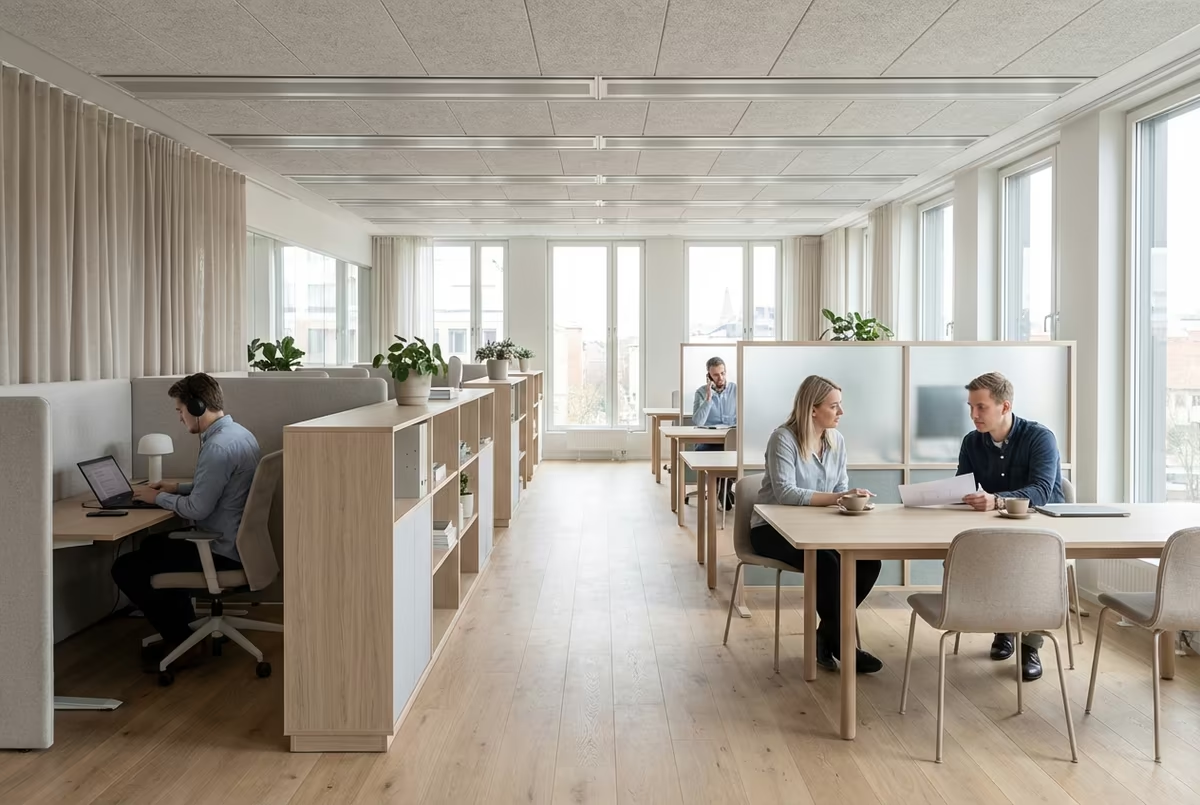
A positive workplace culture promotes trust, clarity and support. Employees feel valued and engaged. A poor workplace culture often results in confusion, stress and high employee turnover.
Toxic workplace culture may include poor communication, lack of recognition and weak leadership. Over time, this damages employee satisfaction and organisational success.
How Workplace Culture Shapes Employee Experience and Results
Workplace culture significantly impacts employee engagement, employee happiness and organisational success. It influences how employees work, how they collaborate and whether they stay long term.
Employee Engagement, Retention and Wellbeing
Positive culture strengthens employee engagement and improves employee retention. Employees feel supported, respected and aligned with purpose. Research from the CIPD (the Chartered Institute of Personnel and Development in the UK) highlights the growing importance of workplace wellbeing, while research from Gallup shows the connection between engagement and performance.
Healthy culture improves job satisfaction, reduces stress and supports long-term business success. Poor workplace culture leads to burnout, disengagement and higher employee turnover.
Work Life Balance, Flexible Working and the Physical Work Environment
Workplace culture shapes expectations about work life balance, flexible hours and how employees use the workplace. In a healthy workplace, boundaries are respected and policies for hybrid working support outcomes rather than control.
The physical work environment also plays an important role, alongside a strong digital workplace. Organisations increasingly design spaces to balance collaboration and focus. Trends such as collaborative workspace and flexible office space show how organisations are shifting towards adaptable environments.
Managing the office noise level and office distractions is also essential. A range of office noise reduction solutions – including such hi-tech solutions as white noise machines and room occupancy sensors – are available to help organisations support a healthy workplace culture.
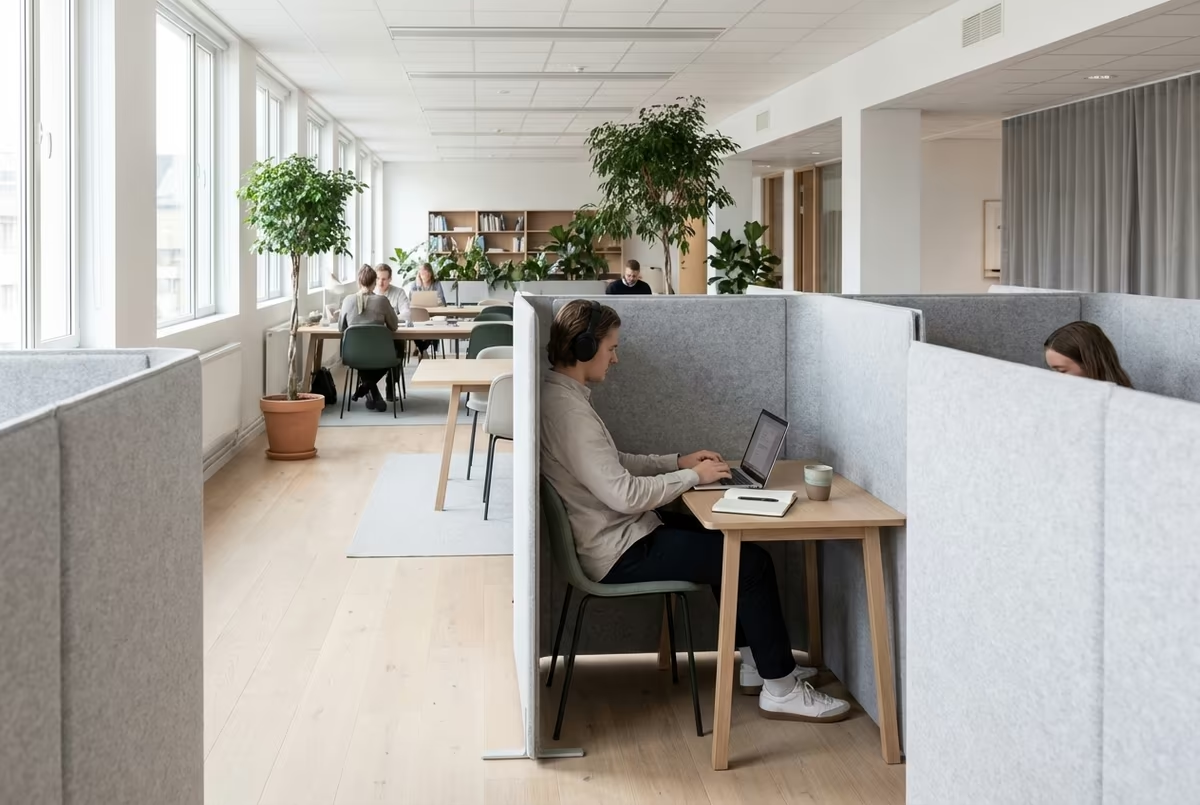
One of the most popular ways to improve workplace culture is to instal modular private office pods as dedicated areas for quiet work - also known as portable meeting rooms. Employees can concentrate more easily in a work booth, which helps to promote not only a more positive workplace culture, but also to increase levels of productivity. The type of work booth used usually depends on size and capacity:
- An individual soundproof phone booth is for solo use, whether for focused work or confidential phone calls
- A two person phone booth can also be used for private meetings, such as performance reviews or negotiations
- A larger team meeting booth is ideal for small groups to collaborate without distraction from the wider office environment.
These zones help by providing environments where employees can focus, collaborate and feel supported.

Practical Examples of Workplace Culture in Action
Workplace culture becomes visible through behaviour, leadership style and everyday interactions.
Positive Workplace Culture Examples
Positive workplace culture often includes:
- Collaborative clan cultures where employees feel connected and supported
- Environments with psychological safety where employees feel confident sharing new ideas
- Organisations that prioritise professional development and mentorship programs
- Flexible workplaces that support work life balance and employee wellbeing
In these environments, employees feel respected and motivated, improving employee satisfaction and organisational success.
Challenging Cultures and What They Teach Us
Challenging cultures often reveal risks:
- High pressure market cultures can harm employee wellbeing and reduce engagement
- Overly hierarchical cultures may limit communication and innovation
- Cultures lacking recognition can make employees feel undervalued
These examples show the importance of open communication, mutual respect and effective leadership.
How to Improve Workplace Culture in Your Organisation
Improving workplace culture requires consistent leadership, clear values and daily action.
Clarifying Values, Behaviours and How We Work
Organisations must define their core values and expected behaviours. Senior leaders should align company policies and leadership actions with these values. Human resources can help create policies that reinforce a healthy culture.
When organisations clearly define organisational culture, employees understand expectations and feel confident in their roles.
Everyday Actions that Build Positive Work Culture
Simple daily actions help create positive culture:
- Encourage open communication and regular feedback
- Recognise achievements so employees feel valued
- Support professional development and mentorship
- Promote work life balance and flexible hours
- Ensure employees feel respected and connected
These consistent behaviours help create a thriving workplace culture and long-term business success.
FAQs
.avif)
Passionate, progress-driven venture & business developer with startup and corporate experience. I speak business, while keeping customers in my heart.