.svg)

Acoustic panels work well for one specific job: reducing echo and reverberation inside a room. They make a space sound clearer and calmer, but they do not block noise from passing between rooms or people. This guide explains how panels work, how their effectiveness is measured, what limits real-world results, and when you need a sealed solution like an enclosed booth instead. Persy Booths makes office pods for exactly the privacy that panels cannot give.
{{key-takeaways}}
How Effective Are Acoustic Panels in Real Spaces?
Acoustic panels deliver a clear, measurable change inside a room. They absorb sound energy instead of letting it bounce off hard walls, floors, and glass, which shortens the time noise lingers. In practice, that shows up as:
- Less echo, so the room sounds tighter and cleaner.
- Clearer speech, with voices easier to follow.
- A calmer space that is easier to concentrate in.
How much a panel absorbs is rated by its Noise Reduction Coefficient, a single number from 0 to 1 averaged from lab tests in a reverberation room, measured under the ASTM C423 method. A panel rated 0.9 absorbs most of the sound that hits it, while one rated 0.1 reflects almost all of it. The other measure that matters is reverberation time, the seconds it takes a sound to fade away.
{{fact-1}}
Panels cut that time, which is why a treated room feels less harsh. The effect is real, but it is about how a room sounds inside, not about keeping sound in or out. Coverage and placement decide how much improvement you actually get, which the later sections cover.
In Offices and Meeting Rooms
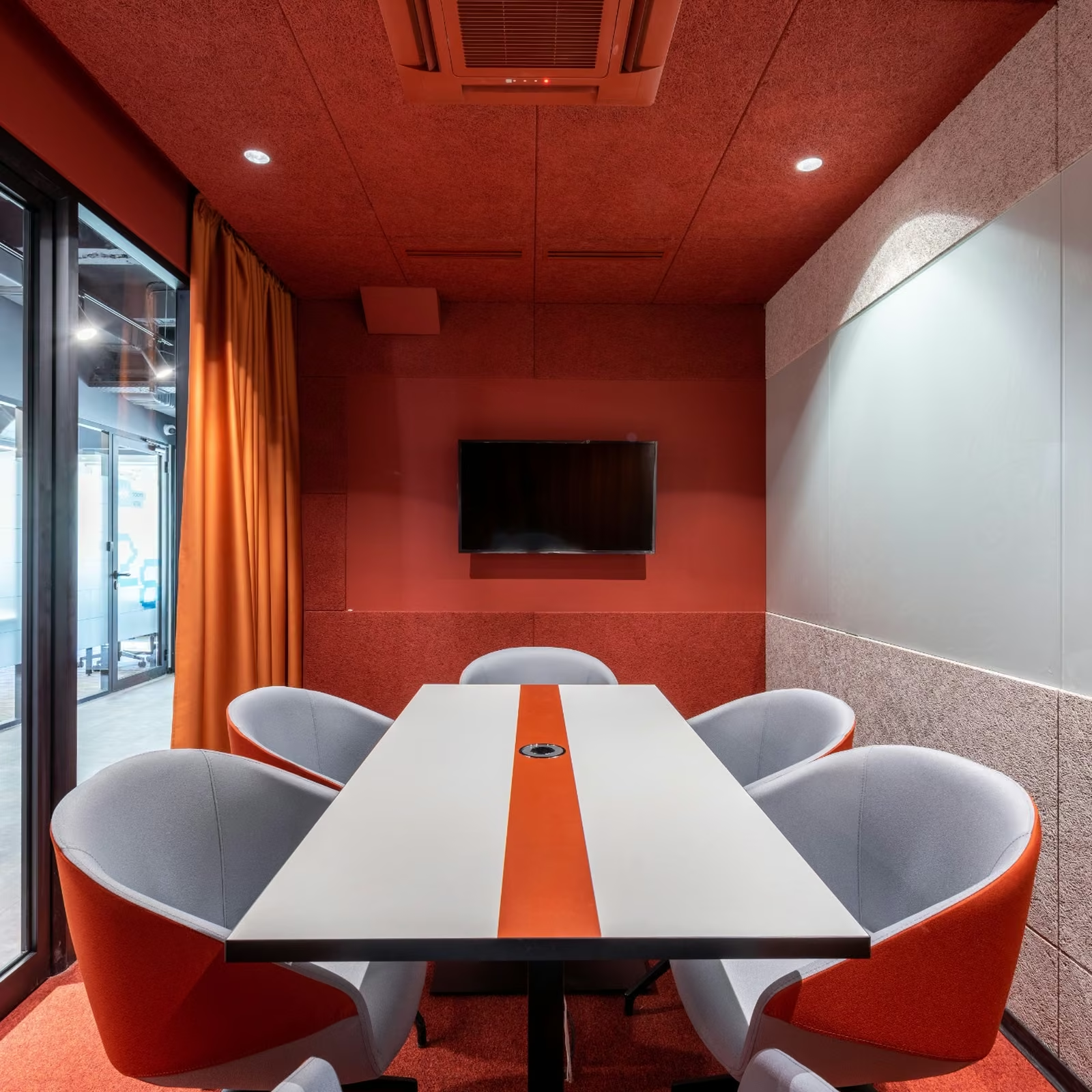
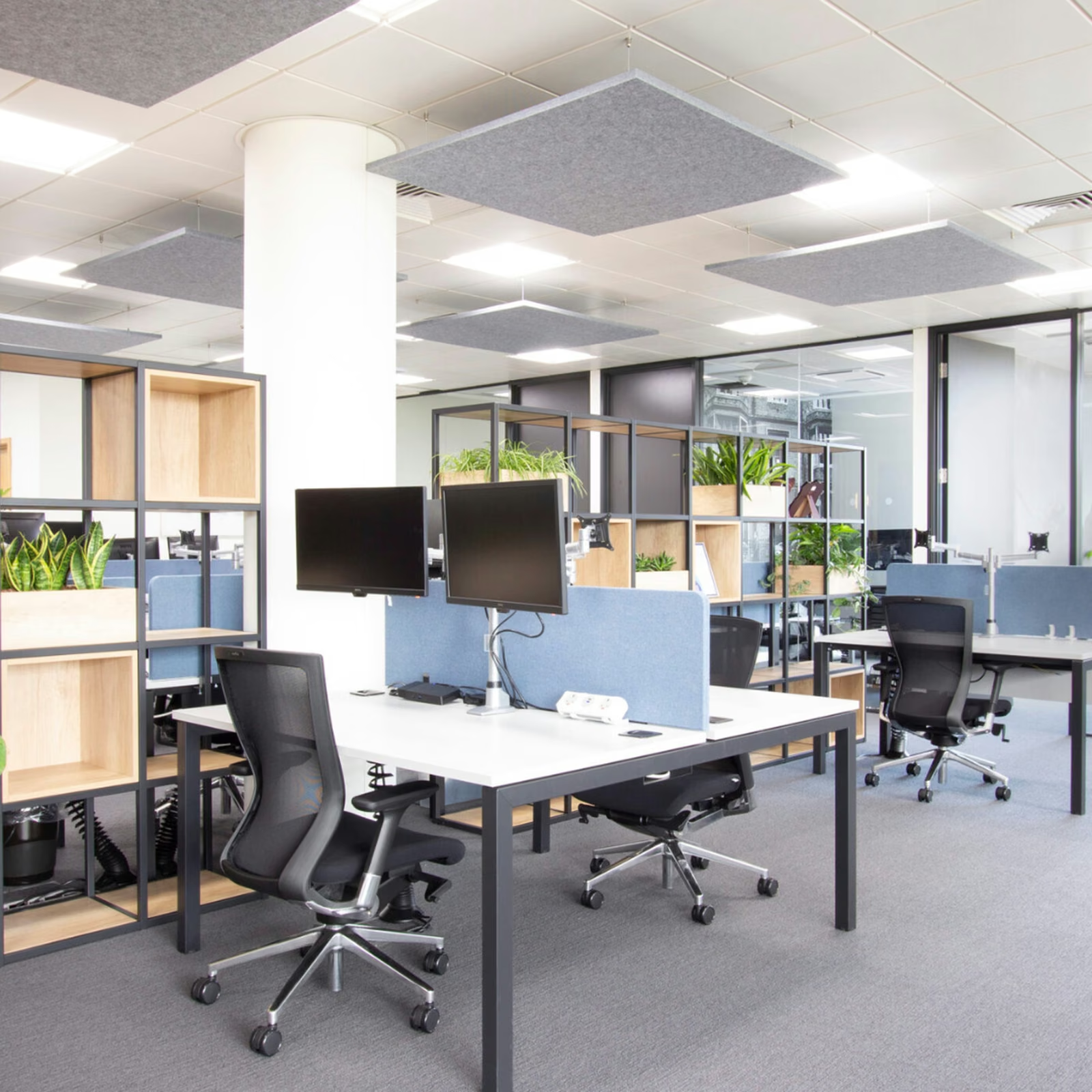
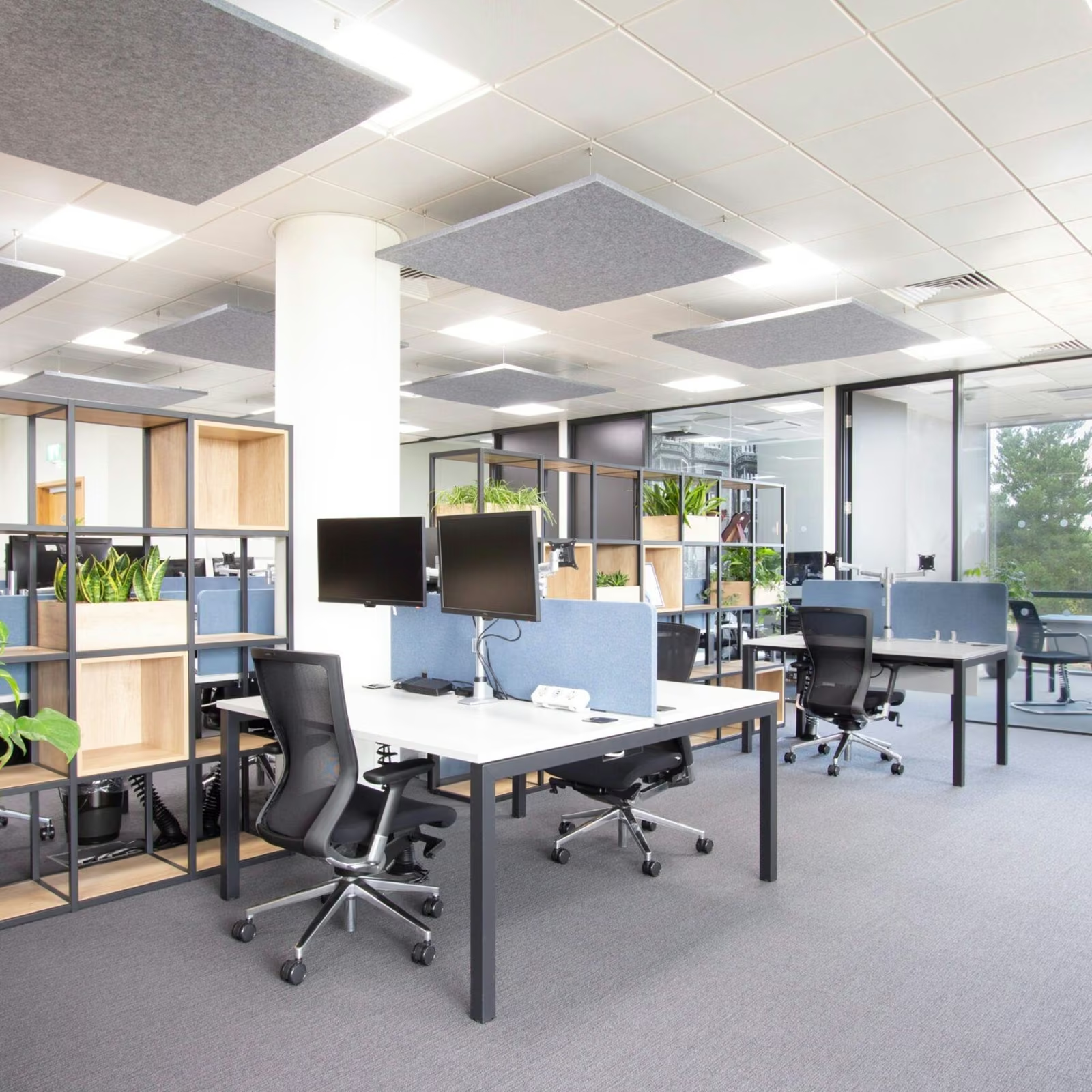
In offices, panels target the noise that wears people down, the hum of overlapping conversations bouncing around an open floor. By absorbing those reflections, panels lower the background din and make nearby speech easier to follow, which helps focus and eases the fatigue that builds up when open-plan noise raises stress and negative mood across a working day. Their impact is strongest in echoey rooms with hard surfaces, like meeting rooms with glass walls and bare floors. Good office acoustics start with treating these reflective surfaces. Panels will not make a busy floor silent, but they take the sharp edge off the noise.
{{stats-1}}
In Home Offices and Studios
At home, a few well-placed panels make a noticeable difference to calls and recording. A spare room or home office is usually small and full of hard surfaces, so sound bounces and voices pick up a hollow, echoey quality on video calls. Panels on the walls behind and beside you absorb those reflections, giving cleaner audio and a more professional sound.
For podcasts or voice recording, treating the wall the mic faces matters most. Realistic coverage is a handful of panels at key reflection points, not wallpapering the whole room. Even modest treatment lifts the sound clearly.
What Affects How Well Acoustic Panels Work?
Why do two rooms with the same panels sound different? Real-world results depend on more than the panels themselves, and a few variables decide whether treatment transforms a room or barely registers. Getting these right is the difference between panels that work and panels that disappoint.
The main factors are:
- Coverage: how much surface area you treat relative to the room
- Placement: putting panels where sound actually reflects
- Material and thickness: which frequencies the panel can absorb
- Room size and surfaces: how much hard, reflective area you start with
Each one shifts the outcome, and they interact. Plenty of panels placed badly will underperform a few placed well. The sections below take the most important factors in turn, so you can plan treatment that actually lands.
Coverage and Placement
Coverage is the most common reason panels underdeliver. Too few panels in a large, hard room leave most reflections untouched, so the echo barely changes. As a rough guide, treating around 15 to 30 percent of a room's hard surface area gives a clear improvement.
Placement matters as much as quantity. Panels work best at the first points where sound reflects, the walls and ceiling areas nearest the source, often found with the mirror trick: if you can see the speaker in a mirror on the wall, a reflection lands there. Spread panels around the room rather than clustering them on one wall.
Material and Thickness
Material and depth decide which sounds a panel can absorb. Thin, lightweight panels handle high frequencies well, like the sharpness of voices and clattering keyboards. Lower, deeper sounds need thicker panels or an air gap behind them to absorb, which is why bass and rumble are harder to treat. Porous materials such as mineral wool or dense foam trap sound as it passes through, and the denser and thicker the panel, the wider the range it covers.
For speech-heavy spaces like offices, mid-range absorption is what counts, so standard panels do the job. Match the panel to the noise you actually have.
Room Size and Surfaces
The room itself sets the starting point. A large space with high ceilings, glass, concrete, and bare floors reflects sound hard and needs far more treatment than a small carpeted room with soft furnishings. Every hard surface adds reflections, and every soft one already absorbs some. Soft flooring, curtains, and upholstered furniture quietly do acoustic work before any panel goes up. So two rooms of the same size can need very different amounts of treatment depending on what is already in them. Assess the surfaces first, then plan coverage to match the room you actually have.
The Limits of Acoustic Panels
Here is the honest part that a lot of panel marketing skips. Acoustic panels absorb sound inside a room, but they cannot stop sound from travelling between spaces. On their own, panels will not:
- Keep a phone call private.
- Block a confidential conversation from carrying across the office.
- Stop a neighbour's voice reaching your desk.
That is a different job entirely.
Absorption and blocking are two separate things. Panels reduce reflections in the air, softening how a room sounds. Blocking sound transmission needs mass and a sealed barrier, the walls, doors, and seals that physically stop sound waves passing through. A panel hung on an open wall does nothing to contain a voice, because the sound simply travels around it through open air. This is why a heavily treated open-plan office can still be a privacy problem: it sounds nicer, but every word still carries. When the goal is privacy or isolation rather than comfort, panels are the wrong tool, and no amount of them will close the gap.
When Panels Are Not Enough: Sealed Spaces for Real Privacy
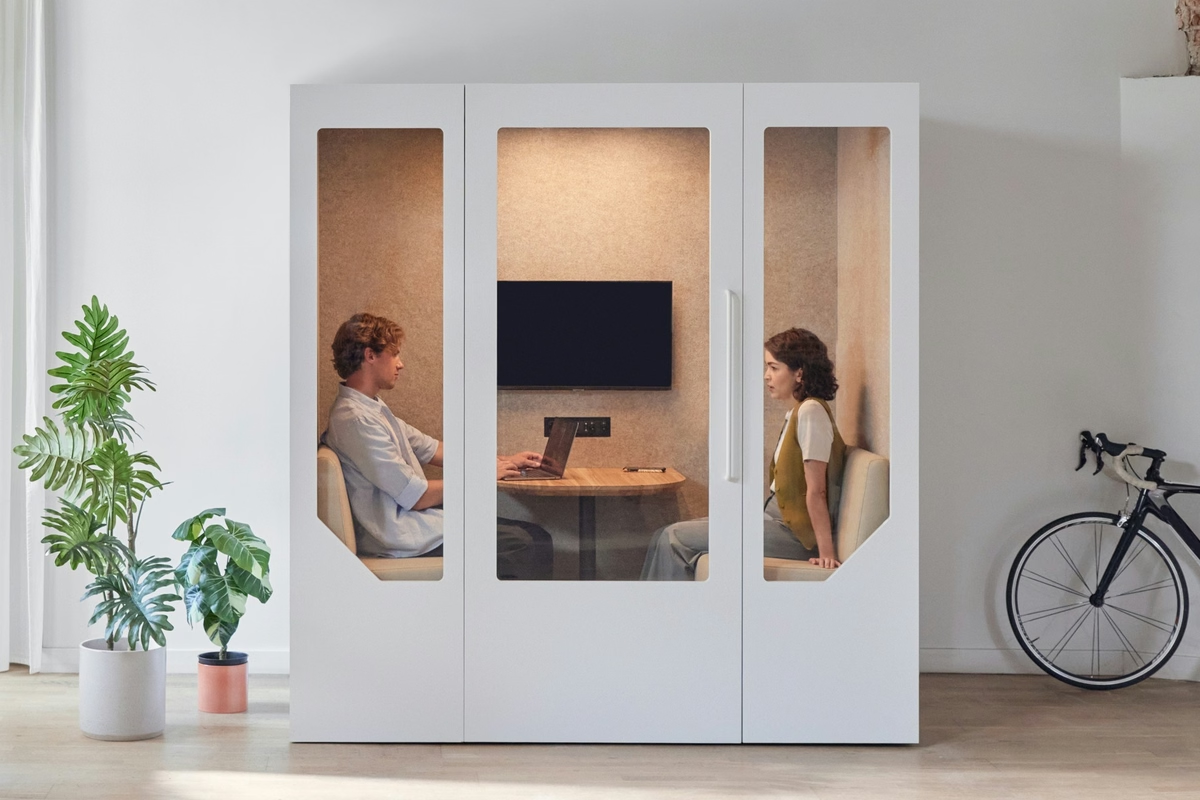
When you need to actually contain sound, the answer is a sealed space, not more panels. A confidential HR conversation, a sales call, or a private one-to-one needs sound to stay inside, and that requires an enclosed structure with solid walls, a sealed door, and acoustic glass. An acoustic pod or booth does what panels cannot.
An enclosed booth combines both jobs. Its shell blocks sound from passing in or out, so conversations stay private, and its internal lining absorbs reflections, so the space sounds clear inside. Panels and pods solve different problems, and they work well together. Panels make the open floor more comfortable to work in, while a pod gives a genuinely private spot within it. Many offices use both: panels to calm the general space, and pods for the calls and meetings that need real isolation. Persy Booths builds pods for exactly this, with tested soundproofing that an open wall of panels can never match.
Pods for Private Calls and Focus
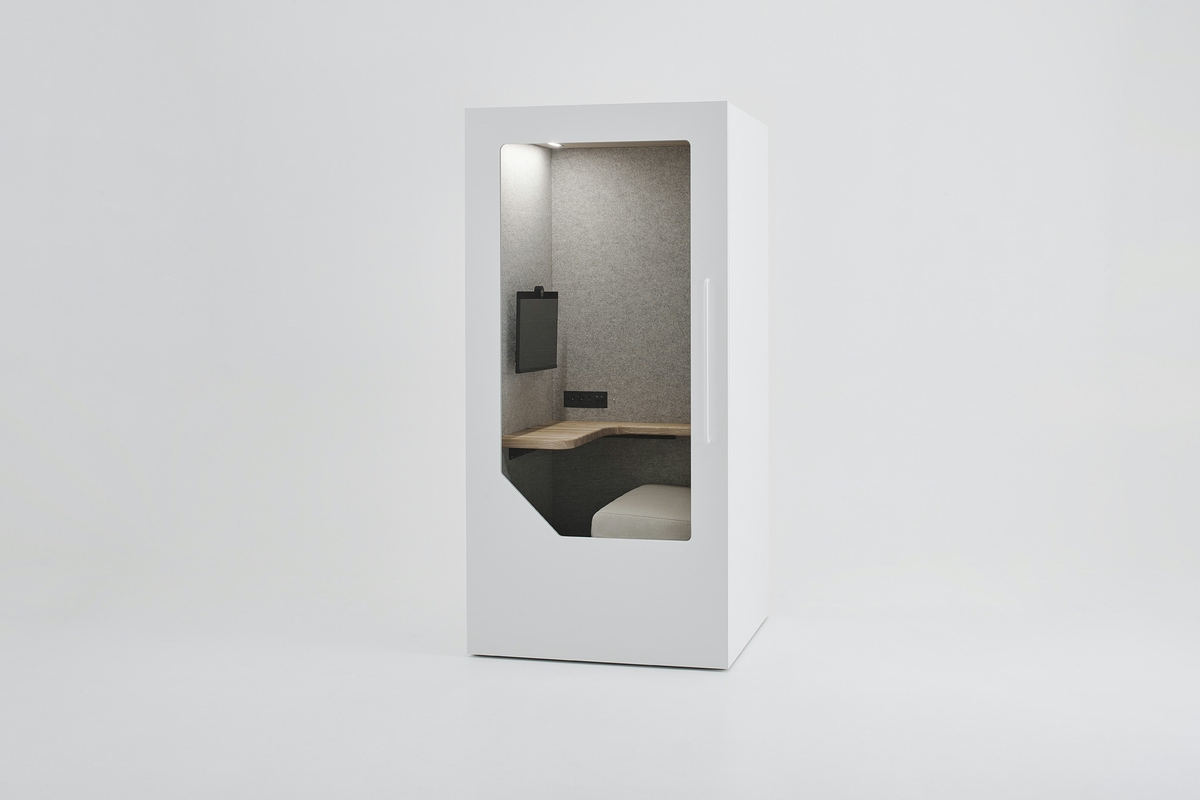
A single-person booth gives the one thing panels cannot: real isolation. Step inside, close the sealed door, and the sound of the office drops away, while your own voice stays in. A soundproof phone booth suits anyone who takes regular calls, joins video meetings, or needs an hour of deep focus away from the open floor.
Unlike a panel-treated corner, it contains the conversation in both directions, so a sensitive call stays private and you stop disrupting nearby colleagues. For most teams, a couple of these booths solve the call-privacy problem that panels alone leave wide open.
Pods for Team Meetings
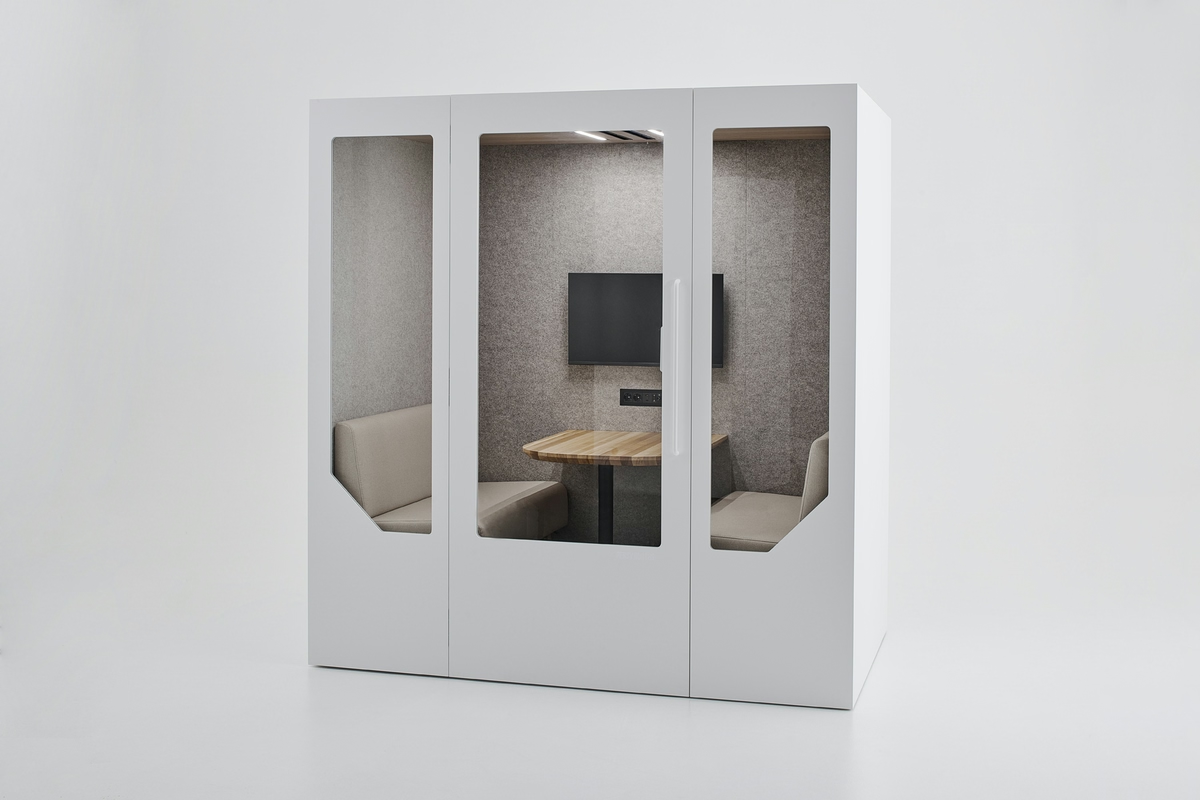
For small groups, a larger pod does the same job at meeting scale. A team meeting booth seats around four people and keeps the discussion sealed inside, so a planning session or a video call does not spill across the floor or get derailed by it. This matters most in open offices where meeting rooms are scarce and calls keep spilling out of them.
A meeting pod adds a private, bookable space without building a permanent room, and it contains sound in a way no arrangement of wall panels can. Panels make the surrounding office quieter, while the pod makes the meeting itself private.
How to Get the Best Results From Acoustic Panels
Want panels to perform their best? A few practical steps make the difference between a room that sounds transformed and one that barely changes.
- Treat enough surface area, roughly 15 to 30 percent of hard surfaces, rather than hanging a token few.
- Place panels at first reflection points, not just where they look tidy.
- Spread them across different surfaces, walls and ceiling, instead of one wall.
- Match panel thickness to the noise, using deeper panels for lower frequencies.
- Count the soft furnishings you already have, and treat the gaps.
Most importantly, match the tool to the goal. If you want a calmer, clearer room, panels handle it well. If you need privacy or true sound isolation, pair the panels with a sealed pod for the calls and meetings that need it. Panels and pods together cover both comfort and privacy, which is the full result most offices are actually after.
{{summary}}
.svg)
Acoustic panels work well at absorbing sound and cutting echo within a room, which makes speech clearer and reduces distraction. They do not soundproof a space or stop noise travelling between rooms. For genuine privacy, such as a confidential call, you need an enclosed, sealed solution rather than panels on the wall.
%20(1).svg)
So how well do acoustic panels work? Very well for what they are designed to do, which is reducing echo and reverberation so a room sounds clearer and calmer. They do not block noise between rooms or deliver privacy, and no amount of them will. The right fix depends on the goal: panels for comfort and clarity across a space, a sealed pod for genuine isolation, and often both together. Decide which problem you are solving, then choose the solution that actually does that job, or talk to a supplier who can match the two.
Acoustic panels work well at absorbing sound and cutting echo within a room, which makes speech clearer and reduces distraction. They do not soundproof a space or stop noise travelling between rooms. For genuine privacy, such as a confidential call, you need an enclosed, sealed solution rather than panels on the wall.
Acoustic panels work well at absorbing sound and cutting echo within a room, which makes speech clearer and reduces distraction. They do not soundproof a space or stop noise travelling between rooms. For genuine privacy, such as a confidential call, you need an enclosed, sealed solution rather than panels on the wall.
.svg)