.svg)

So you want to bring down noise levels - but you want to keep costs down too? Let's talk about the cheapest way to soundproof an office.
Office noise is a common productivity killer. Ringing phones, conversations, and background noise from nearby rooms or traffic noise can make it hard to maintain focus. But redesigning an entire office soundproof system can be costly. The good news is that there are many low-cost, practical solutions that help reduce noise, absorb sound, and create a peaceful work environment without the need for major renovations.
This article explores the cheapest way to soundproof an office, offering clear advice on effective soundproofing techniques that work for both large and small office spaces.
{{key-takeaways}}
Why Soundproofing Matters in Offices
Noise distractions are one of the main reasons people struggle to stay productive in open office spaces. Hard surfaces such as glass, concrete, and hard floors reflect sound waves and amplify unwanted noise. Over time, this leads to higher stress levels, fatigue, and reduced concentration.
Studies by the World Health Organization show that exposure to constant noise pollution can increase blood pressure and lower job satisfaction. Excessive background noise from traffic, ringing phones, or noisy equipment affects the ability to think clearly. The Facilities Management Journal reports that one in three employees suffers from stress caused by office noise.
{{stats-1}}
Persy Booths understands this problem well. Through our work with companies designing private offices and quieter zones, we see how the right soundproofing solutions can turn busy open plan offices into productive, peaceful spaces. The goal is not to eliminate every sound, but to reduce sound transmission and dampen noise to a comfortable level.
Cheap Office Soundproofing Ideas
There are many affordable ways to soundproof an office and reduce noise levels. Below are ten practical and cost-effective methods that target sound absorption, sound blocking, and sound insulation.
1. Rearrange the office layout (€0)
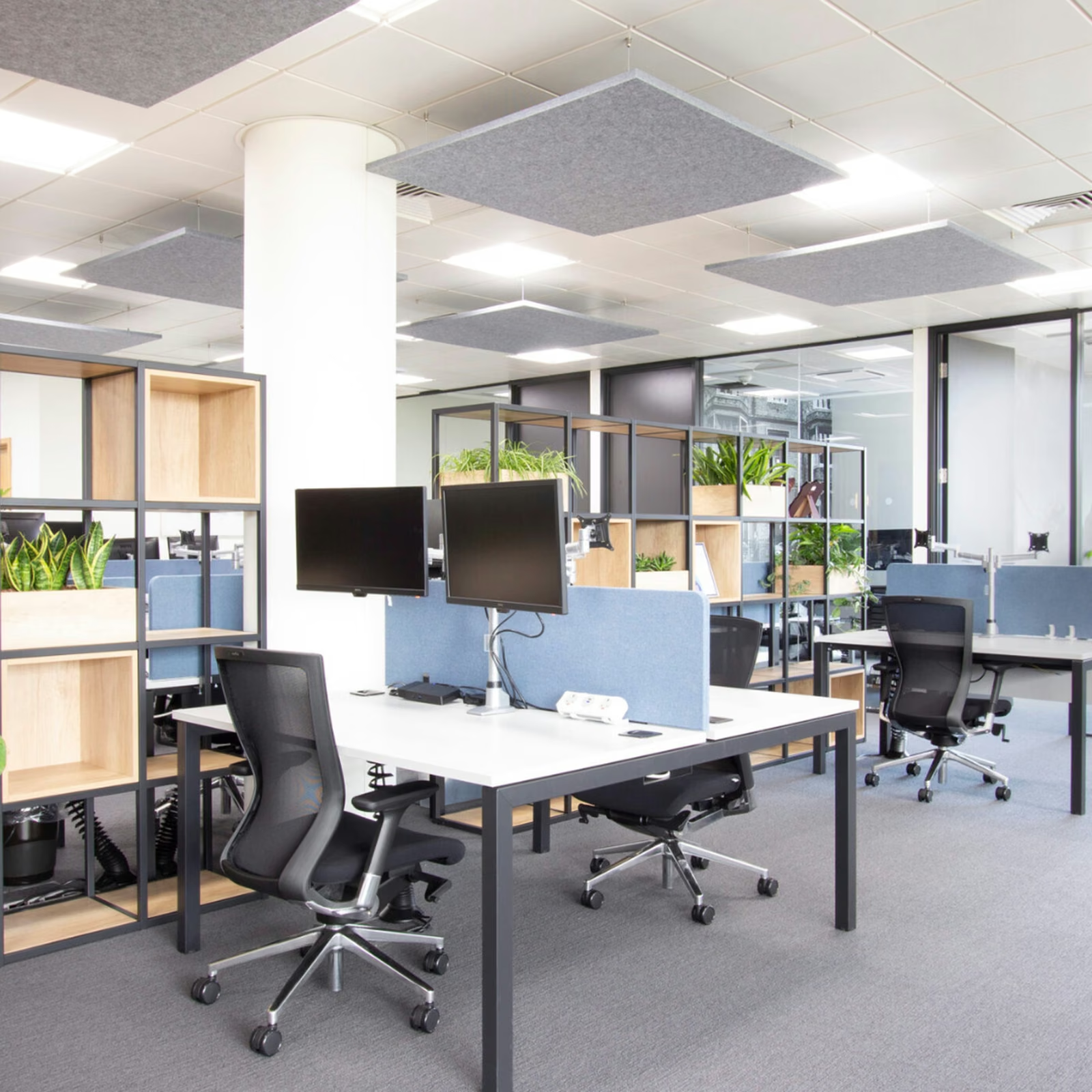
Start by rethinking the office layout. Moving desks away from shared walls or high traffic areas reduces direct exposure to sound sources such as noisy equipment or ringing phones. Placing large furniture, shelving, or living walls along a party wall can act as a natural sound barrier that absorbs sound waves and prevents sound leakage.
2. Add rugs or carpets to reduce reverberation (€12 – €60)
Rugs, mats, or carpet tiles are one of the simplest ways to reduce noise and control sound vibrations from hard floors. Soft furnishings absorb sound waves and help reduce noise reverberation, especially in spaces with high ceilings. For extra benefit, use dense materials or underlay beneath carpets to further dampen impact noise.
3. Hang acoustic curtains or drapes (€25 – €70)
Thick curtains or acoustic drapes are effective sound absorbers that reduce external noise from windows and traffic. They also help with energy efficiency by keeping rooms warmer in winter and cooler in summer. This dual effect of sound and heat control makes them one of the best soundproofing materials for small budgets.
4. Install acoustic panels on walls (€35 – €100)
Acoustic panels are purpose-built sound absorbers that tackle noise problems on reflective surfaces. When mounted on existing walls, they absorb vibrations and reduce sound transmission between spaces. Choose panels with foam or dense fabrics to absorb sound waves efficiently and improve overall sound quality.
5. Use desk dividers or partitions (€30 – €90)
Adding partitions or desk dividers between workstations is a quick way to create quieter zones. They block sound coming from nearby conversations and equipment while giving employees more privacy. For the best results, select partitions made from soft materials with good sound absorption properties.
6. Seal gaps with acoustic caulk (€5 – €15)
Small cracks or openings in walls and around window frames allow sound leakage. Sealing these entry points with acoustic caulk is a cheap and practical solution to prevent sound escaping or entering. It’s also useful around door frames and ceilings to block sound travelling between floors or rooms.
7. Add wall insulation or acoustic plasterboard (€80 – €200)
If you have a stud wall or existing wall that transmits too much sound, adding insulation is an excellent long-term fix. Acoustic plasterboard and insulation batts add mass, helping to block sound and reduce sound transmission. They also improve thermal performance, providing the added benefit of lower heating costs.
8. Use dense materials like mass loaded vinyl (€70 – €180)
Mass loaded vinyl (MLV) is a flexible but dense sound barrier that prevents sound from passing through walls, floors, or ceilings. It’s one of the most effective soundproofing materials for blocking both airborne and impact noise. Installing MLV behind drywall or suspended ceilings helps block sound from noisy neighbours or shared office spaces.
9. Position noisy equipment wisely (€0)
Placing noisy equipment such as printers, shredders, or air conditioning units away from desks can reduce direct sound exposure. Use separate rooms or acoustic enclosures for the noisiest devices. This simple change in office layout can significantly lower overall background noise without any cost.
10. Create enclosed spaces with modular booths (€900 and up)
For teams that need private areas for calls or focused work, modular booths such as our soundproof phone booth, two person phone booth, team meeting booth, or work booth provide an affordable, long-term soundproof office solution. They create peaceful spaces for meetings or concentration without permanent construction.
While the cost of soundproof booths is higher than many of the other tips we have offered, it is important to think of the long-term cost of ownership and benefit. Employees are expensive and boosting their productivity can easily justify the cost of the booths. Forbes Magazine reports that each employee loses 581 hours to lack of focus caused by office distractions – that can get very expensive very quickly.
{{fact-1}}
What's more, soundproof pods may not be as expensive you think. Persy Booths believes in finding the right balance between functionality and cost – by avoiding unnecessary features and designing soundproofing solutions that deliver the right amount of soundproofing at the right cost. Buying direct from manufacturers, rather than distributors, is another way to keep costs down.
Finding the Right Supplier
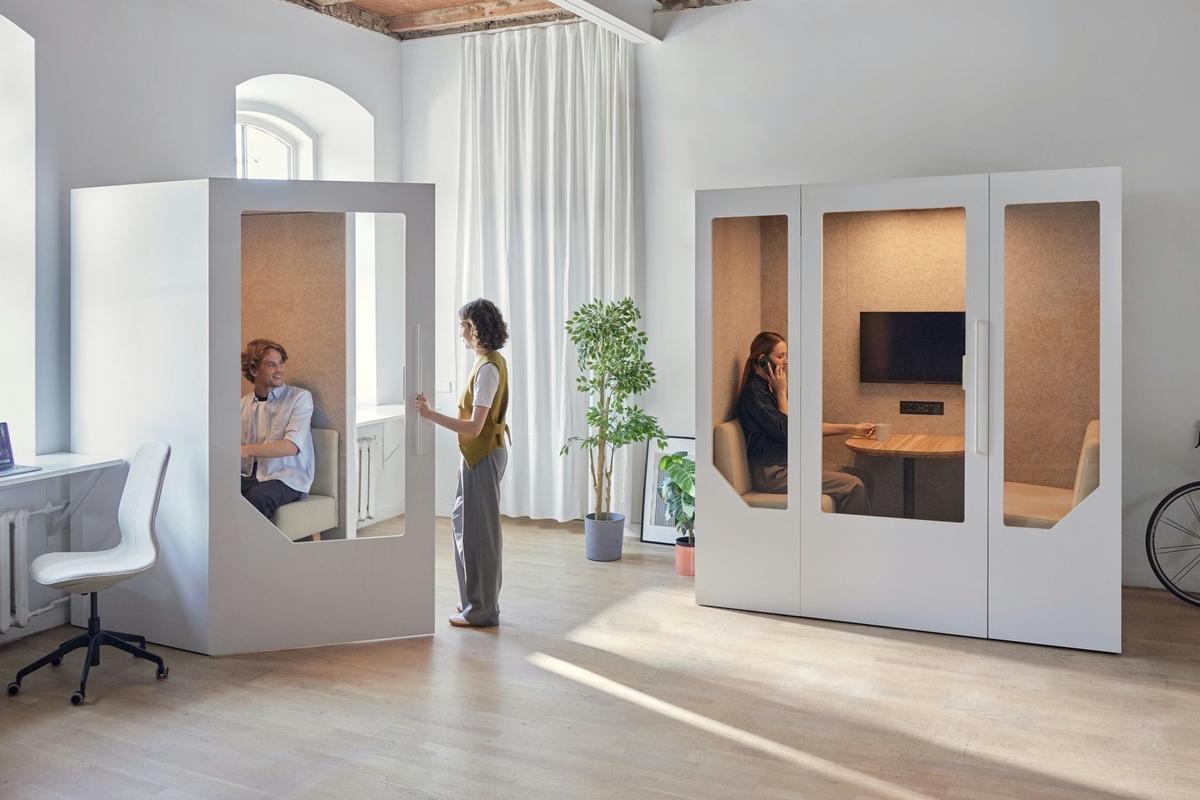
When choosing soundproofing products, finding a supplier who understands both the technical and financial aspects of sound control is essential. A good supplier will help you select effective soundproofing options that match your space, whether that means acoustic panels, soft furnishings, or desk dividers. If you are looking for complete soundproof office pods, Persy Booths is known for its practical approach – providing friendly advice, fast delivery, and minimum hassle for clients.
The goal for you and your suppliers is to achieve noise reduction through smart design rather than unnecessary expense.
{{summary}}
.svg)
- The cheapest way to soundproof an office is by combining soft furnishings, smart layout changes, and sealing gaps to reduce echo and block sound transmission.
- Affordable materials like acoustic panels, rugs, curtains, and mass loaded vinyl can deliver significant noise reduction without structural work.
- Rearranging furniture and isolating noisy equipment are zero-cost methods that dramatically improve acoustic comfort.
- Investing in modular booths are highly effective and can deliver lasting value through higher productivity and privacy.
- The best approach is balance — choosing targeted, cost-effective solutions rather than overspending on unnecessary renovations or premium features.
%20(1).svg)
Soundproofing doesn’t have to mean rebuilding your office. The cheapest way to soundproof an office is to start small – use soft furnishings, rearrange the layout, and apply acoustic caulk or curtains to reduce sound leakage. Combine these low-cost methods with denser materials or modular booths when extra privacy is needed.
The result is a more peaceful space that reduces background noise, prevents noise disruption, and improves overall comfort. A calm, well-planned office soundproof setup helps people maintain focus, improves communication, and creates a better working atmosphere for everyone.
- The cheapest way to soundproof an office is by combining soft furnishings, smart layout changes, and sealing gaps to reduce echo and block sound transmission.
- Affordable materials like acoustic panels, rugs, curtains, and mass loaded vinyl can deliver significant noise reduction without structural work.
- Rearranging furniture and isolating noisy equipment are zero-cost methods that dramatically improve acoustic comfort.
- Investing in modular booths are highly effective and can deliver lasting value through higher productivity and privacy.
- The best approach is balance — choosing targeted, cost-effective solutions rather than overspending on unnecessary renovations or premium features.
- The cheapest way to soundproof an office is by combining soft furnishings, smart layout changes, and sealing gaps to reduce echo and block sound transmission.
- Affordable materials like acoustic panels, rugs, curtains, and mass loaded vinyl can deliver significant noise reduction without structural work.
- Rearranging furniture and isolating noisy equipment are zero-cost methods that dramatically improve acoustic comfort.
- Investing in modular booths are highly effective and can deliver lasting value through higher productivity and privacy.
- The best approach is balance — choosing targeted, cost-effective solutions rather than overspending on unnecessary renovations or premium features.
.svg)