.svg)

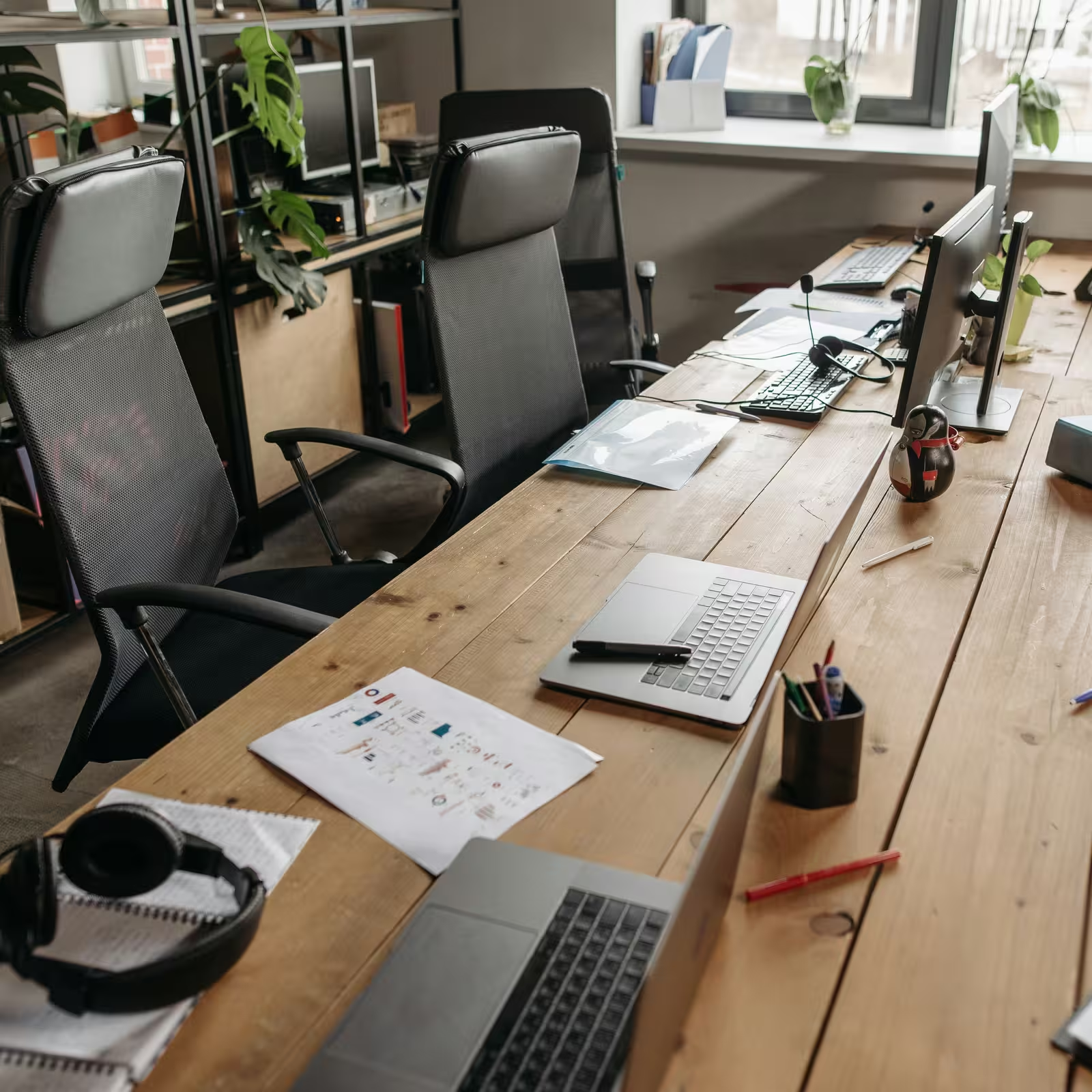
There is no such thing as a "standard" worker. This is why there are so many different types of workplaces available today – and it reflects a fundamental shift in how organisations think about work.
The days when every employee sat at the same desk, in the same office, doing the same thing from nine to five are largely gone. Instead, businesses are creating work environments that support different working styles, different tasks and different employee needs.
The right work environment can improve employee satisfaction, strengthen company culture and help employees perform at their best. The wrong one can contribute to a toxic work environment, reduce productivity and undermine employee engagement. Increasingly, organisations recognise that workplace design is not simply about desks and meeting rooms. It is about creating a workplace environment that supports collaboration, concentration, wellbeing and business performance.
At Persy Booths, we work with organisations that are actively rethinking their office space and employee experience. Through our close relationship with businesses seeking better ways to balance collaboration and privacy, we see first-hand how workplace design influences employee performance, workplace culture and overall job satisfaction. Many organisations are, for example, now using office pods as part of a broader strategy to create more flexible and effective workplaces.
The reality is that there is no single "best" workplace model. The most successful organisations understand that different activities require different environments. The future belongs to workplaces that provide employees with choice, flexibility and access to the right space for the task at hand.
{{key-takeaways}}
What Are the Main Types of Workplaces?
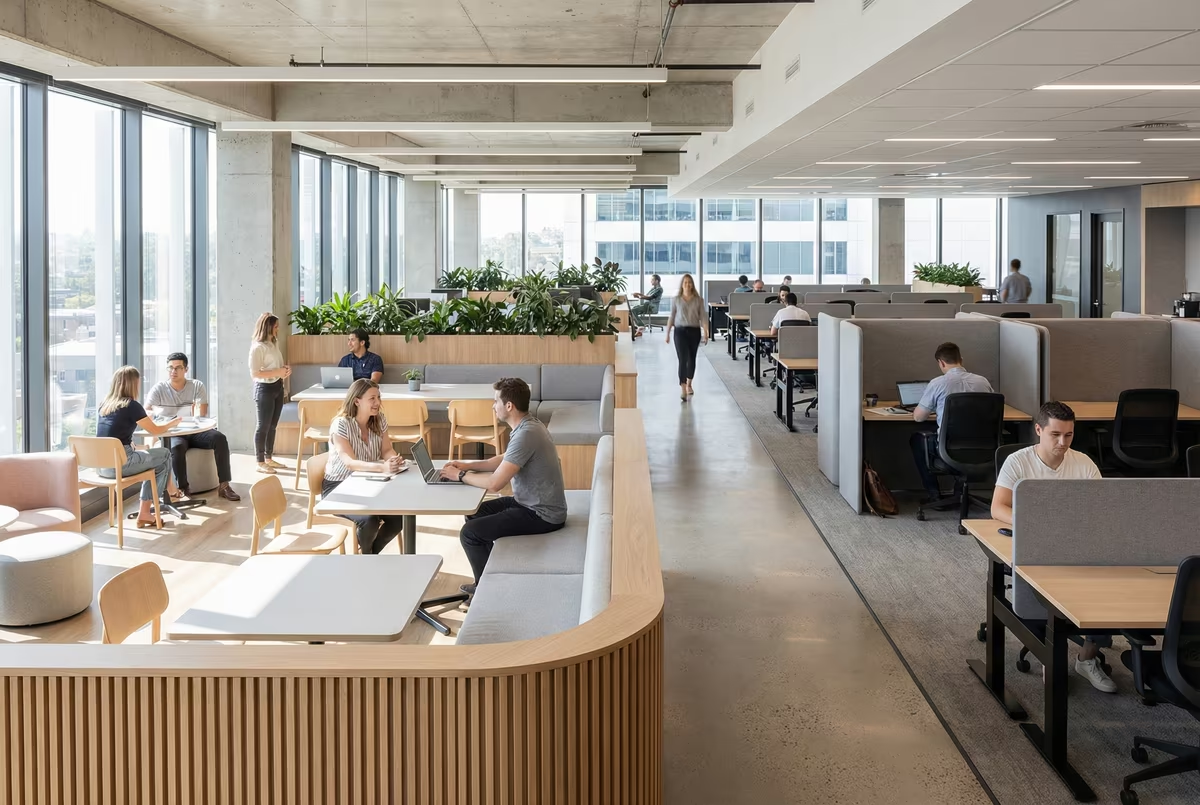
When people talk about types of workplaces, they are often referring to where employees work. However, the concept is broader than that. A workplace includes both the physical environment and the organisational structures that shape how work gets done. In other words, the work environment refers not only to a location but also to the systems, behaviours and expectations that influence daily working life.
Modern businesses can choose from several types of work environments depending on their objectives, workforce and operational requirements. Some prioritise flexibility and work life balance. Others focus on collaboration, training programs and maintaining a strong organisational culture. The right choice depends on the nature of the work, the needs of employees and the long-term goals of the organisation.
While workplace models vary considerably, most organisations operate within one of three broad categories: traditional office workplaces, remote workplaces and hybrid workplaces.
Traditional Office Workplaces
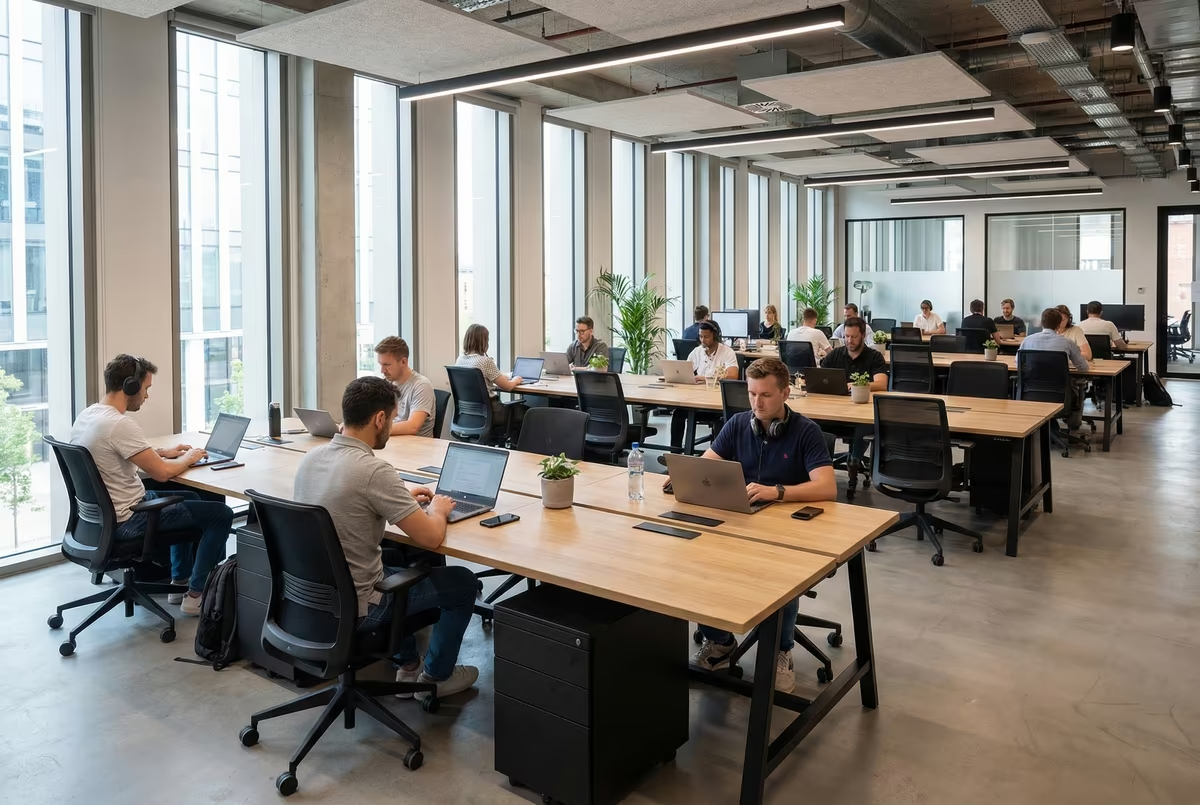
The traditional office remains one of the most familiar workplace models. Employees work from a central location, usually with fixed desks, structured schedules and direct access to colleagues and managers.
This type of workplace provides consistency and visibility. It can help organisations reinforce company values, deliver training programs and maintain a strong workplace culture. Employees interact regularly throughout the day, making it easier to build relationships and share knowledge. For businesses that rely heavily on teamwork or face-to-face communication, the traditional office continues to offer significant advantages.
A traditional office can also support professional development by providing informal learning opportunities, mentoring and direct access to experienced colleagues. However, some employees may find the model restrictive compared with more flexible alternatives.
Remote Workplaces
Remote work allows employees to work away from a central office, typically from home or another location of their choosing. Advances in technology have made remote work increasingly practical across a wide range of industries.
Many organisations embrace remote work because it improves flexibility and allows employees greater control over their schedules. It can contribute to a better work life balance by reducing commuting time and giving employees more autonomy over how they organise their day. For businesses, remote working can provide access to a wider talent pool and reduce overhead costs associated with office space.
However, remote work can also present challenges. Maintaining communication practices, preserving workplace culture and ensuring employees feel valued all require deliberate effort. Without careful management, remote workers may experience isolation or reduced opportunities for personal and professional growth.
Hybrid Workplaces
The hybrid work environment combines the benefits of office-based and remote working. Employees divide their time between the workplace and another location, often their home.
For many organisations, hybrid working offers the best of both worlds by creating a flexible work environment that gives employees more autonomy over where they work while supporting work life balance and wellbeing. Employees benefit from flexibility while still having opportunities for collaboration, relationship building and in-person problem solving. Hybrid models can improve employee satisfaction and support employee well being while allowing organisations to maintain a strong corporate culture.
A hybrid work environment also allows businesses to rethink how office space is used. Rather than dedicating large areas to fixed desks, organisations can create more varied environments that support different activities and working styles.
Workplace Models Based on Office Layout
While remote, hybrid and office-based working describe where people work, office layout determines how people work once they arrive. The physical aspects of workplace design influence everything from concentration and communication to emotional well being and employee experience.
Increasingly, businesses recognise that the most effective workplaces provide a range of settings rather than a single environment. Different tasks require different levels of privacy, collaboration and focus.
Open-Plan Workplaces
Open-plan offices were designed to encourage communication, knowledge sharing and collaboration by removing physical barriers between employees.
At their best, open-plan workplaces create collaborative environments where information flows freely and employees interact naturally throughout the day. They can support open communication, encouraging collaboration and faster decision-making. These environments often help organisations build positive relationships and foster a supportive workplace culture.
However, open-plan offices are not without challenges. Noise, interruptions and visual distractions can reduce concentration and contribute to a stressful environment. Employees performing complex tasks may struggle to maintain focus when surrounded by constant activity.
As a result, many organisations are evolving beyond purely open-plan layouts and adopting collaborative workspaces that provide employees with greater choice over where and how they work.
Private Office Workplaces
Private offices offer a contrasting approach. Instead of prioritising openness, they provide enclosed spaces designed for concentration, confidentiality and focused work.
These environments are particularly valuable where critical thinking, strategic planning or sensitive conversations are common. Employees perform demanding tasks more effectively when distractions are minimised. Private offices can also support a professional environment by providing suitable spaces for client meetings, interviews and confidential discussions.
For some organisations, private offices contribute to a supportive work environment by reducing interruptions and giving employees greater control over their surroundings. While they may limit spontaneous interaction, they often improve focus and productivity.
Flexible and Activity-Based Workplaces
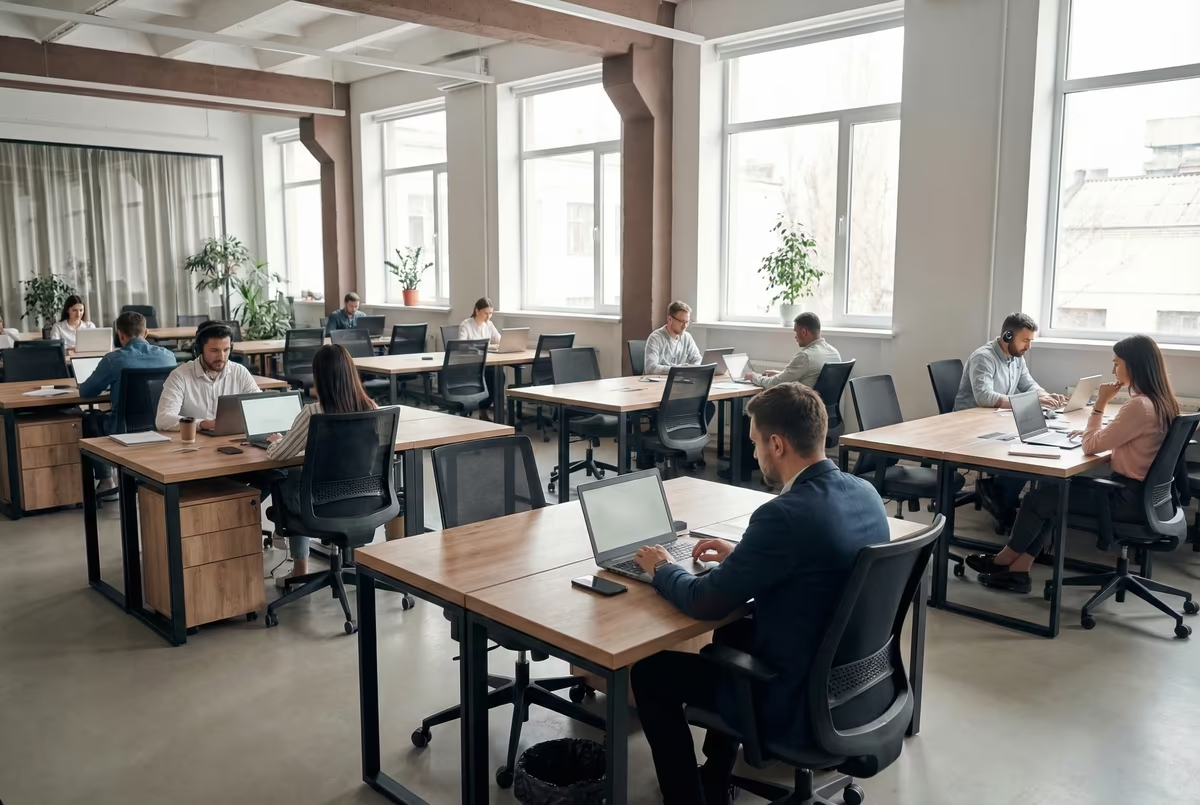
Flexible and activity-based workplaces are becoming increasingly popular because they acknowledge a simple reality: different tasks require different environments.
Rather than assigning employees a single desk, activity-based workplaces provide a variety of settings designed for specific purposes. These may include quiet zones, collaboration areas, meeting spaces, co working spaces and social environments.
This approach allows employees to choose the setting that best suits the task they are performing. It also recognises that employee personalities differ. Rather than ignoring employee personalities, flexible workplaces seek to accommodate a range of working preferences.
By providing employees with greater choice, activity-based workplaces can support professional growth, personal growth and a more positive employee experience.
How Different Types of Workplaces Affect Productivity
The relationship between workplace design and productivity is well established. Different types of work environments influence employee performance in different ways because they affect concentration, communication, comfort and wellbeing.
{{stats-1}}
Focus and Deep Work Needs
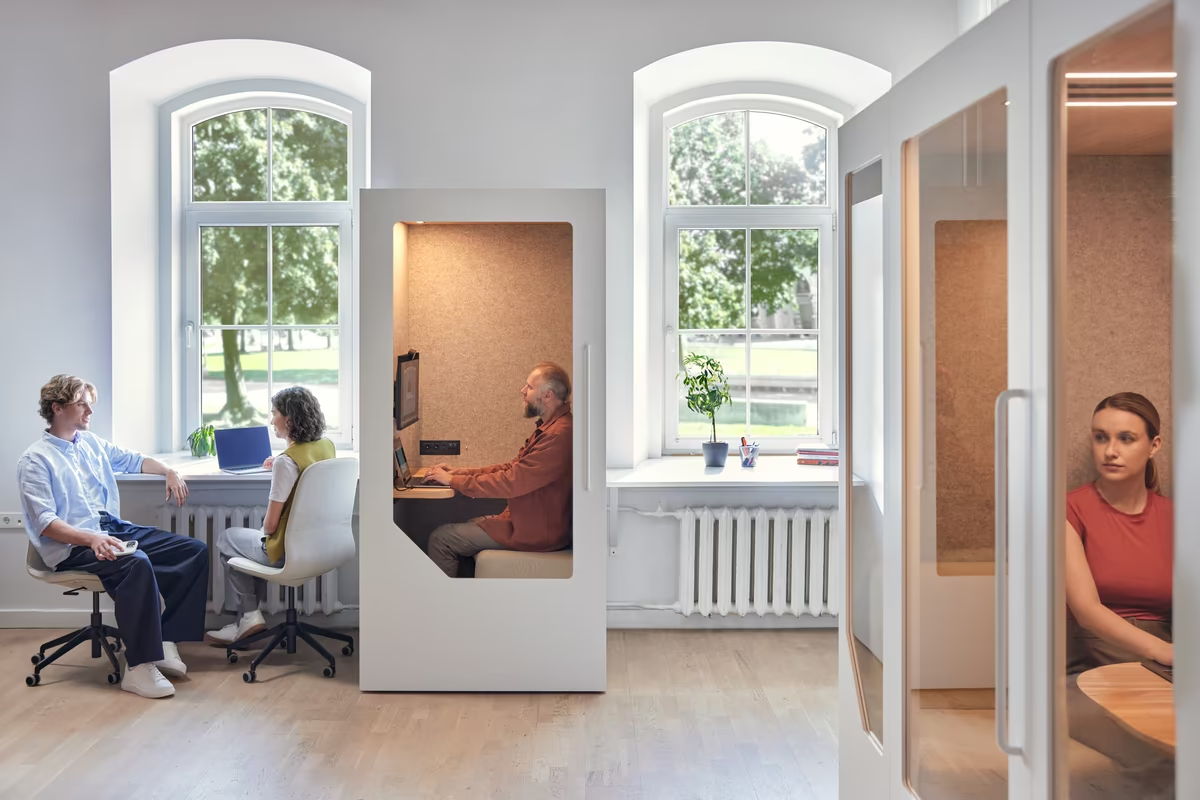
Many of the most valuable business activities require concentration. Strategic planning, writing, software development, analysis and complex decision-making all depend on sustained attention.
This is where workplace design becomes critical. While open-plan environments support collaboration, they can make deep work difficult. Constant interruptions reduce productivity and increase cognitive load.
For this reason, many organisations are introducing dedicated quiet spaces and acoustic solutions. A purpose-built work booth can provide employees with a private setting for focused work, video calls and confidential conversations. By giving employees access to distraction-free environments, organisations can improve both productivity and employee satisfaction.
Collaboration and Team Interaction
Focus is important, but so is collaboration. Innovation rarely happens in isolation, and employees need opportunities to share ideas, solve problems and build relationships.
Workplace design can play a major role in encouraging these interactions. Shared spaces, breakout areas and informal meeting points create opportunities for spontaneous conversations and knowledge sharing. These interactions often strengthen workplace culture and contribute to a positive company culture.
The challenge for employers is creating environments that support both collaboration and concentration. Too much emphasis on one can undermine the other. The most effective workplaces provide a balance between the two.
Noise, Comfort, Workplace Environment and Employee Wellbeing
Noise and comfort have a direct impact on employee wellbeing, concentration and performance. A workplace that is too loud, too crowded or poorly designed can quickly become a stressful environment that affects both productivity and morale. By contrast, a supportive environment prioritises mental health, while high-stakes cultures tend to prioritise output over comfort.
Research from the Chartered Institute of Personnel and Development (CIPD) highlights the importance of employee wellbeing in driving engagement, productivity and retention. According to the CIPD, organisations that take a proactive approach to wellbeing are more likely to benefit from stronger engagement and healthier organisational cultures.
{{fact-1}}
Factors such as natural light, acoustics, ventilation and ergonomic furniture all contribute to a healthy work environment. Organisations that invest in these physical aspects often see improvements in employee satisfaction, employee experience and overall job satisfaction.
Noise deserves particular attention. Excessive background noise can affect concentration, increase fatigue and contribute to mental health challenges. Businesses seeking to create a healthy workplace should understand acceptable noise levels in the workplace and consider how workplace design can minimise unnecessary disruption.
Ultimately, a positive workplace is one where employees can work comfortably, communicate effectively and maintain their wellbeing throughout the day.
Choosing the Right Workplace Type for Your Business
There is no universal answer when selecting a workplace model. The right choice depends on business objectives, workforce needs, company culture and operational realities. Organisations should evaluate how employees work, how teams collaborate and what environment best supports long-term success.
Rather than asking which workplace model is best, businesses should ask which combination of workplace features will help their people perform at their highest level.
Team Size and Work Style
The size of a team and the nature of its work should strongly influence workplace decisions.
A sales team may benefit from collaborative environments that encourage communication and energy. A software development team may require quieter spaces that support critical thinking and concentration. Educational institutions, professional services firms and technology businesses often have very different workplace requirements despite employing highly skilled people.
Businesses should also consider how employees perform their work. Some roles require constant interaction, while others involve long periods of focused activity. The most effective workplace strategies recognise these differences and provide suitable environments for both.
Organisations that align workplace design with work style often see improvements in employee engagement, job satisfaction and employee performance.
Privacy and Meeting Requirements
Privacy is frequently overlooked during workplace planning, yet it has become increasingly important in the modern work environment.
Employees regularly need spaces for confidential conversations, video calls, interviews and client meetings. Without dedicated private areas, these activities can become disruptive for both the individuals involved and the wider office.
This is one reason many organisations are investing in flexible meeting solutions such as a team meeting booth. These spaces provide privacy without requiring extensive construction or permanent meeting rooms. They also support a professional environment by ensuring conversations can take place without distractions or interruptions.
Providing employees with access to appropriate meeting spaces helps create a supportive work environment and contributes to a positive employee experience.
Space Efficiency and Office Planning
Office space is one of the most significant costs faced by many organisations. As hybrid working becomes more common, businesses are reassessing how much space they actually need and how effectively it is being used.
Traditional assumptions about office planning are increasingly being challenged. Assigned desks, large meeting rooms and underutilised spaces are giving way to more flexible layouts designed around actual employee needs.
Understanding how much office space is needed per employee can help organisations make informed decisions about workplace design and occupancy levels.
The most effective workplaces maximise value from every square metre while still providing employees with the environments they need to work effectively. This approach supports both operational efficiency and employee wellbeing.
Modern Workplace Features That Support Better Performance
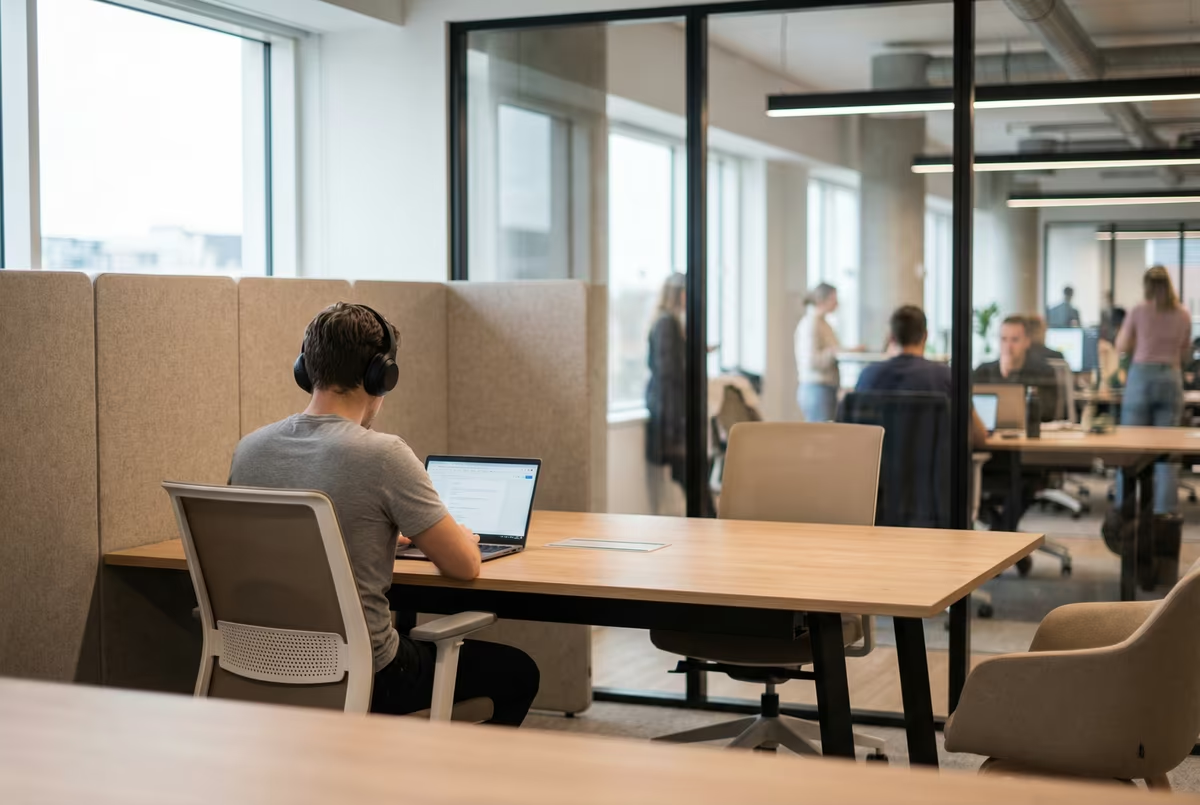
Regardless of which workplace model an organisation chooses, certain features consistently contribute to better outcomes. These design elements improve flexibility, focus, comfort and employee experience across a wide range of workplace types.
Successful workplaces recognise that employees need access to different environments throughout the day. Rather than forcing everyone into the same setting, they provide options that support different tasks and working preferences.
Quiet Spaces for Calls and Individual Work
Even the most collaborative workplace needs areas dedicated to focused work.
Employees increasingly spend time on video calls, virtual meetings and tasks that require concentration. Without suitable quiet spaces, these activities can become frustrating for both the individual and their colleagues. Dedicated focus areas support concentration, reduce distractions and help employees maintain productivity. They also contribute to emotional well being by reducing stress associated with constant interruptions.
Providing employees with access to quiet environments demonstrates a commitment to employee wellbeing and helps create a positive work environment where employees feel valued.
Adaptable Spaces for Meetings and Teamwork
Modern workplaces must support a wide variety of activities throughout the day. A space used for a team discussion in the morning may be needed for individual work in the afternoon and a client meeting later in the day. Adaptable workplaces recognise this reality and provide flexible settings that can accommodate changing requirements.
These environments support encouraging open communication, encouraging collaboration and knowledge sharing without sacrificing productivity. They also help organisations make better use of available office space while giving employees greater freedom to choose where they work.
By creating versatile environments, businesses can empower employees and support growth across multiple areas of the organisation.
The Future of Workplace Types
Workplace design continues to evolve in response to changing employee expectations, technological developments and shifting business priorities.
The future is unlikely to be defined by a single workplace model. Instead, organisations will increasingly combine different workplace types to create environments that support a wider range of activities and preferences.
More Flexibility and Choice for Employees
Employees increasingly expect a flexible work environment regarding where, when and how they work.
Flexible hours, hybrid working and flexible work arrangements are becoming important factors in recruitment and retention. Employees want workplaces that support both professional responsibilities and personal commitments.
Businesses that give employees greater autonomy often experience higher levels of employee engagement and employee satisfaction, and this approach also motivates employees while supporting retention. Gallup's workplace research consistently shows that engaged employees contribute more effectively to organisational performance than disengaged employees. Global workplace research continues to reinforce the importance of engagement and effective management practices.
{{fact-2}}
The future workplace will increasingly focus on providing options rather than enforcing rigid rules.
Smarter Office Design for Changing Needs
Office design is also becoming more sophisticated. Rather than focusing solely on capacity, organisations are considering how spaces support behaviour, wellbeing and performance. Businesses are creating environments that combine collaboration areas, quiet zones, meeting spaces and social settings within a single workplace.
Features such as natural light, acoustic control, flexible furniture and technology-enabled meeting spaces are becoming standard components of the modern workplace.
The goal is no longer simply to accommodate employees. It is to create environments that motivate employees, support growth, improve wellbeing and contribute directly to the organisation's success.
{{summary}}
.svg)
- Traditional, remote and hybrid workplaces each offer distinct benefits and challenges.
- Office layout plays a major role in concentration, communication and employee wellbeing.
- Flexible and activity-based workplaces support different employee personalities and working styles.
- Privacy, acoustics and comfort are increasingly important in the modern work environment.
- The most effective workplaces combine multiple settings to support different types of work.
- Workplace design can directly influence employee engagement, productivity and organisational success.
%20(1).svg)
The various types of work environments available today provide organisations with more flexibility than ever before. Traditional offices, remote work, hybrid workplaces, private offices and activity-based environments each offer unique advantages depending on the needs of the business and its employees.
However, the most important lesson is that no single workplace type is ideal for every situation. Different tasks require different environments. Focused work demands privacy and quiet. Collaboration benefits from shared spaces and interaction. Meetings require suitable facilities. Wellbeing depends on comfort, flexibility and thoughtful workplace design.
The most successful organisations understand this and create workplaces that support multiple ways of working. By combining flexibility, collaboration, privacy and wellbeing, businesses can create a positive work environment that supports employees, strengthens workplace culture and contributes to long-term success.
- Traditional, remote and hybrid workplaces each offer distinct benefits and challenges.
- Office layout plays a major role in concentration, communication and employee wellbeing.
- Flexible and activity-based workplaces support different employee personalities and working styles.
- Privacy, acoustics and comfort are increasingly important in the modern work environment.
- The most effective workplaces combine multiple settings to support different types of work.
- Workplace design can directly influence employee engagement, productivity and organisational success.
- Traditional, remote and hybrid workplaces each offer distinct benefits and challenges.
- Office layout plays a major role in concentration, communication and employee wellbeing.
- Flexible and activity-based workplaces support different employee personalities and working styles.
- Privacy, acoustics and comfort are increasingly important in the modern work environment.
- The most effective workplaces combine multiple settings to support different types of work.
- Workplace design can directly influence employee engagement, productivity and organisational success.
.svg)