


.svg)

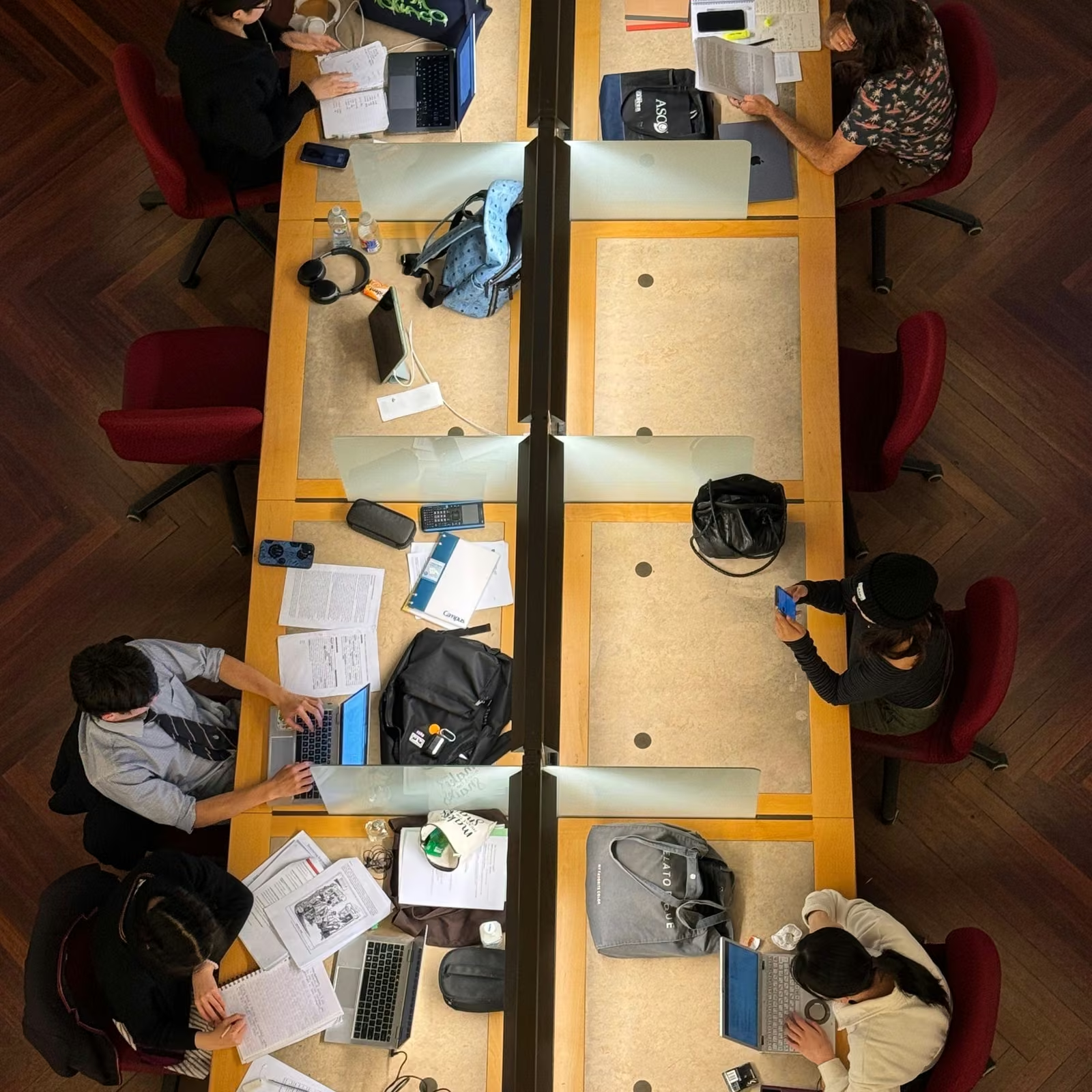
The best type of study space is quiet, well-lit, organised and comfortable, with as few distractions as possible. But there is no single setup that works for everyone. Your ideal study space depends on what you are learning, how much room you have and how long you need to stay focused.
At Persy Booths, our experience creating office pods for distraction-free work has shown us how much the environment around us can influence concentration – and we'd like to share those insights with you.
{{key-takeaways}}
The Best Type of Study Space for Different Needs
The most important thing to remember when creating a study space is that the task matters. Reading a textbook for an hour is different from attending an online lecture, revising for an exam or spending an afternoon writing an essay.
Some students prefer complete silence, while others feel comfortable with a little background noise or music. Some need space for books and notes; others do almost everything on a laptop.
The best study environment therefore combines the basics – comfort, good lighting, organisation and limited distractions – with a setup suited to the individual student.
A Dedicated Desk Setup
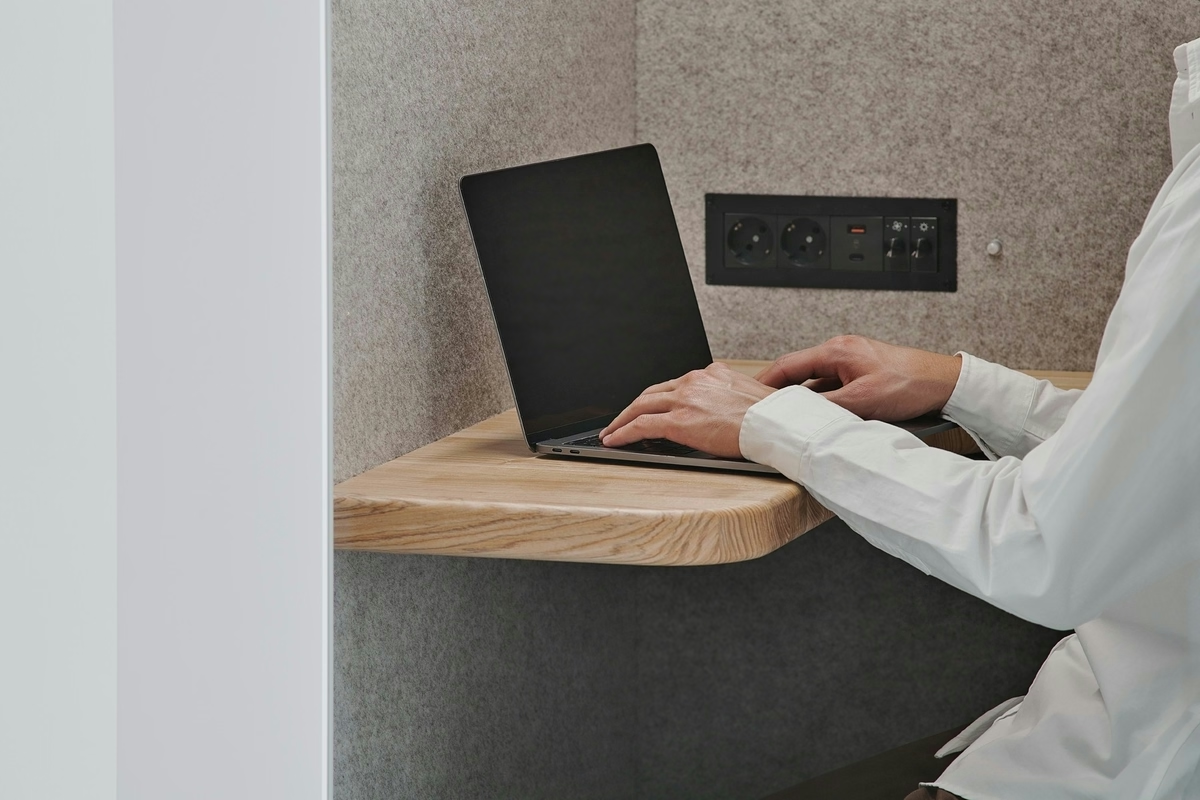
For regular study, a dedicated desk is usually the best option. It creates a clear place for learning and gives you enough room for a computer, books and other essentials.
Choose a chair that encourages good posture and keep the desktop relatively clear. A tidy desk does not have to be completely empty, but removing unrelated items makes it easier to concentrate on the task in front of you.
If possible, position the desk near a window to benefit from natural light and fresh air without placing the screen where glare becomes a problem, since natural light is the most effective type of lighting for studying because it helps regulate your internal body clock and can improve alertness and mood.
A Quiet Corner in a Shared Room
You do not need a separate study room to create a good study space. A quiet corner of a bedroom, living room or shared flat can work perfectly well if you establish some separation between study and everything else.
Face the desk away from obvious distractions (such as a television) and avoid placing it directly next to the bed if space allows. Storage, indoor plants or a small screen can help define the study area and create feelings of separation without physically dividing the room, while a few personal touches add a sense of ownership and support motivation.
A Private Enclosed Space for Deep Focus
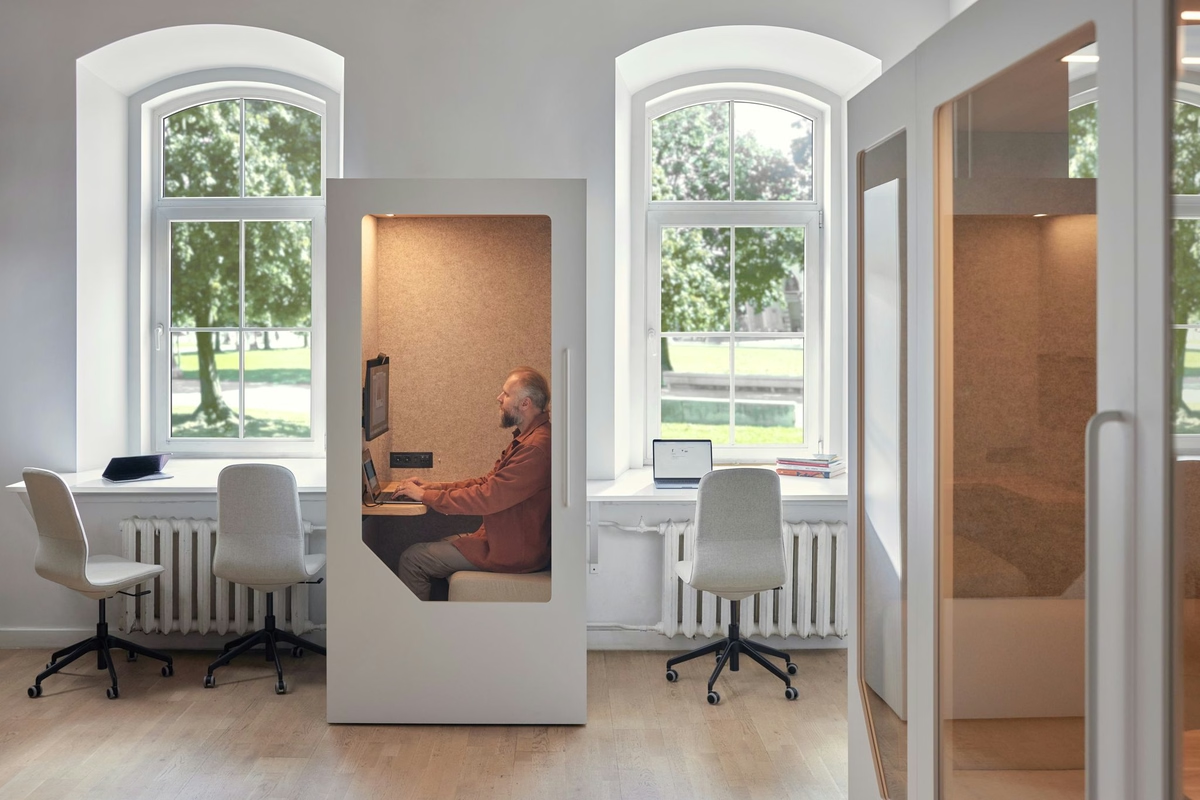
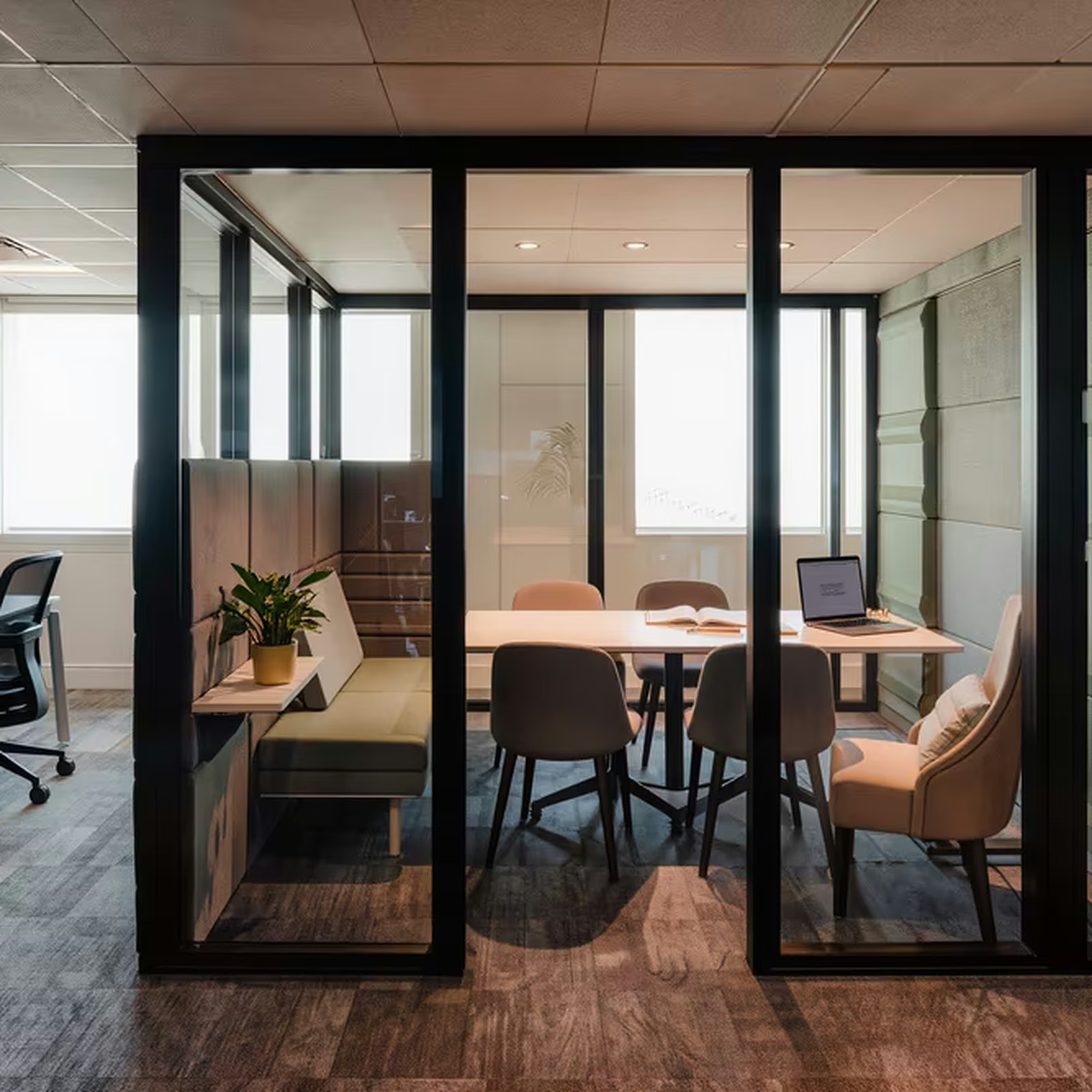
For tasks that demand sustained concentration, privacy becomes more important. A quiet, enclosed environment can reduce interruptions and make it easier to stay focused for a longer period.
This can be particularly useful on a university campus, in a library or in shared accommodation where noise levels are difficult to control. An enclosed work booth provides another option, creating a private environment for concentrated work without requiring a permanent room.
How to Build the Best Study Environment in a Small Space
Limited space does not have to mean limited productivity. The best type of study space in a small home or student room is one that makes intelligent use of the room available.
Rather than trying to create a miniature office, concentrate on a few important factors: separating study from relaxation, keeping the desk organised and reducing visual and audible distractions.
Small improvements can make a surprisingly large difference. Better lighting, a comfortable chair, simple storage and a clearly defined study area may be all that is required.
Create Visual Separation Between Study and Rest
If you study and sleep in the same room, try to give the two activities distinct zones.
The idea is simple: when you sit at the desk, your brain should recognise that it is time to study rather than sleep, watch something or play games.
Even changing the direction of your chair can help. For example, a small bookshelf beside the desk can act as a clear divider. A shelf, plant or freestanding screen can create additional separation. When studying is finished, put books and equipment away rather than allowing the study zone to spread across the entire room.
Use Simple Storage and Tidy Desk Essentials
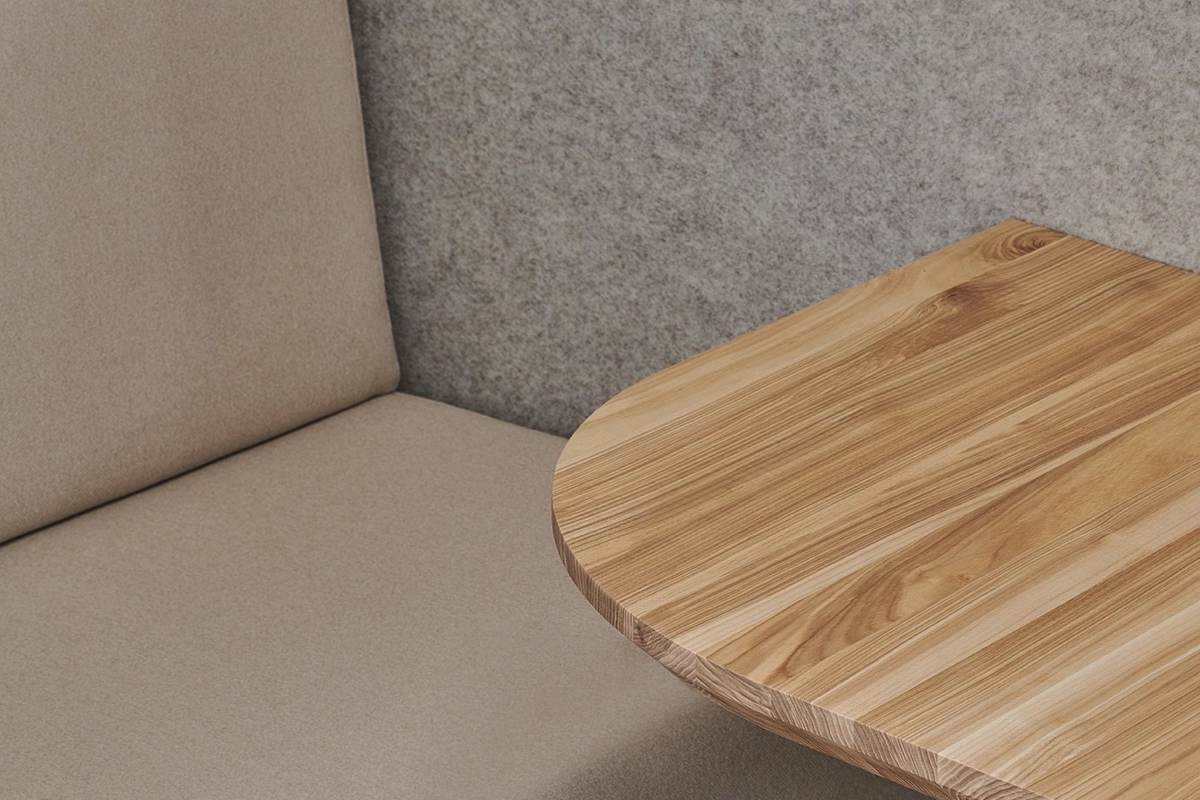
A good study space does not require lots of equipment. In fact, too many objects can become distractions themselves.
Start with the essentials: a desk, a good-quality chair, computer or laptop where necessary, suitable lighting and storage for the materials used on your course.
A desk lamp is particularly useful during the winter months or for evening study, especially one with adjustable brightness so you can match the light to the task at hand; cooler, white-toned light can help support energy and focused work. Keep frequently used items within reach and everything else in drawers, boxes or shelves. The goal is an organised space rather than a sterile one.
Improve Privacy and Focus With Smarter Space Design
Think about what actually interrupts you when you study. It might be conversations, people walking through the room, noise from a television or simply the temptation to see what everyone else is doing.
Changing the position of a desk, adding acoustic materials or introducing a physical screen can potentially reduce these distractions.
For spaces that need a greater degree of privacy, it helps to understand how to choose the best office pod if you prefer enclosed environments for focused activity.
Common Mistakes That Make a Study Environment Less Effective
Sometimes improving a study environment is less about what you add and more about what you remove.
Three of the most common problems are studying in bed too frequently, relying on poor lighting and keeping too many distractions within easy reach. None of these necessarily prevents you from learning, but together they can make the process unnecessarily difficult.
Studying in Bed Too Often
Studying in bed feels comfortable and convenient, especially if you live in a small room. The problem is that the same space is being used for two very different purposes.
Working from a bed can also encourage poor posture, particularly when using a laptop for a longer period.
Whenever possible, move to a desk or table for serious study. Keeping a clearer distinction between work and rest can also help preserve the bedroom as a place associated with sleep rather than unfinished assignments.
Relying on Poor or Insufficient Natural Light
Lighting affects both comfort and our ability to work effectively. A dim room can make reading uncomfortable, while harsh or badly positioned artificial lighting may cause glare.
Recent research into classroom lighting found that lighting conditions can influence cognitive performance, with researchers identifying an optimal range of desktop illumination in their study. Lighting therefore deserves to be treated as a practical part of study-space design rather than decoration, and different colours of light can also affect focus and stress levels.
{{fact-1}}
Make use of natural light where possible and supplement it with a desk lamp, ideally a full-spectrum LED lamp that mimics daylight at 5000K–6500K for focused study. Warm lighting may feel relaxing and is the better option for evening reading.
Keeping Too Many Distractions Nearby
Your phone is an obvious distraction, but it is not the only one. Open browser tabs, games, snacks, television, clutter and other people can all compete for attention.
If the phone is not required for studying, move it out of reach or put it on silent. Keep healthy snacks and water nearby if they help you avoid unnecessary trips to the kitchen, but do not turn the desk into a dining table.
The fewer reasons you have to interrupt yourself, the easier it becomes to maintain focus.
How to Choose the Best Type of Study Space for You
Rather than asking what a perfect study space looks like, ask what you need your space to do.
Consider the type of studying you undertake, the amount of privacy you need, the room available and your normal daily habits. Someone attending online lectures has different requirements from somebody memorising vocabulary or working through complex written problems.
Experiment too. You may discover that music helps with one task but becomes distracting during another, or that you feel more motivated in the library than at home.
Choose Based on the Kind of Studying You Do
Different activities place different demands on your environment.
Reading and memorisation often benefit from calm and limited interruptions. Writing may require more desk space for notes and research. Online lectures require a reliable computer setup and somewhere you can listen without disturbing other people. Tasks that depend more on creativity may benefit from a space that feels less rigid, and some people learn better in an area that feels personalised rather than purely functional.
Instead of trying to create one perfect arrangement, consider whether your study area can adapt to multiple tasks. Even simple changes – clearing extra desk space or switching music off – can alter the environment to suit the job.
Choose Based on Your Noise and Privacy Needs
Noise is one of the biggest factors to explore when choosing an ideal study space. A 2025 meta-analysis of 21 studies found an overall moderate negative effect of environmental and classroom noise on learning performance in children and adolescents. Background noise can affect attention, memory, comprehension and academic performance.
{{stats-1}}
That does not mean everyone needs absolute silence. Some people prefer low-level sound or music. But speech, television and unpredictable interruptions are much harder to ignore.
Understanding acceptable noise levels in the workplace can provide a useful starting point when thinking about acoustic comfort in any focused environment.
Choose Based on Space and Daily Habits
The perfect study space is useless if you never use it.
Choose somewhere that fits naturally into your daily routine. If you study for 30 minutes at a time, a compact desk may be enough. If you regularly work for several hours, chair support, lighting, temperature and fresh air become more important, and keeping the room around 20°C to 25°C can support concentration and cognitive function.
Think about when you study too. A room that is quiet during the day may become noisy in the evening, while a space with excellent natural light may need additional lighting after sunset.
Consistency matters more than appearance, which is a good thing because a usable routine matters more than a visually perfect setup.
{{summary}}
.svg)
- A good study space should combine low noise levels, suitable lighting, a high-quality chair and an organised desk.
- A dedicated desk is usually the best combination for everyday study, but even a corner of a shared room can work well.
- Natural light can help create a pleasant environment, while a good desk lamp is important when daylight is limited.
- Noise and other distractions can have a negative effect on concentration and learning.
- The ideal study space is one you can use comfortably and consistently rather than one that simply looks good.
- Small changes to storage, lighting and privacy can improve a study area without requiring a large budget.
%20(1).svg)
So, what is the best type of study space? For most people, it is a quiet, well-lit and organised environment with limited distractions, a comfortable desk, a chair that supports your posture and enough privacy to stay focused.
Exactly where that space is located matters less than how well it supports your routine. Whether you have a dedicated room, a desk in a bedroom or access to an enclosed study space, the best study environment is ultimately one that makes concentration easier and that you can use consistently.
- A good study space should combine low noise levels, suitable lighting, a high-quality chair and an organised desk.
- A dedicated desk is usually the best combination for everyday study, but even a corner of a shared room can work well.
- Natural light can help create a pleasant environment, while a good desk lamp is important when daylight is limited.
- Noise and other distractions can have a negative effect on concentration and learning.
- The ideal study space is one you can use comfortably and consistently rather than one that simply looks good.
- Small changes to storage, lighting and privacy can improve a study area without requiring a large budget.
- A good study space should combine low noise levels, suitable lighting, a high-quality chair and an organised desk.
- A dedicated desk is usually the best combination for everyday study, but even a corner of a shared room can work well.
- Natural light can help create a pleasant environment, while a good desk lamp is important when daylight is limited.
- Noise and other distractions can have a negative effect on concentration and learning.
- The ideal study space is one you can use comfortably and consistently rather than one that simply looks good.
- Small changes to storage, lighting and privacy can improve a study area without requiring a large budget.
.svg)



.avif)