.svg)


There was a time when describing your work was simple: you had a job and went to work. These days, it's a bit more complicated.
Today’s type of work examples range from full-time and part-time employment to temporary, contract, freelance and self-employed work – often combined with office, remote or hybrid working. At Persy Booths, we see this shift first-hand, as companies use office pods and flexible workplaces for people who no longer all work in the same way, at the same time, in the same place.
{{key-takeaways}}
The Main Different Types of Work
The most common type of work is traditional employment, either full time or part time. But companies also use temporary workers, fixed term contracts, independent contractors and freelancers. Employees hired under a clearly defined employment contract generally have the greatest employment rights and protections, including paid holiday and, subject to eligibility requirements, protection against unfair dismissal.
Full-Time Work
Full time employees typically work around 35 hours or more each week, although there is no single legal definition based on a certain number of hours.
Full time employment suits ongoing responsibilities where businesses need continuity. Permanent employees can develop detailed knowledge of the business, customers and processes, while typically benefiting from greater job security and opportunities for career development.
Part-Time Work
Part time employees perform many of the same jobs as full time employees but work fewer hours. This can accommodate education, caring responsibilities and other commitments.
Hiring part-time employees can also help businesses control labour costs, particularly during peak periods when additional full time staff are unnecessary.
In the UK, part time employees should not be treated less favourably than comparable full-time workers simply because they work part time. EU rules similarly protect part-time work from unjustified less favourable treatment.
{{fact-1}}
Temporary Work

Temporary work meets short-term needs. Retailers might recruit seasonal workers at Christmas, while tourism and hospitality businesses often need additional workers during busy periods.
Temporary staff can also cover sickness, parental leave or sudden demand. Workers may be recruited directly or supplied as an agency worker through a staffing agency, helping employers increase their workforce without adding permanent staff.
Contract Work
Contract work covers a defined period, project or assignment. A company might hire an IT specialist to implement a new system or a consultant for a specific project.
Some employees work under fixed term contracts that end on a specified date or after completing a task. Contract work can therefore provide specialist skills without requiring a permanent hire.
Freelance Work

Freelancers provide services on a freelance basis rather than becoming permanent employees. They are common in creative, technical and consulting careers.
A graphic designer, for example, might create visual content for different companies' print, digital, marketing and branding activities. Freelancers may work for several clients simultaneously, giving businesses flexible access to skills while allowing individuals greater independence.
Self-Employed Work
Someone who is self employed works for themselves. They might be a sole trader, independent professional or business owner running their own business.
A plumber, shop owner, consultant and graphic designer could all be self employed despite having very different jobs. They take responsibility for customers, money and business operations in return for greater autonomy.
Type of Work Examples Across Different Career Fields
Work can also be categorised by career field, industry and economic sector. Career fields group different jobs according to common similarities, helping people identify areas of interest and explore relevant job titles.
At the broadest level, economic activity can be divided into primary, secondary, tertiary, quaternary and quinary sectors. Within these sit career fields ranging from healthcare and hospitality to finance, manufacturing, construction, technology and the creative economy.
Examples include:
- Healthcare – medical practitioners diagnose and treat diseases, while nurses provide direct patient care. Allied health professionals work in areas such as rehabilitation and emergency care, while healthcare scientists analyse tissue samples and monitor diseases. Mental health workers, including psychologists and counsellors, support mental wellbeing through therapy. Healthcare is one of the world's largest employment sectors.
- Technology – software development involves designing and writing code for applications, websites and systems. IT support technicians troubleshoot hardware and software problems, while cybersecurity analysts protect networks and data from hacking, viruses and other cyber threats. Data scientists analyse large datasets to identify patterns and support data-driven decisions. The wider information technology field also includes telecommunications and network administration.
- Manufacturing – production jobs sit alongside technical and supervisory roles. Quality control officers inspect finished goods to ensure they meet safety and quality standards. Shift work is common, with some employees working nights or early mornings.
- Finance – accountants manage financial records, compliance and tax returns, while investment bankers work with financial transactions and investments.
- Hospitality – hotel managers, chefs and other workers provide guest services and food preparation. Direct customer interaction makes hospitality essential to the tourism and travel industries, with shift work particularly common.
- Construction – architects design buildings and structures, while project managers coordinate teams, budgets and logistics.
- Environmental careers – environmental scientists research environmental issues and advise organisations on sustainability and environmental protection.
- Creative economy – designers, writers, artists and other creative professionals generate value through individual creativity, ideas and intellectual property.
Administrative work cuts across many of these sectors, with common responsibilities including processing expenses, filing documentation and handling customer service enquiries.
Type of Work Examples by Business Need
Different types of work suit different business requirements. Employers should consider whether work is ongoing or short term, whether specialist skills are needed, how predictable demand is and what the business can afford.
When Businesses Need Stable Long-Term Roles
Full-time and part-time permanent employees make sense where responsibilities continue indefinitely. Human resources, finance, customer service and management are common examples.
Permanent staff build knowledge and relationships over a longer period. Part-time employment can provide similar continuity where the business requires fewer hours.
When Flexible or Short-Term Support Makes More Sense
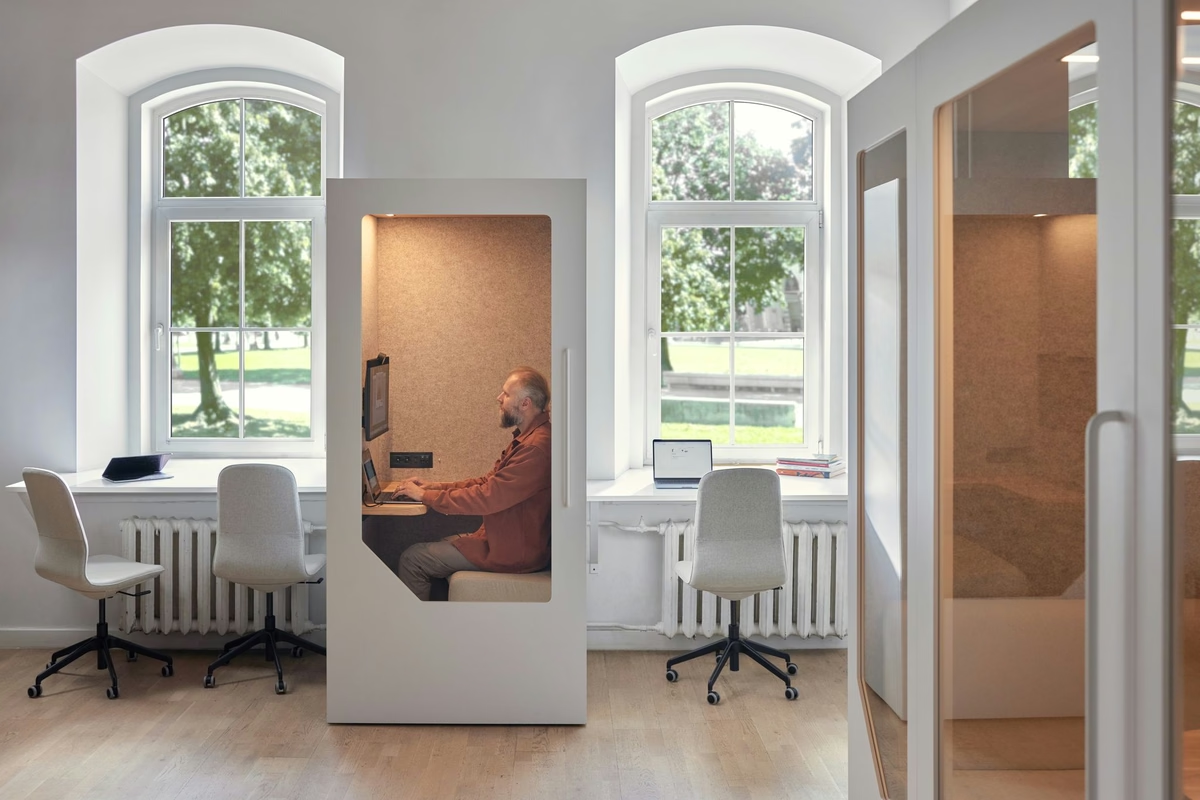
Temporary, contract and freelance arrangements work well when demand changes. Seasonal workers can cover peaks, while freelancers and contractors provide specialist skills for particular projects.
The same thinking applies to workplaces. Businesses can use flexible office space rather than maintaining fixed resources for maximum possible demand.
Different Types of Work in Modern Workplaces
Employment type describes someone's working relationship with a business. Workplace type describes where the work happens. They are related, but not the same.
Full-time employees, part time workers, freelancers and independent contractors might all work in an office, remotely or through a combination of the two.
Office-Based Work
Office-based work provides access to colleagues, managers, equipment and facilities. It can support collaboration and practical training, particularly for new hires and entry level professionals.
Offices are also important for jobs requiring specialist equipment or face-to-face interaction. But businesses increasingly need to decide when physical presence genuinely benefits the work.
Remote and Hybrid Work Models
Remote work takes place away from the employer's workplace, while hybrid working combines remote and workplace-based work.
These models are now well established. The UK Office for National Statistics found that 28% of working adults in Great Britain hybrid worked between January and March 2025. Eurofound research also shows continuing European employee preference for hybrid arrangements.
Understanding hybrid working meaning therefore matters when deciding how different jobs should operate.
{{stats-1}}
How the Workspace Supports Different Work Types
A mixed workforce needs different spaces. Full time staff may need regular desks, while hybrid employees, contractors and freelancers need flexible areas for the days they are present.
A private work booth can provide somewhere for concentrated work or calls without requiring another permanent room.
Technology can provide similar flexibility in how work is organised. Process improvement might include automation tools for scheduling, administration and task management, reducing repetitive work and helping employees use their time more effectively.
How to Choose the Right Type of Work
The right choice depends on what both employer and worker need. Permanent employment provides stability and development, while freelance, temporary and self-employed work can provide greater flexibility.
Choosing the Right Option as an Employer
Consider workload, duration, budget, skills and team structure. Is there enough work for a permanent employee? Is demand seasonal? Are specialist skills required only temporarily?
A freelancer may be cost effective for a defined project, while permanent expertise can offer better value when the same skills are continually required.
Choosing the Right Option as a Worker
Workers need to balance pay, job security, flexibility, independence and career development.
Permanent employment provides greater stability, while part-time work can accommodate other commitments. Freelance and self-employed careers offer more independence but require individuals to find work, manage money and take greater responsibility for their career.
Matching Work Type With the Right Environment
Different jobs require different environments. Focused work needs privacy; collaborative work needs places to communicate.
Modern offices can provide both, combining open areas, quiet spaces and a team meeting booth for private conversations. The aim is to give different workers the right environment for the task.
Common Misunderstandings About Different Types of Work
Terms such as freelancer, contractor and self-employed are often used interchangeably, while part-time and temporary work are sometimes confused. The distinctions matter because they can affect responsibilities and employment rights.
Freelance, Contract and Self-Employed Are Not Always the Same
A freelancer will often be self employed, but not every self-employed person is a freelancer. A business owner, for example, may be self employed without freelancing.
Similarly, independent contractors may operate their own business, while another person described as a contractor might work under a fixed term employment contract. The actual working relationship matters more than the job title.
Part-Time Does Not Always Mean Temporary
Part-time describes working hours; temporary describes duration.
Someone can therefore be a permanent part-time employee for many years. Equally, a temporary employee might work full-time hours for a short period. Fewer hours do not mean less permanence or commitment.
{{summary}}
.svg)
- The main different types of work include full-time, part-time, temporary, contract, freelance and self-employed work.
- Work can also be classified by industry, economic sector, career field and working pattern.
- Permanent employees offer continuity, while temporary and freelance workers provide flexibility.
- Employment type is different from where someone works – office, remote or hybrid.
- The right choice depends on skills, workload, cost, job security and flexibility.
%20(1).svg)
The main type of work examples include full-time, part-time, temporary, contract, freelance and self-employed work, spanning different jobs, industries and career fields.
The right choice depends on business needs, skills, job security, cost and flexibility. Increasingly, it also depends on creating workplaces that allow different types of workers to perform effectively.
- The main different types of work include full-time, part-time, temporary, contract, freelance and self-employed work.
- Work can also be classified by industry, economic sector, career field and working pattern.
- Permanent employees offer continuity, while temporary and freelance workers provide flexibility.
- Employment type is different from where someone works – office, remote or hybrid.
- The right choice depends on skills, workload, cost, job security and flexibility.
- The main different types of work include full-time, part-time, temporary, contract, freelance and self-employed work.
- Work can also be classified by industry, economic sector, career field and working pattern.
- Permanent employees offer continuity, while temporary and freelance workers provide flexibility.
- Employment type is different from where someone works – office, remote or hybrid.
- The right choice depends on skills, workload, cost, job security and flexibility.
.svg)


.avif)