.svg)


Effective meetings end with decisions made, next steps owned, and people leaving with energy instead of frustration. The difference between a focused session and a time sink usually comes down to a few habits anyone can learn. This guide walks through deciding whether to meet at all, preparing properly, assigning roles, running the discussion, following up, and choosing the right space, including the quiet office pods teams use for conversations that need real concentration.
{{key-takeaways}}
Quick Answer: How Do You Run an Effective Meeting?
Run an effective meeting by giving it a clear purpose, inviting only the people who need to be there, and working through a tight agenda. Keep the discussion on track, make decisions out loud, and assign owners to every action. Close by confirming what happens next, then send a short written summary so nothing gets lost.
What Makes a Meeting Effective?
An effective meeting is one that reaches its goal in the time allotted and leaves everyone clear on what comes next. It is judged by results, not by how busy it felt or how many topics it touched. A productive session moves a decision forward, solves a problem, or aligns a group on a plan. An unproductive one circles the same points, drifts off topic, and ends without anyone knowing who does what.
Three qualities separate the two. The meeting has a reason to exist that everyone understands. The people in the room are the ones who can actually contribute or decide. And it produces something concrete that other people can act on. When any of these is missing, the meeting tends to run long and deliver little. The sections below break each one down.
A Clear Purpose and Defined Outcome
Why are you meeting? If the answer is vague, the meeting will be too. Every meeting needs one stated reason and a defined outcome, whether that is a decision, a plan, or a shared understanding of a problem. Write the purpose as a sentence before you send the invite. If you cannot, you are not ready to meet. A clear outcome also tells you when the meeting is done, which keeps it from sprawling past its point.
The Right People in the Room
Attendee choice shapes the discussion more than almost anything else. A smaller group with the right knowledge reaches decisions faster than a crowded room where half the people are spectators. Invite those who hold information, those who will own the follow-up, and the person who can make the call. Everyone else can read the summary afterward. Fewer voices also means each person has room to speak, which raises the quality of what gets said.
A Tangible Result Worth Sharing
A meeting that produces nothing shareable was probably a conversation that could have happened another way. Effective meetings end with an output: a decision recorded, a plan agreed, a list of actions with names attached. That output matters because other people depend on it. Teams downstream need to know what was decided so they can act. If you cannot summarize the result in a few lines that a colleague would understand, the meeting has not finished its job.
Do You Actually Need a Meeting?
Before booking a room, ask whether a meeting is the right tool at all. Plenty of meetings exist out of habit rather than need. Surveys of senior managers have found they spend a large share of the week in meetings, and many rate a big portion of them as unproductive, which is reason enough to question each one.
{{fact-1}}
The simplest test is whether the work needs real-time, back-and-forth discussion. If it does, meet. If it is a status update, a one-way announcement, or a request for input people can give on their own schedule, a message or shared document usually works better and respects everyone's time.
Run a few quick checks before you send the invite:
- Does this need live debate, or just information sharing?
- Will a real decision be made, or are you collecting opinions you could gather asynchronously?
- Is the topic sensitive enough to warrant a conversation rather than a thread?
A recurring meeting deserves the same scrutiny. If the last three sessions could have been an email, cancel the slot and free the calendar. Meet when meeting adds value, and skip it when it does not.
How to Prepare for an Effective Meeting
Most meeting problems start before anyone sits down. A session that runs long, drifts, or ends without a decision can almost always be traced back to thin preparation. Running effective meetings gets far easier when the groundwork is done in advance, because the room can spend its time on discussion rather than orientation.
Preparation has three parts:
- A clear agenda tied to an objective.
- A guest list limited to the people who need to be there.
- Any reading material sent ahead so nobody arrives cold.
None of this takes long. Ten minutes of setup the day before can save half an hour of confusion in the room. Skipping it is the most common reason good intentions turn into a wasted hour. The next three steps cover what good preparation looks like.
Set a Clear Agenda and Objective
An agenda is the meeting's plan, and it should map straight to the objective. Decide the outcome you want first, then list only the items that get you there. Give each item a time box and an owner so the discussion has a shape. A useful agenda also states the type of each item, whether it is for a decision, a discussion, or information, so people know how to engage. Send it with the invite, not minutes before the meeting starts. A tight agenda is the single biggest lever for keeping a session on time.
Invite the Right Attendees
Keep the group lean and give every person a reason to be there. A good rule is that each attendee should either contribute something only they can provide or own an action that comes out of the meeting. If someone is there only to stay informed, the summary will serve them just as well. Smaller groups talk more openly and decide faster. When the invite list creeps past seven or eight, decisions tend to slow down.
Share Materials and Context in Advance
Sending pre-reads ahead of time changes how a meeting runs. When people arrive already briefed, you skip the long setup and move straight into discussion. Share the agenda, any relevant data, and a short note on what input you need. Keep it brief enough that people will actually read it. A one-page summary beats a forty-slide deck nobody opens. Well-prepared participants make shorter, sharper meetings, which is the whole point.
Key Roles That Keep Meetings on Track
A meeting without clear roles drifts. When nobody is steering, conversations wander, decisions stall, and the same point gets made three times. Role clarity fixes this by giving each part of the meeting an owner, so the group knows who keeps time, who records decisions, and who makes the final call.
You do not need a long list of titles. Three roles cover most meetings: someone to facilitate, someone to capture notes, and clarity on who decides versus who advises. In small meetings one person can hold more than one role, but the roles themselves should still be named. Assigning them takes a sentence at the top of the meeting and saves the confusion that comes from everyone assuming someone else is in charge. The sections below describe what each role does.
The Chair or Facilitator
The facilitator runs the meeting without dominating it. They open by restating the purpose, then guide the group through the agenda, keeping each item to its time. Their main job is traffic control: bringing the discussion back when it drifts, cutting off tangents politely, and making sure the loudest voice does not become the only voice. A good facilitator also reads the room, slowing down when a decision needs more thought and speeding up when a point is settled. They are responsible for the meeting ending on time with its objective met.
The Note-Taker
Someone needs to capture what was decided and what happens next. Without notes, decisions get remembered differently by different people, and actions quietly disappear. The note-taker records the decisions, the agreed actions, the owner of each, and the deadline. They do not need to transcribe the whole discussion, just the outcomes that matter. Good notes are short and sent quickly, while the meeting is still fresh. They turn an hour of talk into a record people can act on.
Decision Makers and Contributors
Confusion over who decides is one of the fastest ways to stall a meeting. Before a discussion starts, make clear who owns the decision and who is there to advise. Contributors bring expertise, raise risks, and shape the options. The decision maker listens, weighs the input, and commits to a direction. Both roles matter, but they are different, and mixing them leads to circular debate where everyone has an opinion and nobody has authority. When the call is made, the group moves on rather than relitigating it. Naming the decision maker up front prevents the meeting that decides nothing.
Best Practices for Running Effective Meetings
Good preparation and clear roles set the stage. What happens in the room decides whether a meeting delivers. The best practices for running effective meetings are simple to state and take discipline to keep, which is why most teams know them and few follow them consistently.
A handful of habits carry most of the weight:
- Treat time as the scarce resource it is. Open on time, hold to the agenda, and close when the objective is met rather than when the hour runs out.
- Keep the discussion pointed at the outcome, and steer it back the moment it drifts.
- Make space for quieter people, because the best idea in the room is useless if its owner never gets to say it.
- Decide things out loud and confirm them, so everyone leaves with the same understanding.
These habits are the core of making team meetings more effective, and they compound: a team that runs tight meetings for a month builds a culture that expects them. The three practices below are the ones worth drilling first.
Start and Finish on Time
Starting late trains people to arrive late, and the meeting loses minutes it never gets back. Begin at the stated time even if a few people are missing. Finishing on time matters just as much. A meeting that regularly overruns eats into the next thing on everyone's calendar and signals that the agenda was never realistic. Shorter meetings also concentrate attention. A focused twenty-five minutes usually beats a loose hour. If you finish early, give the time back rather than filling it.
Keep the Discussion Focused
Drift is the quiet killer of good meetings. Keep the conversation tied to the agenda item in front of you, and when a useful but unrelated topic comes up, park it in a visible list to handle later. This acknowledges the point without derailing the meeting. Side conversations work the same way, since a quick redirect keeps the whole group in one discussion. The facilitator carries most of this load, but anyone can help by gently asking how a tangent connects to the goal.
Encourage Balanced Participation
A meeting dominated by two voices wastes the rest of the room. Effective meetings draw out the people who do not naturally jump in. Ask quieter attendees directly for their view, leave a few seconds of silence after a question so people have room to think, and notice when someone keeps talking over others. The aim is to surface knowledge that would otherwise stay hidden, because the quietest person in the room often holds the detail that changes the decision.
Following Up After the Meeting
A meeting only matters if something changes afterward. The follow-up is the step teams skip most often, and skipping it is why so many decisions evaporate by the next morning. Discussion without follow-through produces the feeling of progress without the substance.
Following up has two parts: a clear record of what was decided, and named owners with deadlines for every action. A good summary follows a few rules:
- Send it within a day, while the meeting is still fresh in people's minds.
- Keep it short, a few lines on decisions and a list of actions.
- Treat it as a check on the meeting itself. If you cannot write a crisp recap, the meeting probably ended without real conclusions, which tells you something to fix next time.
Done well, follow-up is what turns an hour of talk into work that actually moves.
Document Decisions and Action Items
Before the meeting ends, summarize out loud what was decided and what happens next. This last step catches misunderstandings while everyone is still in the room to correct them. Read back the decisions and the action items, and confirm that people agree on them. Then put it in writing. A written record removes the disagreement over who said what that derails follow-through. The document does not need to be formal. A short message with decisions at the top and actions below is enough to keep everyone aligned.
Assign Owners and Deadlines
An action without an owner rarely gets done. Every item that comes out of a meeting needs one named person responsible for it and a date by which it is due. Shared ownership tends to mean no ownership, so assign to individuals rather than teams. Deadlines create the gentle pressure that keeps momentum after people scatter back to their desks. When you assign clearly, the next meeting can open by checking progress instead of rehashing what was supposed to happen.
The Right Space for Effective Meetings
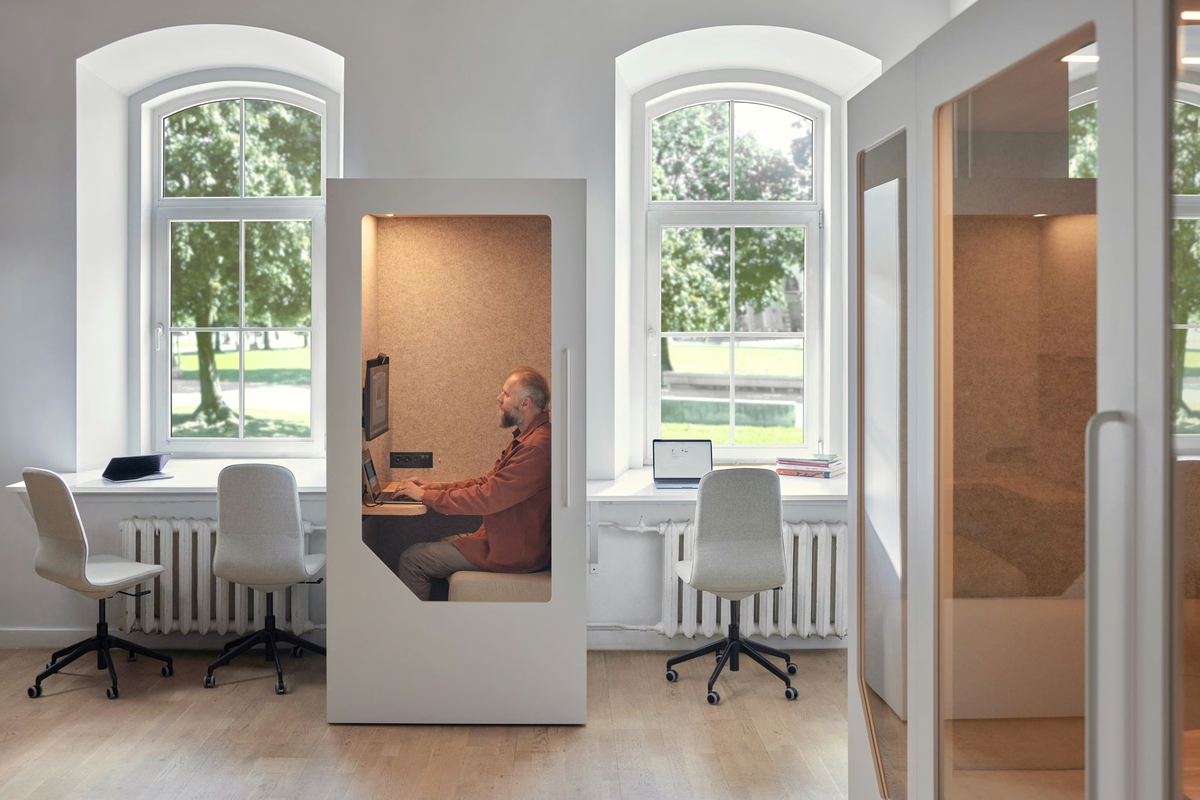
Everything so far assumes the meeting can actually be heard. The physical space shapes meeting quality more than most teams realize. A sharp agenda and a skilled facilitator cannot overcome a setting where people are straining to hear, getting interrupted, or worrying that the whole floor can follow a private conversation.
Open-plan offices are the usual culprit. They are designed for visibility and chance encounters, which is the opposite of what a focused discussion needs. The disruptions stack up:
- Noise leaks in from across the floor.
- People drop by mid-discussion.
- A one-to-one becomes a performance for anyone within earshot.
Dedicated meeting space takes most of this off the table. Acoustic meeting pods and booths from Persy Booths give teams a quiet, private spot for focused discussions, one-to-ones, and video calls, free from the noise and interruptions of an open-plan office. The right environment does not run the meeting for you, but it removes the friction that a good agenda alone cannot.
Reducing Noise and Distractions
How much does noise actually cost a meeting? More than it seems. Open-plan offices are full of distractions at work, from hallway chatter and ringing phones to colleagues stopping by mid-sentence. Each interruption pulls focus, and regaining it takes longer than the interruption itself. For meetings, that means slower decisions and points repeated because half the room missed them. Background noise also makes video calls painful for the people on the other end. Cutting noise is one of the highest-return changes a team can make, because it protects the attention every other best practice depends on.
Dedicated Booths and Pods for Focused Meetings
Enclosed, acoustic spaces solve what open layouts cannot. A booth or pod gives a small group four walls, a door, and sound insulation, so the discussion stays in the room and the noise stays out. A dedicated team meeting booth seats a handful of people in a quiet setting built for focused conversation, which suits group discussions, planning sessions, and any talk that needs concentration. Because these spaces are self-contained, teams can grab one when they need it instead of booking a room weeks ahead. For offices short on meeting rooms, they add capacity where it is actually used.
Running Effective Hybrid and Virtual Meetings
Remote and hybrid setups raise the bar on everything covered so far. When some people are in the room and others are on a screen, small problems get amplified. Poor audio, a frozen camera, or a side conversation the remote attendees cannot hear will quietly exclude half the meeting.
The same fundamentals still apply. You need a clear purpose, a tight agenda, and named roles. Hybrid and virtual meetings just add a layer of logistics on top. Audio has to be clean, because nothing loses a remote participant faster than a room they cannot hear properly. Everyone should be visible and reachable, so remote voices carry the same weight as those in the room. And people taking calls need somewhere quiet to take them.
A two person phone booth gives someone a private, sound-insulated spot for a one-to-one or a client call, away from the open floor. The next two sections cover the basics that make hybrid meetings work.
Audio, Video, and Inclusion Basics
Clear audio is the foundation of any remote meeting, so use a proper microphone rather than a laptop in a noisy room, and ask people to mute when they are not speaking. Cameras on helps too, since seeing faces keeps people present and makes the conversation feel like a conversation. Inclusion takes deliberate effort in hybrid settings. Remote attendees miss the side glances and hallway context that in-room people share, so check in with them by name, watch the chat for raised points, and state decisions clearly for everyone on the call. The aim is a meeting where remote attendees can contribute as fully as the people in the room.
Quiet Spaces for One-to-Ones and Calls
Why do hybrid teams still need quiet rooms when so much happens online? Because the calls themselves need somewhere private to land. A sales call, a performance conversation, or a one-to-one cannot happen well at an open desk where neighbors hear every word. Background office noise also degrades the call for whoever is on the other end. A small, enclosed space fixes both, giving the person a quiet spot to focus and keeping sensitive conversations private. As more work happens on calls, the demand for these focused spaces only grows, and teams that provide them spare people the daily hunt for a free corner.
Common Mistakes That Make Meetings Ineffective
{{stats-1}}
Most ineffective meetings fail in predictable ways, and recognizing the patterns makes them easy to self-audit. Estimates of how people spend their work week suggest a large share of meetings are seen as unnecessary by the very people attending them. The usual offenders:
- Meeting with no clear purpose, which leaves the group unsure what success even looks like.
- A missing or ignored agenda, where the conversation wanders because nothing is steering it.
- Inviting too many people, which slows decisions and tempts attendees to multitask.
- Weak facilitation, which lets the meeting drift, the loudest voice dominate, and time slip away unmanaged.
- No follow-up, where decisions are made but never recorded, owned, or acted on.
Run this list against your own recurring meetings. If you recognize two or three of these, you have found the changes worth making first.
{{summary}}
.svg)
- Have meetings only when live discussion or a decision is needed.
- Set a clear purpose, desired outcome, and focused agenda.
- Invite only the people who need to contribute, decide, or own actions.
- Start and finish on time, keep discussion on topic.
- Make decisions explicit and encourage balanced participation.
- End with clear action items, one owner per task, and deadlines.
- Send a short written recap after the meeting.
- Use a quiet, private space to reduce distractions and improve focus.
- For hybrid meetings, prioritize good audio and equal participation.
%20(1).svg)
Effective meetings come down to a repeatable formula: decide whether you need to meet, prepare an agenda and the right guest list, assign roles, run a focused discussion, and follow up with owned actions. The space matters too, since even a perfect plan struggles in a room full of noise. None of these changes is dramatic on its own. Adopted together and kept consistently, they turn meetings from a standing complaint into a tool your team relies on. Start with one habit, hold to it, and let the gains build from there.
- Have meetings only when live discussion or a decision is needed.
- Set a clear purpose, desired outcome, and focused agenda.
- Invite only the people who need to contribute, decide, or own actions.
- Start and finish on time, keep discussion on topic.
- Make decisions explicit and encourage balanced participation.
- End with clear action items, one owner per task, and deadlines.
- Send a short written recap after the meeting.
- Use a quiet, private space to reduce distractions and improve focus.
- For hybrid meetings, prioritize good audio and equal participation.
- Have meetings only when live discussion or a decision is needed.
- Set a clear purpose, desired outcome, and focused agenda.
- Invite only the people who need to contribute, decide, or own actions.
- Start and finish on time, keep discussion on topic.
- Make decisions explicit and encourage balanced participation.
- End with clear action items, one owner per task, and deadlines.
- Send a short written recap after the meeting.
- Use a quiet, private space to reduce distractions and improve focus.
- For hybrid meetings, prioritize good audio and equal participation.
.svg)