We ship all across Europe. Standard products ship in 3 weeks.
Learn more
Menu
Get a Personalized Quote

Tell us what you're looking for and we'll create a quote tailored to your space, team and needs.

You'll receive:
  • A personalized recommendation
  • Clear pricing based on your request
  • A quick follow-up if we need more details
Persy One
For phone calls and video meetings.
€3999
(excl. shipping & VAT)
Persy Work
For deep-focus tasks and extended work sessions.
€4699
(excl. shipping & VAT)
Persy Two
For two-person meetings and video conferences.
€9499
(excl. shipping & VAT)
Persy Four
For small team catch-ups and discussions.
€11799
(excl. shipping & VAT)
You're All Set!
Thank you! Your request has been successfully submitted. We'll get back to you shortly with your personalized quote.
Close this window
Close this window
Oops! Something went wrong while submitting the form.
Download a Brochure
What you’ll find inside:
  • Product information
  • Product pricing
  • Technical information
Download a Brochure
You're All Set!
Thank you for your interest in Persy Booths! We've sent the brochure to the email address you provided. Please check your inbox for more information.
Oops! Something went wrong while submitting the form.
Download a Brochure
You're All Set!
Thank you for your interest in Persy Booths! We've sent the brochure to the email address you provided. Please check your inbox for more information.
Oops! Something went wrong while submitting the form.

Optimized Airflow Design
Each booth is engineered with strategically placed vents that maximize airflow efficiency, ensuring a comfortable environment for every user.

Consistent Temperature Management
Our advanced ventilation system helps regulate temperature, ensuring a comfortable climate that keeps you cool and focused during long sessions.

Whisper-Quiet Operation
Designed for a distraction-free experience, our ventilation system operates silently, allowing you to concentrate on your work without interruptions.

Soundproofed for confidentiality

Five Layers of Soundproofing Materials
Designed to absorb and reflect a wide range of sound frequencies, these layers work together to enhance overall sound isolation.

Rubber-Magnetic Door Seal
This seal ensures that even the smallest gaps are sealed tight, preventing sound leakage and enhancing privacy.

Double Acoustic-Grade Glass
Our high-quality glass not only allows natural light to enter but also significantly reduces sound transmission, maintaining a peaceful atmosphere.

Recycled PET Felt
This eco-friendly material absorbs sounds and echoes within the booth, ensuring a quiet environment for focused work and conversations.

Sound-treated ventilation channels
Every Persy Booth has sound traps in ventilation channels that absorb the sounds entering or escaping the booth through ventilation channels.

Home Office Soundproofing: Practical Ways to Reduce Noise and Improve Focus

Home office soundproofing reduces outside noise, echo and household distractions with better sealing, soft materials and smart layout.
Laptop and plant on a home office desk beside a large window overlooking rooftops

Home office soundproofing is no longer a luxury – it’s essential for anyone trying to work productively from home. Whether you’re dealing with street noise, noisy neighbours, or household distractions, unwanted noise can quickly undermine concentration, call quality, and overall performance. The good news is that there are practical, effective soundproofing techniques that can help you create a quieter, more focused workspace without major renovation.

The importance of soundproofing is increasingly understood by employers and employees alike. Noise remains one of the top factors affecting employee productivity – further evidence that improving acoustics is essential for effective work environments. Acoustics experts Haworth state that worker concentration can be improved by 48% by reducing noise. In addition, a 2024 workplace study by Leesman showed that only 35% of employees are happy with noise levels in the workplace – so why put up with a noisy environment in your own home?

Companies like Persy Booths understand these challenges through their close work with organisations designing quieter, more productive environments – including solutions like office pods that create a dedicated quiet space when your home office room itself isn’t enough.

{{key-takeaways}}

Find the Main Source of Noise First

Before investing in soundproofing products, it’s important to understand where the noise is coming from. Different types of sound behave differently, and effective soundproofing depends on targeting the right problem.

Outside Noise From Traffic and Neighbours

External noises such as traffic, street noise, and noisy neighbours typically enter through walls, windows, and ceilings. These are often weak points in a house, especially in older properties or rooms with lightweight construction. Airborne noise travels easily through gaps and thin materials, making proper sealing and added mass essential.

Internal Noise From Family, Pets and Appliances

In a shared home, internal noise can be just as disruptive. Voices, TVs, kitchen appliances, and even footsteps create background noise that affects focus. In this case, doors, layout, and room positioning become just as important as wall soundproofing.

Blocking Sound vs Reducing Echo

A common mistake in home office soundproofing is confusing sound blocking with sound absorption – they are quite different things. Blocking sound means preventing it from entering or leaving a room, while reducing echo improves how sound behaves inside the space. Understanding the difference between soundproofing vs sound absorbing is key to understanding how to create the optimal home office.

{{fact-1}}

Best Wall Treatments for a Quieter Room
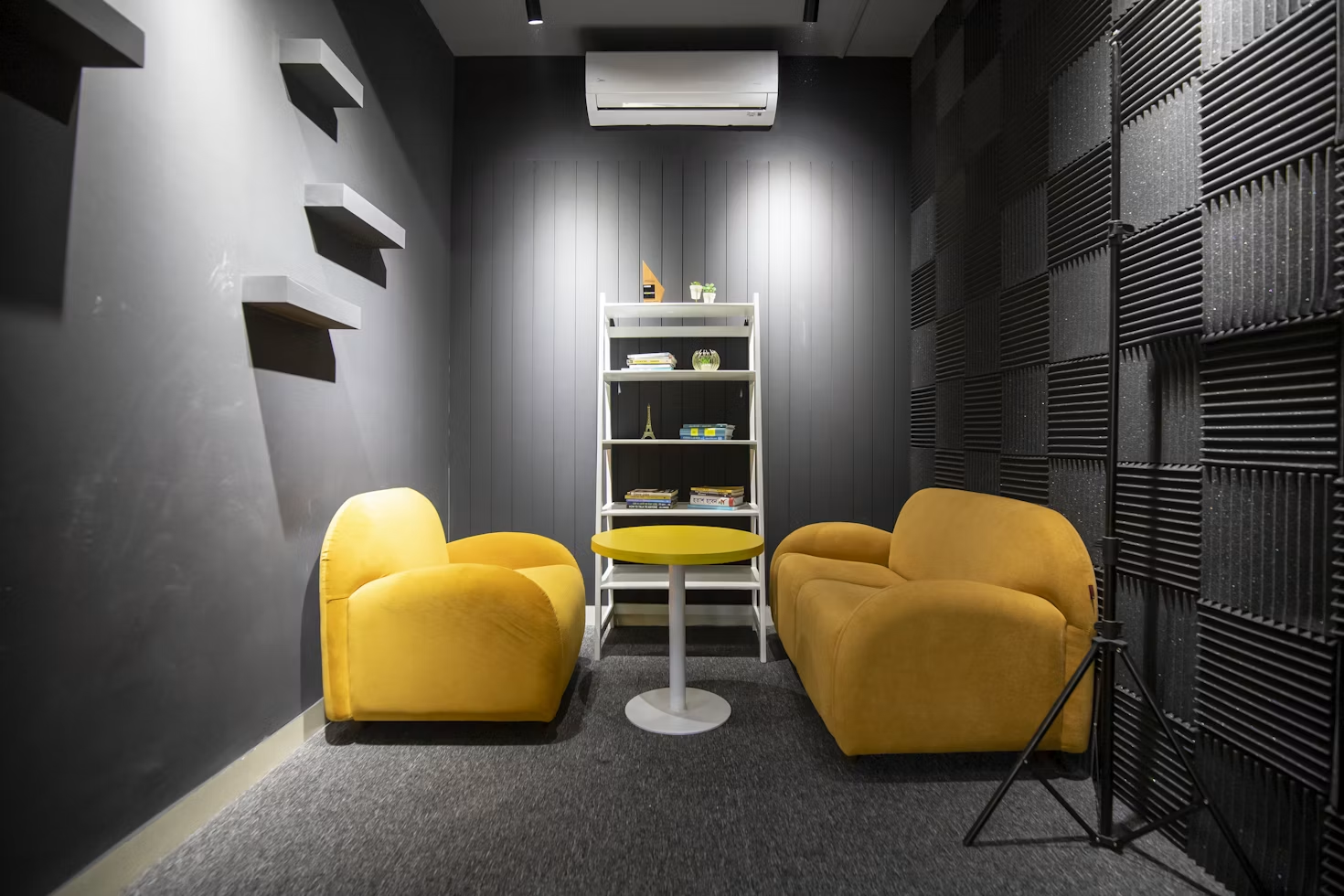
Black acoustic foam panels covering a wall in a small room with armchairs and a side table

Walls are often the primary path for sound transmission, especially between rooms or neighbouring properties. Improving wall performance can deliver significant noise reduction.

Add Mass to Lightweight Walls

{{stats-1}}

Sound waves lose energy when they pass through dense materials. Adding more mass – such as an extra layer of acoustic plasterboard – helps block airborne noise more effectively. This is one of the most effective ways to reduce noise coming through an existing wall.

Use Acoustic Insulation in Stud Walls

If your home office has stud walls, adding acoustic insulation inside the cavity can dramatically improve performance. Placing mineral wool insulation between wall studs provides superior sound absorption compared to standard thermal insulation. This reduces vibration and prevents sound from resonating within the wall structure, improving overall acoustic insulation.

{{fact-2}}

Seal Weak Points and Small Gaps

Even the best soundproof walls can fail if small gaps are left untreated. Installing rubber door sweeps and weather stripping can effectively seal gaps around doors and windows to block noise. Sound travels through electrical outlets, edges, and cracks. Using acoustic sealant to seal gaps ensures that your soundproofing efforts aren’t undermined by overlooked weak spots.

Reduce Noise Through Floors and Ceilings
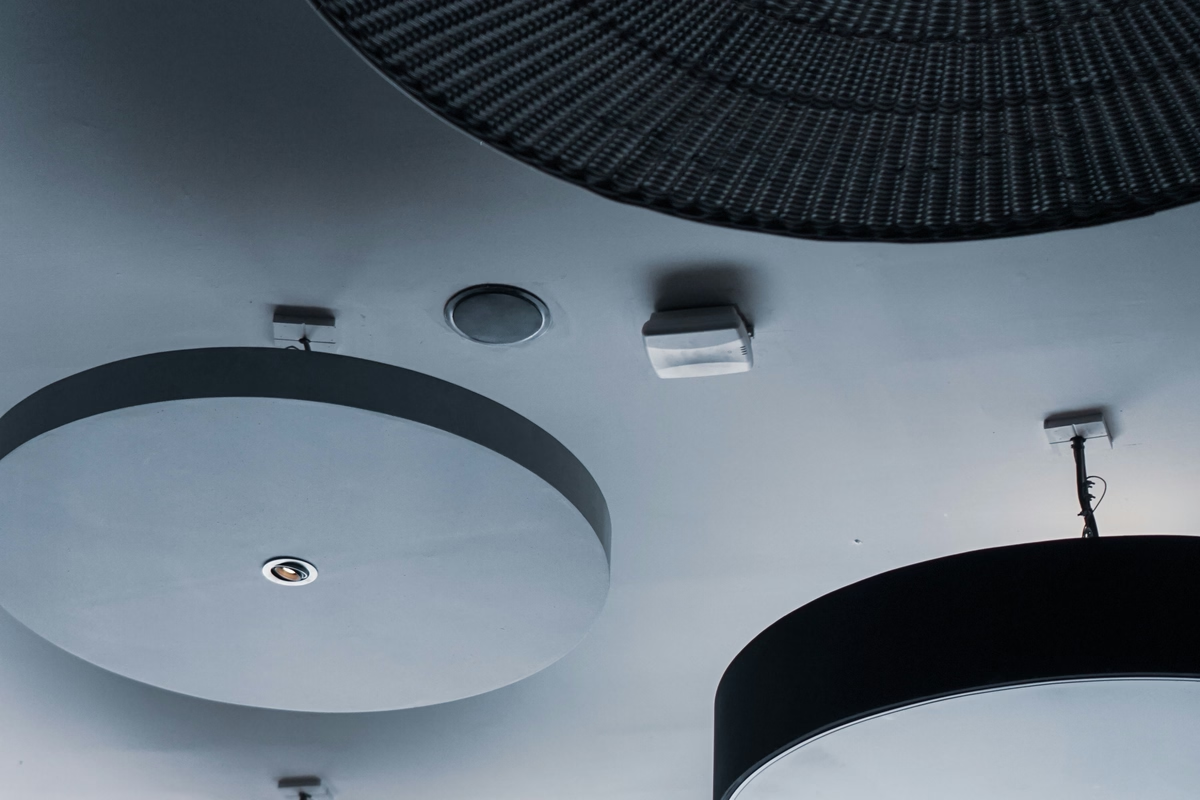
Noise doesn’t just travel sideways – it also moves vertically. Floors and ceilings are key areas to address, especially in multi-storey homes or flats.

Treat Footsteps and Impact Noise From Above

Impact noise – such as footsteps or dropped objects – behaves differently from airborne noise. It travels through vibration, making it harder to block. Thick carpets and underlays can help absorb this type of sound before it enters your space.

Improve the Ceiling When the Floor Above Cannot Be Treated

If you can’t control the room above, upgrading your ceiling can help. Adding an extra layer or installing acoustic insulation reduces the amount of sound that passes through, improving overall soundproofing performance.

Use Soft Floor Layers to Calm the Room

Inside your home office, hard surfaces reflect sound and increase echo. Adding rugs or carpets helps absorb sound, reduce reverberation and deaden sound in a room. This not only lowers noise levels but also improves sound quality during calls. For more ideas, see how to deaden sound in a room.

Improve Doors, Windows and Everyday Sound Leaks

Even well-treated walls won’t perform properly if sound is leaking through doors, windows, and small openings. Soundproof wallpaper can also help absorb reflections and echoes, making rooms quieter overall.

Upgrade Hollow Doors and Add Perimeter Seals

Hollow doors are a major weak point in most homes. Replacing them with solid core doors and adding perimeter seals can significantly reduce sound transmission between rooms.

Make Windows Work Harder Against Outdoor Noise

Windows are often the biggest source of outside noise. Double glazing, soundproof curtains, and properly sealed frames all help block noise from traffic and other external sources.

Check Frames, Vents and Other Overlooked Gaps

Small gaps around vents, frames, and fittings can let in more sound than you might expect. Sealing these areas is a simple but highly effective soundproofing solution that improves overall results.

Simple Setup Changes That Support Better Focus

Not all improvements require construction work. Simple changes to your room setup can also reduce noise and improve comfort. Using white noise machines or apps helps mask distracting sounds, while high-quality, active noise-cancelling headphones can create a personal quiet zone.

Rearrange the Desk Away From the Noisiest Side of the Room

Positioning your desk away from windows or shared walls can reduce direct exposure to noise. Even small adjustments in layout can make a noticeable difference in daily focus.

Use Furniture and Soft Materials to Soften Echo

Bookshelves, curtains, and upholstered furniture all help absorb sound. These additions reduce echo and create a more balanced acoustic environment without the need for specialist materials.

When an Enclosed Workspace Makes Sense
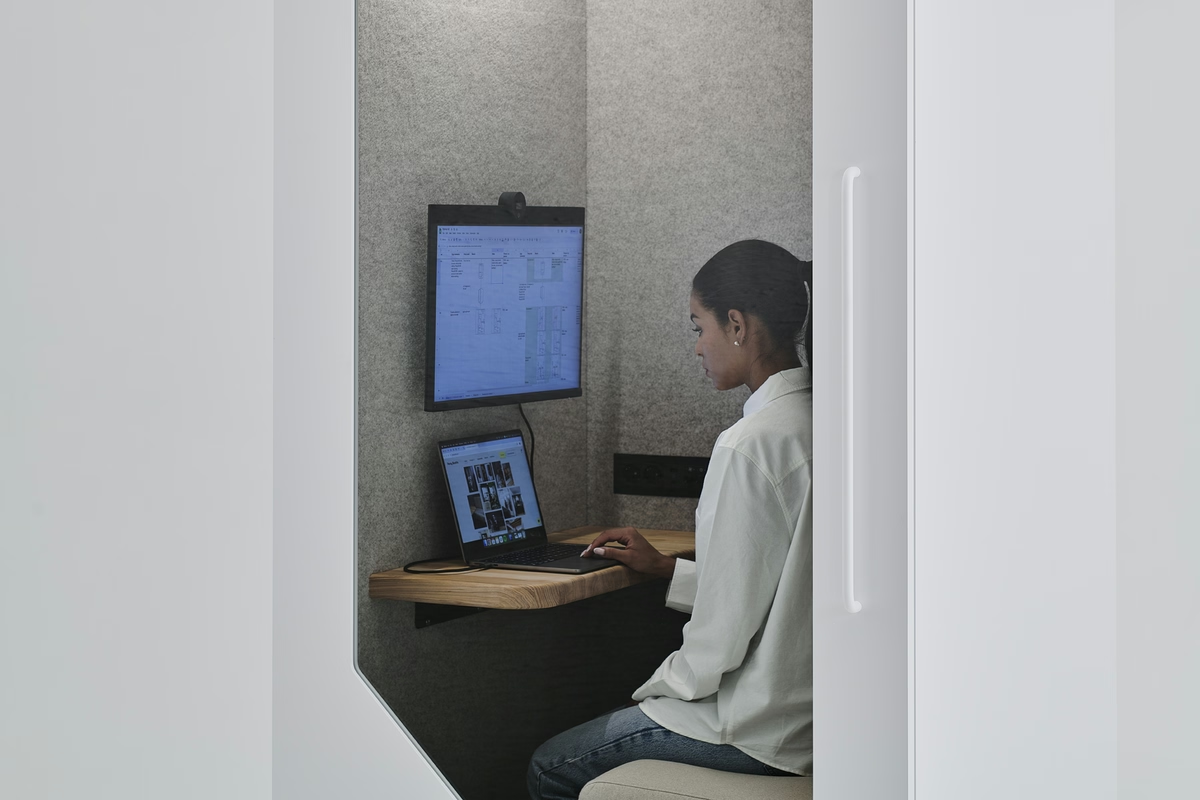
A woman working on a laptop inside an office pod with grey felt acoustic lining and a wall-mounted monitor

Sometimes, even the best soundproofing techniques aren’t enough – especially in busy households or open-plan spaces.

Create a Separate Quiet Zone for Deep Work

Defining a dedicated workspace helps separate work from home life. This psychological and physical separation improves focus and reduces distractions.

Use a Dedicated Booth for Calls and Privacy

In some home office situations, a more controlled environment is often needed. While we have covered many actions you can take to control noise levels, more home workers consider a compact solution like a soundproof phone booth, which provides high performance noise reduction without requiring major changes to your home.

{{summary}}

SHARE THIS ARTICLE
Copy link
Copy link
Twitter
Twitter
LinkedIn
LinkedIn
Key Takeaways

• Home office soundproofing works best when you first identify the main source of noise before choosing solutions
• Adding mass and sealing gaps are the most effective ways to block airborne noise
• Soft materials like rugs and curtains help reduce echo and improve sound quality
• Floors, ceilings, doors, and windows are common weak spots for sound transmission
• A combination of structural fixes and layout changes delivers the best noise reduction

-28 dB
Speech level reduction of a Persy Booths pod, measured under ISO 23351-1:2020. Source: Persy Booths
27 s
How often air is fully refreshed inside a Persy Booths pod. Source: Persy Booths
3 weeks
Typical delivery time with no structural work required. Source: Persy Booths
Fact-checked finding
Guidance from the US General Services Administration groups acoustic strategies into four distinct types. Absorption uses materials such as ceiling tiles, carpeting, curtains and hanging partitions to reduce sound travelling within a space. Blocking uses deliberate design and separation, such as enclosed rooms and zoning. Covering adds low, uniform background sound to spaces that are too quiet to be acoustically comfortable. Mitigating addresses outdoor noise through measures such as improved windows. Absorption and blocking solve different problems, which is why treating a room for echo does not stop noise entering it.
Source:
US General Services Administration, Indoor Environmental Quality, High-Performance Building Clearinghouse
Fact-checked finding
The mass law describes how airborne sound insulation relates to the weight of a partition: each doubling of mass per unit area adds roughly 6 dB of transmission loss, though real constructions typically achieve closer to 5 dB. Mass is not the only factor. Separating a wall into two leaves with an air cavity and absorbent material inside performs better than mass alone predicts, which is why cavity walls and independent stud walls outperform a single thick layer. Airtightness matters too, since gaps around doors, windows, pipe runs and cable runs will undermine an otherwise well-built partition.
Source:
ACT Acoustics, mass law and sound insulation for single panels
Conclusion

Home office soundproofing works best when approached systematically. Start by identifying the main source of noise, then address the key weak points – walls, floors, ceilings, doors, and windows. Combine structural improvements with softer materials and smart layout changes to reduce noise and improve sound quality.

In many cases, a layered approach delivers the best results. And where room-based solutions fall short, enclosed options can provide a reliable way to restore peace and create a truly quiet space for focused work or calls

Find a showroom near you
Visit one of our showrooms across the UK and Europe and compare booth models in person.
What to look for

• Home office soundproofing works best when you first identify the main source of noise before choosing solutions
• Adding mass and sealing gaps are the most effective ways to block airborne noise
• Soft materials like rugs and curtains help reduce echo and improve sound quality
• Floors, ceilings, doors, and windows are common weak spots for sound transmission
• A combination of structural fixes and layout changes delivers the best noise reduction

What to avoid

• Home office soundproofing works best when you first identify the main source of noise before choosing solutions
• Adding mass and sealing gaps are the most effective ways to block airborne noise
• Soft materials like rugs and curtains help reduce echo and improve sound quality
• Floors, ceilings, doors, and windows are common weak spots for sound transmission
• A combination of structural fixes and layout changes delivers the best noise reduction

FAQs (NBQs)

They’re a bit like FAQs, but we call them NBQs. No b*** questions. The questions you need to ask to make sure you aregetting value for money.

What is the best way to approach home office soundproofing?

Start by identifying where noise enters your space – walls, doors, windows, floors, or ceilings. Then apply targeted solutions such as sealing gaps, adding mass, or improving insulation.

Does home office soundproofing completely block outside noise?

No. It can significantly reduce noise, but complete soundproofing depends on the structure of the room and the materials used.

How can I reduce echo as part of home office soundproofing?

Use soft materials such as rugs, curtains, and acoustic panels to absorb sound and reduce reverberation.

Which parts of a room matter most for home office soundproofing?

Walls, doors, windows, and small gaps are the most common weak points. Treating these areas delivers the biggest improvements.

Is home office soundproofing worth it for video calls and meetings?

Yes. Reducing background noise improves speech clarity, professionalism, and overall call quality.

What solutions can improve privacy in a home office?

A combination of soundproofing upgrades, better room layout, and enclosed workspaces can create a quieter, more private environment – although reducing noise levels is normally a greater priority than privacy when working from home.

Sometimes you just have to get away from the pressure. That's what breakout areas are for – and with the increasing noise and pressure of the modern workplace, it's no wonder they're so popular.

To give it a formal definition, a breakout area is a dedicated part of the office designed for informal, flexible use. Unlike rows of desks or enclosed meeting rooms, a breakout space offers employees somewhere to step away from their main workspace, relax, talk, and think differently.

In many offices, especially in the modern workplace, the traditional layout of desks and formal meeting rooms no longer suits the full range of tasks people perform during the working day. At Persy Booths, we see the importance of this every time we visit our customers. Employees need places to focus, collaborate, reset, and share ideas. That is why office breakout areas have become such an important feature of contemporary office space.

A well designed breakout area supports productivity, employee wellbeing and creativity. It helps teams feel comfortable, stress free and engaged. When planned properly, it can transform the overall workplace environment and reflect the style and culture of the business.

Key Takeaways

  • A breakout area is a flexible space within the office designed for relaxation, informal meetings and collaboration, separate from desks and formal meeting rooms.
  • In the modern workplace, breakout spaces help employees move between focused work, teamwork and short breaks more naturally during the working day.
  • Well planned office breakout areas support employee wellbeing, mental health and productivity by offering comfortable seating, natural light and a change of scene.
  • Flexible breakout spaces encourage creativity, informal learning and stronger team relationships without the need to book meeting rooms.
  • Good design matters: layout, soft seating, modular furniture, lighting and acoustics all play a key role in creating a well designed breakout area.
  • In open plan offices, breakout areas should be supported by acoustic solutions such as office pods and office noise reduction solutions to protect focused work.
  • When thoughtfully integrated into the wider office space, breakout areas help create a more inviting, productive and balanced work environment.

Breakout Area Meaning and Purpose in the Office

The term “office breakout area” simply refers to a shared space where employees can take a break from desks and spend time in a more relaxed setting. A "breakout room" is similar in meaning, although it can also refer to a semi-enclosed room used for small, informal meetings or quick catch-ups.

In everyday language, a breakout space is somewhere you can sit, speak freely, and work in a different way. It is usually easily accessible from the main workspace and does not require booking. The purpose is flexibility. People can use it for relaxation, short meetings, collaboration or quiet thinking.

In open plan offices, where large teams share the same office space, breakout areas provide much-needed variety. They give employees choice about where and how they work during the day, which is key to maintaining focus and motivation.

Open plan office breakout space with sofas and informal seating used for relaxed work and conversation

What Is a Breakout Area or Breakout Room?

So what is a breakout area or breakout room in practical terms?

It is a space designed with comfort and informality in mind. Unlike traditional meeting rooms, which often feature a boardroom table, screens and structured seating, breakout areas tend to include soft seating, sofas, chairs and sometimes high tables or benches.

The atmosphere is more inviting and flexible. Comfortable seating, relaxed rules and varied office furniture allow people to sit, rest, unwind or have quick informal meetings without the pressure of a formal setting. A breakout space may include bold colours, wood finishes, good quality lighting and even food or drink facilities.

The key difference is intent. Meeting rooms are structured and often booked in advance. A breakout area is suitable for spontaneous use, encouraging creativity and conversation without formality.

Team having an informal meeting in a breakout area with sofas and relaxed seating arrangement

Key Uses: Relaxation, Informal Meetings and Idea Generation

Office breakout areas serve multiple practical functions during the working day.

First, they support relaxation. A short break away from desks helps employees reset, protect mental health and return to focused work feeling refreshed. Even ten minutes in a lounge-style space can make a difference.

Second, they are ideal for informal meetings. Instead of booking meeting rooms for every quick discussion, team members can gather in a breakout space to speak openly and share updates. This flexible breakout spaces approach saves time and helps maintain productivity.

Third, breakout areas encourage idea generation. When employees move away from the main workspace and sit in a more relaxed setting, creativity often improves. The change of scene, natural light and inviting breakout furniture create a setting that suits brainstorming and collaboration.

Benefits of Office Breakout Areas for Employees and Teams

The importance of office breakout areas goes beyond aesthetics. They contribute directly to a healthier and more productive workplace.

A well designed breakout area supports employee wellbeing, strengthens team relationships and improves overall engagement. In many offices, the presence of flexible breakout spaces signals a shift in how business leaders think about work. It shows recognition that employees are not machines tied to desks, but people who need variety and comfort.

Wellbeing, Healthy Work and Reduced Stress

Breakout areas provide a valuable change of scene. Stepping away from screens and the main workspace gives employees permission to take a break and relax.

This small shift can have a positive impact on mental health. When people feel comfortable in their office environment, they are more likely to feel stress free and supported. Soft, comfortable seating and access to natural light both contribute to a healthier workspace. Relaxation does not mean losing productivity. On the contrary, short breaks in a breakout area can improve focus and make the working day more sustainable. Employees who can unwind and reset are more likely to return to their desks feeling productive and engaged. Recent research from the World Green Building Council shows that thoughtfully designed office environments that prioritise wellbeing can measurably improve productivity and employee health.

Employee taking a short break in a breakout area with plants and natural light in an open office

Collaboration, Informal Learning and Employee Engagement

Breakout spaces are also powerful tools for collaboration.

In open office layouts, employees may hesitate to speak freely at desks due to office distractions or concerns about disturbing others. A breakout area offers a more suitable space to talk, share ideas and build relationships.

Informal learning often happens in these settings. Team members exchange insights, solve problems together and develop new ideas in a relaxed environment. Research from CBRE’s 2026 Workplace & Occupancy Benchmarking Program shows that a majority of employees cite collaboration and connection with colleagues as primary reasons they come into the office, underscoring the value of spaces that support spontaneous interactions.

This strengthens workplace culture and improves communication across the business. When employees have access to a perfect breakout space that feels inviting and practical, they are more likely to spend time together, strengthening bonds within the team. Over time, this contributes to higher engagement and a more positive workplace.

Designing Effective Breakout Spaces in Offices

Creating an effective breakout area requires careful planning. It is not simply about adding sofas to an office. The layout, furniture, lighting and acoustics must all suit how people actually use the space.

The goal is to create a versatile and flexible area that complements the main workspace without disrupting focused work nearby.

Layout, Soft Seating and Modular Furniture

Position the breakout space so it is easily accessible but clearly separated from desks. This visual and physical distinction helps employees switch modes from focused work to relaxation or collaboration.

Soft seating is essential. Sofas, chairs and comfortable seating options encourage people to sit back and unwind. Modular furniture is particularly useful, as it allows teams to reconfigure the space depending on the task. Modular solutions can be moved to accommodate small meetings, solo work or larger group discussions.

Incorporate high tables, benches and a range of seating types to suit different preferences. Some employees may prefer to sit upright at high tables, while others choose lounge-style sofas. Good quality lighting and access to natural light will make the breakout area more inviting.

Zoning for Quiet Time, Social Space and Games Rooms

In larger offices, it is helpful to create distinct zones within office breakout areas.

For example, one zone may be designed for quiet time, with comfortable seating and minimal distractions. Another may act as a social space with high tables and bold colours to encourage conversation. A third might function as a games room for team bonding and relaxation.

In open plan settings, breakout areas often sit alongside those focused work zones. This is often known as the concept of a collaborative workspace, with businesses exploring the shift from traditional layouts to a more adaptable model. These focused work zones allow teams to move easily between open collaboration and enclosed concentration as needed. However, to ensure that ambient noise from more "social" breakout spaces doesn't distract others, companies often turn to solutions such as a work boothprivate office pods and portable meeting rooms to protect focus while maintaining a flexible office space. These private booths vary mainly by size and function:

Open office layout showing breakout seating, collaborative zones, and quiet work areas

Breakout Areas, Office Acoustics and Noise Management

In open plan offices, breakout areas must be carefully integrated into the wider environment. Without proper planning, conversations and games can raise the overall office noise level and disrupt focused work.

Understanding the impact of an open office layout is crucial when designing breakout areas that suit different team needs.

Keeping Breakout Areas Comfortable Without Disturbing Others

To maintain balance, consider the location of the breakout area relative to desks and quiet zones. Position it away from the most focus-intensive parts of the office.

Use materials that absorb sound, such as upholstered furniture, wood finishes and soft surfaces. These practical choices help manage the office noise level and reduce distractions.

Employers should also explore office noise reduction solutions to ensure that breakout spaces do not negatively impact the wider workspace. In some cases, installing a white noise machine can help mask background conversations and maintain a productive environment.

Being aware of common office distractions allows businesses to create zones that suit different working styles.

Using Booths, Pods and Sound Solutions Around Breakout Spaces

To support both collaboration and focus, combine breakout areas with enclosed solutions.

A nearby soundproof phone booth or two person phone booth can give employees a private space for calls, while private office pods provide a suitable setting for deep, focused work. A work booth positioned close to the breakout area can offer quick transitions between relaxation and concentration.

Monitoring usage with a room occupancy sensor helps businesses understand how breakout spaces and booths are used throughout the working day. This practical data supports better space planning over time.

When designed thoughtfully, breakout spaces and acoustic solutions work together to create a balanced open office that supports both collaboration and productivity.

Person taking a call inside a soundproof office booth near an open workspace

Real-world Office Breakout Area Examples and Ideas

Breakout areas can reflect company culture and business priorities. The design should suit the style, team structure and values of the organisation.

Relaxed Lounge-style Breakout Areas

A lounge-style breakout area might include sofas, soft seating, low tables and plants. Warm lighting, wood finishes and comfortable chairs create a calm, inviting feel.

This type of space is ideal for relaxation, informal chats and solo breaks. Employees can sit, rest and unwind in a calm environment that supports mental health and wellbeing.

Activity and Games-focused Breakout Spaces

Some businesses choose a more energetic approach. A games room style breakout space might feature high tables, benches and activity zones.

This example works well for creative teams that benefit from movement and social interaction. The key is to maintain a respectful environment where fun supports, rather than undermines, productivity.

Multi-purpose Breakout Corners Next to Collaborative Workspaces

In smaller offices, a compact breakout corner placed next to a collaborative workspace can act as an overflow area before or after meetings.

These flexible breakout spaces may include modular furniture, screens for quick presentations and comfortable seating for small groups – all useful elements when planning coworking ideas. Positioned near meeting rooms but distinct from desks, they provide a versatile solution for quick huddles.

Are you ready to break out?

Given all the advantages, it's little wonder that breakout areas are found in most modern offices. But, if they are not already in place, companies still have to find the budget to do it.

The good news is that it does not need to be expensive. We're proud of the fact that Persy Booths, for example, provide high-quality soundproof booths without a hefty price tag (especially since we sell direct and cut out the reseller markup). Also bear in mind that many of the other elements that go into making these zones both desirable and effective are inexpensive.

The truth is that employees appreciate them and most companies can easily justify them and benefit from them – break out areas do not have to break the bank.

Grey felt acoustic panels lining the walls of a small private office with a desk and sofa
Acoustics
All articles
Soundproof Panels for Office: How They Improve Workplace Acoustics and Focus
July 28, 2026
Employee working alone at a quiet window seat away from the main office floor
Acoustics
All articles
How To Build Creative Quiet Workspaces Within Your Office
July 17, 2026
Acoustic ceiling panels and light discs suspended in an open-plan office
Acoustics
All articles
How Can Sound Masking Improve Office Productivity? Benefits, Use Cases & Office Solutions
July 14, 2026
Open plan office with acoustic desk dividers and large windows
Acoustics
All articles
Sound Dampening Materials: 20+ Materials That Reduce Noise
June 9, 2026