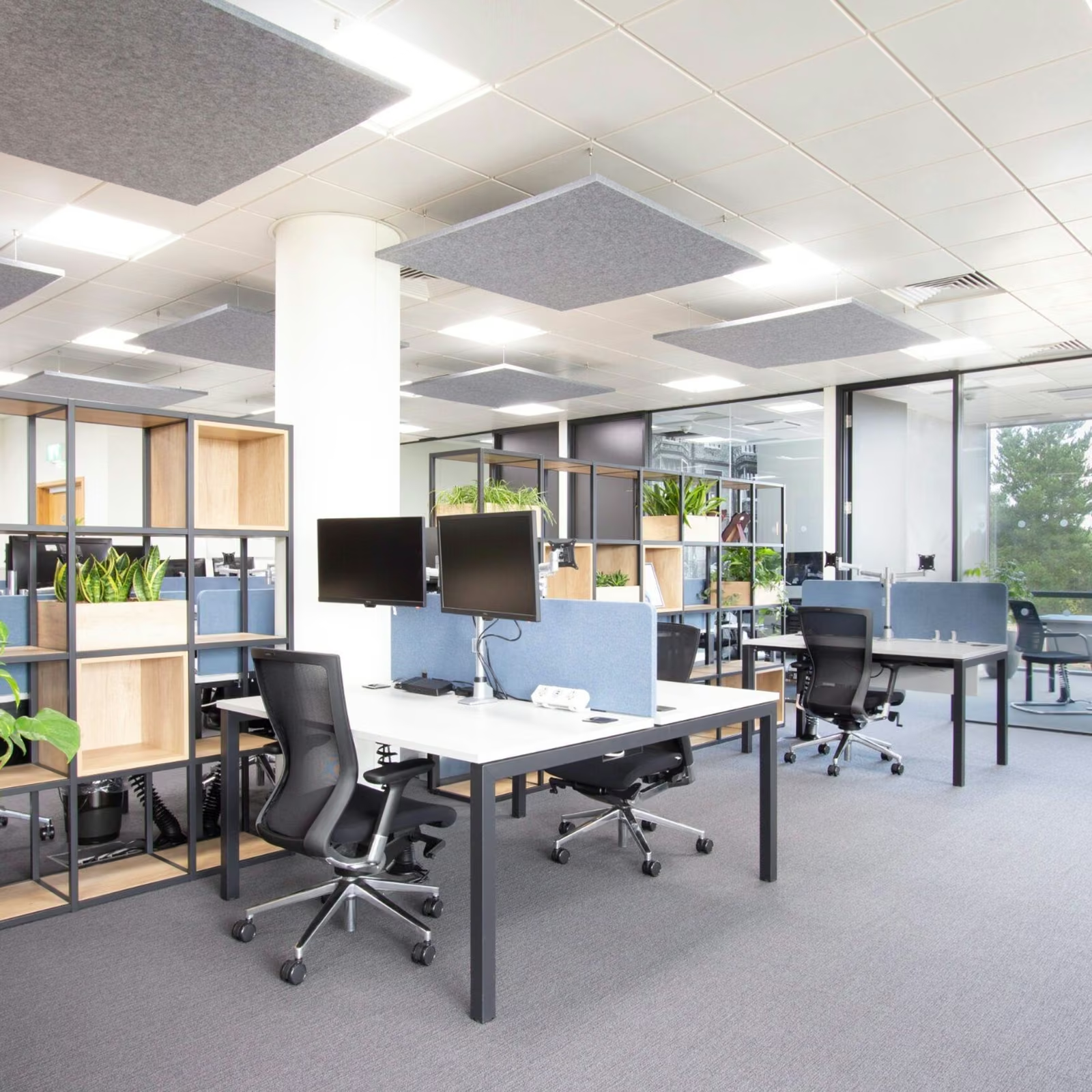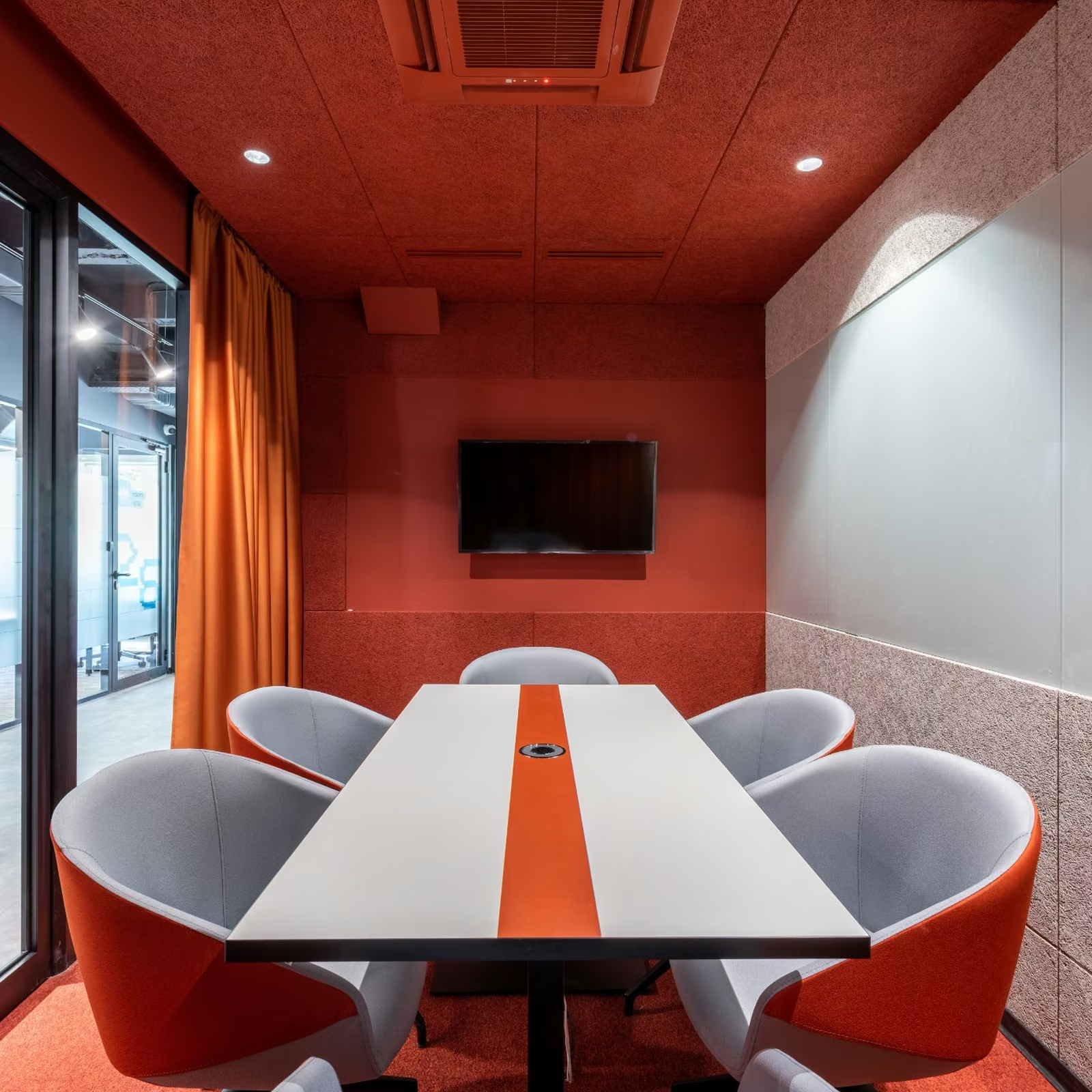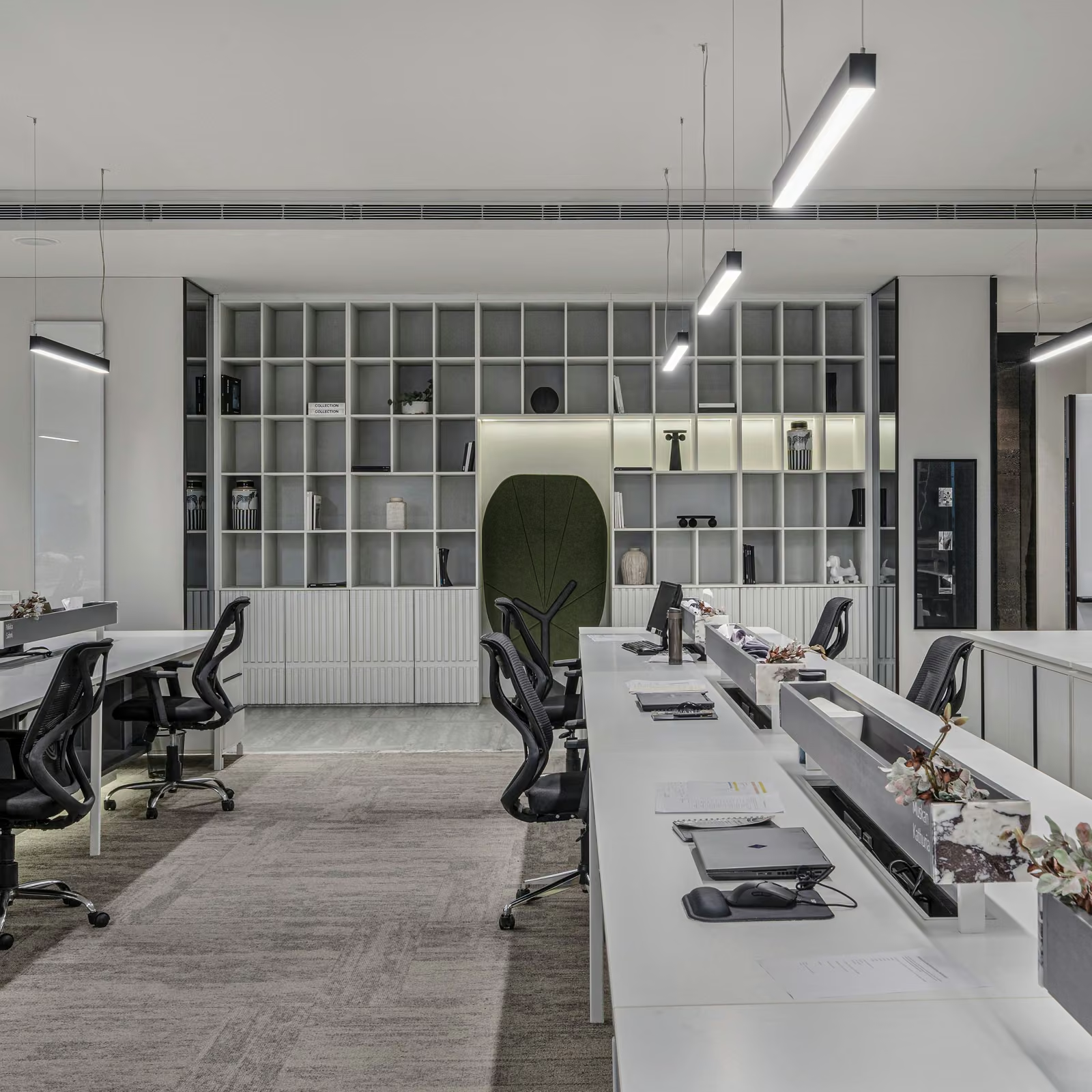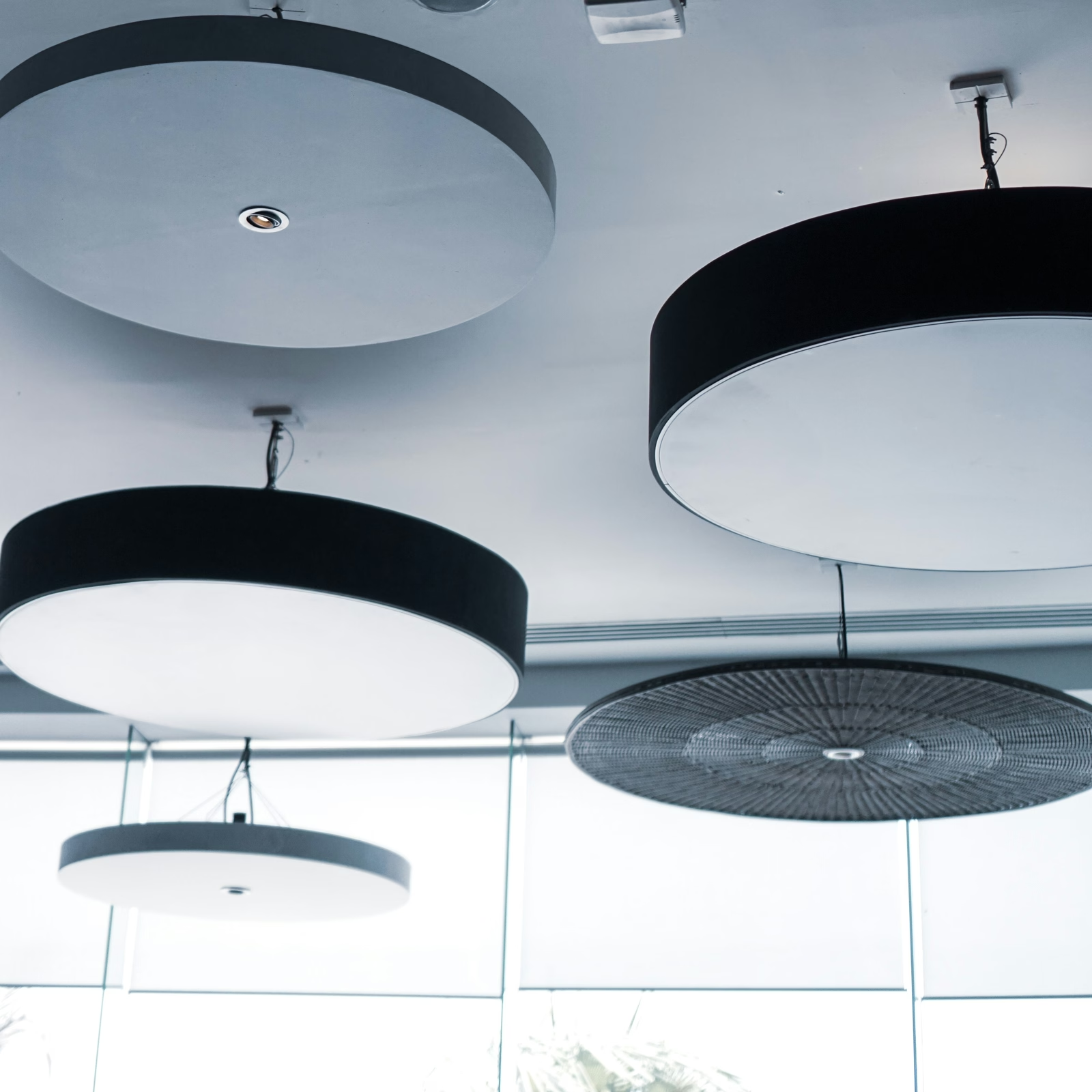
How can sound masking improve office productivity? It helps by making nearby speech less intelligible, so people are less likely to lose focus every time a conversation starts nearby. In open-plan and hybrid offices, that can mean better concentration, stronger speech privacy, and a calmer working day. As part of a wider acoustic strategy, Persy Booths and well-placed office pods can add private spaces for calls, focused work, and short meetings when sound masking alone is not enough.
{{key-takeaways}}
The Main Productivity Benefits of Sound Masking
Sound masking improves office productivity in practical, day-to-day ways. It does not make an office silent. Instead, it adds a low, even background sound that helps cover distracting speech and makes the space feel acoustically more stable. That matters because speech is one of the most disruptive office sounds.
When people can hear fragments of nearby conversations, their attention gets pulled away from the task in front of them. A better acoustic balance supports focused work, reduces interruptions, and helps teams feel more comfortable in shared spaces. It can also improve privacy for phone calls, HR discussions, finance work, and leadership conversations that should not carry across the room.
Better Focus for Individual Work
For individual work, the biggest gain is fewer speech-based distractions. Sound masking reduces the clarity of background conversations, so employees hear less detail and are less likely to track what other people are saying. That is useful for analysis, writing, coding, admin work, and any task that needs sustained attention. Instead of reacting to every nearby voice, staff can stay in the task for longer. In busy open offices, that simple change can make concentration feel much easier to maintain across the day.
Improved Speech Privacy for Calls and Confidential Work
Overheard conversations are a common issue in open offices, often leading to distractions and confidentiality concerns. Sound masking also helps protect speech privacy by introducing unobtrusive background noise that blends into the ambient soundscape, making overheard conversations less intelligible.
This is how sound masking systems work: they do not eliminate noise, but reduce the intelligibility of conversations outside the immediate area, so discussions become harder to follow from nearby desks or circulation zones. Studies show that sound masking can reduce the intelligibility of conversations, allowing employees to maintain focus on their tasks without being distracted by nearby discussions.
That matters in HR, finance, legal, client service, and leadership settings, where partial overhearing can still be a problem. It is not a replacement for a sealed room, but it can make shared office space more appropriate for routine confidential conversations. In practice, this supports better privacy without forcing every call into a meeting room.
{{fact-1}}
Less Mental Fatigue During the Day
Unpredictable office noise takes effort to ignore. Over time, that extra effort adds to mental fatigue. A more controlled sound environment reduces that strain, which can help people stay more comfortable and productive from morning to late afternoon. This is especially helpful in offices where teams move between focused tasks, calls, and collaboration. When fewer sudden conversations break attention, staff do not have to reset as often. That can also reduce frustration linked to everyday office distractions.
What Is Sound Masking in an Office?
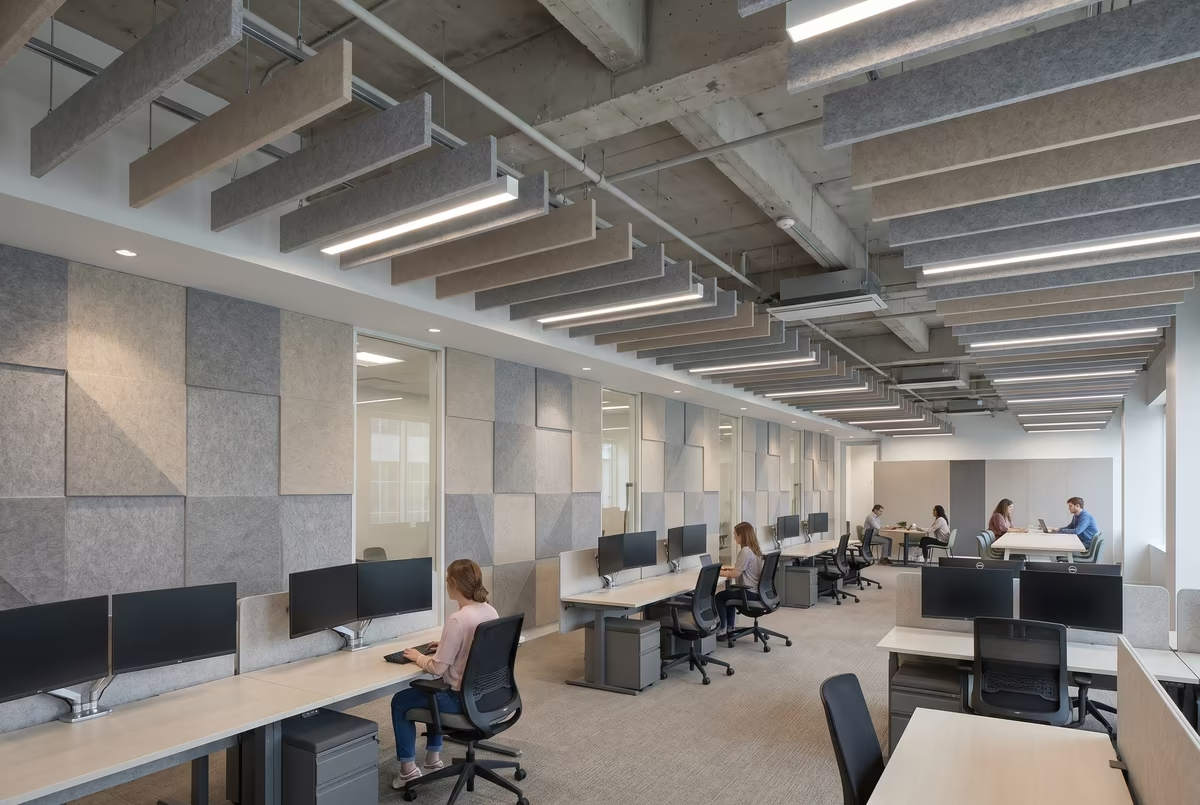
Sound masking is the controlled addition of a low, consistent background sound into a workplace. In offices, it introduces an ambient background sound, often described as a constant hum, that is subtle and pleasant, helping to mask distracting noises and create a more comfortable environment.
Many sound masking systems use pink noise, which is specifically designed to be soothing and effective for acoustic comfort. The system typically consists of emitters, which are small loudspeakers, and control units, and is deployed and implemented according to the specific needs of the office.
The goal is not to make the office louder, but to make distracting speech less noticeable and less intelligible. That is why sound masking can improve office productivity, especially in open-plan areas where sound carries easily between desks. It supports focus, speech privacy, and overall acoustic comfort as part of a broader office acoustics strategy.
Sound Masking vs White Noise
People often mix up sound masking and white noise, but they are not the same thing. White noise is broad and even across the frequency range. Sound masking is more targeted. Modern systems are usually shaped around the frequencies of human speech so they cover conversation more effectively and with less irritation than a harsher, static-like sound. That distinction matters in real offices, because the aim is comfort as well as privacy. For a deeper explainer, see how does white noise work.
Why Productivity Drops in Noisy Offices
Why do noisy offices hurt performance so quickly? The main issue is not always volume. It is unpredictability and speech intelligibility. In open spaces, especially those designed for collaborative work, increased noise levels can negatively impact workers and businesses by making it difficult to concentrate, reducing privacy, and hindering productivity.
In open-plan and hybrid workplaces, people are often distracted by phone calls, desk conversations, and passing discussions that rise and fall without warning. That kind of noise is hard to tune out. It breaks concentration, weakens speech privacy, and increases mental load. Studies have shown that it takes an average of 23 minutes to return to a task after an interruption caused by noise, significantly slowing down individual work and hindering collaborative efforts.
Over time, staff can feel more fatigued, more annoyed, and less able to do detail-heavy work well. In spaces that need private calls, a dedicated soundproof phone booth can help cover the gap that open-floor acoustics still leave.
Where Sound Masking Works Best
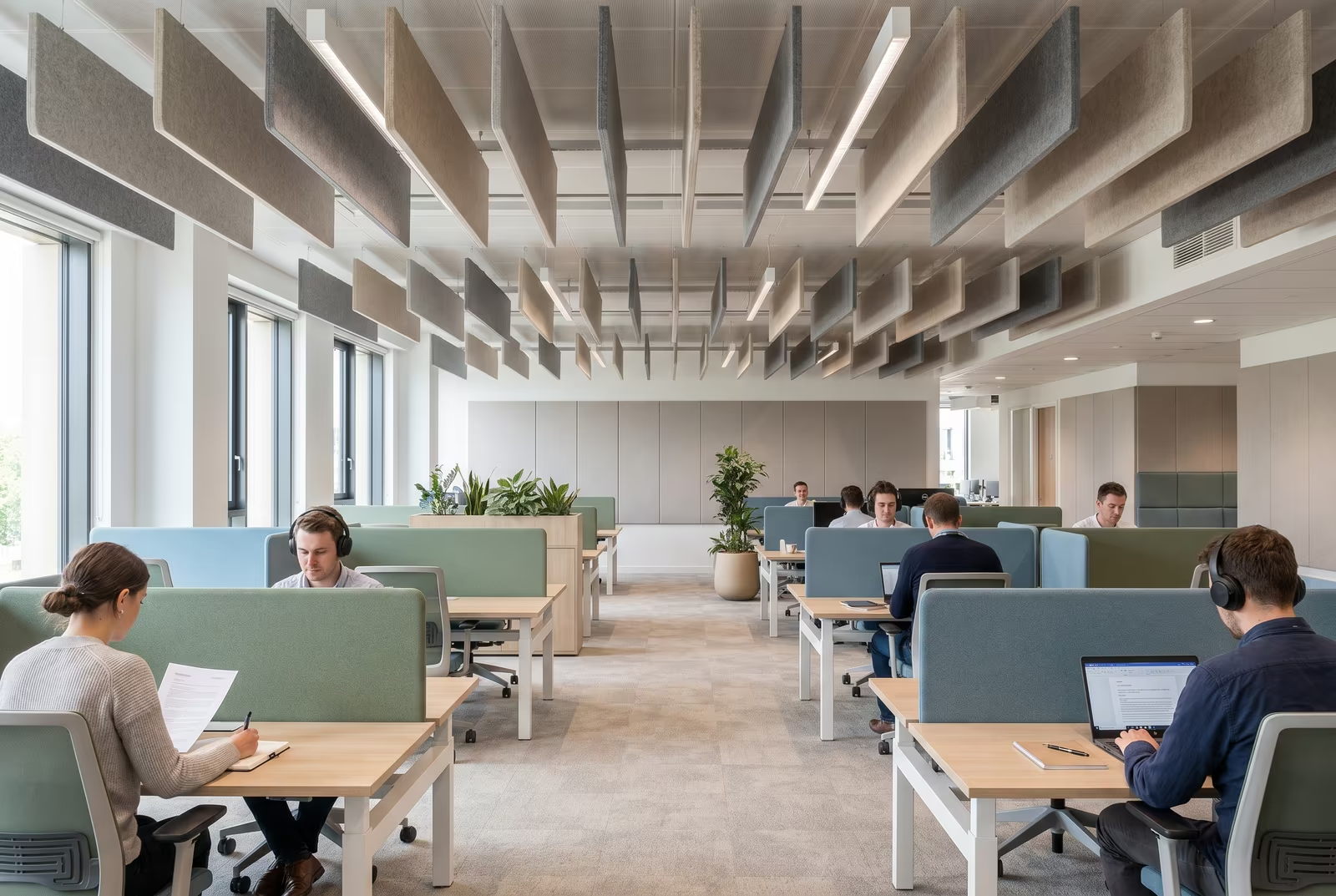
Sound masking works best in spaces where speech travels easily and many people share the same acoustic environment. This includes open-plan offices, hot-desking areas, shared benching layouts, customer support floors, project spaces, hybrid offices where occupancy changes from day to day, as well as quiet zones and centers such as call centers.
In these environments, managed acoustics are crucial for creating a controlled sound environment that enhances employee well-being and organizational performance. It is especially useful where teams need a balance between collaboration and heads-down work.
When implementing sound masking, it is essential to assess the specific needs of the office environment, including the size of the space, the nature of the work, and the general office culture. In these settings, sound masking can create a more even sound backdrop, which helps reduce distraction distance and improve perceived privacy without changing the whole office layout.
{{fact-2}}
Sound Masking vs Other Office Noise Solutions
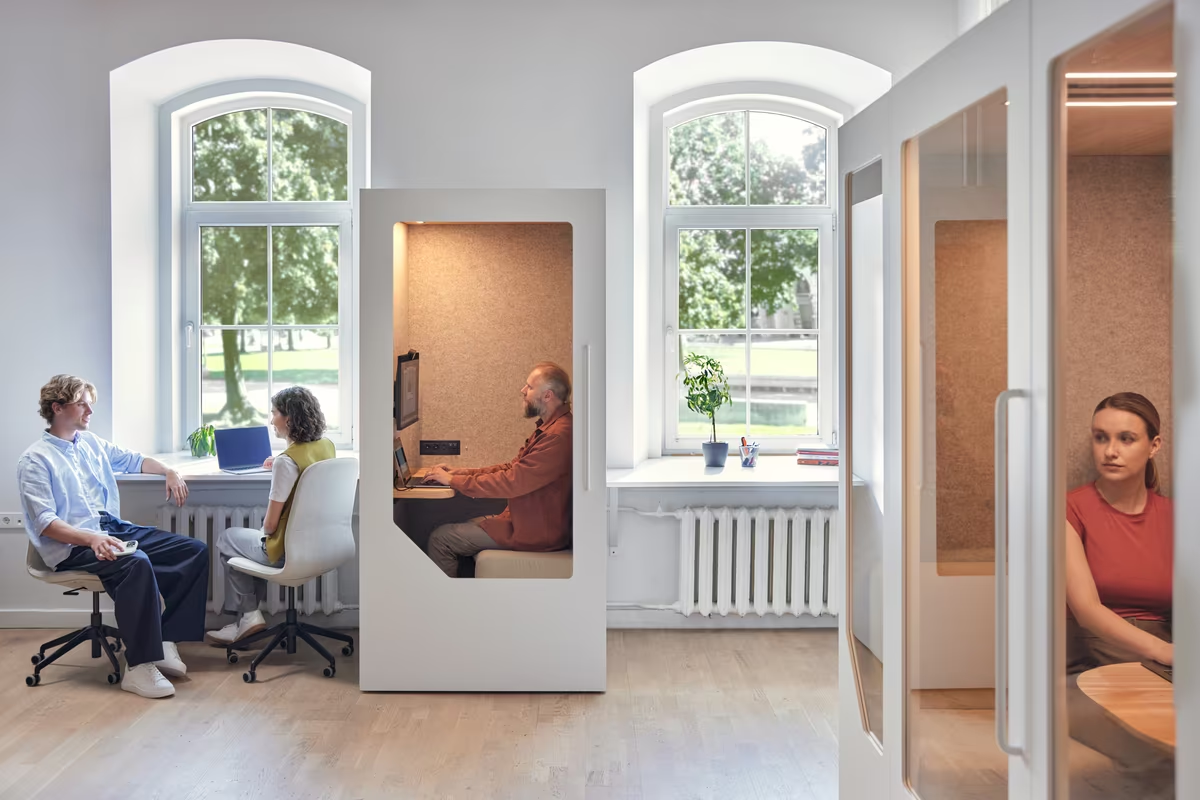
Sound masking is useful, but it is rarely the only answer. The best office acoustics usually come from combining several methods. Soundproofing blocks sound transmission between spaces. Sound absorption reduces reflections inside a space. Layout changes can separate noisy activity from quiet work zones.
Sound masking covers unwanted speech in areas that stay open. Each method solves a different part of the problem. That is why many workplace guidelines recommend a mix of absorption, blocking, and covering strategies rather than one standalone fix. For facilities teams and designers, the real question is not sound masking or something else. It is how to combine tools in a way that matches the work being done.
{{stats-1}}
Acoustic Treatments and Layout Changes
Acoustic panels, ceiling treatments, carpets, upholstered furniture, screens, and better zoning all help improve office sound conditions. These measures reduce reverberation and stop noise from spreading so freely across the floor. Layout planning matters too.
When collaboration zones, support spaces, and quiet work areas are placed more carefully, fewer people are exposed to irrelevant speech. Sound masking works well alongside these changes because it covers what absorption and layout alone cannot fully solve in an open office.
When a Booth Is a Better Solution
Some tasks need more than masking alone. Private calls, video meetings, one-to-ones, and deep focus sessions often need a physically enclosed space. That is where a booth becomes the better solution. Sound masking can improve the wider floorplate, but it will not create full isolation for sensitive conversations.
Persy Booths fit naturally into this kind of layered acoustic strategy. A dedicated work booth gives employees a place to step away for concentrated work or confidential calls while sound masking supports the rest of the office around it.
{{summary}}

Sound masking improves office productivity by reducing the impact of nearby conversations, helping employees focus for longer and work with fewer interruptions. It also improves speech privacy in shared spaces and supports acoustic comfort in open-plan and hybrid offices. Used alongside booths and other acoustic solutions, it creates a more effective workplace.

So, how can sound masking improve office productivity? It reduces speech distraction, supports concentration, and improves speech privacy in the spaces where people spend most of their day. With the experience of leading providers, implementing sound masking solutions can transform a noisy, distracting workspace into a calm, efficient, and productivity-boosting environment.
It is especially valuable in open-plan and hybrid workplaces, where conversations travel easily and attention is often pulled in too many directions. For the strongest result, sound masking should sit inside a broader acoustic plan that may also include layout improvements, absorption, and enclosed spaces. Persy Booths can complement that strategy by giving teams dedicated private areas for calls, meetings, and focused work.
Sound masking improves office productivity by reducing the impact of nearby conversations, helping employees focus for longer and work with fewer interruptions. It also improves speech privacy in shared spaces and supports acoustic comfort in open-plan and hybrid offices. Used alongside booths and other acoustic solutions, it creates a more effective workplace.
Sound masking improves office productivity by reducing the impact of nearby conversations, helping employees focus for longer and work with fewer interruptions. It also improves speech privacy in shared spaces and supports acoustic comfort in open-plan and hybrid offices. Used alongside booths and other acoustic solutions, it creates a more effective workplace.