We ship all across Europe. Standard products ship in 3 weeks.
Learn more
Menu
Get a Personalized Quote

Tell us what you're looking for and we'll create a quote tailored to your space, team and needs.

You'll receive:
  • A personalized recommendation
  • Clear pricing based on your request
  • A quick follow-up if we need more details
Persy One
For phone calls and video meetings.
€3999
(excl. shipping & VAT)
Persy Work
For deep-focus tasks and extended work sessions.
€4699
(excl. shipping & VAT)
Persy Two
For two-person meetings and video conferences.
€9499
(excl. shipping & VAT)
Persy Four
For small team catch-ups and discussions.
€11799
(excl. shipping & VAT)
You're All Set!
Thank you! Your request has been successfully submitted. We'll get back to you shortly with your personalized quote.
Close this window
Close this window
Oops! Something went wrong while submitting the form.
Download a Brochure
What you’ll find inside:
  • Product information
  • Product pricing
  • Technical information
Download a Brochure
You're All Set!
Thank you for your interest in Persy Booths! We've sent the brochure to the email address you provided. Please check your inbox for more information.
Oops! Something went wrong while submitting the form.
Download a Brochure
You're All Set!
Thank you for your interest in Persy Booths! We've sent the brochure to the email address you provided. Please check your inbox for more information.
Oops! Something went wrong while submitting the form.

Optimized Airflow Design
Each booth is engineered with strategically placed vents that maximize airflow efficiency, ensuring a comfortable environment for every user.

Consistent Temperature Management
Our advanced ventilation system helps regulate temperature, ensuring a comfortable climate that keeps you cool and focused during long sessions.

Whisper-Quiet Operation
Designed for a distraction-free experience, our ventilation system operates silently, allowing you to concentrate on your work without interruptions.

Soundproofed for confidentiality

Five Layers of Soundproofing Materials
Designed to absorb and reflect a wide range of sound frequencies, these layers work together to enhance overall sound isolation.

Rubber-Magnetic Door Seal
This seal ensures that even the smallest gaps are sealed tight, preventing sound leakage and enhancing privacy.

Double Acoustic-Grade Glass
Our high-quality glass not only allows natural light to enter but also significantly reduces sound transmission, maintaining a peaceful atmosphere.

Recycled PET Felt
This eco-friendly material absorbs sounds and echoes within the booth, ensuring a quiet environment for focused work and conversations.

Sound-treated ventilation channels
Every Persy Booth has sound traps in ventilation channels that absorb the sounds entering or escaping the booth through ventilation channels.

Productive Workplace Environment: Key Elements That Improve Focus and Performance

This article explores what makes a workplace environment truly productive, covering office design, communication, leadership, and employee wellbeing. It breaks down the physical and cultural factors that support focus and performance, plus practical steps businesses can take to build a more productive workplace.
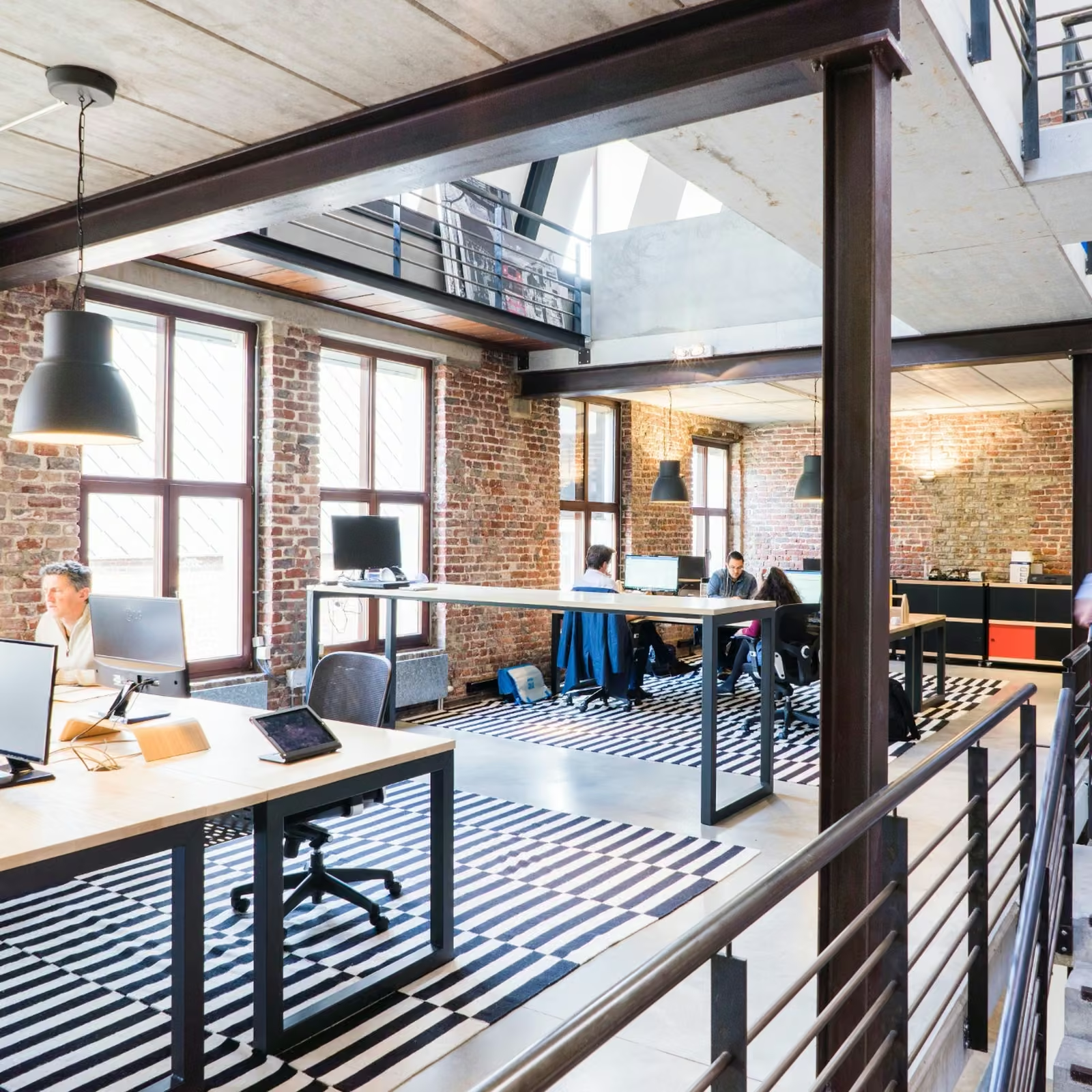
Two colleagues focused on laptop work in an open office

So you want to make sure you're getting the best productivity from your people? The truth is that a productive workplace environment is about much more than attractive offices or the latest technology. It combines thoughtful workspace design, supportive leadership, effective communication and a culture that enables people to perform at their best. When these elements work together, employees are more engaged, collaboration becomes easier, and businesses benefit from higher productivity, stronger retention and improved job satisfaction.

At Persy Booths, we work closely with organisations that are continually looking for practical ways to improve the working experience. From creating quieter spaces with office pods to helping businesses make better use of their offices, we've seen first-hand how the right environment can transform both employee wellbeing and business performance.

{{key-takeaways}}

What Creates a Productive Workplace Environment?
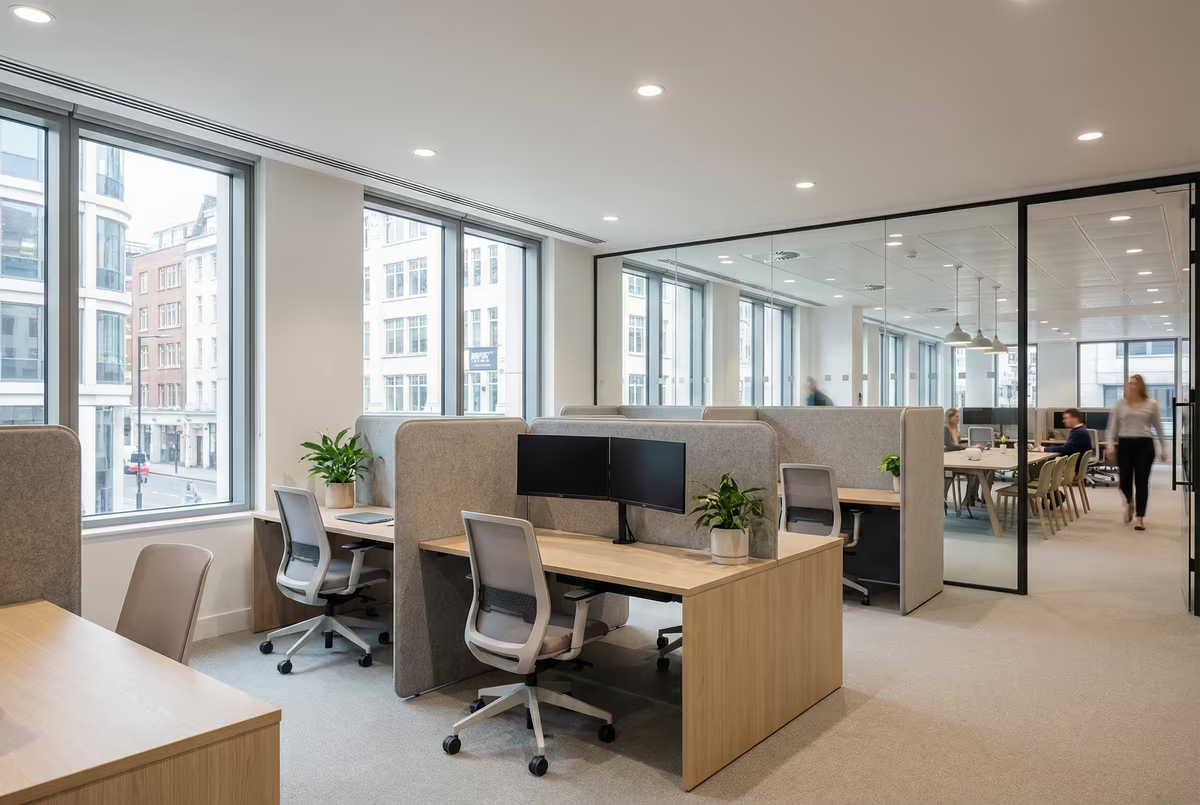
Quiet focus workspace with individual desks separated by grey acoustic partitions beside a glazed meeting room

When you strip it down to basics, a productive workplace environment is simply one where employees have everything they need to complete their work efficiently, confidently and comfortably. That includes the physical work environment, but it also depends on company culture, leadership, communication and the level of support employees receive every day.

Many organisations assume productivity is driven purely by technology or performance targets. In reality, creating a more productive work environment requires attention to dozens of small factors that work together. The office environment should support concentration without isolating people, encourage collaborative working without creating constant distractions, and provide opportunities for individuals to focus when required.

Equally important is creating a healthy work environment where employees feel respected, listened to and trusted. When employees feel valued, they become more self motivated, develop positive relationships with colleagues and contribute more effectively to the wider business.

The most successful organisations understand that a positive workplace equals better employee morale, improved workplace productivity and stronger employee wellbeing. Rather than viewing productivity as simply working harder, they recognise that helping people work smarter delivers more sustainable success.

Clear Communication and Shared Expectations

Open communication is one of the strongest foundations of a productive workplace. When objectives, responsibilities and priorities are clearly defined, employees understand what success looks like and can focus their energy accordingly.

Transparent communication also prevents duplication, confusion and unnecessary delays. Teams connected by regular updates and clear expectations make better decisions, collaborate more effectively and solve problems more quickly. Employees feel comfortable raising concerns, sharing ideas and asking questions because everyone understands both individual and team goals.

Autonomy, Trust and Employee Ownership

Highly productive organisations promote autonomy rather than micromanagement. When leaders allow employees to make decisions within clear boundaries, people develop greater ownership of their work and become more accountable for results.

Trust also improves motivation. Employees who feel trusted are more likely to take initiative, contribute creative ideas and continually improve their own performance. Combined with constructive feedback and appropriate support, autonomy creates a happy and positive workplace where people consistently produce their best selves.

Physical Workplace Features That Support Productivity
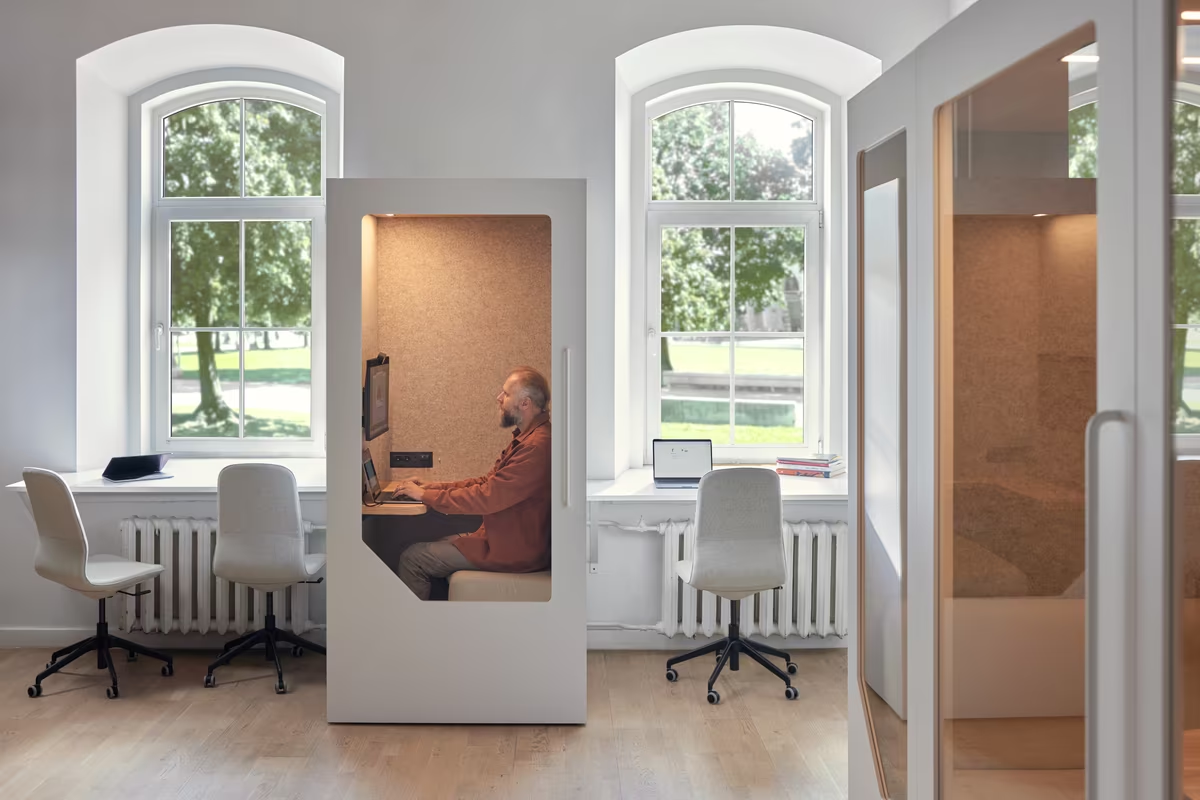
Employee taking a private call on a laptop inside a Persy Booths acoustic phone booth in an open office

The physical workplace remains one of the biggest influences on everyday performance. Even with remote working becoming increasingly common, office spaces continue to play an important role in collaborative working, innovation and company culture.

The most effective workplaces balance concentration with interaction. Adequate lighting, natural light, comfortable furniture and thoughtful layouts all reduce physical strain and improve concentration throughout the day. Small ergonomic improvements such as adjustable chairs, correct monitor placement and standing desks can significantly reduce eye fatigue while supporting healthy work practices.

Equally important is providing different environments for different activities. Employees move continually between focused individual work, meetings, phone calls and collaborative tasks. Offices that recognise these changing needs enable employees to remain productive throughout the working day rather than forcing every activity into the same shared workspace.

Quiet Areas for Focused Work

Deep concentration requires freedom from constant interruptions. While open-plan offices encourage interaction, they can also increase low productivity when employees struggle to concentrate on complex tasks.

A dedicated quiet zone or work booth allows individuals to focus on detailed work, confidential conversations or video meetings without disturbing colleagues. Providing easy access to these spaces makes a big difference to both productivity and employee satisfaction, particularly for employees whose roles require sustained concentration.

Balanced Spaces for Collaboration and Meetings

Collaboration remains essential, but productive businesses ensure it happens in appropriate spaces rather than across the entire office.

Purpose-designed meeting rooms and dedicated team meeting booth solutions provide spaces where discussions can take place without disrupting colleagues. These environments support team work, encourage employees to share ideas freely and help maintain a professional environment across the wider workplace.

Successful offices recognise that collaborative spaces should complement quiet working areas rather than replace them.

Noise Control and Acoustic Comfort

Noise is one of the biggest barriers to workplace productivity. Conversations, telephone calls and background activity continually interrupt concentration, increasing stress levels and reducing the quality of work.

Improving acoustic comfort doesn't necessarily require major building work. Soft furnishings, carefully planned layouts and dedicated quiet spaces all contribute towards reducing distractions. Many businesses ask us for tips on how to deaden sound in a room to create environments that support both collaboration and focused work.

Reducing unnecessary noise allows employees to maintain concentration for longer while improving communication and creating a more positive work environment overall.

{{stats-1}}

The Role of Office Layout in a Productive Workplace Environment
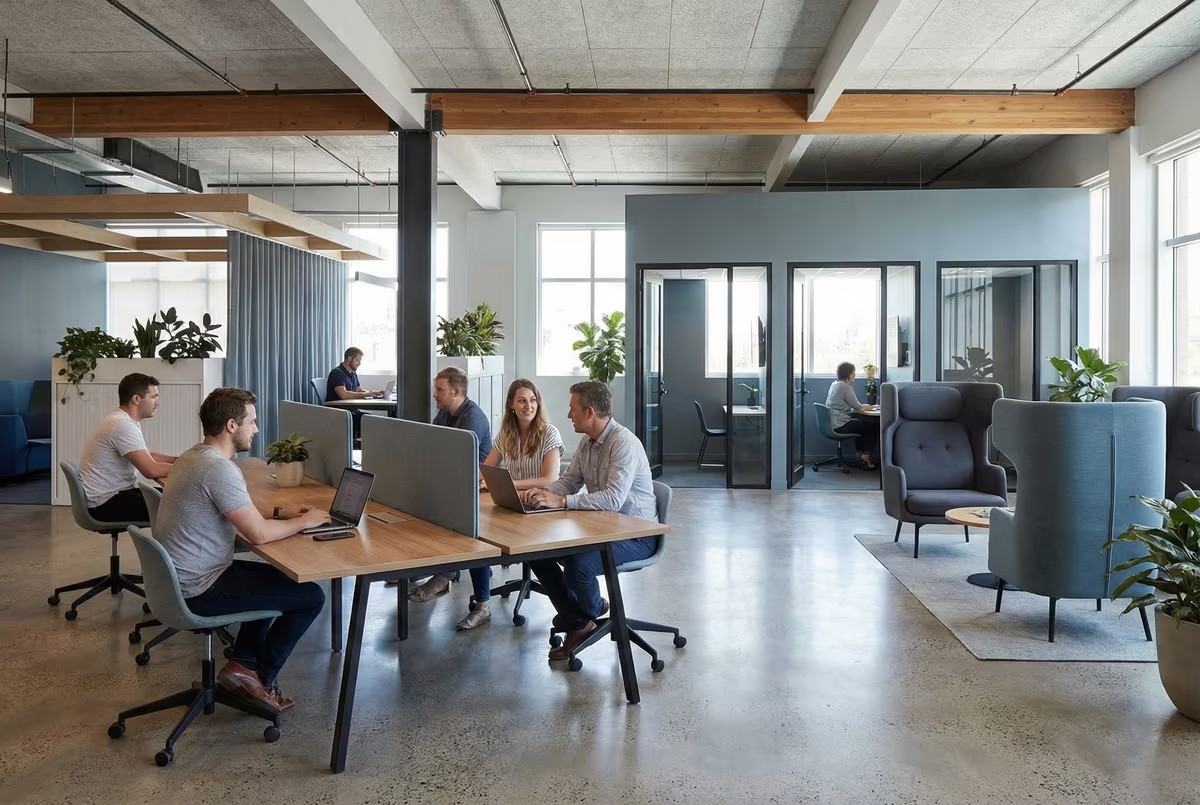
Agile office supporting several work modes at once, with shared desks, high-back lounge chairs and enclosed focus rooms

Office layout influences far more than appearance. It shapes how employees move throughout the workplace, where conversations happen and how easily teams collaborate. A carefully designed workspace helps employees transition naturally between different tasks while reducing unnecessary disruption.

Rather than viewing offices as rows of identical desks, many businesses now design environments around how people actually work. Different tasks require different settings, and successful workplaces accommodate this variety through flexible planning and purposeful zoning.

Designing for Different Work Modes

Employees rarely spend an entire day performing one type of activity. A typical day may include focused analysis, collaborative discussions, online meetings, informal conversations and regular breaks.

Providing suitable environments for each activity allows individuals to remain productive without compromising colleagues. Flexible work arrangements, quiet spaces and collaborative areas all contribute to a healthier balance between concentration and interaction, while helping employees maintain a healthy work life balance.

Making Better Use of Available Space

Productivity is not determined by office size but by how effectively available space is used. Poorly planned offices often become overcrowded in some areas while leaving others underused.

Regular reviews of workspace usage help organisations identify opportunities for workspace optimisation. By aligning layouts with real working patterns, businesses create a happier work environment where employees can work efficiently, collaborate naturally and contribute more effectively to long-term business success.

Positive Company Culture and Leadership Factors That Influence Productivity

While office design plays an important role, the culture of an organisation ultimately determines whether employees thrive. A beautifully designed workspace will only achieve so much if people feel unsupported, overworked or disconnected from the wider business.

Positive company culture is built through consistent leadership behaviours, fair treatment, clear communication and genuine concern for employee wellbeing. When leaders actively support their teams, encourage collaboration and demonstrate trust, employees become more engaged and committed to achieving shared goals.

The most productive organisations recognise that employee morale and workplace productivity are closely linked. Employees who feel appreciated are more willing to contribute ideas, support colleagues and take ownership of their responsibilities. Over time, this creates a supportive community where individuals work together towards common objectives rather than simply completing isolated tasks.

Leaders should also recognise that productivity is not about keeping people constantly busy. Sustainable performance comes from creating an environment where employees feel comfortable asking for support, suggesting improvements and maintaining a healthy work life balance.

Recognition, Feedback and Employee Engagement

One of the simplest ways to encourage employees is to recognise good work consistently. Recognition does not always require financial rewards. Regular feedback, sincere praise and showing appreciation for individual contributions all help people feel valued.

Constructive feedback also enables employees to develop professionally. Training courses and workshops can help employees expand their knowledge and expertise. Investing in employee training is a high-return investment for productivity. Rather than focusing solely on mistakes, productive leaders help individuals focus on their strengths while identifying opportunities for improvement. Small gestures – whether that's acknowledging a successful project, celebrating achievements during meetings or organising the occasional team lunch – reinforce a happy work environment where employees remain engaged and motivated.

Healthy Work Habits, Work Life Balance, and Breaks

Even the most committed employees cannot maintain peak concentration throughout the day. Regular breaks are essential for preventing fatigue, improving decision-making and maintaining long-term productivity.

Healthy work habits include realistic workloads, opportunities to move away from the desk, flexible schedules where appropriate and encouragement to maintain a healthy work life balance outside the office. Organisations that allow employees to recharge and provide mental health support are more likely to prevent burnout and maintain consistently high performance over time. Employee Assistance Programmes (EAPs) also provide confidential support for employees facing personal or work-related challenges.

Supporting employees' relationships with family and loved ones also contributes to employee well being. Businesses that respect personal commitments often see stronger loyalty, improved job satisfaction and reduced staff turnover, and creating a stigma-free environment for discussing mental health concerns is vital for employee wellbeing.

Psychological Safety and Team Trust

People perform at their best when they feel safe expressing opinions, asking questions and admitting mistakes without fear of criticism.

Psychological safety encourages innovation because employees become more willing to suggest improvements, challenge assumptions and solve problems collaboratively. Trust between colleagues also strengthens teamwork, helping teams resolve disagreements constructively rather than avoiding difficult conversations.

Creating this atmosphere requires leaders to listen carefully, respond respectfully and demonstrate that every contribution matters, with an individuals focus on recognising each person’s development and contribution. Over time, employees feel comfortable sharing ideas that can improve both workplace productivity and wider business performance.

Common Barriers to a Productive Workplace Environment

Most businesses want to improve productivity, yet many unknowingly create obstacles that reduce performance. These barriers rarely stem from a single issue. Instead, they develop gradually through poor workplace design, ineffective communication and working practices that no longer match how people actually work.

Fortunately, many of these challenges can be addressed through relatively straightforward changes. By understanding where friction occurs, organisations can create environments that better support both individual performance and collaborative working.

Constant Interruptions and Distractions

Frequent interruptions are one of the biggest causes of low productivity. Every unexpected conversation, notification or background discussion forces employees to refocus, reducing both efficiency and the quality of their work.

Open-plan offices often make this worse when every activity takes place in the same shared environment. Without quiet zones or dedicated areas for focused work, employees struggle to concentrate on demanding tasks.

Creating appropriate spaces for different activities helps minimise interruptions while still supporting collaboration when it is genuinely needed.

Poor Communication and Unclear Priorities

Even talented teams become less productive when communication is inconsistent or priorities continually change.

Employees waste valuable time seeking clarification, duplicating work or waiting for decisions when expectations are unclear. Regular updates, transparent communication and clearly defined responsibilities reduce uncertainty and enable teams to work with greater confidence.

Leaders should also ensure that communication channels remain manageable. Too many meetings, emails or messaging platforms can become just as disruptive as too little communication.

Lack of Privacy and Flexible Work Settings

Not every conversation should happen in the middle of a busy office. Confidential discussions, online meetings and detailed analytical work all require appropriate levels of privacy.

Employees who constantly search for somewhere quiet become frustrated and lose valuable working time. Likewise, businesses that fail to provide flexible work arrangements may find it harder to accommodate different working styles and individual preferences.

Providing a range of workspace options enables employees to choose the environment that best suits the task they are completing, resulting in higher productivity and greater employee satisfaction.

How to Build a More Productive Workplace Environment

Creating a productive work environment does not require a complete office redesign overnight. The greatest improvements usually come from understanding how people work today and making targeted changes that remove unnecessary obstacles.

Successful organisations continually review both their physical environment and their workplace culture, recognising that employee needs evolve over time. By combining thoughtful planning with regular employee feedback, businesses can create workplaces that support both immediate performance and long-term success.

Bear in mind that productivity flows from well-being. When employees feel secure, happy and healthy, they are likely to perform better. According to recent research from the Gallup State of the Global Workplace report, organisations with highly engaged employees consistently achieve stronger performance and better business outcomes. Similarly, the CIPD (The Chartered Institute of Personnel and Development) in the UK highlights the link between employee wellbeing, engagement and enhanced employee performance.

{{fact-1}}

Review Space, Workflows and Employee Needs

The first step is understanding how employees actually spend their working day rather than relying on assumptions.

Observe where bottlenecks occur, identify spaces that remain underused and ask employees which aspects of the workplace help or hinder their productivity. These conversations often reveal practical improvements that require relatively modest investment while delivering significant benefits.

Create Zones That Match Real Tasks

Different activities require different environments. Focused work, collaborative projects, video calls, informal conversations and breaks all benefit from dedicated spaces.

Rather than expecting one workspace to support every activity, organisations should create clearly defined zones that reflect real working patterns. This flexibility enables employees to move naturally between different tasks while maintaining concentration and collaboration throughout the day. Shared areas can also host team building activities that strengthen relationships and support smoother collaboration across these zones.

Invest in Solutions That Support Performance

Long-term productivity comes from investing in solutions that improve both comfort and effectiveness.

This may include better ergonomics, improved lighting, acoustic treatments or flexible workplace solutions that provide privacy without sacrificing collaboration. The most successful investments are those that continue supporting employees as businesses grow and working practices evolve.

Ultimately, creating a productive work environment is about enabling people to perform at their best every day.

{{summary}}

SHARE THIS ARTICLE
Copy link
Copy link
Twitter
Twitter
LinkedIn
LinkedIn
Key Takeaways
  • A productive workplace environment combines physical workspace design, company culture, communication and employee wellbeing.
  • Different types of work require different spaces, including quiet areas for focused work and collaborative spaces for teamwork.
  • Trust, autonomy and recognition encourage employees to perform at their best while improving employee satisfaction.
  • Thoughtful office layouts reduce distractions, improve workplace productivity and help teams work more effectively.
  • Long-term productivity comes from balancing workplace design with healthy work habits and supportive leadership.
63%
Employees who say they have no quiet area available for focused work. Source: Oxford Economics & Plantronics, When the Walls Come Down, 2018
1%
Employees able to concentrate in an open-plan office without extra effort, down from 20% in 2015. Source: Oxford Economics & Plantronics, When the Walls Come Down, 2018
3-18 m
Distraction distance in open-plan offices, the radius within which speech remains intelligible enough to break concentration. Source: Hongisto et al., Frontiers in Psychology, 2017
Fact-checked finding
In a study of 349 occupants across 28 open-plan offices, lack of speech privacy was a bigger driver of acoustic dissatisfaction than noise disturbance itself, contributing 25% more to overall dissatisfaction.
Source:
Yadav et al., Journal of the Acoustical Society of America, 2025
Fact-checked finding
Source:
Conclusion

A productive work environment is created through the combination of thoughtful workspace design, supportive leadership and a culture that genuinely values people.

When businesses provide appropriate environments for focused work, collaboration and wellbeing, employees become more engaged, motivated and productive. Equally, when communication is clear, recognition is consistent and leaders promote trust, teams perform more effectively and contribute more positively to organisational success.

There is no single solution that transforms productivity overnight. Instead, sustainable improvements come from continually refining both the physical workplace and the employee experience. Organisations that invest in both create workplaces where people enjoy coming to work, perform at their highest level and help the business succeed over the long term.

Find a showroom near you
Visit one of our showrooms across the UK and Europe and compare booth models in person.
What to look for
  • A productive workplace environment combines physical workspace design, company culture, communication and employee wellbeing.
  • Different types of work require different spaces, including quiet areas for focused work and collaborative spaces for teamwork.
  • Trust, autonomy and recognition encourage employees to perform at their best while improving employee satisfaction.
  • Thoughtful office layouts reduce distractions, improve workplace productivity and help teams work more effectively.
  • Long-term productivity comes from balancing workplace design with healthy work habits and supportive leadership.
What to avoid
  • A productive workplace environment combines physical workspace design, company culture, communication and employee wellbeing.
  • Different types of work require different spaces, including quiet areas for focused work and collaborative spaces for teamwork.
  • Trust, autonomy and recognition encourage employees to perform at their best while improving employee satisfaction.
  • Thoughtful office layouts reduce distractions, improve workplace productivity and help teams work more effectively.
  • Long-term productivity comes from balancing workplace design with healthy work habits and supportive leadership.

FAQs (NBQs)

They’re a bit like FAQs, but we call them NBQs. No b*** questions. The questions you need to ask to make sure you aregetting value for money.

What is a productive workplace environment?

A productive work environment combines effective workspace design, supportive leadership, clear communication and employee wellbeing. It gives employees the tools, spaces and support they need to focus, collaborate effectively and consistently produce high-quality work while maintaining a healthy work life balance.

What are the most important features of a productive workplace environment?

The key features include open communication, supportive leadership, quiet areas for focused work, collaborative spaces, natural light, ergonomic furniture, clear expectations and a positive company culture where employees feel valued and motivated.

How does office design affect a productive workplace environment?

Office design influences concentration, collaboration and comfort. Providing appropriate meeting rooms, quiet working areas, private office spaces, flexible layouts and good acoustic control enables employees to choose the best environment for each task while reducing unnecessary distractions.

Why is noise control important in a productive workplace environment?

Excessive background noise interrupts concentration, increases stress and reduces productivity. Better acoustic comfort enables employees to focus for longer, communicate more effectively and complete demanding work without constant interruptions.

How can businesses improve a productive workplace environment?

Businesses should regularly review employee needs, improve workspace planning, encourage open communication, provide appropriate work settings, support employee wellbeing and invest in workplace solutions that enhance both productivity and comfort.

Can a productive workplace environment improve employee wellbeing?

Yes. A supportive workplace that promotes autonomy, recognition, healthy working practices and comfortable workspaces reduces stress, improves employee wellbeing and job satisfaction, while helping employees remain engaged and productive over the long term.

Sometimes you just have to get away from the pressure. That's what breakout areas are for – and with the increasing noise and pressure of the modern workplace, it's no wonder they're so popular.

To give it a formal definition, a breakout area is a dedicated part of the office designed for informal, flexible use. Unlike rows of desks or enclosed meeting rooms, a breakout space offers employees somewhere to step away from their main workspace, relax, talk, and think differently.

In many offices, especially in the modern workplace, the traditional layout of desks and formal meeting rooms no longer suits the full range of tasks people perform during the working day. At Persy Booths, we see the importance of this every time we visit our customers. Employees need places to focus, collaborate, reset, and share ideas. That is why office breakout areas have become such an important feature of contemporary office space.

A well designed breakout area supports productivity, employee wellbeing and creativity. It helps teams feel comfortable, stress free and engaged. When planned properly, it can transform the overall workplace environment and reflect the style and culture of the business.

Key Takeaways

  • A breakout area is a flexible space within the office designed for relaxation, informal meetings and collaboration, separate from desks and formal meeting rooms.
  • In the modern workplace, breakout spaces help employees move between focused work, teamwork and short breaks more naturally during the working day.
  • Well planned office breakout areas support employee wellbeing, mental health and productivity by offering comfortable seating, natural light and a change of scene.
  • Flexible breakout spaces encourage creativity, informal learning and stronger team relationships without the need to book meeting rooms.
  • Good design matters: layout, soft seating, modular furniture, lighting and acoustics all play a key role in creating a well designed breakout area.
  • In open plan offices, breakout areas should be supported by acoustic solutions such as office pods and office noise reduction solutions to protect focused work.
  • When thoughtfully integrated into the wider office space, breakout areas help create a more inviting, productive and balanced work environment.

Breakout Area Meaning and Purpose in the Office

The term “office breakout area” simply refers to a shared space where employees can take a break from desks and spend time in a more relaxed setting. A "breakout room" is similar in meaning, although it can also refer to a semi-enclosed room used for small, informal meetings or quick catch-ups.

In everyday language, a breakout space is somewhere you can sit, speak freely, and work in a different way. It is usually easily accessible from the main workspace and does not require booking. The purpose is flexibility. People can use it for relaxation, short meetings, collaboration or quiet thinking.

In open plan offices, where large teams share the same office space, breakout areas provide much-needed variety. They give employees choice about where and how they work during the day, which is key to maintaining focus and motivation.

Open plan office breakout space with sofas and informal seating used for relaxed work and conversation

What Is a Breakout Area or Breakout Room?

So what is a breakout area or breakout room in practical terms?

It is a space designed with comfort and informality in mind. Unlike traditional meeting rooms, which often feature a boardroom table, screens and structured seating, breakout areas tend to include soft seating, sofas, chairs and sometimes high tables or benches.

The atmosphere is more inviting and flexible. Comfortable seating, relaxed rules and varied office furniture allow people to sit, rest, unwind or have quick informal meetings without the pressure of a formal setting. A breakout space may include bold colours, wood finishes, good quality lighting and even food or drink facilities.

The key difference is intent. Meeting rooms are structured and often booked in advance. A breakout area is suitable for spontaneous use, encouraging creativity and conversation without formality.

Team having an informal meeting in a breakout area with sofas and relaxed seating arrangement

Key Uses: Relaxation, Informal Meetings and Idea Generation

Office breakout areas serve multiple practical functions during the working day.

First, they support relaxation. A short break away from desks helps employees reset, protect mental health and return to focused work feeling refreshed. Even ten minutes in a lounge-style space can make a difference.

Second, they are ideal for informal meetings. Instead of booking meeting rooms for every quick discussion, team members can gather in a breakout space to speak openly and share updates. This flexible breakout spaces approach saves time and helps maintain productivity.

Third, breakout areas encourage idea generation. When employees move away from the main workspace and sit in a more relaxed setting, creativity often improves. The change of scene, natural light and inviting breakout furniture create a setting that suits brainstorming and collaboration.

Benefits of Office Breakout Areas for Employees and Teams

The importance of office breakout areas goes beyond aesthetics. They contribute directly to a healthier and more productive workplace.

A well designed breakout area supports employee wellbeing, strengthens team relationships and improves overall engagement. In many offices, the presence of flexible breakout spaces signals a shift in how business leaders think about work. It shows recognition that employees are not machines tied to desks, but people who need variety and comfort.

Wellbeing, Healthy Work and Reduced Stress

Breakout areas provide a valuable change of scene. Stepping away from screens and the main workspace gives employees permission to take a break and relax.

This small shift can have a positive impact on mental health. When people feel comfortable in their office environment, they are more likely to feel stress free and supported. Soft, comfortable seating and access to natural light both contribute to a healthier workspace. Relaxation does not mean losing productivity. On the contrary, short breaks in a breakout area can improve focus and make the working day more sustainable. Employees who can unwind and reset are more likely to return to their desks feeling productive and engaged. Recent research from the World Green Building Council shows that thoughtfully designed office environments that prioritise wellbeing can measurably improve productivity and employee health.

Employee taking a short break in a breakout area with plants and natural light in an open office

Collaboration, Informal Learning and Employee Engagement

Breakout spaces are also powerful tools for collaboration.

In open office layouts, employees may hesitate to speak freely at desks due to office distractions or concerns about disturbing others. A breakout area offers a more suitable space to talk, share ideas and build relationships.

Informal learning often happens in these settings. Team members exchange insights, solve problems together and develop new ideas in a relaxed environment. Research from CBRE’s 2026 Workplace & Occupancy Benchmarking Program shows that a majority of employees cite collaboration and connection with colleagues as primary reasons they come into the office, underscoring the value of spaces that support spontaneous interactions.

This strengthens workplace culture and improves communication across the business. When employees have access to a perfect breakout space that feels inviting and practical, they are more likely to spend time together, strengthening bonds within the team. Over time, this contributes to higher engagement and a more positive workplace.

Designing Effective Breakout Spaces in Offices

Creating an effective breakout area requires careful planning. It is not simply about adding sofas to an office. The layout, furniture, lighting and acoustics must all suit how people actually use the space.

The goal is to create a versatile and flexible area that complements the main workspace without disrupting focused work nearby.

Layout, Soft Seating and Modular Furniture

Position the breakout space so it is easily accessible but clearly separated from desks. This visual and physical distinction helps employees switch modes from focused work to relaxation or collaboration.

Soft seating is essential. Sofas, chairs and comfortable seating options encourage people to sit back and unwind. Modular furniture is particularly useful, as it allows teams to reconfigure the space depending on the task. Modular solutions can be moved to accommodate small meetings, solo work or larger group discussions.

Incorporate high tables, benches and a range of seating types to suit different preferences. Some employees may prefer to sit upright at high tables, while others choose lounge-style sofas. Good quality lighting and access to natural light will make the breakout area more inviting.

Zoning for Quiet Time, Social Space and Games Rooms

In larger offices, it is helpful to create distinct zones within office breakout areas.

For example, one zone may be designed for quiet time, with comfortable seating and minimal distractions. Another may act as a social space with high tables and bold colours to encourage conversation. A third might function as a games room for team bonding and relaxation.

In open plan settings, breakout areas often sit alongside those focused work zones. This is often known as the concept of a collaborative workspace, with businesses exploring the shift from traditional layouts to a more adaptable model. These focused work zones allow teams to move easily between open collaboration and enclosed concentration as needed. However, to ensure that ambient noise from more "social" breakout spaces doesn't distract others, companies often turn to solutions such as a work boothprivate office pods and portable meeting rooms to protect focus while maintaining a flexible office space. These private booths vary mainly by size and function:

Open office layout showing breakout seating, collaborative zones, and quiet work areas

Breakout Areas, Office Acoustics and Noise Management

In open plan offices, breakout areas must be carefully integrated into the wider environment. Without proper planning, conversations and games can raise the overall office noise level and disrupt focused work.

Understanding the impact of an open office layout is crucial when designing breakout areas that suit different team needs.

Keeping Breakout Areas Comfortable Without Disturbing Others

To maintain balance, consider the location of the breakout area relative to desks and quiet zones. Position it away from the most focus-intensive parts of the office.

Use materials that absorb sound, such as upholstered furniture, wood finishes and soft surfaces. These practical choices help manage the office noise level and reduce distractions.

Employers should also explore office noise reduction solutions to ensure that breakout spaces do not negatively impact the wider workspace. In some cases, installing a white noise machine can help mask background conversations and maintain a productive environment.

Being aware of common office distractions allows businesses to create zones that suit different working styles.

Using Booths, Pods and Sound Solutions Around Breakout Spaces

To support both collaboration and focus, combine breakout areas with enclosed solutions.

A nearby soundproof phone booth or two person phone booth can give employees a private space for calls, while private office pods provide a suitable setting for deep, focused work. A work booth positioned close to the breakout area can offer quick transitions between relaxation and concentration.

Monitoring usage with a room occupancy sensor helps businesses understand how breakout spaces and booths are used throughout the working day. This practical data supports better space planning over time.

When designed thoughtfully, breakout spaces and acoustic solutions work together to create a balanced open office that supports both collaboration and productivity.

Person taking a call inside a soundproof office booth near an open workspace

Real-world Office Breakout Area Examples and Ideas

Breakout areas can reflect company culture and business priorities. The design should suit the style, team structure and values of the organisation.

Relaxed Lounge-style Breakout Areas

A lounge-style breakout area might include sofas, soft seating, low tables and plants. Warm lighting, wood finishes and comfortable chairs create a calm, inviting feel.

This type of space is ideal for relaxation, informal chats and solo breaks. Employees can sit, rest and unwind in a calm environment that supports mental health and wellbeing.

Activity and Games-focused Breakout Spaces

Some businesses choose a more energetic approach. A games room style breakout space might feature high tables, benches and activity zones.

This example works well for creative teams that benefit from movement and social interaction. The key is to maintain a respectful environment where fun supports, rather than undermines, productivity.

Multi-purpose Breakout Corners Next to Collaborative Workspaces

In smaller offices, a compact breakout corner placed next to a collaborative workspace can act as an overflow area before or after meetings.

These flexible breakout spaces may include modular furniture, screens for quick presentations and comfortable seating for small groups – all useful elements when planning coworking ideas. Positioned near meeting rooms but distinct from desks, they provide a versatile solution for quick huddles.

Are you ready to break out?

Given all the advantages, it's little wonder that breakout areas are found in most modern offices. But, if they are not already in place, companies still have to find the budget to do it.

The good news is that it does not need to be expensive. We're proud of the fact that Persy Booths, for example, provide high-quality soundproof booths without a hefty price tag (especially since we sell direct and cut out the reseller markup). Also bear in mind that many of the other elements that go into making these zones both desirable and effective are inexpensive.

The truth is that employees appreciate them and most companies can easily justify them and benefit from them – break out areas do not have to break the bank.

Workplace
All articles
Types of Workplaces: A Guide to Modern Work Environments
July 21, 2026
Employee distracted by phone while work screens with charts and data sit unattended in the background, showing divided attention and reduced focus
Workplace
All articles
What Factors Lead to Low Work Effort: Causes, Warning Signs and Solutions
July 17, 2026
Person on a video call in an open plan office workspace
Workplace
All articles
Disadvantages of Instant Messaging in the Workplace: Productivity, Communication and Privacy Challenges
June 16, 2026
Two Persy Booths office pods integrated into a modern open plan office with desks and chairs
Workplace
All articles
Office Furniture Ideas: Practical Setups for Home and Small Spaces
May 12, 2026