The world would be a noisy place without soundproof insulation. It's an essential way of reducing noise and improving comfort in residential and commercial buildings. By installing acoustic insulation materials in walls, floors and ceilings, you can reduce noise transmission, control sound vibrations, and improve sound quality. Whether dealing with noisy neighbours, outside noise, or busy office spaces, the right sound insulation approach improves the acoustic environment.
At Persy Booths, we talk about soundproofing all the time because our customers want the best possible working environment for their staff, and their offices often combine structural insulation with flexible solutions like our office pods. So let's dive in and find out what soundproof insulation is, why offices need it, and how it works.
{{key-takeaways}}
{{stats-1}}
What Is Soundproof Insulation?

Soundproof insulation refers to materials and construction methods used to reduce noise transfer between spaces. It helps control noise transmission through walls, ceilings and floors. It is widely used in commercial buildings and homes to improve comfort and reduce unwanted noise.
Acoustic insulation works alongside it. Soundproof acoustic insulation refers to specialised materials and systems designed to block sound transmission – it is not soundproofing by itself but can help create a soundproof system when combined with high mass materials and decoupling devices. While one approach blocks sound, acoustic insulation materials improve sound absorption and reduce echo.
Typical uses include:
- Wall sound insulation in stud wall systems
- Acoustic floor insulation to reduce impact noise
- Ceiling systems to manage airborne noise
- Solutions for music rooms and office spaces
Acoustic insulation materials come in different materials such as slabs, rolls, foam, partition rolls, and underlays, and are available in different thicknesses (from 25mm to 100mm) to suit various wall structures.
How Soundproof Insulation Works
Sound travels as sound waves through air and building materials. These waves create sound vibrations that pass between rooms. Insulation reduces this by:
- Adding density to block noise
- Using fibrous materials to absorb sound waves
- Limiting vibration transfer
- Incorporating high mass materials to effectively block sound transmission
-
This reduces airborne noise and improves acoustic performance. Combining different materials and high mass also helps in reducing reverberation within wall cavities, further enhancing soundproofing effectiveness.
Soundproof Insulation vs Acoustic Insulation
Soundproof insulation blocks sound between spaces, while acoustic insulation improves sound quality within a room.
If you need to reduce noise from party walls or neighbours, blocking sound is key. Soundproofing solutions typically involve a soundproofing system that combines acoustic insulation, high mass materials, and decoupling techniques for maximum effectiveness. If you want to reduce echo, sound absorption is more important. For more detail, see our article on soundproofing vs sound absorbing.
Why Soundproof Insulation Matters in Modern Buildings
Modern construction often allows more noise to travel between spaces. Lightweight materials and open layouts increase exposure to unwanted noise. To address this, acoustic insulation solutions tailored to different spaces are essential for effectively preventing sound transmission and disturbances. Effective acoustic insulation helps reduce noise transmission and improve comfort.
Benefits include:
- Reduced noise levels in homes and office spaces
- Improved privacy in separating walls
- Better sound quality in shared environments
- Lower impact of noise pollution
In the workplace, this can make a big difference not just to productivity, but also to how people feel. According to the World Health Organization, long-term exposure to noise pollution affects health and wellbeing.
Improving Comfort in Homes
Homes are affected by airborne noise, outside noise, and internal activity. Sound insulation for walls and floors helps:
- Reduce airborne noise
- Limit noise from neighbours
- Improve comfort in shared buildings
- Use acoustic wall insulation to reduce noise transmission between rooms
- Insulate separating floors to limit noise transfer between levels
This is particularly important in properties with brick wall or stud wall construction.
Enhancing Focus in Offices and Workspaces
In office spaces, noise affects productivity. Acoustic insulation reduces distractions and improves communication. High-performance acoustic insulation materials are especially effective in office environments, helping workers to focus in open-plan environments. Employers who wish to attract and retain the best staff look to make their offices a comfortable and productive environment – and one the most fundamental requirements is to maintain acceptable noise levels in the workplace.
Types of Soundproof Insulation Materials
Different acoustic insulation materials reduce noise in different ways. There is a wide acoustic insulation range and a variety of acoustic insulation products available for different applications, such as soundproofing walls, floors, and partitions. Choosing the right insulation materials depends on the type of noise and the building structure.
Mineral Wool and Acoustic Slabs
Acoustic mineral wool is widely used for sound insulation, helping absorb sound waves and reduce airborne noise. Benefits include:
- Strong sound absorption
- Fire resistance
- Suitable for stud wall systems
Rockwool acoustic insulation is commonly used in commercial buildings and homes.
Fibreglass Insulation
Fibreglass insulation is a cost-effective sound insulation material, which reduces airborne noise by trapping sound waves. Advantages include:
- Easy installation
- Good performance in walls and ceilings
- Widely available
It is often used for wall sound insulation.
Acoustic Foam and Panels
Foam panels improve sound absorption and reduce reverberation. They help:
- Improve sound quality
- Reduce echo
- Control sound within a space
These are often used in music studios and office spaces as part of sound deadening insulation.
Mass Loaded Vinyl and High-Density Barriers
Dense materials block noise effectively. High mass materials are essential for blocking sound transmission, as their density and weight significantly reduce the passage of sound waves between spaces. They help reduce noise transmission and improve performance.
They are often combined with acoustic insulation boards for better results. The ReductoClip System can also be used, as it decouples the original wall structure to create a room within a room and is designed to achieve high levels of acoustic insulation and soundproofing.
If you want to dig deeper into the science of acoustics, the UK Institute of Acoustics is a helpful resource.
Where Soundproof Insulation Is Used
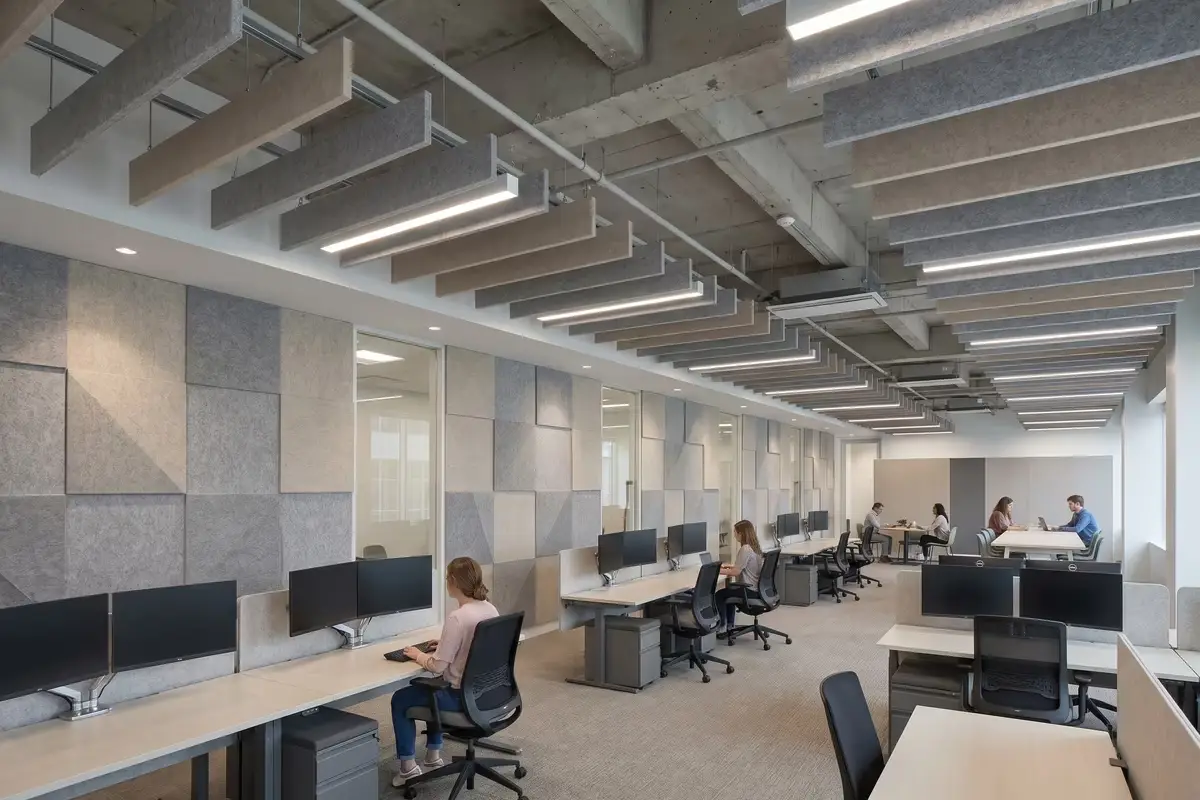
Sound insulation is applied across key areas of buildings to reduce noise and improve acoustic performance.
Walls and Partitions
Walls are a major source of noise transmission. Installing insulation in stud wall systems or separating walls helps:
- Reduce noise between rooms
- Improve privacy
- Limit unwanted noise
Ceilings and Floors
Floors and ceilings are key for controlling impact noise and sound vibrations. Solutions include:
- Acoustic floor insulation
- Acoustic underlay
- Ceiling insulation systems
These reduce impact noise and improve acoustic performance.
Offices and Meeting Areas
In office spaces, reducing noise improves focus and productivity. Sound insulation helps improve speech clarity and reduce distractions. Many workplaces also use solutions like the Persy One – a popular type of soundproof phone booth available from Persy Booths.
Alternative Solutions for Noise Control in Offices

Structural insulation is not always practical. Alternative solutions can provide effective noise reduction.
Acoustic Booths for Focus and Privacy
Acoustic booths create a controlled acoustic environment. They provide:
- Reduced noise levels
- Private areas for calls
- Improved focus
They are widely used in modern office spaces.
When Booths Work Better Than Structural Insulation
Booths are useful when:
- Layout flexibility is required
- Installation is not possible
- Noise is localised
They provide targeted solutions compared to building-wide insulation.
Tips for Choosing the Right Soundproof Insulation
Choosing the right approach depends on understanding the type of noise and the building structure.
Identify the Type of Noise
Noise can be airborne noise or impact noise – and understanding this helps select the right materials.
Consider Installation Location
Different areas require different solutions:
- Walls need dense insulation materials
- Floors need impact-resistant systems
- Ceilings combine absorption and isolation
Combine Insulation with Acoustic Design
The best results come from combining:
- Acoustic insulation materials
- Structural solutions
- Additional acoustic products
This improves sound absorption and reduces unwanted noise.
{{summary}}

- Soundproof insulation helps reduce noise by limiting how sound travels through walls, floors and ceilings
- Acoustic insulation materials absorb sound waves and improve acoustic performance
- Effective systems combine blocking sound and sound absorption
- Wall sound insulation and acoustic floor insulation deliver strong results
- Materials like acoustic mineral wool, fiberglass and insulation boards are widely used
- Offices often combine structural insulation with modular solutions, eg office pods
- Complete soundproofing is difficult, but strong systems can significantly reduce unwanted noise
- Effective solutions require the right combination of materials and expertise
- A technical team can provide guidance on selecting and installing soundproof insulation

Creating a quieter, more comfortable space starts with the right approach to soundproof insulation. By combining effective acoustic insulation materials with smart installation in walls, floors and ceilings, it is possible to significantly reduce noise and improve everyday comfort.
The key is understanding your specific noise problem, choosing the right materials, and applying them in the right locations. Whether the goal is to block unwanted noise between rooms, improve sound quality, or create a more peaceful environment, a well-designed solution makes a clear difference.
Ultimately, while no system can eliminate all noise completely, the right combination of sound insulation and acoustic design will create a noticeably quieter, more effective space.
- Soundproof insulation helps reduce noise by limiting how sound travels through walls, floors and ceilings
- Acoustic insulation materials absorb sound waves and improve acoustic performance
- Effective systems combine blocking sound and sound absorption
- Wall sound insulation and acoustic floor insulation deliver strong results
- Materials like acoustic mineral wool, fiberglass and insulation boards are widely used
- Offices often combine structural insulation with modular solutions, eg office pods
- Complete soundproofing is difficult, but strong systems can significantly reduce unwanted noise
- Effective solutions require the right combination of materials and expertise
- A technical team can provide guidance on selecting and installing soundproof insulation