Shopping for acoustic products? You'll often come across two acronyms, STC and NRC.
They can appear side by side on spec sheets, which makes them easy to mix up. So what does each one tell you?
To find out, we spoke to Dr Troy Bouman, an acoustics and vibration engineer with a PhD from Michigan Tech who has worked with our design team. Here's the simple version.
{{key-takeaways}}
The truth about sound ratings
There are two ways to deal with sound. You can block it, or you can absorb it. STC covers the first job and NRC covers the second.
STC: how much sound gets blocked
STC stands for Sound Transmission Class. It sums up how well a wall, door or window stops sound passing through, using lab results from lots of different pitches. The method comes from ASTM E413.
The higher the number, the more sound it blocks. "It's a term that is a single dB number that your general contractor or your construction person can use and say, okay, this window has an STC rating of this," Troy explains.
So a window at STC 56 beats a window at STC 45. Easy.
There's a catch, though. Low, rumbling sounds are always harder to stop. "Everything performs worse at low frequency, and the STC curve does account for that," says Troy. STC was built around everyday sounds such as speech, radio and TV, so it says less about machinery or music.
NRC: how much sound gets soaked up
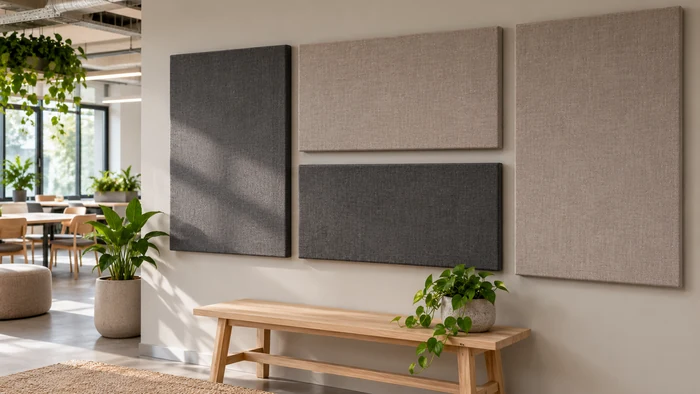
NRC stands for Noise Reduction Coefficient. It tells you how much sound a surface absorbs, so less of it bounces back into the room.
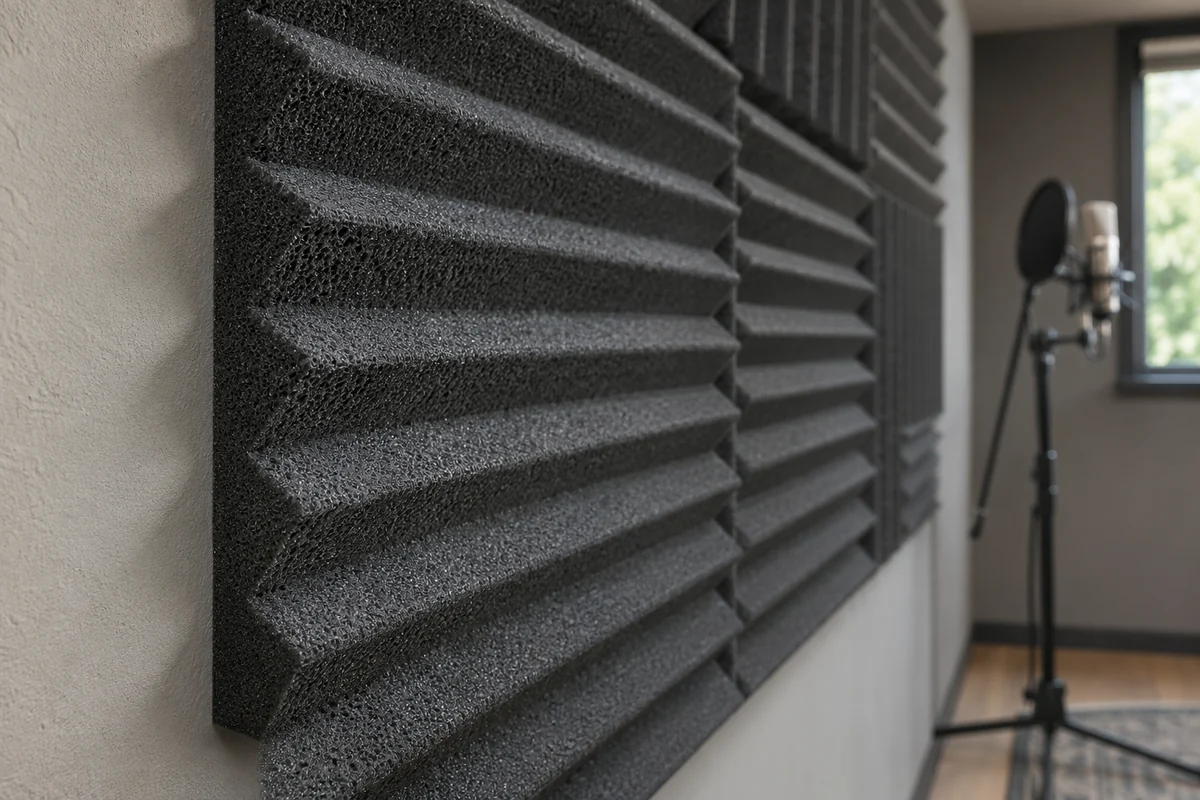
The scale runs from 0 to about 1. Close to 0 means the surface reflects nearly everything, like glass. Close to 1 means it absorbs nearly everything, like thick acoustic foam.
So where does the sound go? "Absorption foam works by converting acoustic energy to thermal energy through resistance in the foam," says Troy. In other words, good foam turns sound into a tiny bit of heat.
Blocking and absorbing need different things
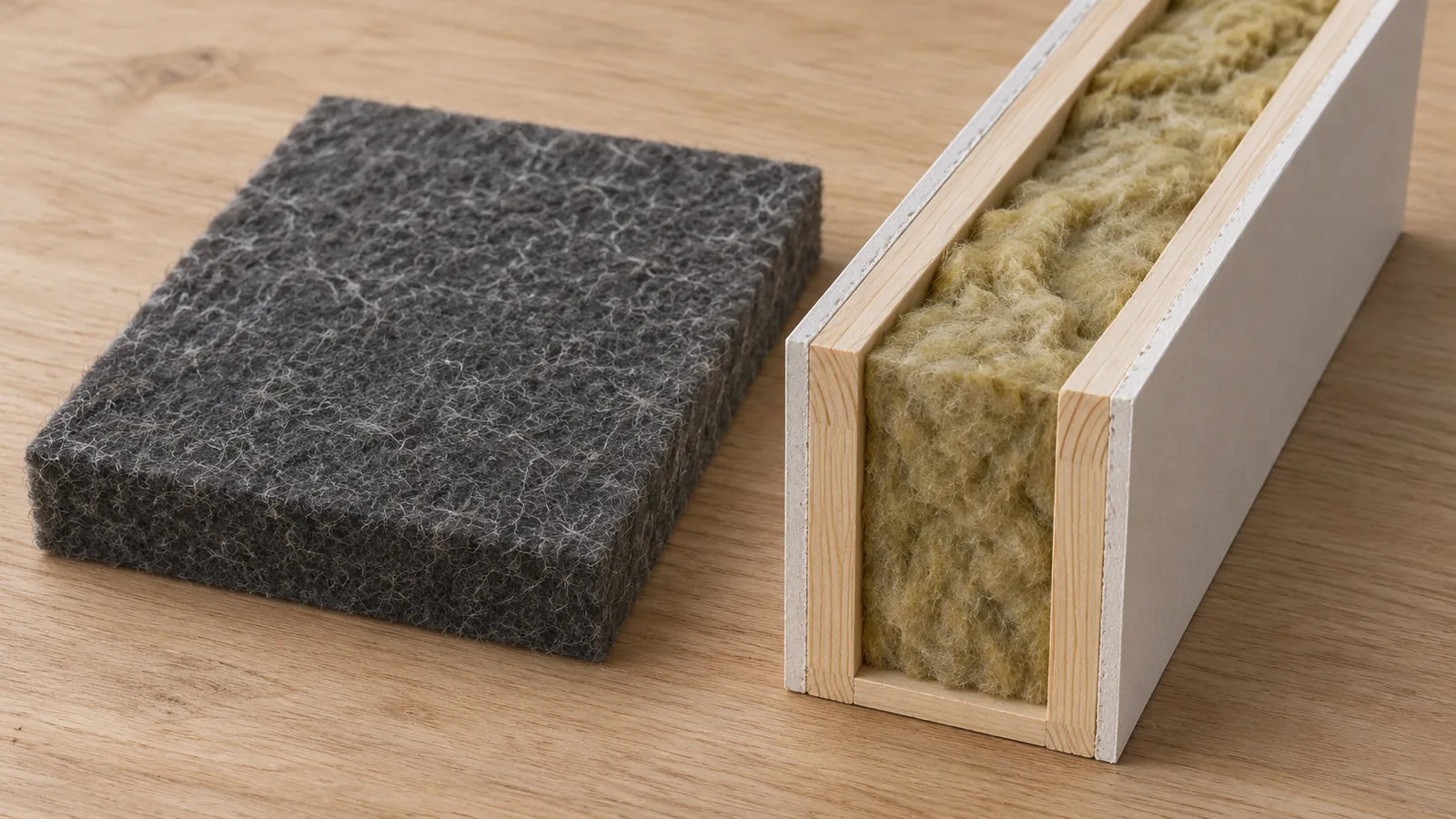
Troy sums it up in two lines. "If you're thinking about blocking sound, it's mass," says Troy. "If you're thinking about absorbing sound, it's the thickness of the material."
Heavier materials push STC up. Thicker absorbing layers push NRC up.
{{key-truths}}
Why a booth needs both

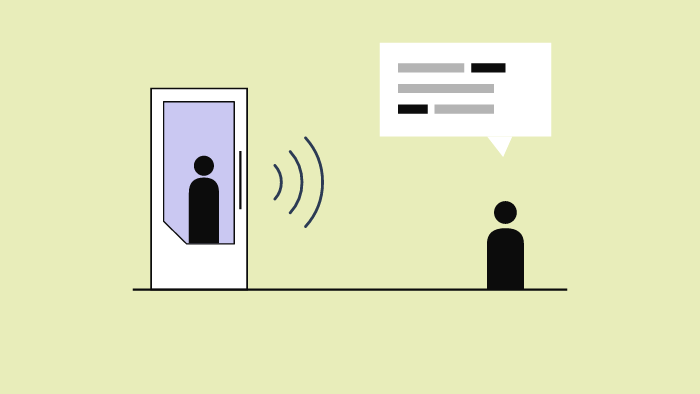
Imagine someone talking inside a booth. Strong walls alone would trap the sound, so the inside would stay loud and echoey. "We could just block it, but that would make the sound level inside the booth very loud," says Troy.
Lining the booth with absorbing material brings the level inside down. That also means the walls have less sound left to block.
That's how we build our office pods. Every model combines 8 cm walls with five layers of soundproofing, including recycled PET felt.
- Persy One, a soundproof phone booth for calls
- Persy Work, a Work booth for deep focus
- Persy Two, a 2 person meeting pod for 1:1s
- Persy Four, a 4 person meeting pod for team chats
One more tip. STC and NRC describe materials and walls. For a finished booth, look for a result under ISO 23351-1, which tests the whole enclosure.
What to look for
- STC figures for walls, doors and glass
- NRC figures for panels and linings inside
- A thick absorbing layer inside the booth
- A test result for the complete booth
What to avoid
- Comparing an NRC figure with an STC figure
- Judging a whole booth by one panel's rating
- Expecting absorbing panels to block sound on their own
{{summary}}

- STC rates how well a wall, door or window blocks sound.
- NRC rates how well a surface soaks sound up.
- Blocking needs mass. Absorbing needs thickness.
- A good booth needs both.

STC tells you how much sound a barrier stops. NRC tells you how much sound a surface soaks up. One depends on mass, the other on thickness, and a well-built booth uses both.
High STC keeps sound in. High NRC stops it bouncing around.
- STC rates how well a wall, door or window blocks sound.
- NRC rates how well a surface soaks sound up.
- Blocking needs mass. Absorbing needs thickness.
- A good booth needs both.
- STC rates how well a wall, door or window blocks sound.
- NRC rates how well a surface soaks sound up.
- Blocking needs mass. Absorbing needs thickness.
- A good booth needs both.