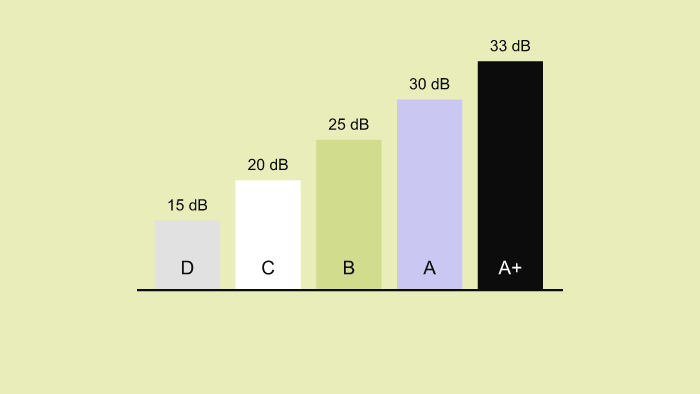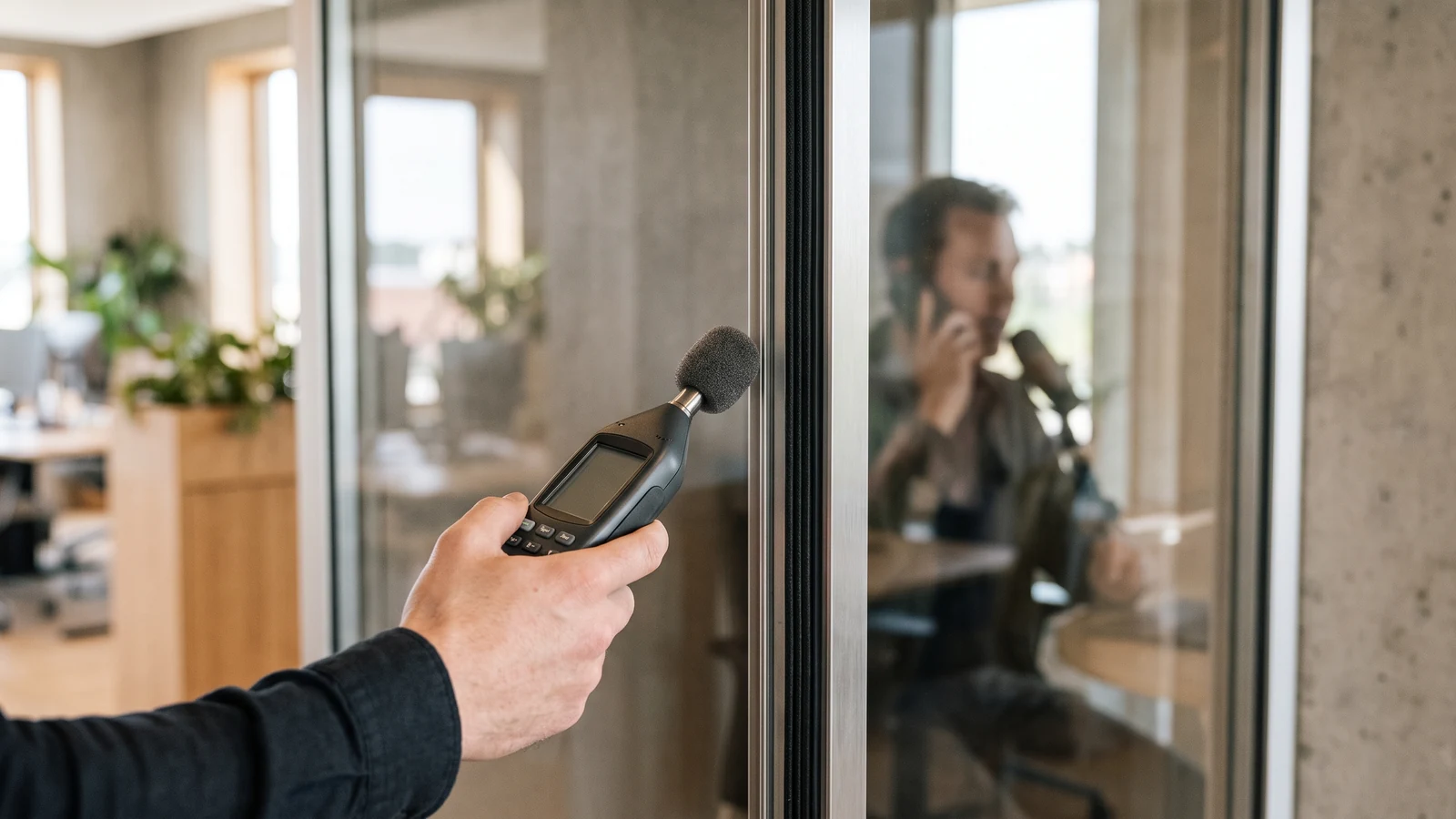
Every booth comes with a number. 28 dB. 30 dB. Class A. Class B.
Those figures look precise, so comparing booths should be easy. Pick the biggest number and you're done, right?
Not quite. So we asked an expert. Dr Troy Bouman is an acoustics and vibration engineer with a PhD from Michigan Tech, and he has worked with our design team on how our office pods handle sound. Here's what he told us.
{{key-takeaways}}
The truth about acoustic ratings
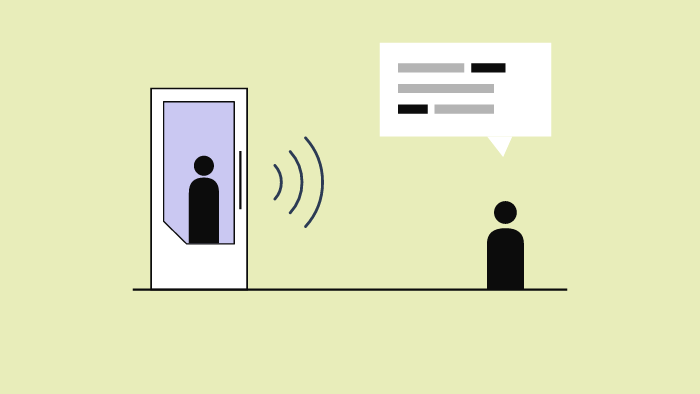
In the lab, a booth is tested across lots of pitches, from deep rumble to high chatter. Those results then get boiled down to one dB figure and a letter class, often under ISO 23351-1.
That's handy for comparing booths. It also hides a lot.
"In general, they're reasonable assumptions," says Troy, "but it can drive different levels of performance, where you have a booth that's rated as an A and a booth that's rated as a B, and the B actually might perform better for a certain use case, depending on what exactly the frequency content is."
Small differences are hard to hear
Here's something most buyers don't know. According to Troy's rules of thumb, you need:
- about 3 dB to notice any difference
- about 6 dB for a clear difference
- roughly 10 dB for something to sound twice as loud
So 28 dB versus 30 dB? Most people won't hear it.
Perfect silence costs a fortune
No booth blocks every sound. "It's impossible to get to perfect sound stoppage, and the closer you get to that, the cost increases exponentially," says Troy.
That's why a good booth is built for the place it will live. Troy compares it to taking a minivan onto a racetrack. A minivan does its job brilliantly. It just wasn't built to race.
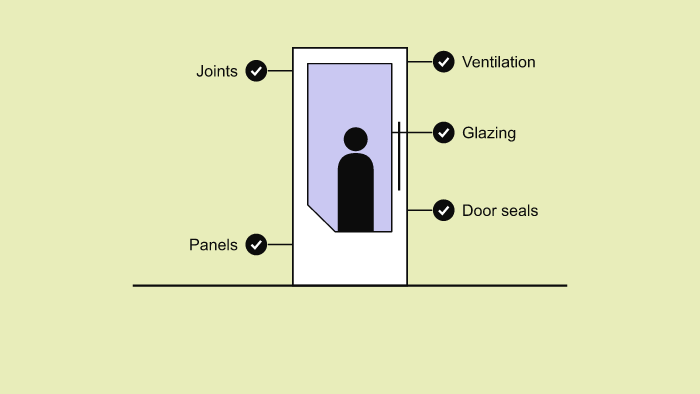
Sound always finds the weak spot
Thick walls are great. But if there's an easier way out, sound will take it.
"What happens in acoustics is sound finds the easiest path," Troy explains. "It's like electricity. It wants to go the easiest way."
The usual suspects are:
- The door. Troy calls it "one of the primary places that people can get it wrong."
- Gaps. "All you have to do is open that window a very small amount and a lot of acoustic energy comes in."
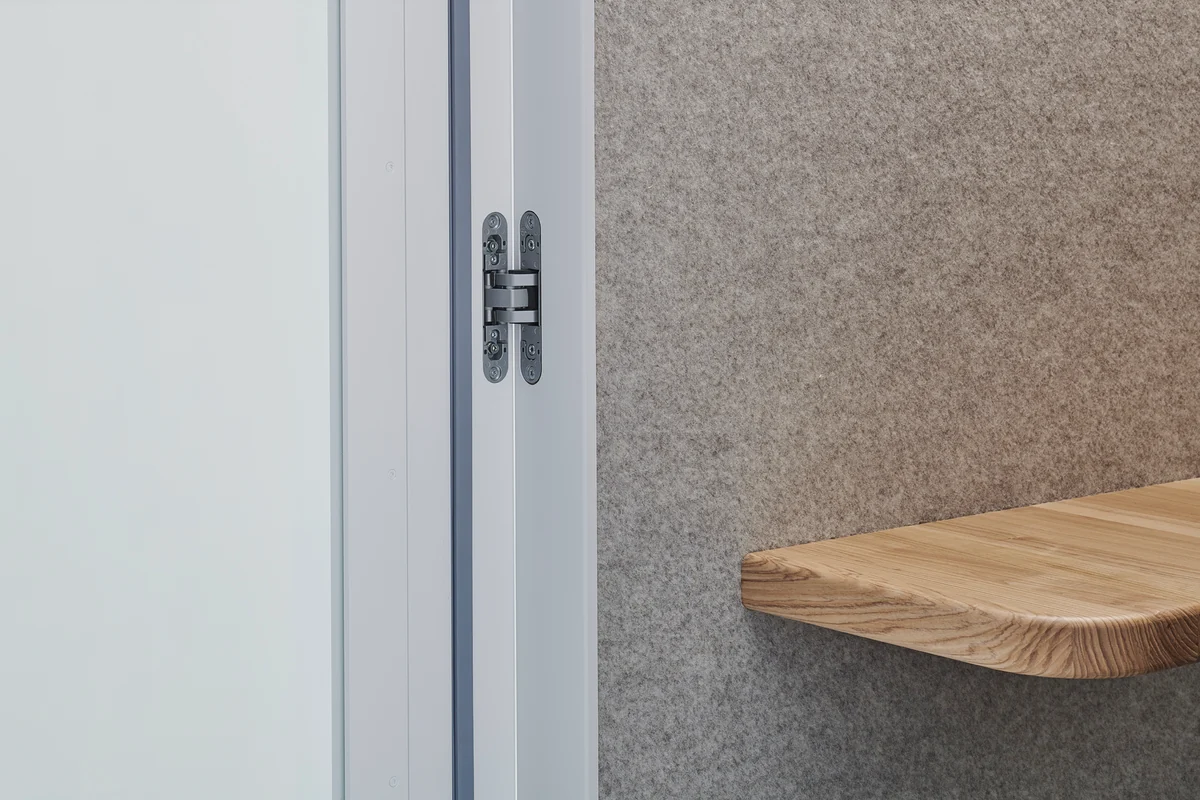
- Ventilation. Every air hole is also a hole for sound, so the air needs a winding, foam-lined route through the booth.
{{key-truths}}
What you can check yourself
No lab? No problem. Troy says a buyer "could look at how massive it is, because mass has a correlation with transmission loss, and they can look at how thick the foam is, and they can look at how well it's constructed to prevent gaps."
In other words, feel the weight of the panels, look at the foam and check the seals.
What to look for
- Heavy, solid panels and a solid door
- Thick sound-absorbing foam inside
- A tight seal all the way around the door
- Ventilation routed through lined channels
What to avoid
- Light, thin panels
- Visible gaps at the door or joints
- Picking a booth on a 1 or 2 dB difference alone
Try before you buy
Numbers only tell you so much. The best test is stepping inside.
Visit one of our showrooms and step inside each model.
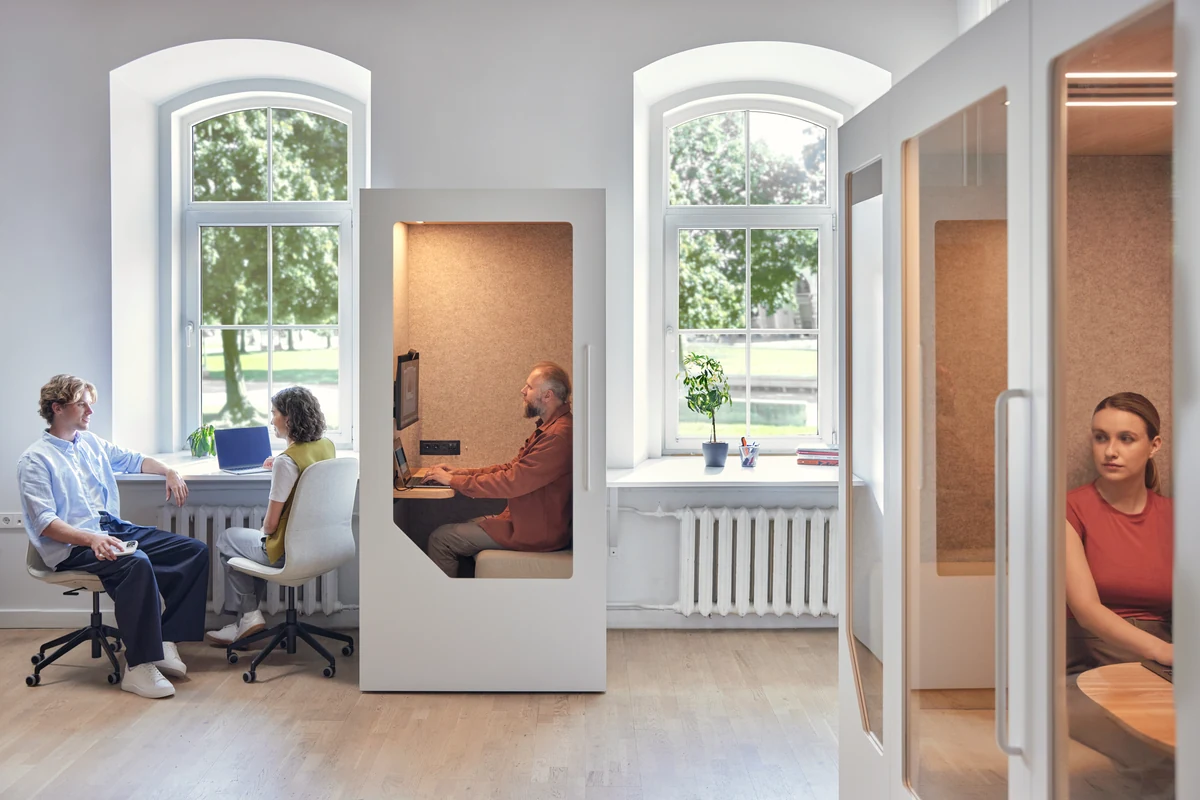
The Persy One soundproof phone booth reduces speech levels by 28 dB, ready for calls and video meetings.
The Persy Work booth shares that 28 dB result and adds a larger desk for long focus sessions.
Persy Two is a 2 person meeting pod rated at 25.6 dB, suited to 1:1s and interviews.
Persy Four is a 4 person meeting pod, also at 25.6 dB, for small team meetings.
Close the door, have a chat and hear the difference for yourself.
As for working with our team, Troy puts it simply. "One of the things I like about working with the Persy team is they are clear to me on what they're trying to achieve and what they're not trying to achieve."
{{summary}}

- A dB rating squeezes lots of test results into one number.
- A difference of 1 or 2 dB is hard to hear.
- Sound escapes through a booth's weakest spot, and that's often the door.
- Weight, foam thickness and tight seals are things you can check yourself.

A dB rating is a useful starting point, but it can't tell you everything. Small differences are hard to hear, sound always finds the weakest spot, and the build quality behind the number matters most.
A booth is only as quiet as its weakest gap.
- A dB rating squeezes lots of test results into one number.
- A difference of 1 or 2 dB is hard to hear.
- Sound escapes through a booth's weakest spot, and that's often the door.
- Weight, foam thickness and tight seals are things you can check yourself.
- A dB rating squeezes lots of test results into one number.
- A difference of 1 or 2 dB is hard to hear.
- Sound escapes through a booth's weakest spot, and that's often the door.
- Weight, foam thickness and tight seals are things you can check yourself.