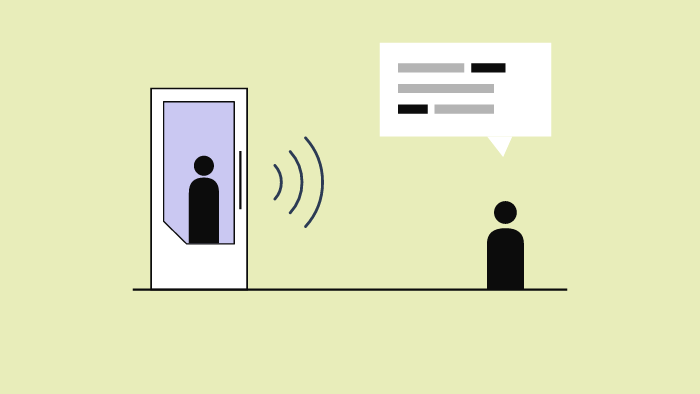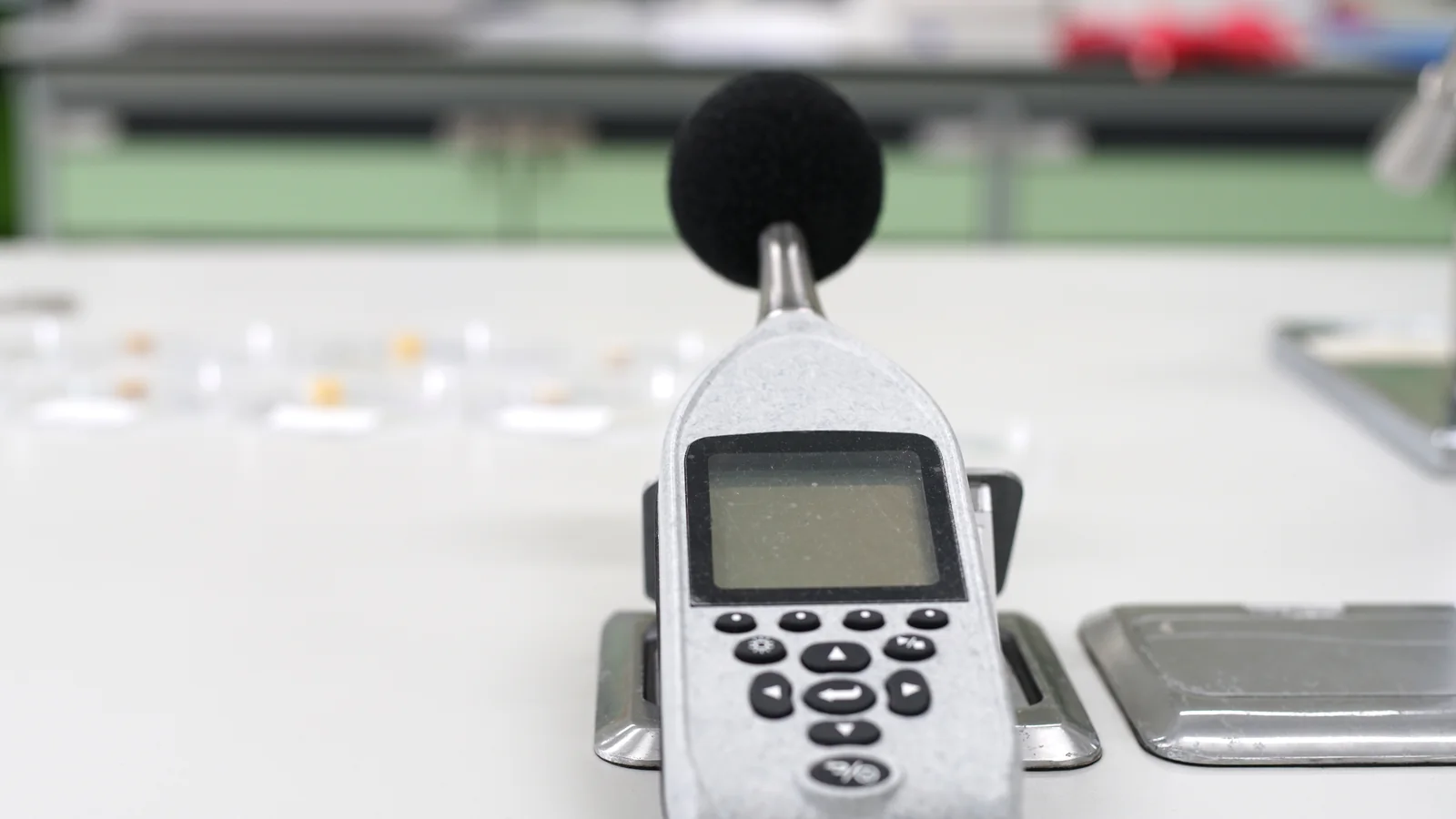
Picture a quiet office at 40 dB. Inside a booth nearby, someone is talking at a normal 65 dB. How much does that booth need to cut their voice so nobody outside can follow the conversation?
"We would need 25 decibels, 65 minus 40 is 25 decibels, a reduction from the booth," says Dr Troy Bouman, an acoustics and vibration engineer with a PhD from Michigan Tech who has worked with our design team.
That sum is the reason ISO 23351-1 exists. It gives every booth the same test, so you can see how much speech it really cuts. Here's how it works, and why 30 dB gets so much attention.
{{key-takeaways}}
What is ISO 23351-1?
Its job is consistency. "The point of ISO, the standard, is to define exactly to everyone how the number is to be calculated," Troy explains.
How is a booth tested?
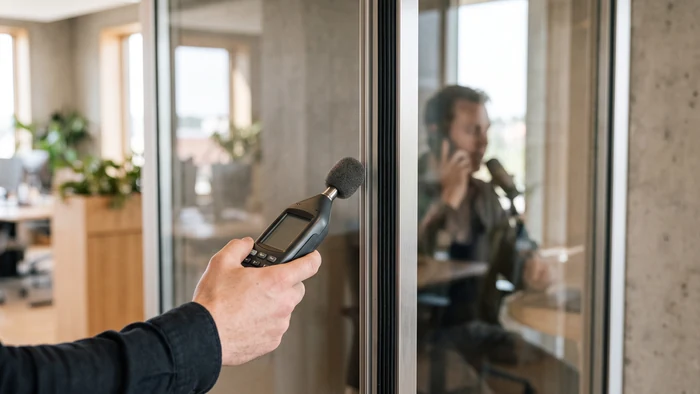
A sound source plays standard speech, once on its own and once from inside the booth. The lab compares the two across a range of pitches and boils the result down to one figure, the speech level reduction.
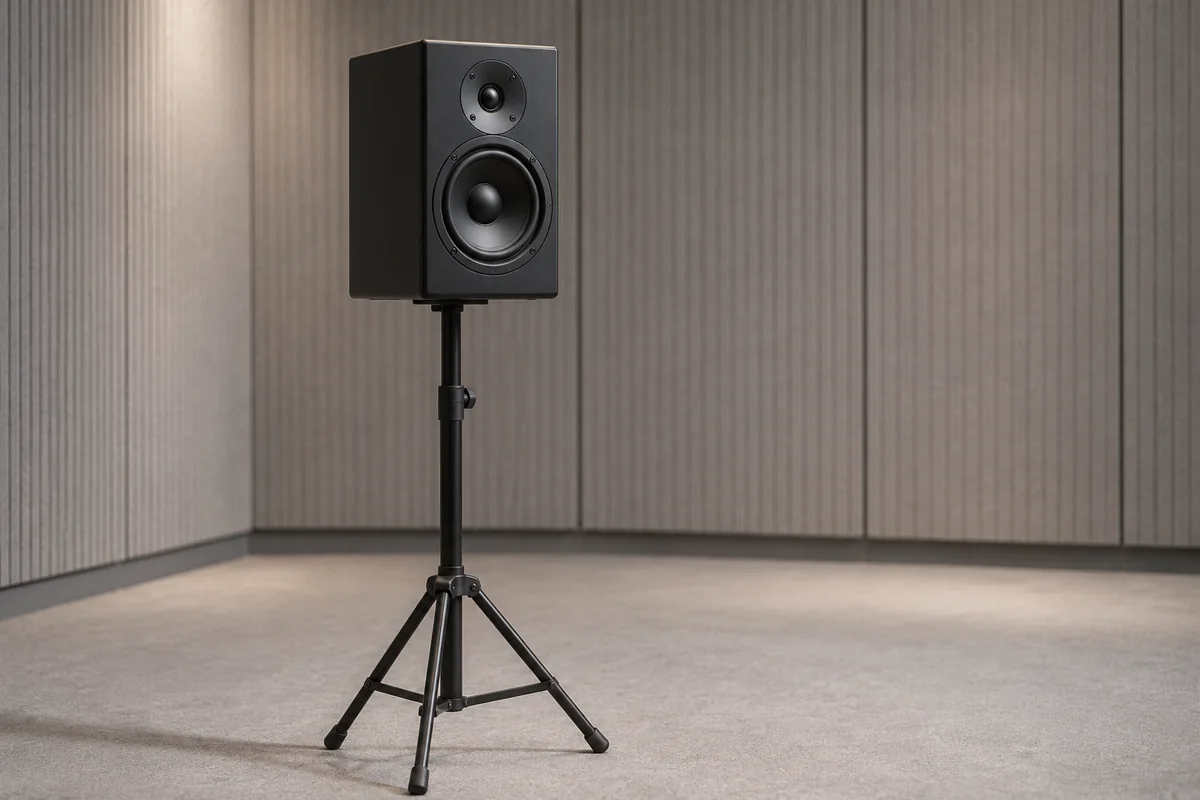
Troy calls that kind of single figure "a necessary dumbing down." It's what makes products easy to compare, even if it hides some of the detail.
What do the classes mean?
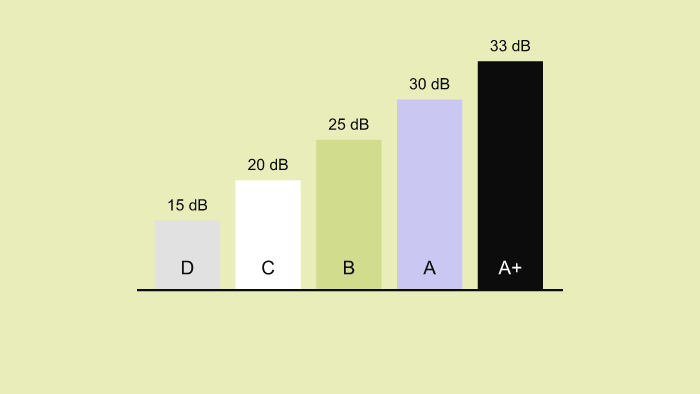
Each result falls into a class. The bands below come from a Turku University of Applied Sciences report on the standard.
Why does 30 dB matter?
It's also a hard line to reach. When the Turku researchers tested 11 commercial phone booths, results ranged from 15 to 30.3 dB. Only one booth made Class A, and five landed in Class D.
Will you hear the difference between classes?
In most workplaces, yes. "If there is an A versus B product, I would say broadly, you would notice a difference," says Troy.
He adds one condition. "If you have a typical office environment, I think it's very reasonable to, as you go between the classification ratings, to expect a difference in performance." In an unusual setting, like a loud factory floor, the ratings may not line up so neatly.
Where Persy booths sit
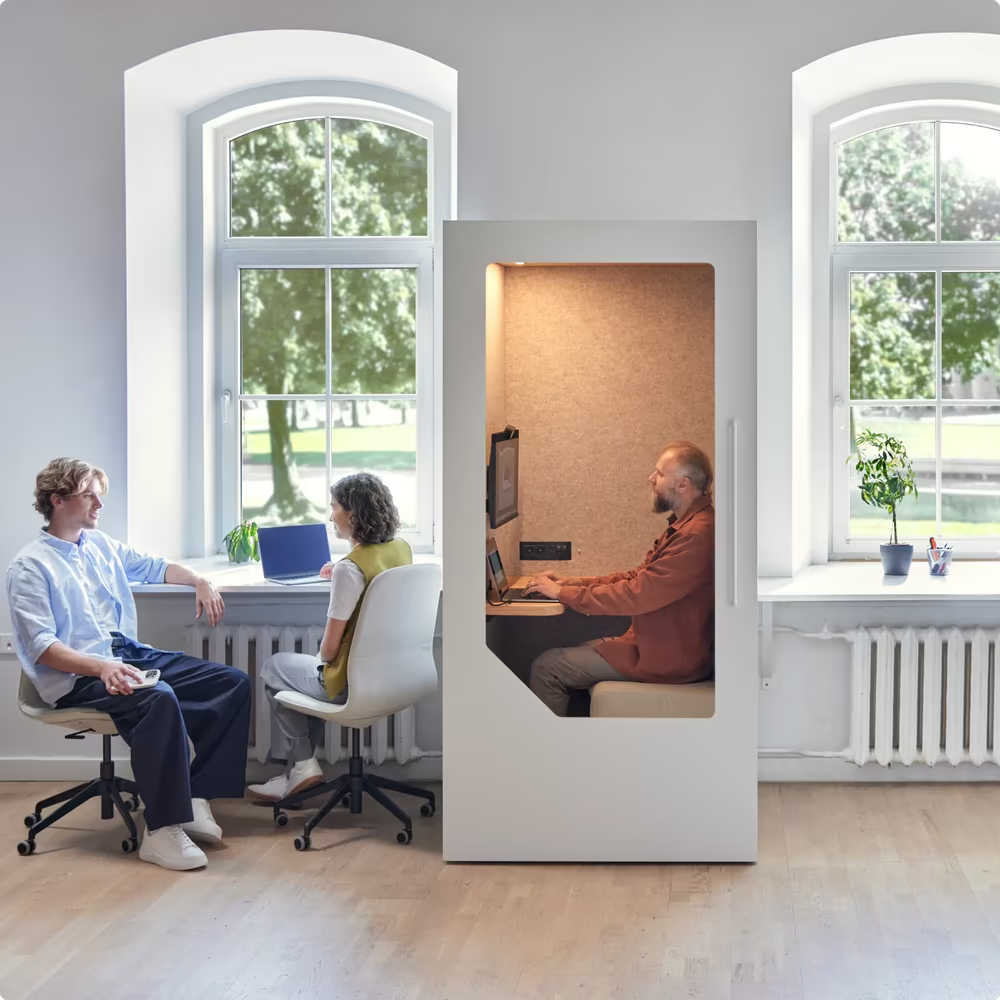
All our office pods are tested by a third-party lab to ISO 23351-1:2020 and rated Class B.
- Persy One, our soundproof phone booth, reduces speech levels by 28 dB.
- Persy Work, our Work booth for focused tasks, also reaches 28 dB.
- Persy Two, our 2 person meeting pod, reaches 25.6 dB.
- Persy Four, our 4 person meeting pod, reaches 25.6 dB.
Quick checklist
Before you compare booths on their ISO results, check these four things.
- The result names ISO 23351-1 and states a class.
- An independent lab carried out the test.
- The result covers the exact model you plan to buy.
- You know roughly how loud your office is.
{{summary}}

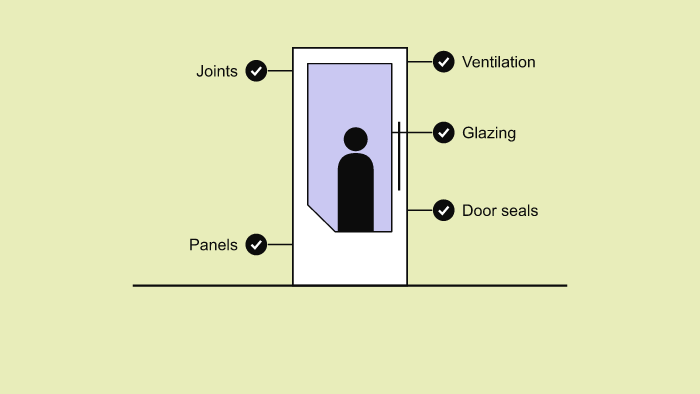
ISO 23351-1 is the international lab method for measuring how well a booth, pod or furniture enclosure reduces speech. It was published in 2020 and applies to complete products, so a single screen or wall panel can't be rated with it.
30 dB is the line between Class B and Class A. Crossing it moves a booth up a class.

Back to Troy's quiet office. There, 25 dB was enough to bring speech down to the background level. A busier office hides more of what leaks out, and a very quiet one hides less. So the reduction you need depends on your space as much as the booth.
And compare classes before you compare single decibels.
ISO 23351-1 is the international lab method for measuring how well a booth, pod or furniture enclosure reduces speech. It was published in 2020 and applies to complete products, so a single screen or wall panel can't be rated with it.
30 dB is the line between Class B and Class A. Crossing it moves a booth up a class.