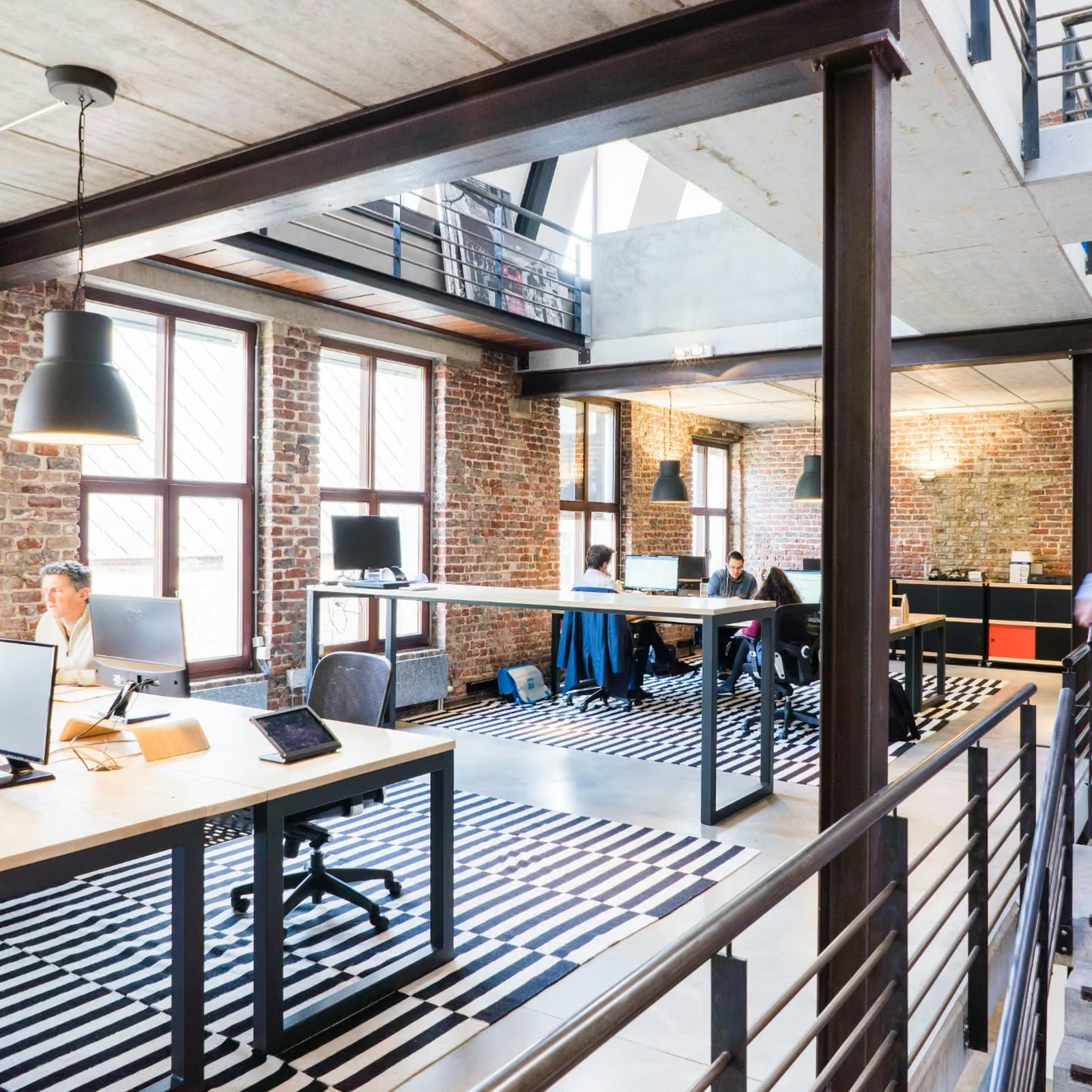
In today’s modern workplace, where every square metre counts, workplace occupancy sensors are one of the simplest ways to improve efficiency, cut wasted energy, and make better decisions about how rooms are used.
Put simply, these small devices sit quietly in the background and detect when people enter, leave, or use a space. That data then turns into practical insights that help companies run smarter offices through office space monitoring.
From meeting rooms and breakout areas to soundproof office pods, workplace occupancy sensors have become a key part of building an adaptable, productive work environment. Here at Persy Booths, we think occupancy sensors are a great idea. Every company needs a great working environment, but they also need to know which office areas to invest in. With occupancy sensors, you can see what’s actually being used and where to focus your efforts.
Key takeaways from this article:
- What workplace occupancy sensors are and how the technology works
- The different types of sensors and where they fit best
- The measurable benefits for modern offices, from energy savings to productivity
- Implementation tips that keep things simple, cost-effective, and privacy-focused
How Do Workplace Occupancy Sensors Work?
Workplace occupancy sensors detect when a room is in use and send that data to a building management system or room-booking platform. Most workplace occupancy sensors use one of these common technologies:
- Optical and camera-based sensors
- Infrared sensors (including PIR)
- Ultrasonic detection
- IoT-based sensors that monitor conditions like temperature, humidity, and light
Passive infrared (PIR) sensors pick up on body heat and motion, while ultrasonic sensors emit sound waves to detect movement—even subtle shifts. Optical systems offer higher accuracy and wider range, though they typically come at a higher cost. Meanwhile, IoT-enabled occupancy sensors gather richer real-time data about usage, environmental conditions, and how rooms change over time.
Crucially, modern occupancy sensors are built with privacy in mind, aligning with workplace data privacy principles and often complement strategies for how to deaden sound in a room. Most don't identify individuals; they simply track occupancy, motion, or environmental changes. When you use them alongside smart office tools you get a clearer picture of how different spaces support the way your teams actually work.

Types of Workplace Occupancy Sensors
Different workplaces have different needs, so choosing the right workplace occupancy sensors matters. Below are the main options and where they fit best.
Passive Infrared (PIR) Sensors
- Pros: Low cost, reliable, energy-efficient
- Cons: Limited range and can miss very still people
- Best for: Small rooms where cost control is key
Ultrasonic Sensors
- Pros: Strong detection, even when occupants remain still
- Cons: More expensive and more sensitive to air movement
- Best for: Larger meeting rooms or high-activity spaces
Dual-Technology Sensors
- How they work: Combine PIR and ultrasonic technology for more accurate detection
- Best for: High-importance spaces where false positives or missed detection must be avoided
Optical / Camera-Based Sensors
- Pros: Advanced analytics and reliable presence monitoring
- Cons: Higher cost, plus privacy and security need careful management
- Best for: Enterprise-level rooms and smart workplace strategies
IoT-Enabled Smart Sensors
- Pros: Track temperature, humidity, light levels, and more, often linking into wider building systems
- Cons: Need integration and ongoing management
- Best for: Organisations that rely on real-time data to improve workplace planning

Benefits of Workplace Occupancy Sensors in Offices
Introducing workplace occupancy sensors isn’t just about convenience - they deliver measurable improvements across efficiency, employee experience, and operational value. They help optimise spaces, reduce wasted energy, and support smarter ways of working in agile working environments.
Optimise Space Usage
Workplace occupancy sensors show how rooms are actually used, supporting better workspace optimization and highlighting underused areas, overbooked meeting rooms, or spaces that need redesign. This helps businesses get more from existing space instead of overspending on expansions or equipment.
Automate Check-In and Booking
Many booking platforms use sensor-based detection to release unused meeting slots, preventing “ghost meetings” and saving time. If a room is booked but shows no occupancy after a set period, the system can free it up automatically.
Boost Productivity
Real-time usage data helps employees find available rooms faster - for quiet focus work, quick catch-ups, or private calls - so they spend less time searching and more time working. And when teams need private areas, solutions like office noise solutions or office pods can support focus without major renovations.
Support Smart Energy Use
Workplace occupancy sensors can reduce wasted energy by triggering lighting and HVAC only when spaces are in use. This helps cut unnecessary power usage while keeping comfort levels consistent in occupied rooms.
From an EU perspective, the revised Energy Performance of Buildings Directive encourages smarter building automation—such as occupancy detection for lighting and HVAC—to help meet ambitious carbon-reduction targets across member states.
Enhance Workplace Analytics
From capacity planning to redesign decisions, workplace occupancy sensors provide evidence instead of guesswork. Teams can see which spaces are always full, which are rarely used, and when peak usage occurs - making planning more accurate and more cost-effective.
_opt_1000%20(1).avif)
Implementation Tips for Workplace Occupancy Sensors
To get the best results, it takes more than installing devices on the ceiling. Companies should:
- choose the right sensor technology based on room type, needs, and budget
- integrate workplace occupancy sensors with booking tools or building management software
- ensure privacy compliance and communicate clearly with people using the office
- maintain and test sensors over their lifetime to keep detection accurate
Choosing the right supplier also matters. Look for practical, helpful specialists who offer clear guidance, fast delivery, and minimal hassle. Persy Booths takes exactly this approach when supplying offices with soundproof booths, such as the Persy One office pod.
Workplace occupancy sensors may be small, but their impact on office efficiency is significant. By providing accurate usage insights, automating controls, and helping companies use rooms more effectively, they support smarter workplaces and happier teams. For businesses balancing cost, function, and practicality, they’re one of the most valuable additions to a modern office ecosystem.
You can use the Persy One booth for a variety of purposes, but it is best suited for focused work sessions, private phone calls, or escaping office distractions.
Conclusion
Workplace occupancy sensors are a simple but powerful tool for modern offices. By tracking room usage in real time, businesses can make better decisions about meeting room availability, lighting control, and space planning. If the goal is saving energy, reducing ghost meetings, or improving how rooms are used alongside acceptable noise levels in the workplace, the right sensors help offices work more efficiently without adding complexity.
FAQ
What are workplace occupancy sensors?
.avif)
Passionate, progress-driven venture & business developer with startup and corporate experience. I speak business, while keeping customers in my heart.