


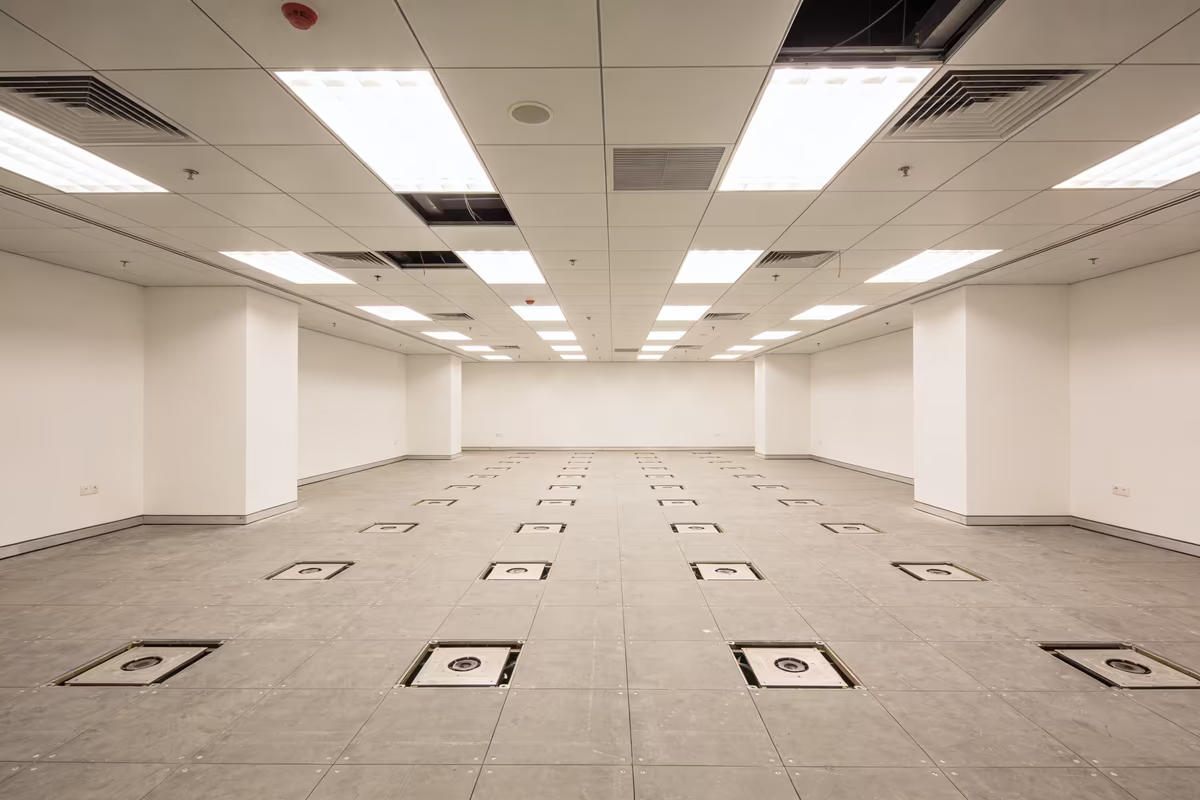
A Cat A fit out is the landlord's basic, functional base: raised floors, ceilings, services and plain finishes, with no layout. A Cat B fit out is the tenant's finished, branded office built on top, with partitions, meeting rooms, furniture and IT, ready to move into.
When organisations move into new office space, one of the first decisions they face is whether they need a cat a and cat b fit out and what each stage actually involves. The distinction matters because it directly affects fit out costs, move-in readiness, and how functional the workplace will be once employees arrive.
At Persy Booths, we work closely with organisations shaping their interior space and understand how decisions made during office fit outs influence productivity, collaboration, and employee experience. Whether starting with a Cat A office or upgrading an existing cat b office, understanding the fit out process helps avoid delays, overspending, and poorly designed work environments.
Key takeaways from this article
- Cat a prepares a space ready with core amenities and infrastructure, while cat b transforms it into a fully operational workplace.
- Cat b fit outs cost more but directly shape company culture, office layout, and employee experience.
- Hybrid working requires thoughtful cat b space planning, including quiet zones, breakout spaces, and collaboration areas.
- Lease terms and existing space condition strongly influence whether cat a, cat b, or combined fit out cat is best.
- Acoustic design, flexible layouts, and technology are now essential elements of modern office fit.
Shell and Core: Where a Fit Out Starts
Before any fit out begins, a new building is usually handed over as shell and core. This is the bare structure: the concrete frame, external walls and cladding, the core lift shafts and stairwells, and the main incoming services, but no finished floors, ceilings or usable workspace.
From there, an office fit out moves through clear stages:
- Shell and core – the empty base building, structure and main services only.
- Cat A – the landlord makes the space lettable with raised floors, ceilings, lighting, HVAC and basic finishes.
- Cat A+ – an optional middle step that adds a few ready-to-use elements so a tenant can move in faster.
- Cat B – the tenant fits out the space into a finished, branded, fully operational office.
What Cat A and Cat B Fit Outs Include
A clear standard industry definition explains the difference between a cat a fit and cat b fit: "Cat a creates the base building infrastructure, while cat b delivers a finished, usable workspace".
Cat A Fit Out Meaning, Typical Specification and Who Pays
A cat a office fit prepares an empty shell so it becomes a lettable, functional office. It typically includes raised access floors, suspended ceilings, basic mechanical and electrical systems, HVAC systems, air conditioning, smoke alarms, and basic internal finishes such as painted walls and concrete floors.
These elements form the core fit out and convert a shell and core office – usually a concrete and metal frame with minimal adjustments – into internal space suitable for occupancy. Landlords normally fund cat a fit outs because they create space ready for tenants without committing to specific office layout decisions.
The result is a functional office, but still a blank canvas or bare bones environment with limited usability for day-to-day work.

Cat B Fit Out Meaning, Features and Move-in Readiness
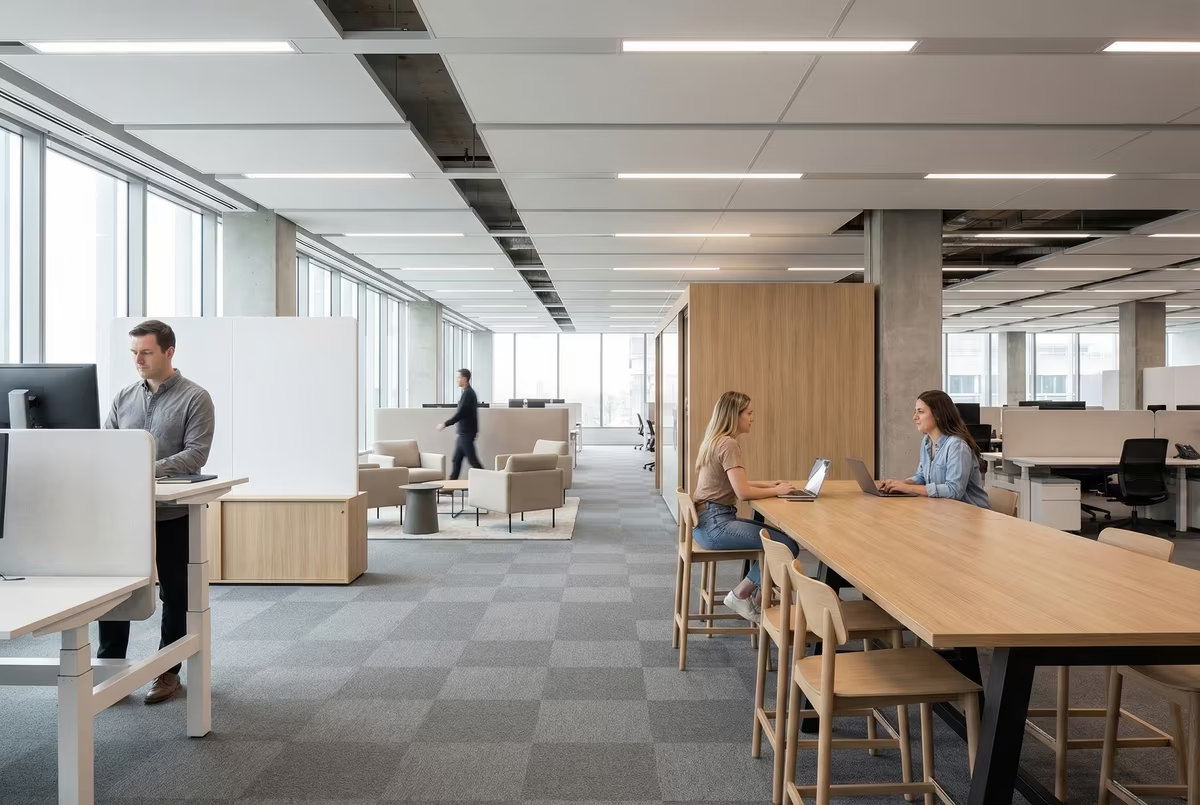
Cat b fit outs transform cat a space into a fully working cat b office. A typical cat b office fit includes interior partitions, meeting rooms, kitchen areas, break rooms, breakout spaces, furniture, soft furnishings, air conditioning, IT infrastructure, and brand detailing.
Cat b involves installing all functional elements required for a modern workplace – turning a shell and core fit into a complete working environment with electrical services, power points, shower facilities, and office design tailored to the tenant’s needs.
Cat A vs Cat B Fit Out: Costs, Timelines and Key Differences
Understanding cat a and cat b fit out costs and timelines helps businesses plan realistic move-in dates and avoid delays.
Here is how the two stages compare at a glance:
Scope, Responsibility and Category A / B (Plus Cat A+)
Category a focuses on infrastructure and base building elements. Category b focuses on customisation and usability.
Key differences include:
- Cat a – usually funded by landlord, delivers shell and core fit with building’s mechanical, electrical systems, and basic finishing
- Cat b – usually funded by tenant, creates a complete office environment with partitions, furniture, and brand detailing
- Cat A+ – a combined cat a cat b office fit out that includes ready-to-use features such as meeting rooms and simple office design elements
You may occasionally see the term “Cat C”, but it is not a formal industry category. The recognised office fit out categories are Cat A, Cat A+ and Cat B.
Choosing between cat a office fit, category b workspace, or combined fit out depends on lease terms, project budget, and required move-in speed.
Cat A and Cat B Fit Out Costs, Number of Days on Site and Move-in Dates
Typical commercial fit out costs vary depending on project complexity and specification. Cat a office fit is generally lower cost, focusing on infrastructure and core amenities. Cat b fit outs involve higher investment due to furniture, IT infrastructure, and interior partitions. As a rough UK guide, a Cat A fit out often lands around £40 to £75 per square foot, while a Cat B fit out typically runs from about £75 to £150 or more per square foot, with high-specification or heavily serviced spaces costing more.
Programme length also differs. Cat a may take several weeks, while cat b can extend to months depending on design complexity. Cat b space is fully usable on completion, while cat a remains an empty space requiring further work.
Designing Cat B Fit Out for Hybrid Work and Company Culture
Modern workplaces require more than compliance, and the best modern office designs treat culture as a design brief. Cat B space decisions now shape how employees collaborate, focus, and experience the workplace. Modern research into office space and workplace performance shows that layout, flexibility, and workplace design strongly influence employee productivity and collaboration, particularly in hybrid environments.
Space Planning for Hybrid Working, Schedules and Office Occupancy
Effective office layout planning must reflect real usage patterns. Modern hybrid workplace design includes balancing desks with breakout spaces, collaboration zones, and quiet areas, using data to optimise occupancy and avoid underused space.
Organisations increasingly use insights from room occupancy sensor technology to refine layout and improve utilisation, alongside planning for flexible office space that adapts to changing workforce patterns.
Quiet Zones, Collaboration Areas and Office Noise Control (Booths, Pods and Portable Rooms)
Acoustic comfort is now a core part of any Cat B fit out. Open-plan layouts are great for collaboration but poor for focus, so the best workplaces build in a mix of quiet zones and collaboration areas rather than choosing one. Strong office acoustics and the right soundproofing insulation reduce distraction and protect concentration.
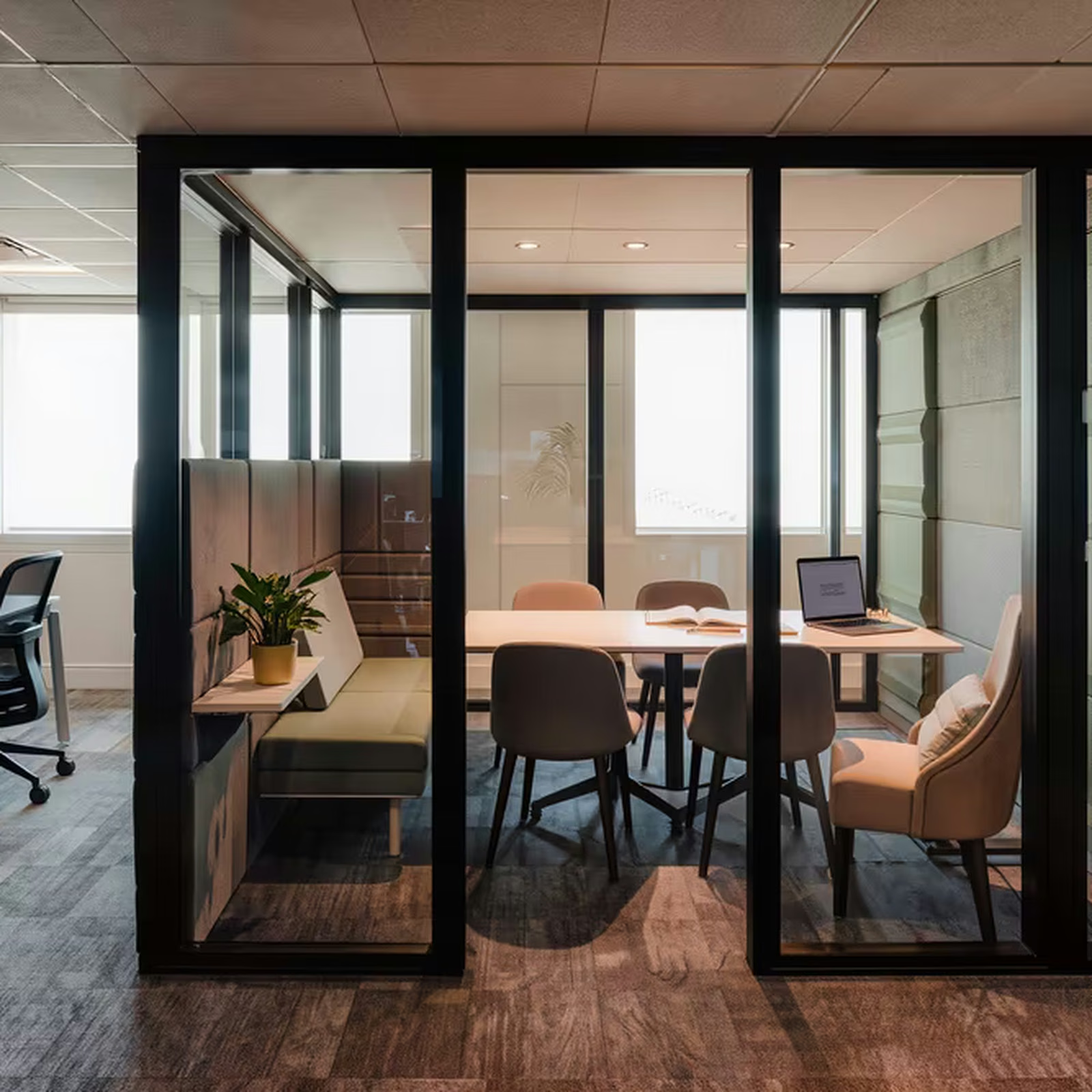
Freestanding booths and pods are a popular Cat B answer because they add private, acoustically treated space without permanent building work, and they can be moved or reconfigured as the team changes. A soundproof phone booth suits solo calls, a two person phone booth works for quick one-to-ones, a team meeting booth handles small hybrid meetings, and a dedicated work booth gives heads-down focus. For a fully enclosed option, enclosed office pods offer a room within a room.

Choosing the Right Cat A and Cat B Fit Out Strategy for Your Project
Selecting the right fit out cat strategy depends on budget, lease responsibilities, and existing space condition.
Lease Responsibilities, Budget Planning and Risk of Over- or Under-Specifying
Fit out planning should consider lease terms defining landlord versus tenant responsibilities, cat a office fit out costs, cat b fit out costs, and existing shell and core office condition. Overspending on the wrong stage or under-specifying infrastructure can lead to costly redesign or poor usability.
Ensuring electrical systems, core amenities, and building reception integration align with operational needs is essential for successful commercial projects.
Sustainability in Cat A and Cat B Fit Outs
Sustainability now shapes both Cat A and Cat B decisions. On the Cat A side, landlords increasingly retain and refurbish existing raised floors, ceilings and services rather than stripping them out, which cuts embodied carbon and cost. On the Cat B side, tenants can specify energy-efficient lighting and HVAC, low-VOC and recycled materials, and furniture that can be reused when the lease ends.
A growing number of projects target BREEAM certification, whose Refurbishment and Fit-Out standard assesses the sustainability of interior fit outs. Choosing reusable, demountable elements, such as freestanding booths and modular partitions, also makes a fit out easier to adapt or relocate, which is far more sustainable than ripping out and rebuilding at the next move.
Aligning Fit Out with Company Culture, Employee Experience and Hybrid Working Success
Modern office fit should reflect how employees work and interact. Effective workplace design includes creating breakout spaces, collaboration areas, space for a proper in person meeting, and even play space to support creativity and engagement. Interior space should encourage productivity while ensuring internal space suitable for hybrid work patterns.
A well-designed Cat B office transforms new office space into a compelling environment worth commuting to, improving retention and employee satisfaction.
Cat A and Cat B Fit Out: FAQs
.avif)
Passionate, progress-driven venture & business developer with startup and corporate experience. I speak business, while keeping customers in my heart.


.avif)